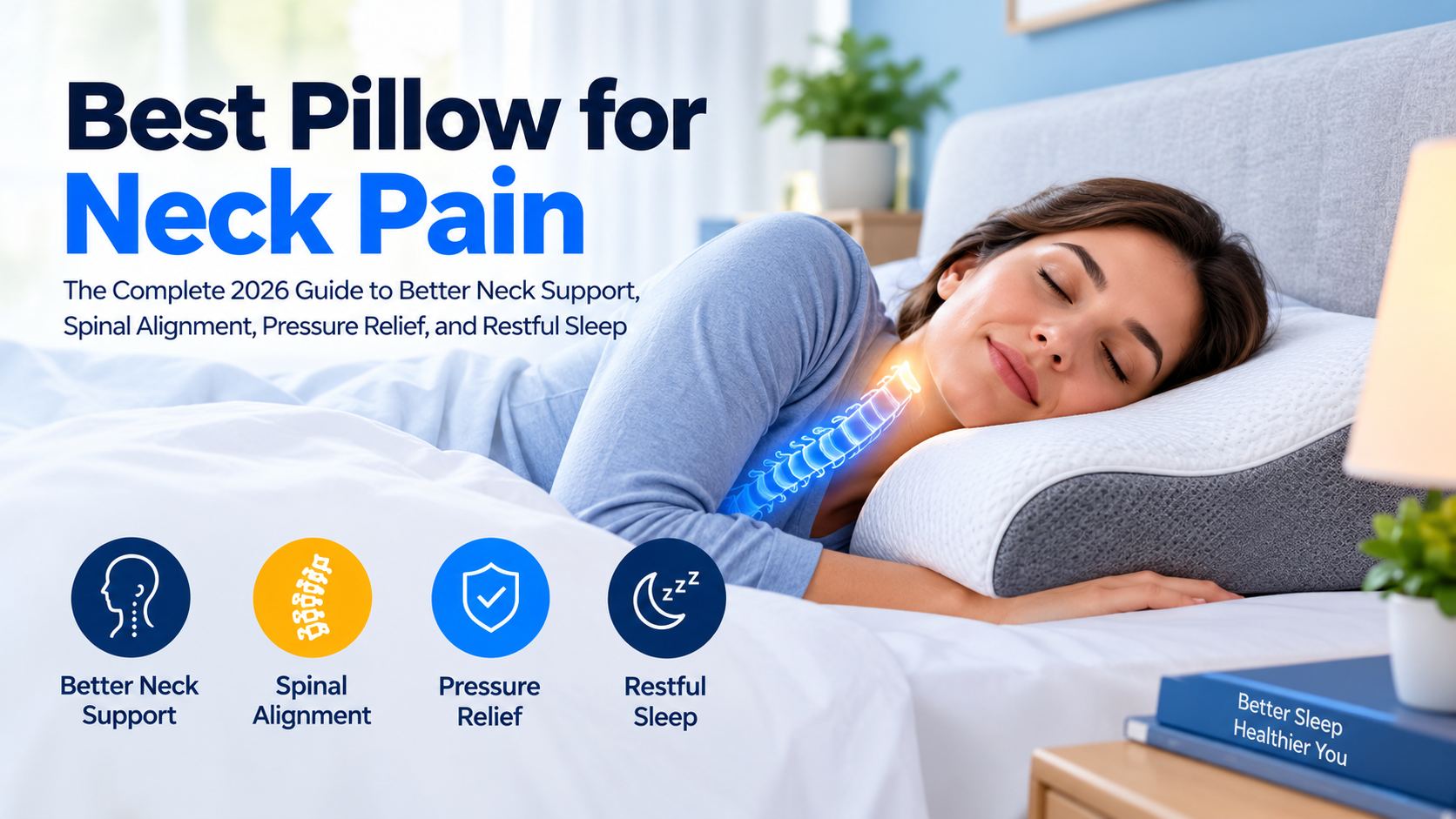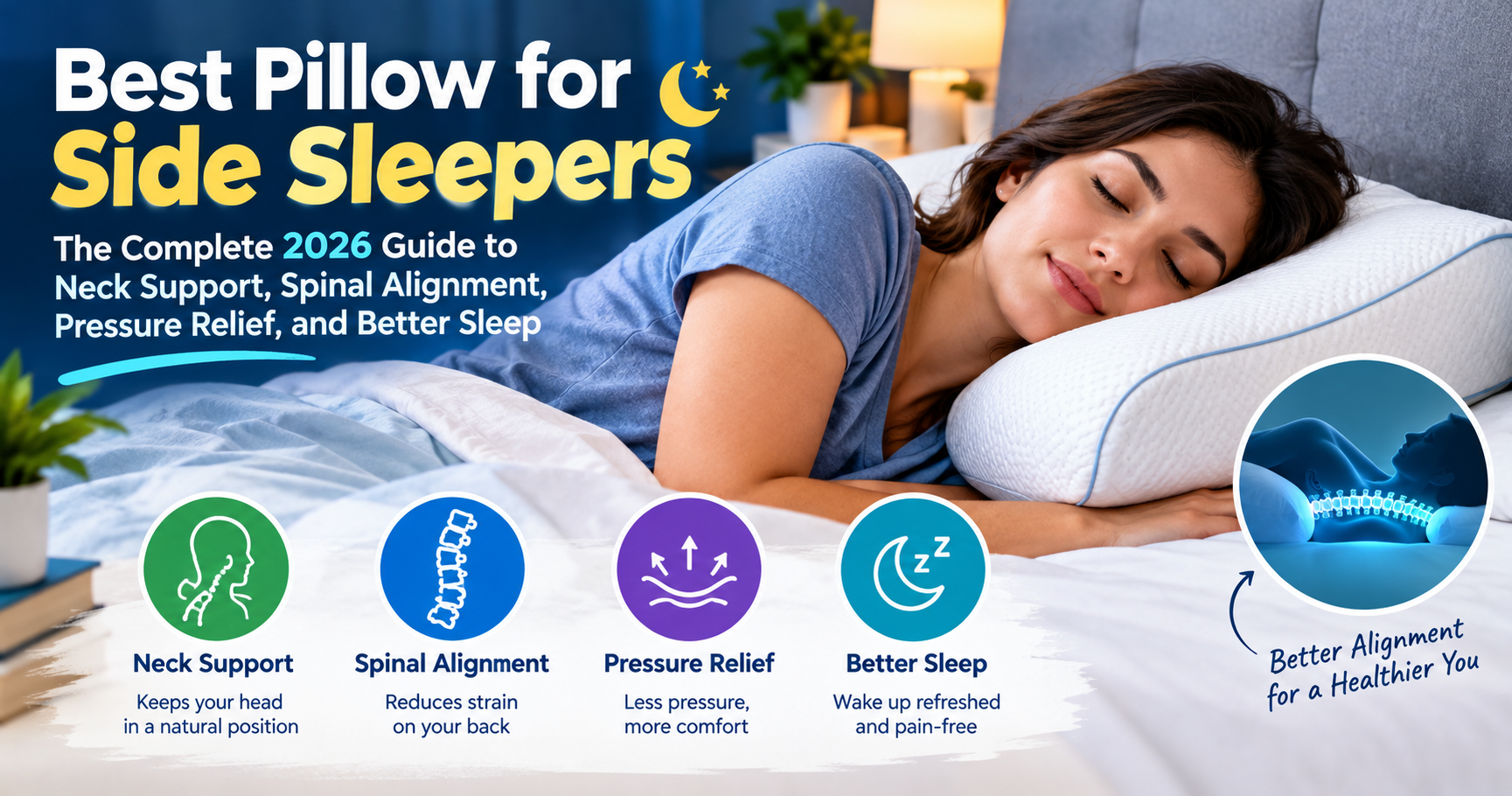
Choosing the best pillow for side sleepers can make a meaningful difference to sleep comfort, especially if you regularly wake up with a stiff neck, shoulder discomfort, or headaches. Side sleeping can support a comfortable sleeping position, but the pillow must fill the space between your head and mattress without pushing your neck too high or allowing it to sink too low.
The challenge is that pillows are not one-size-fits-all. Your shoulder width, mattress firmness, body shape, and personal preferences all influence which pillow will feel supportive. A thick pillow that works well on a firm mattress may be uncomfortable on a softer one because your shoulder sinks further into the bed.
This guide explains how to choose a pillow based on loft, firmness, fill material, temperature regulation, and individual comfort, helping you make a practical decision rather than relying on marketing claims alone.


What Makes a Pillow Suitable for Side Sleeping?
A suitable side-sleeping pillow fills the gap between your head and the mattress while keeping your neck reasonably aligned with the rest of your spine. When viewed from behind, your head should not tilt noticeably toward the mattress or upward toward the ceiling. The aim is a comfortable, neutral position rather than a rigid posture that feels forced.
Pillow height, commonly called loft, is especially important. Side sleepers often need a medium-high or high-loft pillow because the shoulder creates a larger gap between the head and mattress. However, the ideal height depends on shoulder width, mattress compression, and how deeply the head sinks into the pillow.
The best pillow for side sleepers should also maintain its shape throughout the night. If the filling compresses too much, your head may gradually sink and strain the neck. If the pillow is excessively firm or tall, it can push your head upward. Both situations may create discomfort, even when the pillow initially feels luxurious.

How to Choose the Right Pillow Loft and Firmness
Pillow loft and firmness are related but different. Loft describes the pillow’s height, while firmness describes how resistant it feels when you press against it. A high-loft pillow can be soft and compressible, while a lower-profile pillow can feel dense and firm.
Your mattress influences the height you need. On a firm mattress, your shoulder may not sink very far, so a taller pillow may be necessary to bridge the gap. On a plush mattress, your shoulder sinks deeper, reducing the distance between your head and the sleeping surface. Choosing the same pillow for both mattresses may produce different results.
| Sleeping setup or preference | Pillow feature to consider | Why it may help |
|---|---|---|
| Broad shoulders | Medium-high to high loft | Helps fill a larger head-to-mattress gap |
| Narrow shoulders | Medium or adjustable loft | Reduces the risk of pushing the head upward |
| Firm mattress | Slightly higher loft | Compensates for less shoulder sinking |
| Soft mattress | Lower or adjustable loft | Accounts for deeper shoulder compression |
| Frequent neck stiffness | Adjustable fill or supportive foam | Allows a more personalised fit |
| Sleeping hot | Breathable cover and ventilated fill | May improve airflow and moisture management |
| Changing positions overnight | Responsive, adaptable filling | Makes repositioning more comfortable |
These are starting points, not medical rules. A useful test is to lie in your normal sleeping position for several minutes and assess whether your neck feels relaxed. If possible, have someone check your head alignment from behind. The pillow should feel supportive without creating pressure beneath the neck or shoulder.
Best Pillow Materials for Side Sleepers


7
Memory Foam Pillows
Memory foam conforms to the shape of your head and neck, distributing pressure across the contact area. Solid memory foam pillows tend to retain a more consistent shape, while shredded memory foam models can often be adjusted by removing or adding filling.
These pillows can suit people who prefer a stable, contouring feel. However, some foam products retain heat, and dense models may feel too firm to people who like a softer surface. Look for ventilation features and a removable cover if temperature and cleaning are important considerations.
Latex Pillows
Latex pillows generally feel springier and more responsive than traditional memory foam. They tend to recover their shape quickly when you move, which can be helpful if you change positions during the night. Depending on the design, latex may also provide good airflow.
The main drawbacks are weight, cost, and feel. Some people find latex too buoyant or firm, while others appreciate its consistent support. Natural and synthetic latex products also differ, so check the material description rather than assuming all latex pillows have identical properties.
Down and Down-Alternative Pillows
Down pillows use soft plumage from ducks or geese, while down-alternative pillows typically use polyester or other synthetic fibres. Both can offer a soft, mouldable feel, making them appealing to people who prefer a pillow that can be shaped around the head.
The potential problem is loss of loft. Softer fills may compress significantly under the head, meaning some side sleepers need to fluff the pillow regularly or choose a model with greater fill capacity. Down alternatives can be useful for people avoiding animal-derived filling, but quality and durability vary.
Buckwheat and Adjustable-Fill Pillows
Buckwheat pillows contain small hulls that shift as you move, allowing the pillow to be shaped to your preferred height. Their structure can provide stable support and airflow, although the texture may feel firm and the hulls can make noise when repositioned.
Adjustable-fill pillows are particularly useful when you are unsure about your ideal loft. Removing a small amount of filling can reduce height, while adding it can increase support. This flexibility can be more practical than purchasing several fixed-height pillows in search of a comfortable fit.
How Your Sleeping Position Affects Pillow Choice
Side sleeping places pressure on the shoulder and creates a gap between the head and mattress. The best pillow for side sleepers should fill that gap while allowing the shoulder to rest naturally. Avoid forcing the shoulder underneath the pillow, as this can create extra pressure around the neck and upper arm.
Your arm position matters, too. Pulling the top arm tightly beneath the head can elevate the shoulder and twist the neck. Keeping your arms in a comfortable position in front of your body may help reduce this strain. A separate body pillow can provide support for the upper arm or legs without requiring the head pillow to do everything.
People who switch between side and back sleeping may benefit from a responsive or adjustable pillow. A shape that feels perfect on your side may be too tall when you roll onto your back. Rather than choosing the tallest pillow available, focus on a design that maintains comfortable alignment across your usual positions.
Common Pillow Problems and How to Fix Them
Waking up with a stiff neck does not automatically mean you need a new pillow. The cause may involve pillow height, sleeping posture, mattress support, daytime muscle tension, or an underlying health condition. Start by checking whether the pillow allows your head to tilt upward or downward and whether the discomfort improves when you adjust its height.
If your shoulder feels compressed, consider your mattress and arm position as well as the pillow. A pillow cannot fully compensate for a mattress that does not suit your body or a sleeping posture that places excessive pressure on the shoulder. Adjusting your position, using a supportive mattress, and choosing a suitable pillow may work better together than changing just one item.
Heat and sweating can create another problem. Some memory foam pillows retain more heat than others, and thick, non-breathable covers can make this worse. Look for breathable fabrics, ventilation channels, and removable washable covers. Remember that cooling labels do not guarantee that a pillow will remain cool for every sleeper.
Pillow Care, Hygiene, and Replacement
Even a well-designed pillow loses performance if it becomes lumpy, flattened, or difficult to clean. Follow the manufacturer’s care instructions because memory foam, latex, down, and synthetic fills may require different cleaning methods. Some pillows are machine-washable, while others should only be spot-cleaned.
Use a clean pillowcase and wash it regularly to help manage sweat, oils, and dust. A pillow protector can add another barrier against moisture and allergens. If you have allergies, consider an encasement and a washable product, while remembering that no pillow can guarantee freedom from allergens.
Replace a pillow when it no longer maintains comfortable support, develops persistent lumps, or cannot be cleaned adequately. There is no universal replacement date because lifespan depends on materials, construction, use, and care. A simple practical test is to check whether the pillow returns to its intended shape and still supports your head without constant folding or fluffing.
Frequently Asked Questions
What is the best pillow height for side sleepers?
Many side sleepers prefer medium-high or high loft, but the right height depends on shoulder width, body shape, mattress firmness, and how much the pillow compresses. Choose a height that keeps your head and neck aligned rather than relying on a particular measurement alone.
Is memory foam or latex better for side sleeping?
Both can work well. Memory foam contours closely to the head and neck, while latex generally feels springier and returns to shape more quickly. Your comfort preferences, temperature sensitivity, and desired firmness are more important than the material name alone.
Can the wrong pillow cause neck pain?
An unsuitable pillow can contribute to neck discomfort if it keeps the head tilted upward, downward, or sideways for extended periods. However, neck pain can have many causes. Persistent, severe, or worsening symptoms should be assessed by a healthcare professional rather than attributed entirely to the pillow.
Are adjustable pillows worth buying?
Adjustable pillows can be useful if you are uncertain about the right loft or prefer to change the firmness over time. Removing or adding filling allows you to fine-tune the height without replacing the entire pillow. Check whether replacement filling is available and whether adjustments are straightforward.
Is a firm pillow better for side sleepers?
Not necessarily. A pillow should provide enough support to maintain comfortable alignment without creating excessive pressure. Some side sleepers prefer firm foam, while others find a medium-firm or adjustable pillow more comfortable. Loft and firmness should be considered together.
How often should I replace my pillow?
Replace it when it becomes permanently flattened, lumpy, unhygienic, or unable to support your head comfortably. Some materials last longer than others, so assess the pillow’s condition instead of following a fixed timetable. Proper cleaning and a protective cover can help extend its useful life.
Can a pillow help with shoulder pressure?
A suitable pillow may improve head and neck alignment, but shoulder pressure also depends on mattress firmness, body position, and underlying joint or muscle problems. If shoulder discomfort persists, particularly with weakness, numbness, or restricted movement, seek professional advice.
Conclusion
The best pillow for side sleepers is one that matches your body shape, shoulder width, mattress, and preferred sleeping position. Medium-high loft, supportive filling, and the ability to retain shape are useful starting points, but personal comfort and neutral neck alignment matter more than any single material or marketing claim.
Consider adjustable memory foam, latex, or other suitable fillings based on how you sleep and whether you prefer a contouring or responsive feel. Make small adjustments, assess your comfort over several nights, and remember that persistent pain may require attention beyond changing your pillow.
Ultimately, a pillow should support your natural sleeping posture rather than force your body into one. Choosing the right fit, maintaining good pillow hygiene, and pairing it with a comfortable mattress can help create a more restful and supportive sleep environment.