

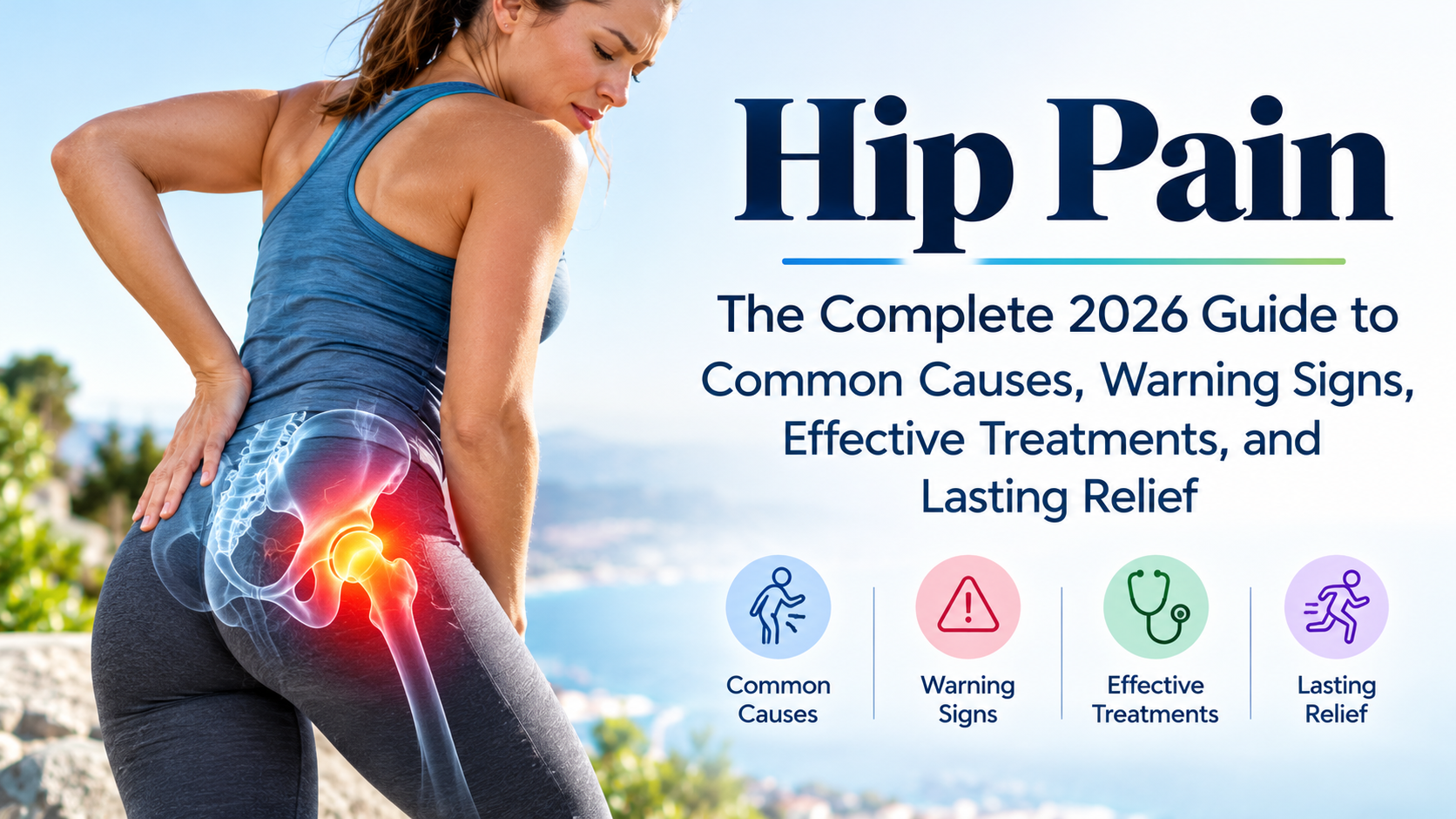
Hip pain can make everyday activities such as walking, climbing stairs, sleeping on your side, or getting up from a chair uncomfortable. It may develop gradually because of joint changes or muscle overuse, or appear suddenly after a fall, awkward movement, or sports injury. The location of the discomfort, how it started, and the symptoms that accompany it can help identify what might be happening.
The hip is a strong, weight-bearing joint that connects the thighbone (femur) to the pelvis. Its ball-and-socket structure allows movement in several directions while supporting body weight. Muscles, tendons, ligaments, cartilage, and fluid-filled bursae help the joint move smoothly and remain stable. Problems in any of these structures can affect mobility, but pain felt around the hip can sometimes originate in the lower back or other nearby areas.
What Causes Hip Pain?


Common causes include osteoarthritis, bursitis, tendinitis, muscle strains, and injuries involving the bones or surrounding soft tissues. Osteoarthritis develops when joint structures change over time, potentially causing stiffness and discomfort during movement. Tendinopathy affects tendons that connect muscles to bones, while bursitis involves irritation of a small fluid-filled sac that reduces friction around the joint.
The location of the discomfort can offer useful clues. Pain deep in the groin may come from the hip joint itself, including osteoarthritis or a labral problem. Discomfort on the outer side of the hip may be associated with greater trochanteric pain syndrome, which can involve the gluteal tendons and nearby bursa. Pain in the buttock or back of the hip may instead involve the lumbar spine, nerves, or deep gluteal muscles.
Activity levels also matter. Someone who suddenly increases running distance or begins heavy lower-body training may overload tissues that have not adapted to the new demands. Reducing the aggravating activity and gradually rebuilding strength can help in some cases, but persistent or severe symptoms need proper assessment rather than guesswork.
Common Symptoms and What They May Mean
Hip problems can cause aching, sharp pain, stiffness, weakness, clicking, or a reduced range of motion. Symptoms may appear during activity, after prolonged sitting, when getting out of bed, or at night. Difficulty putting on shoes, crossing the legs, or walking uphill can also indicate that the joint or surrounding tissues are not moving comfortably.
A pattern of symptoms is more informative than one symptom alone. For example, morning stiffness and pain after walking may occur with osteoarthritis, while tenderness on the outer hip that worsens when lying on that side can occur with greater trochanteric pain syndrome. Tingling, numbness, or pain extending down the leg may suggest nerve irritation originating in the back.
| Symptom pattern | Possible cause | Recommended response |
|---|---|---|
| Deep groin discomfort and stiffness | Hip osteoarthritis or joint irritation | Arrange assessment if persistent |
| Pain on the outer hip when lying on that side | Greater trochanteric pain syndrome | Reduce direct pressure and seek advice if symptoms continue |
| Pain after a sudden twist or intense exercise | Muscle strain or tendon injury | Reduce aggravating activity and monitor symptoms |
| Pain spreading from the back into the hip or leg | Lumbar spine or nerve-related problem | Seek clinical assessment if persistent or worsening |
| Sudden severe pain after a fall | Fracture or significant injury | Seek urgent medical care |
| Hot, swollen joint with fever | Possible joint infection | Seek emergency medical assessment |
These patterns are general guides, not diagnoses. Several conditions can produce similar symptoms, and some serious problems cause relatively few external signs.
Warning Signs That Need Medical Attention

Some symptoms require urgent medical evaluation rather than home treatment. Seek emergency care if you develop sudden, severe hip pain after a fall or accident, cannot stand or put weight on the affected leg, or notice an unusual change in the shape or position of the leg. A fracture can occur even after a relatively minor fall in someone with osteoporosis or weakened bones.
A hot, swollen hip accompanied by fever, chills, or feeling seriously unwell may indicate a joint infection. This is a medical emergency because infection can damage the joint and spread into the bloodstream. New weakness or numbness in both legs, loss of sensation around the groin, or new difficulty controlling your bladder or bowels alongside back or hip symptoms also requires emergency assessment.
Arrange a medical appointment if symptoms persist for several weeks, repeatedly interrupt sleep, worsen over time, or interfere with normal activities. Unexplained weight loss, a history of cancer, or pain that remains severe at rest should also be discussed promptly with a healthcare professional. Early evaluation can help identify the cause and prevent an underlying condition from being overlooked.
How Hip Pain Is Diagnosed
Diagnosis begins with a medical history and physical examination. A clinician may ask when the symptoms started, whether an injury occurred, where the discomfort is located, and which activities make it better or worse. Previous injuries, exercise habits, medications, and conditions such as osteoporosis or inflammatory arthritis can influence the assessment.
The physical examination may include observing your walking pattern, checking hip movement, testing muscle strength, and assessing tenderness around the joint. The clinician may also examine your lower back, knee, and nerves because discomfort in these areas can sometimes be felt around the hip. No single movement test can reliably identify every possible cause.
Imaging is selected according to the suspected condition. X-rays can show fractures and many changes associated with osteoarthritis. Magnetic resonance imaging (MRI) may be useful when a clinician suspects a stress fracture, labral injury, or soft-tissue problem that cannot be adequately assessed with an X-ray. Blood tests or joint-fluid analysis may be needed when infection or inflammatory disease is suspected. Not everyone needs imaging, particularly when symptoms are mild and the diagnosis is clinically clear.
Effective Treatments and Home Care
Treatment depends on the underlying cause, symptom severity, and your general health. For mild muscle or tendon irritation, temporarily reducing activities that aggravate the area may help. This does not necessarily mean avoiding all movement. Comfortable walking or gentle mobility exercises may be appropriate if they do not increase symptoms.
Ice wrapped in a towel can help manage discomfort after a recent injury, while gentle heat may ease stiffness in some chronic conditions. Avoid applying either directly to the skin, and stop if it causes irritation. If you have reduced skin sensation or circulation problems, seek professional guidance before using temperature-based treatments.
Medication may help some people, but suitability varies. Nonsteroidal anti-inflammatory drugs (NSAIDs), such as ibuprofen, can cause stomach bleeding, kidney problems, and cardiovascular complications in certain individuals. A pharmacist or clinician can help you determine whether a medication is appropriate, particularly if you take other medicines or have existing health conditions.
Persistent symptoms may require physiotherapy, targeted rehabilitation, or further medical treatment. Some people with advanced hip osteoarthritis may eventually benefit from joint replacement when other treatments no longer provide adequate relief. Surgery is not necessary for most minor strains, and the appropriate plan should be based on the diagnosis rather than pain intensity alone.
Exercises to Improve Hip Strength and Mobility


Exercise can improve hip strength, flexibility, balance, and confidence with movement. The gluteal muscles help stabilise the pelvis, while the hip flexors, hamstrings, and surrounding muscles support walking, climbing stairs, and standing up from a chair. Strengthening these muscles may improve function for certain conditions, particularly when exercise is matched to the individual’s ability.
Depending on the cause and severity of symptoms, suitable exercises may include gentle glute bridges, supported standing hip abductions, or comfortable sit-to-stand movements. Begin with a small range of motion and light resistance. Increase the challenge gradually only when your technique remains controlled and symptoms do not worsen.
A useful principle is to avoid forcing a movement simply because it is commonly recommended online. Deep squats, aggressive hip stretches, or repeated lunges may aggravate certain conditions. Stop an exercise that causes sharp pain, increasing limping, or a noticeable increase in discomfort, and seek professional advice if symptoms persist. If you have had surgery, sustained a fracture, or been diagnosed with a significant injury, follow your clinician’s rehabilitation instructions.
Lifestyle Changes for Long-Term Hip Health
Regular physical activity helps maintain muscle strength, joint function, and general health. Low-impact activities such as swimming, water exercise, and stationary cycling may be more comfortable than running or jumping during a flare-up. Choose an activity that you can perform safely and consistently without substantially worsening your symptoms.
If excess body weight contributes to joint stress, gradual weight management may help reduce the load on the hips during daily movement. A balanced diet with adequate protein, vegetables, fruit, whole grains, and healthy fats supports general health and recovery. No single food or supplement has been shown to reverse established hip osteoarthritis.
Sleep position and daily habits can also influence comfort. If lying on your side aggravates outer-hip symptoms, try sleeping on the opposite side with a pillow between your knees, or lie on your back if comfortable. Avoid staying in one position for prolonged periods, and take movement breaks when sitting for long stretches. These adjustments may improve comfort, although they do not replace treatment for an underlying condition.
Preventing Future Hip Problems
Preventive strategies focus on building strength, managing workload, and reducing avoidable injury risks. Warm up before strenuous exercise, increase running distances gradually, and allow time for recovery between demanding sessions. Sudden increases in training volume can overload muscles and tendons, particularly when strength and mobility have not developed alongside the workload.
Strengthening the gluteal muscles, improving balance, and maintaining comfortable hip mobility can support everyday movement. However, prevention is not about eliminating every risk. Age-related joint changes, inherited factors, previous injuries, and certain medical conditions cannot always be prevented through exercise alone.
Pay attention to recurring symptoms rather than repeatedly pushing through them. A small adjustment to training or daily activity may be sufficient for mild overuse, while persistent discomfort deserves assessment. Consistent activity, appropriate recovery, and early attention to warning signs provide a more reliable foundation for joint health than relying on any single stretch or exercise.
Frequently Asked Questions
What is the most common cause of hip pain?
The cause varies with age, activity level, and medical history. Osteoarthritis is a common cause in older adults, while muscle strains and tendon problems may occur in physically active people. Pain around the hip can also originate from the lower back, so an assessment may be necessary to distinguish between these conditions.
How can I relieve hip pain at home?
For mild symptoms without warning signs, temporarily reduce aggravating activities, try wrapped ice after a recent injury, and maintain comfortable movement as tolerated. Gentle exercise may help some conditions, but avoid forcing painful stretches. Seek medical advice if symptoms worsen, persist, or affect your ability to walk normally.
Is walking good for hip pain?
Walking can be helpful for many people, particularly when symptoms are mild and the pace and distance are manageable. Start with a short walk on level ground and increase gradually if symptoms remain stable. If walking causes severe discomfort, a limp, or worsening symptoms afterward, reduce the activity and arrange an assessment.
Can hip pain come from the lower back?
Yes. Irritation involving the lumbar spine or nearby nerves can cause pain in the buttock, outer hip, or leg. Numbness, tingling, or pain extending below the knee may suggest a nerve-related cause. A clinician can examine both the hip and back to help identify the source.
Should I use heat or ice for hip pain?
Ice may help with swelling or discomfort after a recent injury, while gentle heat may feel soothing when stiffness is the main symptom. Neither treatment works for every cause. Protect your skin and seek professional guidance if you have reduced sensation, circulation problems, or symptoms that are not improving.
When should I see a doctor for hip pain?
Seek emergency care for sudden severe pain after an injury, inability to bear weight, a hot swollen joint with fever, or new bladder or bowel problems with neurological symptoms. Arrange a routine assessment if discomfort persists, worsens, interrupts sleep, or limits normal activities.
Can exercise make hip pain worse?
Yes, particularly when the exercise is unsuitable for the underlying condition or the workload increases too quickly. Mild muscular effort is different from sharp joint pain or worsening symptoms. Choose controlled movements within a comfortable range and seek guidance if an exercise repeatedly aggravates the problem.
Conclusion
Hip pain can develop from muscle strains, tendon irritation, osteoarthritis, injuries, or problems originating in the lower back. Understanding the location and pattern of symptoms, recognising warning signs, and obtaining an appropriate diagnosis are important steps toward recovery. While activity adjustments and targeted strengthening can help many people, severe symptoms or signs of infection require urgent medical attention.
The most important takeaway is to address the underlying cause rather than simply masking discomfort. Maintain comfortable movement where appropriate, build strength gradually, and seek professional guidance when symptoms persist or interfere with daily life. With a treatment plan suited to the individual, many people can improve mobility, return to valued activities, and support better hip function over time.