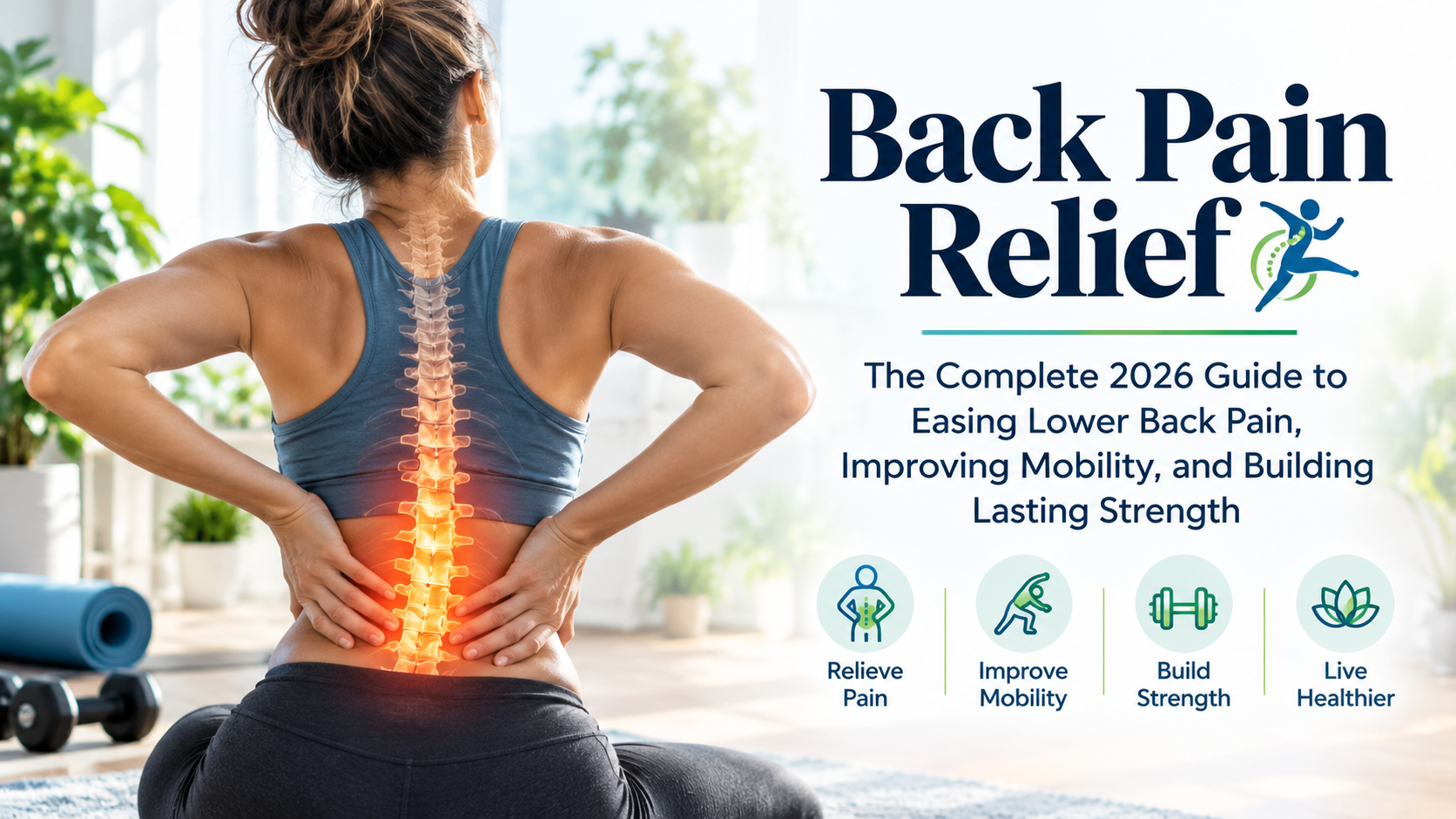
Back discomfort can make everyday activities feel surprisingly difficult. Sitting at a desk, getting out of bed, bending to pick something up, or taking a long walk may become uncomfortable when the muscles, joints, or other structures around the spine are irritated. Some episodes improve within days, while others recur or persist long enough to interfere with sleep, exercise, and work.
Finding effective back pain relief starts with understanding the likely cause, recognising symptoms that need medical attention, and choosing practical steps that support recovery. Most episodes of uncomplicated lower back pain improve without surgery, and staying gently active is often more helpful than prolonged bed rest. However, severe symptoms or certain warning signs require prompt medical assessment.
What Causes Back Pain?


The lower back, or lumbar spine, supports much of the body’s weight while allowing bending, twisting, and other movements. It contains vertebrae, intervertebral discs, joints, ligaments, nerves, and surrounding muscles. Discomfort can develop when these structures are strained or irritated, although the exact source is not always identifiable.
Common causes include muscle strains, ligament sprains, age-related changes in spinal discs, osteoarthritis, and irritation of nerves. A sudden increase in lifting, an unfamiliar workout, or repeated bending may trigger a muscular flare-up. In other cases, a herniated disc can irritate a nerve and cause pain that travels into the buttock or leg.
Daily habits may contribute, too. Remaining in one position for hours, sleeping poorly, or increasing exercise intensity too quickly can make symptoms harder to manage. Still, back discomfort does not automatically mean the spine is damaged. Many episodes occur without a serious underlying condition, and pain intensity alone does not reliably indicate the extent of tissue injury.
Warning Signs That Need Medical Attention
Most uncomplicated back pain can initially be managed with sensible self-care, but some symptoms require urgent evaluation. Seek emergency medical care if you develop new difficulty controlling your bladder or bowels, inability to urinate, numbness around the groin or saddle area, or rapidly worsening weakness in one or both legs. These can be signs of serious nerve compression.
Prompt medical assessment is also important when back pain follows a major accident, accompanies fever or feeling seriously unwell, or occurs with unexplained weight loss or a history of cancer. Severe pain that is constant, progressively worsening, or especially troubling at night should also be discussed with a healthcare professional. These symptoms do not always indicate a dangerous condition, but they should not be ignored.
| Symptom or situation | Recommended action |
|---|---|
| Mild stiffness after activity | Try gentle movement and monitor symptoms |
| Pain that persists or repeatedly returns | Arrange a medical or physiotherapy assessment |
| Pain travelling down the leg with numbness | Seek clinical assessment, especially if worsening |
| New bladder or bowel control problems or saddle numbness | Seek emergency medical care |
| Severe pain after a major injury | Seek urgent medical evaluation |
| Back pain with fever or serious illness | Obtain urgent medical assessment |
Effective Home Treatments for Back Pain Relief

For mild, recent discomfort without warning signs, simple home care may help. Applying a wrapped cold pack for short periods can reduce discomfort after a recent strain, while gentle heat may ease muscle tightness and stiffness. Protect your skin from direct contact with ice or very hot surfaces, and stop if either treatment causes irritation.
Continue ordinary movement as much as your symptoms allow. Short walks, changing positions regularly, and breaking up long periods of sitting can prevent stiffness from becoming more troublesome. If sitting for work aggravates symptoms, try standing briefly or walking around at regular intervals rather than remaining in one position throughout the day.
Avoid prolonged bed rest unless a clinician has advised it for a specific reason. Too much inactivity can reduce strength and make returning to everyday activities more difficult. If an activity sharply increases pain or causes new symptoms down the leg, reduce the intensity and seek advice if the problem persists.
Gentle Exercises to Improve Mobility and Strength


Appropriate movement can help restore confidence, maintain mobility, and strengthen muscles that support the spine. The best starting exercises depend on the person’s symptoms and abilities, so no single routine suits every back condition. Begin gently and use movements that feel comfortable rather than forcing your body into a deep stretch.
Examples include short walks, gentle pelvic tilts, and controlled glute bridges if these movements do not worsen symptoms. A physiotherapist may also recommend exercises for the abdominal muscles, hips, and back extensors. These muscles work together to control the trunk during lifting, walking, and everyday movement.
Consistency matters more than intensity at the beginning. Try a small amount of comfortable movement, then increase duration or repetitions gradually as your tolerance improves. Stop and seek professional advice if exercise causes worsening pain, new weakness, numbness, or symptoms that travel farther down the leg.
Posture, Sitting, and Sleeping Habits
Posture can influence comfort, but there is no single perfect position that prevents every episode of back pain. The most useful approach is to vary your position and avoid staying still for too long. When working at a desk, keep your feet supported, place the screen at a comfortable height, and position the keyboard so you do not need to reach forward constantly.
When lifting objects, keep the load close to your body, bend your hips and knees as appropriate, and avoid twisting under heavy load. For example, when moving a box, turn your feet to change direction instead of rotating your torso while holding the weight. If an object is too heavy or awkward, ask for help or divide the load.
Sleep can also affect recovery. Choose a position that feels comfortable and supports restful sleep. Some people prefer lying on their side with a pillow between their knees, while others feel better on their back with a pillow beneath their knees. These are comfort strategies, not mandatory positions; the best choice is the one that allows you to rest without aggravating symptoms.
Medication and Professional Treatment Options
Medication may provide short-term symptom relief, allowing some people to move more comfortably while recovering. Nonsteroidal anti-inflammatory drugs (NSAIDs), such as ibuprofen, may help certain types of back pain, but they are not suitable for everyone. They can cause stomach bleeding, kidney problems, and cardiovascular complications, particularly in people with certain medical conditions or those taking interacting medicines. Consult a pharmacist or healthcare professional if you are unsure what is safe for you.
A clinician may recommend physiotherapy when pain persists, movement is limited, or symptoms keep returning. Treatment may include a tailored exercise plan, education about activity, and strategies to rebuild strength and confidence. Manual therapy may be used as part of a broader treatment plan, but it should not replace appropriate exercise and self-management.
Imaging, such as an X-ray or MRI, is not routinely needed for every episode. A healthcare professional may order it when symptoms suggest a serious underlying condition or when the result is likely to change treatment decisions. Surgery is reserved for selected cases, such as certain forms of severe nerve compression or structural problems that have not responded to appropriate care.
Lifestyle Changes That Support Long-Term Recovery


Regular physical activity helps maintain muscle strength, endurance, and general health. Walking, swimming, cycling, and appropriately adapted strength training may all be useful, depending on the person’s symptoms and preferences. The goal is not to avoid every movement that could cause discomfort, but to rebuild capacity gradually and safely.
Nutrition and sleep support overall recovery, too. A balanced diet with adequate protein, vegetables, fruit, whole grains, and healthy fats helps meet the body’s general nutritional needs. Getting sufficient sleep and managing stress may also improve how well you cope with persistent discomfort, although neither replaces medical assessment when warning signs are present.
For recurring symptoms, consider keeping a simple activity diary. Record what you were doing when discomfort increased, how long it lasted, and what helped. This can reveal patterns, such as pain after prolonged sitting or sudden increases in training, and provide useful information for a clinician or physiotherapist.
Common Mistakes That Can Delay Recovery
One common mistake is avoiding all movement because of fear that activity will damage the spine. For many people with uncomplicated back pain, gradual movement is part of recovery. Another mistake is pushing through severe pain in the belief that harder exercise will produce faster results. Both extremes can be unhelpful; the aim is to find a manageable level of activity and build from there.
Relying exclusively on massage, heat, pain medication, or stretching may also leave the underlying problem insufficiently addressed. These approaches can sometimes ease symptoms, but longer-term improvement often requires understanding activity triggers, restoring movement, and gradually rebuilding strength. If symptoms repeatedly return despite sensible changes, a professional assessment can help identify a more suitable plan.
Frequently Asked Questions
What is the fastest way to get back pain relief?
There is no single fastest method for everyone. For mild back discomfort without warning signs, gentle movement, short walks, and heat or cold applied safely may provide relief. Avoid prolonged bed rest, and seek medical advice if symptoms are severe, worsening, or not improving.
Is walking good for lower back pain?
Walking is often helpful for uncomplicated lower back pain because it encourages movement without requiring heavy loading. Begin with a comfortable duration and increase gradually. If walking causes significant worsening, a new limp, weakness, or increasing leg symptoms, stop and seek professional advice.
Should I use heat or ice for back pain?
Cold may be useful after a recent strain, while heat can soothe stiffness or muscle tightness. Both are options for short-term comfort, and neither treats every underlying cause. Wrap cold packs, avoid extreme temperatures, and discontinue treatment if your skin becomes painful or irritated.
Can exercise make back pain worse?
Exercise can aggravate symptoms if the movement, load, or intensity is unsuitable. Start with gentle activities and progress gradually. Sharp or worsening pain, new numbness, weakness, or symptoms spreading farther down the leg are reasons to stop and obtain medical advice.
When should I see a doctor for back pain?
Arrange an assessment if the pain persists for several weeks, repeatedly returns, interferes with daily activities, or travels down your leg with numbness or tingling. Seek emergency care for new bladder or bowel dysfunction, saddle numbness, rapidly worsening leg weakness, or severe pain after major trauma.
Can sleeping position help relieve back pain?
A comfortable sleeping position may reduce pressure and help you rest. Some people prefer side sleeping with a pillow between their knees, while others prefer lying on their back with support beneath the knees. Choose the position that feels comfortable and does not worsen your symptoms.
Does back pain always mean a slipped disc?
No. Back pain can result from muscle strains, joint irritation, osteoarthritis, disc changes, nerve irritation, or other causes. A slipped or herniated disc is only one possibility, and symptoms alone cannot reliably establish the diagnosis. Persistent or concerning symptoms should be assessed by a qualified professional.
Conclusion
Effective back pain relief usually begins with understanding your symptoms, staying gently active when it is safe, and choosing treatments that fit your circumstances. Comfortable movement, gradual strengthening, sensible activity adjustments, and adequate recovery can help many people return to everyday activities without relying on prolonged rest.
The most important takeaway is to balance patience with appropriate action. Do not assume every ache signals serious damage, but never ignore warning signs such as new bladder or bowel problems, saddle numbness, or rapidly worsening weakness. When symptoms persist or interfere with daily life, professional assessment can help you identify the cause and build a safer, more effective recovery plan.