
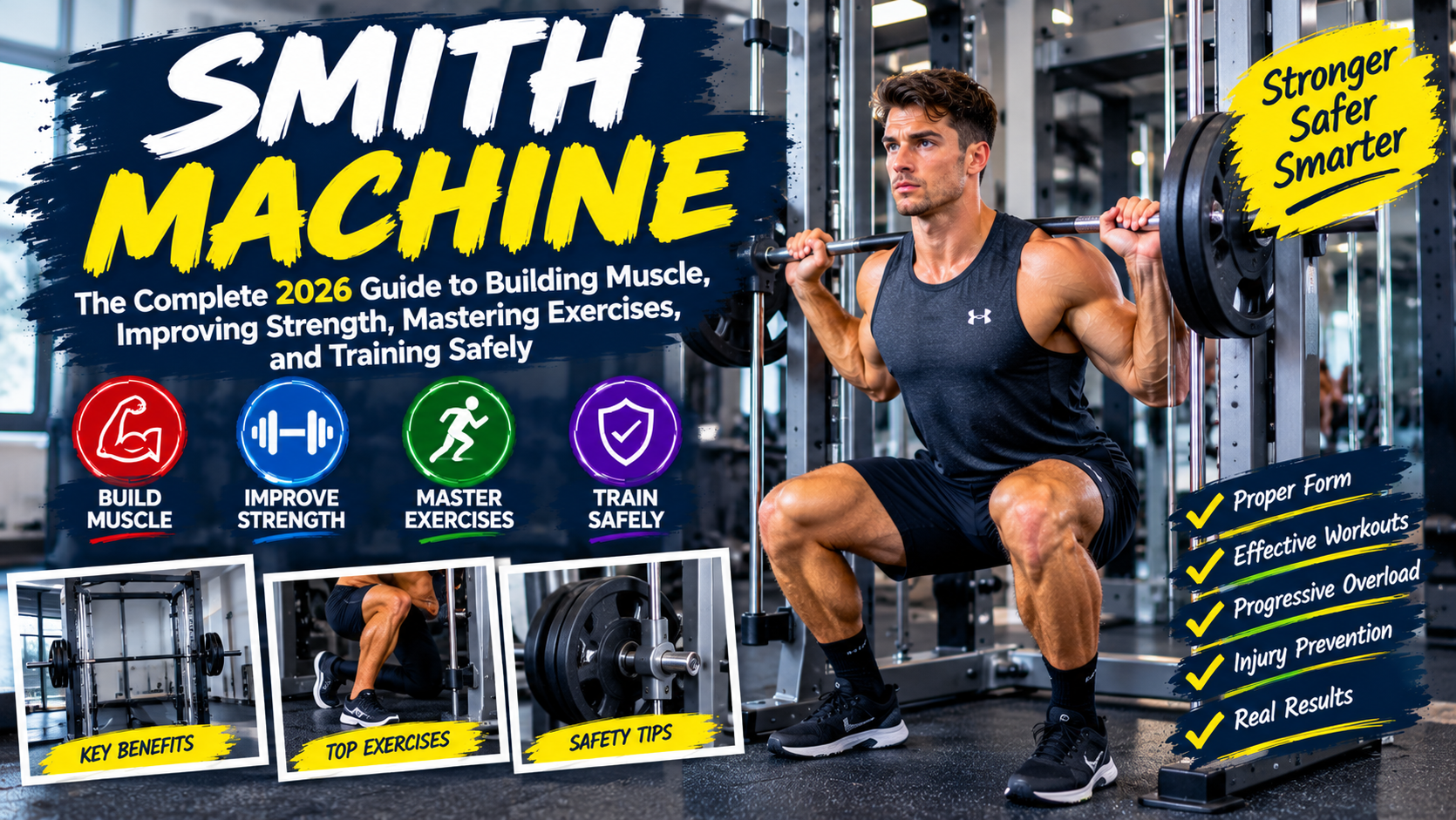
A smith machine is a popular piece of gym equipment designed to support controlled barbell movements along a fixed vertical or slightly angled track. It is commonly used for squats, bench presses, shoulder presses, lunges, and other resistance-training exercises. By guiding the bar along a predetermined path, it can make certain movements easier to control and allow lifters to train without needing a spotter for every set.
However, guided movement does not automatically make every exercise safer or more effective. Proper setup, suitable resistance, correct technique, and an understanding of your fitness goals remain essential. Whether you are new to weightlifting or an experienced gym-goer looking to add variety to your program, learning how this equipment works can help you use it more effectively.
This guide explores its benefits, limitations, best exercises, setup techniques, and practical ways to incorporate it into a balanced strength-training routine.
What Is a Smith Machine?

A smith machine is a resistance-training station consisting of a barbell attached to vertical or angled steel rails. The bar moves along these rails rather than following the freely controlled path of a traditional barbell. Most models include adjustable safety stops and hooks that allow users to secure the bar at different heights.
Depending on the model, the bar may use counterbalancing to reduce its effective starting weight. This means the bar’s actual weight and the resistance you feel can differ between machines, so it is worth checking the manufacturer’s specifications rather than assuming every bar weighs the same.
The main purpose of this equipment is to provide a guided lifting path. For example, someone performing a squat can rotate the bar to lock it into position if they need to stop a repetition. This feature can be useful for beginners learning resistance training and experienced lifters completing certain exercises without a training partner.
Benefits of Using Guided Barbell Equipment
One major advantage is stability. Because the bar follows a fixed track, you do not need to control its movement in every direction as you would with a free-weight barbell. This can make it easier to concentrate on the target muscles and practice consistent repetitions.
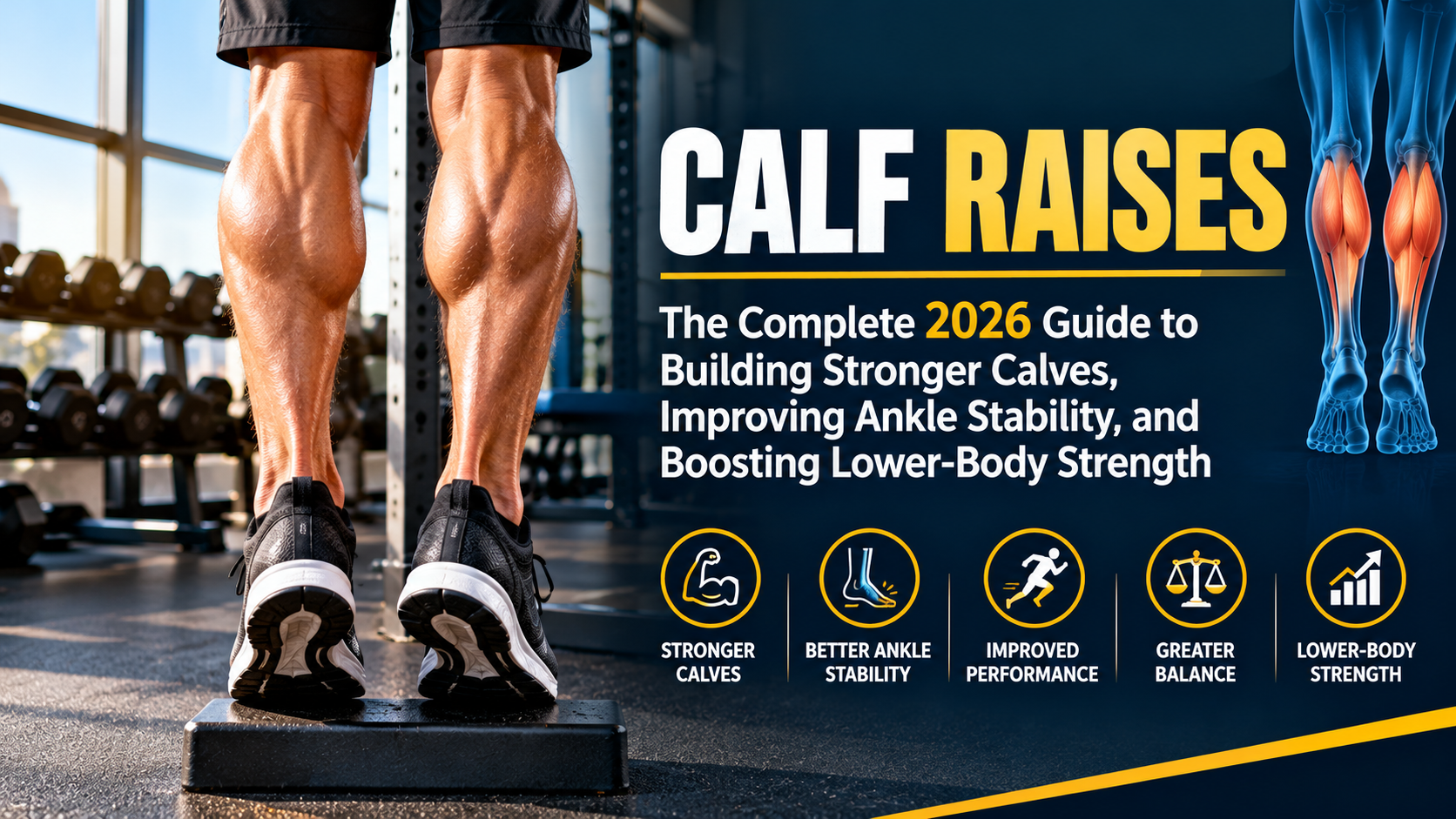
Another benefit is exercise versatility. A single station can support several movements, including squats, presses, calf raises, hip thrusts, and split squats. For people training in a busy commercial gym or a compact home gym, that versatility can make the equipment a practical addition to a strength program.
The built-in hooks and adjustable safety catches are also useful. When positioned correctly, they can help limit how far the bar descends if you cannot complete a repetition. However, these mechanisms must be set at appropriate heights, and users should understand how to engage them before lifting challenging loads.
It is important to remember that guided lifting is not automatically superior to free weights. Barbells and dumbbells require greater independent stabilization, while a guided bar can help isolate particular movements. Both approaches can support muscle growth and strength when programmed appropriately.
Best Exercises to Perform on a Smith Machine


The most useful exercises are those that fit your anatomy, mobility, training experience, and goals. Start with manageable resistance, learn the movement pattern, and adjust your position until the exercise feels controlled and comfortable.
| Exercise | Primary muscles | Training benefit |
|---|---|---|
| Squat | Quadriceps, glutes | Lower-body strength |
| Bench press | Chest, triceps, front shoulders | Upper-body pushing strength |
| Shoulder press | Deltoids, triceps | Shoulder strength |
| Calf raise | Gastrocnemius, soleus | Calf development |
| Hip thrust | Glutes, hamstrings | Hip-extension strength |
| Split squat | Quadriceps, glutes | Single-leg strength and balance |
| Romanian deadlift | Hamstrings, glutes | Posterior-chain development |
Squats
Smith squats can help you practice a consistent squat pattern and focus on the quadriceps and glutes. Set the bar at a comfortable upper-back position, place your feet where your body can descend naturally, and lower yourself under control. Your heels should remain grounded, and your knees should move comfortably in line with your toes.
Foot placement matters because the fixed bar path may not suit every lifter equally. Avoid forcing your body into an awkward position simply to follow the rails. If you experience joint pain or cannot maintain stable movement, reduce the load, adjust your stance, or choose another squat variation.
Bench presses and shoulder presses
A guided bench press can be useful for developing chest and triceps strength. Position the bench so the bar reaches the intended point on your chest without forcing your shoulders into an uncomfortable position. Keep your feet planted and avoid bouncing the bar off your body.
For shoulder presses, adjust the bench and bar height so you can press through a comfortable range of motion. People with limited shoulder mobility may find overhead pressing uncomfortable, so a lighter load or alternative exercise may be more appropriate. Always set the safety catches before beginning a challenging set.
How to Set Up and Use the Equipment Correctly
Before loading the bar, inspect the station and make sure the rails, hooks, and safety catches operate properly. Adjust the bar height to match your starting position, then set the safety stops just below the lowest point you intend to reach during the exercise. Test the setup with an unloaded bar before adding weight.
Your body position should match the exercise. For squats, establish a stable stance and position the bar securely across your upper back rather than directly on your neck. For presses, align the bench so the bar travels through a comfortable movement path. For hip thrusts, use appropriate padding and ensure the bench remains stable.
During each repetition, use controlled movement rather than relying on momentum. Breathe steadily, brace your trunk when needed, and avoid twisting your body to compensate for a difficult lift. A mirror can help you check alignment, but it should not replace attention to how the movement feels.
A useful principle is: “Set the equipment for your movement, not your movement for the equipment.” The fixed path is a feature, but your comfort, control, and safe range of motion should determine whether a particular exercise is suitable.
Smith Machine vs. Free Weights
The main difference between a guided barbell and free weights is how much the lifter controls the bar’s movement. A traditional barbell requires independent stabilization and allows the bar to move through a path determined by your technique and body mechanics. A guided station constrains that path, which can make some exercises easier to manage but less natural for certain lifters.
Neither method is universally better. Research on resistance training, including work published in journals such as Sports Medicine, supports using exercise selection and training variables that match the individual’s goals, experience, and physical capabilities. The best program may combine both methods rather than relying on only one.
| Feature | Guided barbell | Free-weight barbell |
|---|---|---|
| Bar movement | Fixed vertical or angled track | Freely controlled path |
| Stabilization demand | Generally lower | Generally higher |
| Solo lifting | Safety hooks can help | Spotter or suitable rack safeties may be needed |
| Exercise flexibility | Limited by rail path | Greater freedom of movement |
| Muscle development | Effective when appropriately programmed | Effective when appropriately programmed |
| Learning priorities | Setup and track-specific technique | Bar control and stabilization |
For example, a lifter may use a guided squat for controlled hypertrophy training and free-weight squats to develop bar control and practice a more natural movement path. The choice depends on training goals, equipment access, comfort, and experience.
Building a Workout Around Guided Resistance Training
A balanced workout should train the major muscle groups rather than focus entirely on one area. Beginners may benefit from two or three full-body sessions per week, while more experienced lifters might use upper-body and lower-body sessions depending on their recovery needs.
A simple session could include squats, bench presses, Romanian deadlifts, and calf raises, followed by suitable pulling exercises such as lat pulldowns or seated rows. The pulling movements are important because a guided barbell station does not replace every exercise needed for balanced development.
For many beginners, two or three working sets of approximately eight to twelve repetitions can be a reasonable starting point for suitable exercises. Use a load that allows controlled repetitions, and rest long enough to maintain good technique. These ranges are guidelines, not rules; heavier or lighter approaches may suit different goals.
Progress gradually. Once you can complete the intended repetitions with consistent form and without excessive strain, consider a small increase in resistance. Keep a training log to track weights, repetitions, technique notes, and recovery. If performance deteriorates or pain develops, reduce the workload and reassess your approach.
Common Mistakes and How to Avoid Them
A frequent mistake is assuming that the rails make every lift risk-free. Safety hooks help only when they are set correctly and used as intended. Before lifting, test the locking mechanism and catches, and never rely on equipment you have not checked.
Another mistake is using too much weight. The guided path can create a sense of confidence that encourages lifters to load the bar beyond their current ability. Heavy resistance is not inherently wrong, but it should match your technique and experience. If you cannot control the lowering phase or maintain a stable position, reduce the load.
Poor setup can also make an otherwise useful exercise uncomfortable. A bench placed too far forward, an unsuitable squat stance, or an incorrect bar height can alter the movement. Make small adjustments, test the unloaded bar, and stop if discomfort persists.
Finally, avoid neglecting free-weight exercises, pulling movements, mobility, or cardiovascular fitness. Strength training works best as part of a broader program that includes adequate recovery, balanced nutrition, and regular physical activity.
Frequently Asked Questions
Is a smith machine good for beginners?
Yes, it can be useful for beginners because the guided bar path may make certain movements easier to control. However, beginners still need to learn correct setup, technique, breathing, and safety-catch use. Start with light resistance and seek qualified coaching if you are unsure how to perform an exercise.
Can you build muscle using a smith machine?
Yes. It can support muscle growth when exercises provide sufficient challenge and the training program includes appropriate volume, effort, and progression. Muscle development also depends on adequate protein, overall nutrition, sleep, and consistency. Free weights are not essential for every muscle-building goal.
Is it safer than using a barbell?
It offers useful safety features, including rotating hooks and adjustable stops, but it is not automatically safer for every exercise or person. The fixed movement path may feel uncomfortable for some body types, and incorrect setup can still create risk. Use appropriate loads and learn how to operate the safety mechanisms.
Can you squat on a smith machine?
Yes, squats are one of its common uses. Position the bar comfortably across your upper back, select a stable stance, and descend only as far as you can maintain control without pain. Since the bar path is fixed, experiment carefully with foot placement instead of forcing an uncomfortable position.
Does it work the same muscles as free weights?
It can train many of the same major muscle groups, including the quadriceps, glutes, chest, shoulders, and triceps. However, the fixed bar path changes stabilization demands and may affect how an exercise feels. Both methods can be effective, but they are not identical in movement or training demands.
How much weight should beginners use?
Choose a resistance that allows you to complete your planned repetitions with controlled technique and without sharp pain. The starting load varies by exercise, individual strength, and the machine’s bar weight. Begin conservatively, test the movement, and increase resistance gradually as your control improves.
Conclusion
The smith machine can be a valuable tool for building muscle, improving strength, and adding variety to a resistance-training program. Its guided bar path, adjustable hooks, and versatility make it useful for exercises such as squats, bench presses, shoulder presses, and calf raises.
The best results come from using the equipment thoughtfully: set the bar and safety stops correctly, choose resistance you can control, maintain comfortable movement patterns, and progress gradually. Combine guided exercises with suitable pulling movements, free weights when appropriate, balanced nutrition, and sufficient recovery.
The key takeaway: equipment alone does not build strength. Consistent training, sound technique, and gradual progression turn a useful gym station into an effective part of a long-term fitness plan.