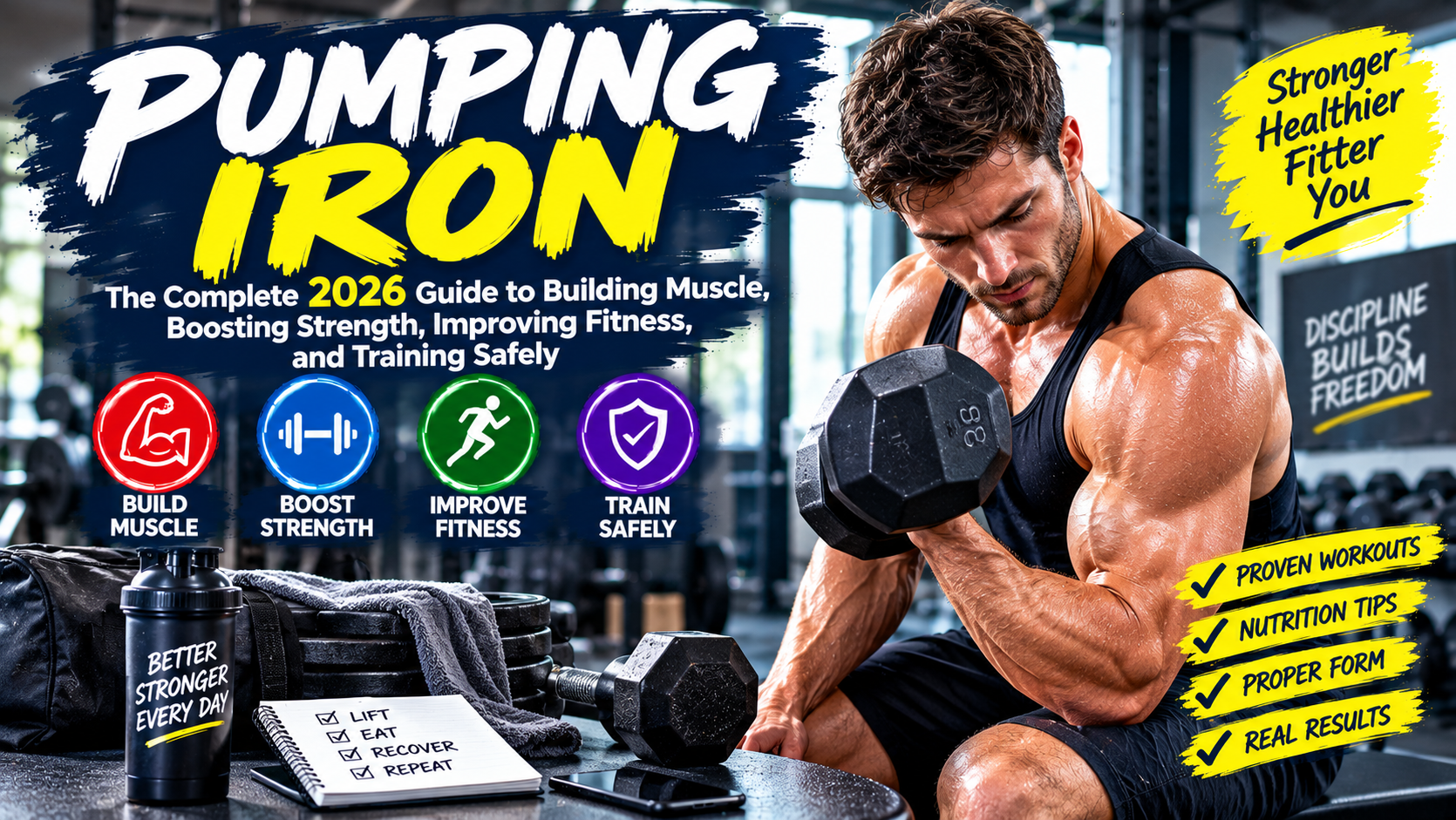
Pumping iron is more than lifting weights to build bigger muscles. It is a form of resistance training that can improve muscular strength, support bone health, enhance physical performance, and make everyday activities easier. Whether you are a beginner stepping into the gym for the first time or an experienced lifter refining your routine, understanding how strength training works can help you achieve better results.
From dumbbell curls and barbell squats to machine-based exercises and progressive overload, effective weight training combines proper technique, consistent effort, recovery, and nutrition. The goal is not simply to lift the heaviest weight possible. It is to challenge your muscles intelligently while allowing your body to adapt and grow stronger.
This guide explains the benefits of lifting weights, essential exercises, workout structure, nutrition, common mistakes, and practical strategies for building a sustainable fitness routine.
What Does Pumping Iron Mean?
Pumping iron is an informal expression for lifting weights as part of a strength-training or bodybuilding routine. It typically involves using barbells, dumbbells, weight machines, kettlebells, or other resistance equipment to challenge the muscles.
When you lift a weight, your muscles produce force against resistance. This stimulates muscular adaptation, helping your body improve strength and, depending on training volume, nutrition, and recovery, potentially increase muscle size. These changes develop gradually through repeated training sessions rather than through one intense workout.
For example, a beginner might start with light dumbbells for shoulder presses and gradually increase the resistance as the exercise becomes easier. An experienced athlete might use a barbell squat to develop lower-body strength. Both approaches follow the same principle: apply a manageable challenge, maintain good technique, and progress over time.
The Major Benefits of Weight Training
Regular resistance training can benefit people across different ages and fitness levels. The results depend on individual health, training consistency, exercise selection, and recovery habits.
Muscle growth and strength
One of the main reasons people lift weights is to develop stronger, more capable muscles. Resistance training stimulates muscle protein remodeling and adaptation. With adequate training and nutrition, this process can contribute to hypertrophy, the increase in muscle size.
Stronger muscles can make everyday activities, such as carrying groceries, climbing stairs, lifting luggage, and moving furniture, feel more manageable. For athletes, improved strength may also support performance in sports that require acceleration, jumping, balance, or physical control.
Bone health and functional fitness
Weight-bearing activities and resistance exercises place mechanical stress on bones, encouraging the body to maintain or improve bone strength. Strength training can also support balance, coordination, and functional independence, particularly as people age.
However, resistance training should match the individual’s ability and health status. People with osteoporosis, significant joint problems, or other medical concerns may benefit from professional guidance to choose appropriate exercises and loading levels.
Metabolic health and body composition
Building muscle can support body composition goals, especially when combined with balanced nutrition and regular physical activity. Resistance training also uses energy during exercise and can increase energy expenditure during recovery.
It is important to keep expectations realistic. Lifting weights alone does not guarantee fat loss, and muscle growth does not happen overnight. For people aiming to reduce body fat, a sustainable calorie deficit, adequate protein, sleep, and regular movement usually work better than extreme workouts or restrictive diets.
Essential Exercises for a Balanced Strength Routine
A well-designed routine trains the major muscle groups rather than focusing exclusively on visible muscles such as the biceps and chest. Compound exercises are particularly useful because they involve multiple joints and muscle groups at once.


The best exercises depend on your experience, mobility, equipment, and goals. Beginners can start with machines or lighter dumbbells before progressing to more technically demanding movements.
| Exercise | Primary muscles targeted | Main benefit |
|---|---|---|
| Squat | Quadriceps, glutes | Lower-body strength |
| Bench press | Chest, triceps, front shoulders | Upper-body pushing strength |
| Lat pulldown | Latissimus dorsi, biceps | Back strength and pulling ability |
| Romanian deadlift | Hamstrings, glutes, back muscles | Hip-hinge strength |
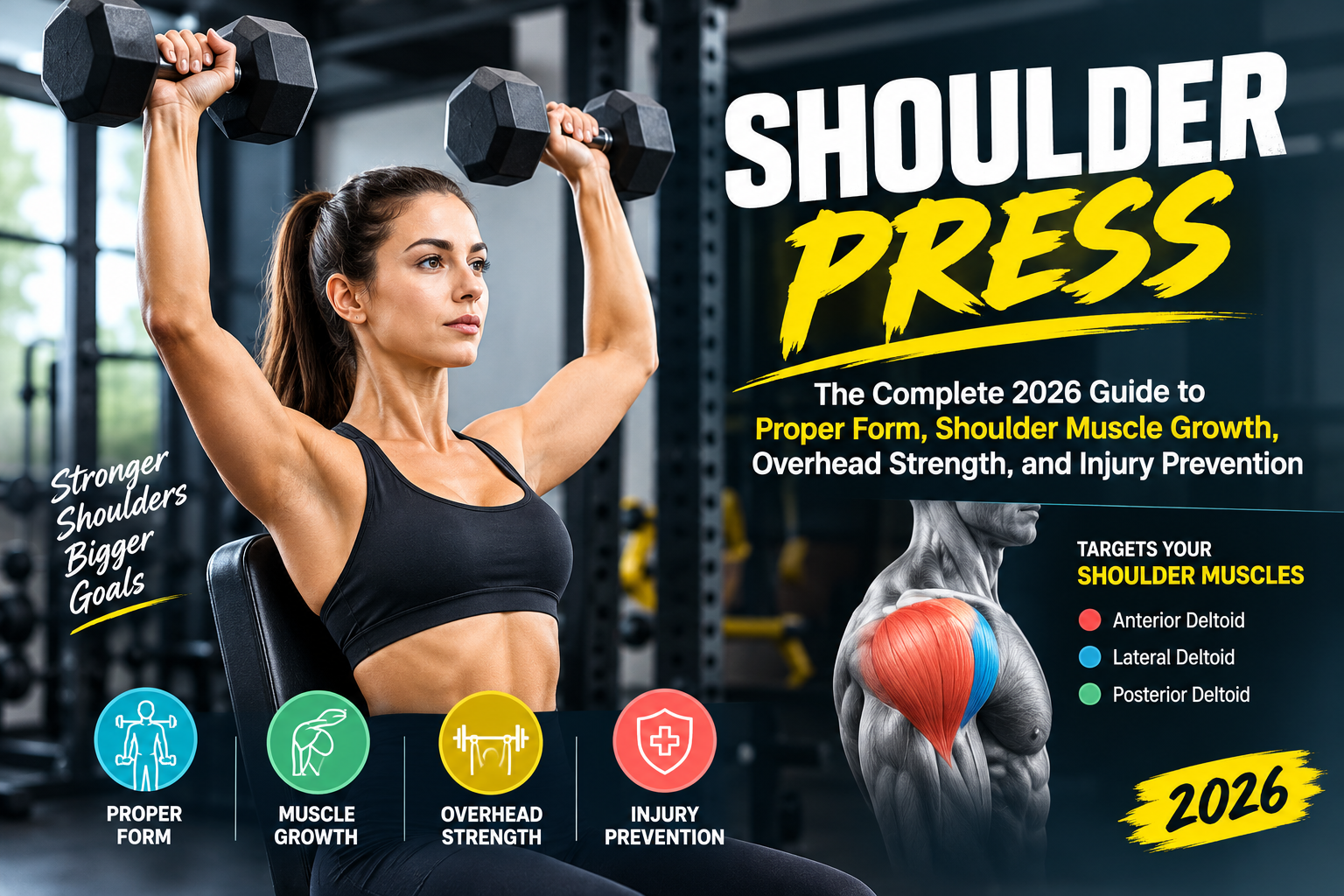
| Dumbbell shoulder press | Shoulders, triceps | Overhead strength |
| Biceps curl | Biceps | Elbow-flexion strength |
| Plank | Core muscles | Trunk stability |
Compound movements generally form the foundation of a balanced program, while isolation exercises help target specific muscles. For instance, squats train several lower-body muscles together, whereas leg extensions emphasize the quadriceps.
A practical approach is to choose exercises that you can perform comfortably with controlled movement. If an exercise causes sharp pain, stop and reassess your technique or seek guidance from a qualified fitness professional.
How to Build a Beginner-Friendly Weightlifting Plan
A beginner does not need an advanced bodybuilding split or a gym session lasting two hours. A simple full-body program performed two or three days per week can provide an effective starting point.
Each session should include movements for the legs, hips, pushing muscles, pulling muscles, and core. Start with manageable resistance and prioritize consistent technique. For many beginners, one to three working sets per exercise are sufficient initially, with the number of repetitions adjusted to the exercise and training goal.
Here is an example of a simple full-body workout:

| Exercise | Sets | Repetitions |
|---|---|---|
| Goblet squat | 2–3 | 8–12 |
| Dumbbell bench press | 2–3 | 8–12 |
| Lat pulldown | 2–3 | 8–12 |
| Romanian deadlift with dumbbells | 2 | 8–10 |
| Dumbbell shoulder press | 2 | 8–12 |
| Plank | 2–3 | 20–40 seconds |
These numbers are starting guidelines, not strict requirements. Rest for around one to three minutes between sets depending on the exercise, intensity, and your recovery. Allow sufficient recovery between sessions, especially when training unfamiliar movements.
As your fitness improves, increase the challenge gradually. You might add a repetition, improve your range of motion, or use a slightly heavier weight while maintaining good form. Consistency matters more than making every workout exhausting.
Progressive Overload: The Key to Long-Term Progress
Progressive overload means gradually increasing the training challenge so your muscles have a reason to adapt. Without an appropriate increase in demand, your progress may eventually slow as your body becomes accustomed to the same routine.
There are several ways to apply this principle. You can lift a slightly heavier weight, complete more repetitions with the same weight, perform an additional set, or improve your technique and control. Not every variable needs to increase at once.
For example, imagine you can perform eight controlled dumbbell curls with a particular weight. Over several sessions, you work toward completing twelve repetitions with the same technique. Once that becomes manageable, you may increase the weight slightly and return to a lower repetition count.
The key is to avoid rushing. Increasing resistance too quickly can compromise technique and raise injury risk. A useful training rule is: progress when your current workload feels controlled, not simply when you feel impatient for heavier weights.
Nutrition and Recovery for Better Results
Effective weight training depends on more than what happens in the gym. Muscles adapt during recovery, and your body needs sufficient energy, protein, fluids, and sleep to support the process.
Protein provides amino acids that help repair and build muscle tissue. Useful sources include eggs, fish, chicken, dairy products, beans, lentils, tofu, and lean meat. People who train regularly may benefit from spreading protein intake across meals rather than relying on a single large serving.
Carbohydrates also play an important role by providing energy for demanding workouts. Whole grains, potatoes, fruit, and other carbohydrate-rich foods can help replenish energy stores. Healthy fats support normal body functions, while vegetables and fruit provide vitamins, minerals, and fiber.
Recovery is equally important. Most adults should aim for seven to nine hours of sleep per night, although individual needs vary. Avoid repeatedly training the same muscles intensely without allowing adequate recovery, and adjust your workload if persistent fatigue or declining performance develops.
As exercise physiologist William J. Kraemer and colleagues have discussed in resistance-training research, training outcomes depend on the interaction of variables such as intensity, volume, frequency, and recovery. In practical terms, no single workout variable replaces a well-rounded, consistent program.
Common Weightlifting Mistakes and How to Fix Them
One common mistake is lifting too much weight too soon. Heavy loads can be useful when appropriate, but struggling through repetitions with uncontrolled movement can undermine technique. Choose a weight that allows you to complete the intended repetitions with stable posture and a controlled range of motion.
Another problem is neglecting certain muscle groups. Some gym-goers repeatedly train the chest and arms while skipping their back, legs, or core. Over time, this can create an unbalanced routine and limit overall progress. A full-body plan helps distribute training across the major muscle groups.
Skipping warm-ups is another avoidable error. Before demanding sets, spend several minutes moving gently and performing exercise-specific warm-up sets with lighter resistance. You do not need to exhaust yourself before the workout; the goal is to prepare for the movements ahead.
Finally, avoid treating soreness as the only sign of success. Muscle soreness can occur after unfamiliar or demanding exercise, but a productive workout does not need to leave you in pain. Track improvements in strength, technique, consistency, and recovery instead of judging progress by how sore you feel the next day.
How to Make Weight Training a Sustainable Habit
The most effective program is one you can maintain. Choose a realistic schedule around work, school, family responsibilities, and other commitments. If you can reliably train three times per week, that is generally more useful than planning six sessions and repeatedly missing them.
Keep a simple workout log that records exercises, weights, sets, repetitions, and relevant notes about technique. Reviewing your records helps you identify progress and recognize when your training has stalled. It also prevents you from relying on memory when deciding whether to increase resistance.
It helps to set measurable goals. Instead of saying, “I want to get stronger,” choose a specific target, such as improving your squat technique or gradually increasing the number of controlled push-ups you can perform. Goals should reflect your experience, health, and available training time.
For long-term success, think of exercise as a skill and a routine rather than a short-term challenge. Some weeks will be better than others. Returning consistently, adjusting when necessary, and avoiding an all-or-nothing mindset are essential parts of lasting fitness.
Frequently Asked Questions
Is pumping iron good for beginners?
Yes, resistance training can be suitable for beginners when exercises, loads, and training frequency match their ability. Start with manageable weights, learn proper technique, and increase difficulty gradually. Machines, resistance bands, and bodyweight exercises can also help develop foundational strength before progressing to heavier free weights.
How many days a week should I lift weights?
Many beginners can start with two or three full-body sessions per week, with recovery time between demanding sessions. More experienced lifters may benefit from additional training days, depending on their goals, total workload, and recovery. The best schedule is one that allows consistent progress without excessive fatigue.
Can lifting weights help with fat loss?
Yes, strength training can support fat-loss goals by helping preserve or build muscle while improving overall fitness. However, fat loss generally requires a sustained calorie deficit. Combining resistance training with regular movement, balanced nutrition, and adequate sleep is often more effective than relying on weightlifting alone.
Should I do cardio before or after lifting weights?
It depends on your main goal. If improving strength is your priority, perform demanding weightlifting exercises before intense cardio so fatigue does not compromise your lifting performance. If endurance is your primary goal, you may choose to prioritize cardio. Light cardio before training can serve as part of a warm-up.
How long does it take to see results from weight training?
Some beginners notice improvements in coordination and strength within a few weeks, partly because the nervous system becomes more efficient at performing movements. Visible muscle growth often takes longer and varies with training history, nutrition, genetics, sleep, and consistency. Evaluate progress over months rather than expecting dramatic changes after a few sessions.
Is it better to lift heavy weights or do more repetitions?
Both approaches can improve strength and muscle development when the training effort and overall program are appropriate. Heavier loads are particularly useful for developing maximal strength, while moderate or lighter loads can also build muscle when sets are sufficiently challenging. Good technique, progressive overload, and a suitable training plan matter more than one repetition range alone.
Can I lift weights every day?
Some people train daily by alternating muscle groups and adjusting intensity, but daily hard sessions are unnecessary for most beginners. Recovery needs depend on training volume, exercise selection, sleep, nutrition, and experience. If performance consistently declines or fatigue persists, reduce the workload and allow more recovery time.
Conclusion: Build Strength Through Consistency, Not Shortcuts
Pumping iron can be a valuable part of a healthier lifestyle, helping improve muscular strength, support bone health, develop functional fitness, and contribute to body-composition goals. The best results come from combining appropriate exercises, sound technique, progressive overload, balanced nutrition, and sufficient recovery.
You do not need to start with heavy barbells or complicated bodybuilding routines. Begin with manageable resistance, train the major muscle groups, record your progress, and increase the challenge as your ability improves. If you have an existing medical condition, significant pain, or concerns about exercise safety, seek advice from an appropriate healthcare professional.
The final takeaway: lasting strength is built one well-executed repetition at a time. Focus on steady progress, respect recovery, and make training a habit you can sustain for years.