
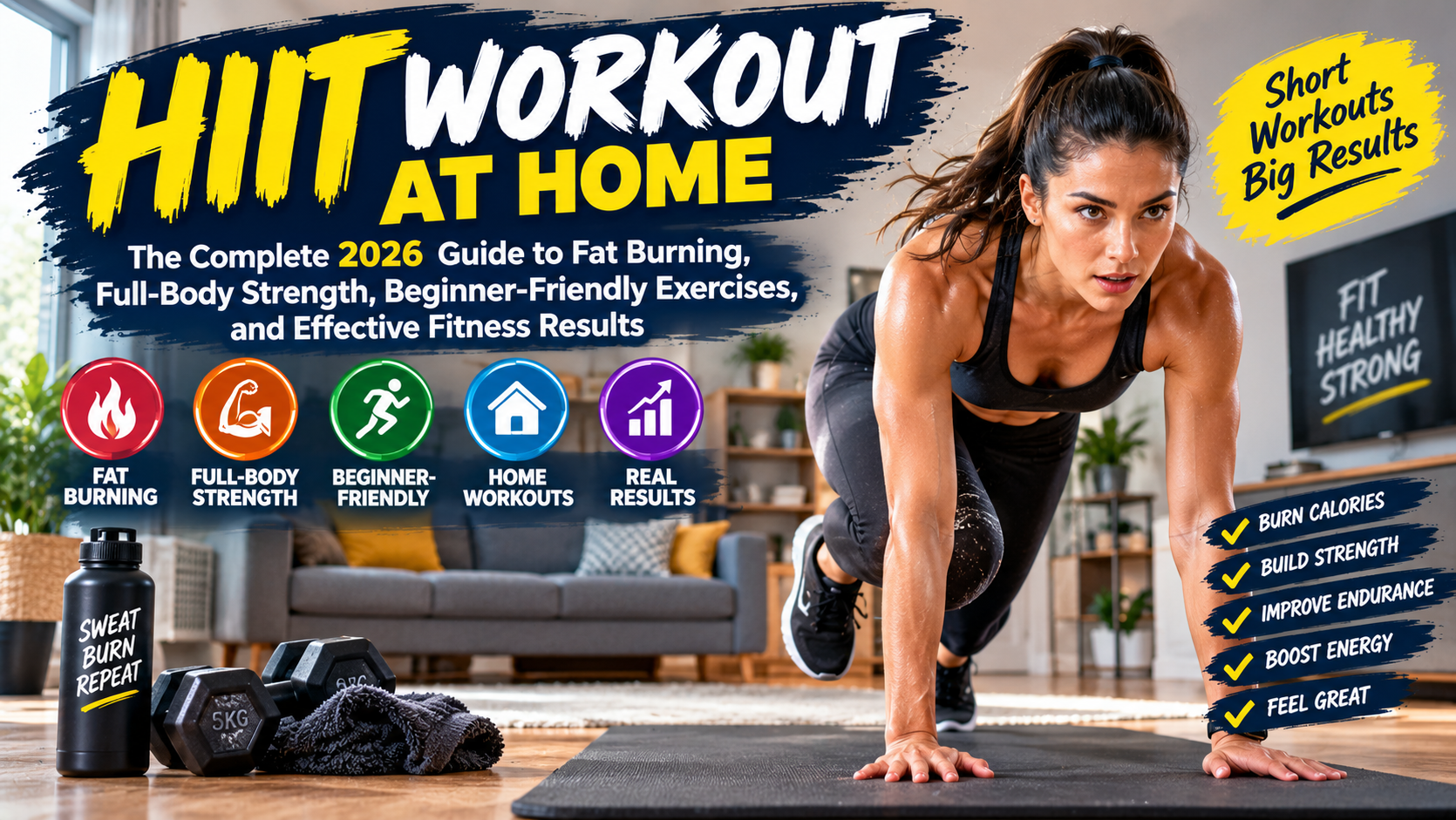
A HIIT workout at home is an efficient way to improve cardiovascular fitness, build muscular endurance, and support weight management without expensive equipment or a gym membership. High-intensity interval training alternates short periods of challenging exercise with planned recovery, allowing you to complete an effective workout in a relatively short time.
Whether you are a beginner with limited space, a busy professional squeezing exercise into a lunch break, or an experienced fitness enthusiast looking to improve conditioning, HIIT can fit into different schedules and fitness levels. The key is choosing appropriate exercises, managing intensity, and allowing enough recovery between sessions.
With movements such as squats, mountain climbers, push-ups, and jumping jacks, you can train your whole body in your living room. However, working harder is not always better. Good technique, gradual progression, and consistency matter more than exhausting yourself in every session.
What Is a HIIT Workout and How Does It Work?
High-intensity interval training, commonly called HIIT, involves alternating challenging exercise intervals with rest or low-intensity recovery periods. For example, you might perform 20 seconds of fast bodyweight squats, recover for 40 seconds, and then move to another exercise.
During the harder intervals, your heart rate and breathing increase as your body demands more energy. Recovery periods allow you to regain control of your breathing before the next effort. This repeated pattern develops cardiovascular endurance and helps you practice producing effort under fatigue.
Unlike steady-state cardio, such as walking at a consistent pace, HIIT deliberately changes the intensity throughout the session. However, it does not mean every interval must be an all-out sprint. Beginners can start with moderate-to-vigorous effort and increase intensity as their conditioning improves.
“High intensity” should be relative to your current fitness level. A brisk step-back burpee or controlled squat can be challenging for a beginner, while an experienced athlete may need faster or more demanding variations to achieve a similar training effect.
Benefits of HIIT Training at Home
One major benefit is time efficiency. A focused session lasting 15–25 minutes, including warm-up and recovery, can provide a meaningful cardiovascular challenge. This is particularly useful for people balancing work, family responsibilities, and other commitments.
HIIT can also improve aerobic fitness, muscular endurance, and the ability to recover between demanding efforts. Bodyweight exercises such as lunges, push-ups, and squats challenge multiple muscle groups, while fast-paced movements elevate cardiovascular demand. Research on interval training supports its usefulness for improving cardiorespiratory fitness, although results vary with the program, training frequency, and individual.
For people working toward fat loss, interval training can contribute to overall energy expenditure. However, it does not specifically burn belly fat or guarantee weight loss. Sustainable fat loss depends largely on maintaining an appropriate calorie deficit over time, supported by balanced nutrition, sleep, and regular physical activity.
Another advantage is accessibility. You can train with a yoga mat, a small amount of floor space, and comfortable footwear. No treadmill, stationary bike, or weight machine is required, although optional equipment can expand the variety of exercises.
Best HIIT Exercises You Can Do at Home


6
The best exercises combine simple technique with enough movement to challenge your cardiovascular system. Choose movements that suit your current ability rather than copying the most advanced version you see online. If an exercise causes sharp pain, dizziness, or unusual discomfort, stop and reassess.
| Exercise | Main muscles or focus | Beginner modification |
|---|---|---|
| Bodyweight squats | Quadriceps, glutes | Squat to a sturdy chair |
| Marching high knees | Cardiovascular endurance, hip flexors | March at a comfortable pace |
| Mountain climbers | Core, shoulders, cardiovascular fitness | Place hands on an elevated surface |
| Push-ups | Chest, shoulders, triceps, core | Push up against a wall or sturdy counter |
| Reverse lunges | Glutes, quadriceps, balance | Use a wall for support |
| Jumping jacks | Full-body coordination, cardio | Step one foot out at a time |
| Glute bridges | Glutes, hamstrings | Use a smaller comfortable range |
Squats, lunges, and glute bridges provide lower-body work, while push-ups strengthen the upper body. Mountain climbers and jumping jacks add a greater cardiovascular challenge. Combining these movements helps create a balanced session rather than repeatedly training only one muscle group.
If jumping bothers your knees or ankles, replace explosive movements with low-impact alternatives. Step jacks, controlled marching, and elevated mountain climbers can still raise your heart rate. Low-impact does not mean ineffective; you can increase effort through a quicker pace, a larger comfortable range of motion, or shorter recovery periods.
A 20-Minute HIIT Workout at Home
This HIIT workout at home is designed for people who want a practical full-body routine without equipment. Beginners should focus on controlled movement and use the easier variations. More experienced exercisers can increase their pace while maintaining good technique.

Warm-up for three minutes: March in place, circle your arms, perform gentle bodyweight squats, and step from side to side. A warm-up gradually prepares your muscles and cardiovascular system for harder work.
Complete the following circuit using 30 seconds of exercise followed by 30 seconds of rest. Perform each movement once, then repeat the circuit for a second round.
| Exercise | Work interval | Recovery |
|---|---|---|
| Bodyweight squats | 30 seconds | 30 seconds |
| Incline or regular push-ups | 30 seconds | 30 seconds |
| Marching high knees or fast high knees | 30 seconds | 30 seconds |
| Reverse lunges | 30 seconds | 30 seconds |
| Mountain climbers | 30 seconds | 30 seconds |
| Step jacks or jumping jacks | 30 seconds | 30 seconds |
The six exercises take six minutes per round, so two rounds take 12 minutes. Add a three-minute warm-up and approximately three minutes of gentle walking and stretching afterward to create an 18-minute session. You can use the remaining time to transition between exercises or extend your cooldown.
Aim for an effort level that feels challenging but controlled. During the hardest intervals, you should breathe noticeably faster while still being able to maintain proper form. If your technique deteriorates, slow down or rest. Completing fewer quality repetitions is more valuable than rushing through poor-quality movements.
How Beginners Should Start HIIT Training
Starting gradually is especially important if you have been inactive, are returning after a break, or are unfamiliar with vigorous exercise. Begin with one or two sessions per week and use a work-to-recovery ratio such as 20 seconds of movement followed by 40 seconds of rest. Walking intervals, chair squats, wall push-ups, and step jacks offer approachable starting points.
A common beginner mistake is copying an advanced workout with repeated jumps, burpees, and sprint intervals. This can leave you exhausted before you develop the coordination and conditioning needed to perform the exercises safely. Instead, establish a foundation of comfortable movement, stable balance, and consistent breathing before progressing to more demanding variations.
Use the talk test as a practical guide: during recovery, your breathing should settle enough for you to speak comfortably. If you remain severely breathless before the next interval, extend your recovery. Beginners do not need to reach maximal effort to benefit from interval training.
“Progress is not measured by how exhausted you feel at the end of a workout; it is measured by how consistently you can train, recover, and improve.”
How Often Should You Do HIIT?
For most beginners, one or two weekly sessions are a reasonable starting point. People with established fitness may tolerate two or three sessions, depending on intensity, training history, sleep, nutrition, and their other exercise commitments. More frequent sessions are not automatically better.
Allow recovery between demanding workouts, especially if your routine includes jumping, lunges, or other high-impact movements. On non-HIIT days, consider walking, easy cycling, mobility exercises, or resistance training at an appropriate intensity. The World Health Organization recommends adults aim for 150–300 minutes of moderate-intensity aerobic activity or 75–150 minutes of vigorous-intensity activity weekly, alongside muscle-strengthening activities on at least two days. HIIT can contribute to these targets according to the intensity and duration of your sessions.
If your legs remain unusually sore, your performance drops, or you feel persistently fatigued, reduce the intensity or frequency. Recovery is part of the training process, not a sign that you are doing something wrong.
Common HIIT Mistakes and How to Avoid Them
One frequent problem is skipping the warm-up. Going directly from sitting at a desk to explosive jumping can make the session feel unnecessarily difficult. Begin with light movement and gradually increase your pace. Similarly, finish with a cooldown instead of stopping abruptly after a hard interval.
Another mistake is prioritizing speed over technique. Knees collapsing inward during squats, sagging hips during push-ups, or uncontrolled landings can compromise movement quality. Use a simpler exercise variation when necessary, and stop if you experience sharp or worsening pain.
Some people also expect rapid weight loss from short workouts alone. Although HIIT can increase energy expenditure, food intake, daily movement, sleep, and consistency all influence body composition. Pair exercise with sustainable eating habits rather than trying to compensate for meals with punishing workouts.
Finally, avoid treating every session as a competition. If you are unable to maintain good form, extend the rest periods or lower the intensity. A well-adjusted workout that you can repeat consistently is generally more useful than an extreme session that leaves you unable to train for several days.
Nutrition and Recovery for Better Results
Your body needs sufficient energy and nutrients to support exercise and recovery. Build meals around protein sources such as eggs, yogurt, beans, lentils, fish, tofu, or chicken, alongside vegetables, fruit, and carbohydrate-rich foods such as oats, potatoes, rice, or whole grains. Protein supports muscle repair, while carbohydrates help replenish energy used during demanding exercise.
For a short workout, most people do not need a special sports drink or supplement. Drinking water throughout the day and having access to fluids during exercise is usually sufficient. In hot or humid conditions, you may need more fluid, especially if you sweat heavily.
Sleep matters too. Adults generally benefit from seven to nine hours of sleep each night. Poor sleep can make hard sessions feel more difficult and interfere with recovery. If you regularly feel drained, consider whether you need more rest, adequate food, or fewer high-intensity sessions rather than simply pushing harder.
FAQs About HIIT Workouts at Home
Is a HIIT workout at home effective without equipment?
Yes. Bodyweight exercises such as squats, push-ups, lunges, mountain climbers, and step jacks can challenge your cardiovascular system and muscular endurance. The effectiveness depends on exercise selection, effort, progression, and consistency rather than owning gym equipment.
Can HIIT help you lose belly fat?
HIIT can support overall fat loss by increasing physical activity and energy expenditure, but it cannot selectively remove fat from your stomach. A sustainable calorie deficit, balanced nutrition, regular exercise, and sufficient sleep are important for reducing overall body fat. Core exercises strengthen abdominal muscles but do not directly target belly fat.
How long should a home HIIT session last?
Many people can begin with 10–20 minutes, including short work intervals and recovery periods. A longer workout is not necessarily better, particularly for beginners. Choose a duration that allows you to maintain good technique and recover adequately afterward.
Is HIIT suitable for beginners?
Yes, provided the intensity and exercises match the individual’s fitness level. Beginners can use low-impact movements, shorter work intervals, and longer rest periods. People who are pregnant, have significant joint problems, or have medical conditions affecting exercise tolerance should seek appropriate professional guidance before beginning vigorous training.
Should I do HIIT every day?
Daily high-intensity training is unnecessary for most people and may make recovery more difficult. Start with one or two sessions weekly and gradually adjust according to your fitness and recovery. Use other days for walking, moderate cardio, mobility work, or strength training.
Is HIIT better than walking?
Neither is universally better. HIIT can improve cardiovascular fitness efficiently, while walking is accessible, easier to recover from, and simple to perform regularly. Many people benefit from combining both, using HIIT for challenging intervals and walking to increase everyday activity.
What should I do if jumping exercises hurt my knees?
Replace jumps with step jacks, controlled marching, chair squats, or other comfortable low-impact movements. Reduce the range of motion if needed and check your technique. If pain persists, worsens, or affects daily activities, consult a qualified healthcare professional rather than pushing through it.
Conclusion
A consistent HIIT workout at home can help improve cardiovascular fitness, muscular endurance, and overall physical conditioning without requiring a gym or expensive equipment. The most effective routine is one that matches your current ability, challenges you appropriately, and leaves enough room for recovery.
Start with a short full-body circuit, master the basic movements, and increase the difficulty gradually. Support your training with balanced meals, adequate hydration, quality sleep, and regular movement throughout the week.
The final insight is simple: consistency beats intensity without a plan. You do not need to finish every workout exhausted to make progress. Train with purpose, protect your technique, and build a routine you can sustain for months—not just a few days.