

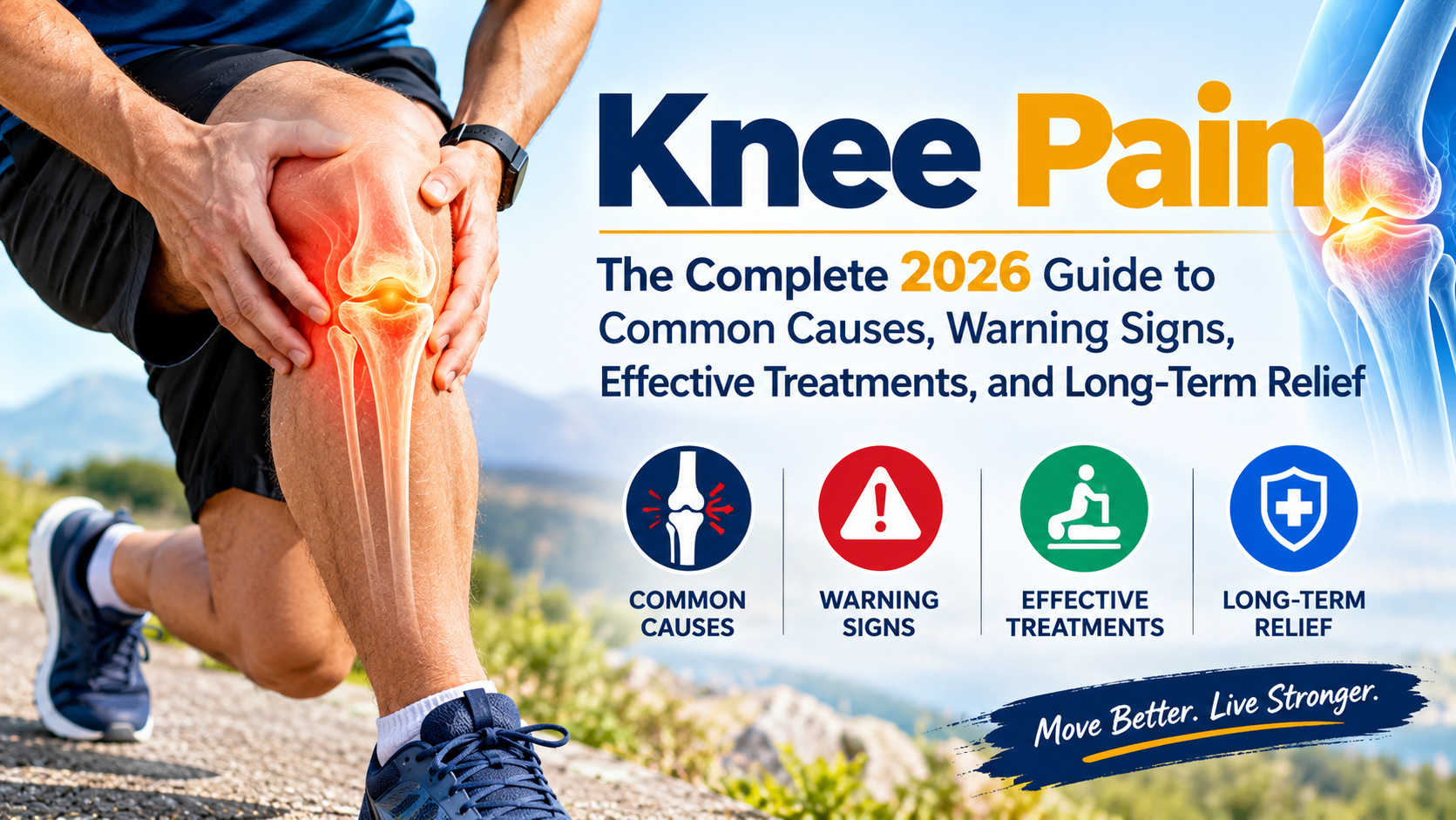
Knee pain can make everyday activities such as walking, climbing stairs, exercising, or getting out of a chair unexpectedly difficult. It may begin after a sports injury, develop gradually from repetitive movement, or appear alongside swelling and stiffness as the joint changes with age. Although some cases improve with rest and simple self-care, others require medical assessment to identify the underlying problem.
The knee is one of the body’s largest and most complex joints. It connects the thighbone (femur) to the shinbone (tibia), with the kneecap (patella), cartilage, ligaments, tendons, and surrounding muscles working together to support movement. Understanding which structures may be involved can help you make informed decisions about recovery, exercise, and when to seek professional care.
What Causes Knee Pain?


The cause of knee discomfort often depends on how it started, where it hurts, and whether other symptoms are present. Sudden pain after twisting, falling, or landing awkwardly may indicate a ligament injury, meniscus tear, fracture, or tendon damage. Gradual discomfort that worsens during activity may be associated with overuse, muscle weakness, changes in joint cartilage, or irritation around the kneecap.
Common causes include osteoarthritis, patellofemoral pain syndrome, bursitis, tendinitis, and injuries to the anterior cruciate ligament (ACL) or meniscus. Osteoarthritis involves changes in the joint’s cartilage and surrounding tissues, while patellofemoral pain typically affects the area around or behind the kneecap. These conditions can produce similar symptoms, so pain location alone cannot establish a diagnosis.
Body weight, training intensity, previous injuries, footwear, and changes in physical activity can also influence knee health. For example, a runner who suddenly doubles their weekly mileage may overload tissues that have not adapted to the increased demand. Reducing the workload and returning gradually can help address this problem, although persistent symptoms deserve professional evaluation.
Common Symptoms and What They May Mean
Symptoms can provide useful clues about the structures involved, but they are not a substitute for a physical examination. Pain at the front of the knee may occur with patellofemoral pain, while tenderness along the joint line can occur with a meniscus problem. Pain below the kneecap may involve the patellar tendon, particularly in people who frequently jump or sprint.
Swelling, stiffness, clicking, and difficulty bending the knee can occur with several conditions. A painless click is often harmless, but clicking accompanied by pain, swelling, locking, or instability needs closer attention. A knee that gives way may reflect weakness, pain-related muscle inhibition, or an injury affecting joint stability.
| Symptom | Possible explanation | Recommended response |
|---|---|---|
| Pain when climbing stairs | Patellofemoral pain or osteoarthritis | Reduce aggravating activity and arrange assessment if persistent |
| Swelling after twisting | Meniscus or ligament injury | Seek prompt medical evaluation |
| Stiffness after sitting | Osteoarthritis or other joint conditions | Use gentle movement and monitor symptoms |
| Tenderness below the kneecap | Patellar tendinopathy or local irritation | Adjust jumping and running loads |
| Sudden severe pain with inability to bear weight | Fracture or significant injury | Seek urgent medical care |
| Hot, red joint with fever | Possible joint infection or inflammatory condition | Obtain emergency medical assessment |
These patterns are general clues, not definitive diagnoses. The same symptom can have several causes, and a clinician may need to assess movement, stability, swelling, medical history, and sometimes imaging or laboratory tests.
Warning Signs That Need Medical Attention

Some symptoms require urgent attention rather than home treatment. Seek emergency medical care if the knee becomes severely painful after an injury, looks deformed, swells rapidly, or cannot support your weight. A locked knee that cannot fully bend or straighten also warrants prompt assessment, especially after a twisting injury.
A hot, red, swollen joint accompanied by fever or feeling seriously unwell may indicate an infection. This can damage the joint if treatment is delayed. Sudden calf swelling or pain alongside shortness of breath or chest pain also requires emergency evaluation because a blood clot may be responsible for these symptoms.
If discomfort persists for several weeks, repeatedly returns, interferes with sleep, or limits ordinary activities, arrange an appointment with a healthcare professional. Early assessment can clarify the likely cause and help prevent repeated cycles of aggravation and incomplete recovery.
How Knee Pain Is Diagnosed
Diagnosis usually begins with a conversation about when symptoms started, what movements make them worse, whether an injury occurred, and how the problem affects daily life. A clinician may ask about previous joint problems, sports participation, work demands, medications, and medical conditions that influence inflammation or bone health.
A physical examination may include checking swelling, tenderness, range of motion, walking pattern, muscle strength, and joint stability. Specific movement tests can help assess ligaments, menisci, and other structures. No single test is perfect, so findings are interpreted together rather than in isolation.
Imaging is not always necessary. X-rays may help assess fractures or osteoarthritis, while magnetic resonance imaging (MRI) can provide detailed information about ligaments, menisci, and other soft tissues when clinically indicated. Blood tests or joint-fluid analysis may be needed if an inflammatory condition or infection is suspected. The goal is to select tests that can meaningfully guide treatment.
Effective Treatments and Home Care
The most appropriate treatment depends on the underlying cause and the severity of symptoms. For a minor strain or flare-up, temporarily reducing activities that provoke discomfort may help. Ice wrapped in a towel can be used for short periods to ease swelling, while gentle movement can prevent unnecessary stiffness. Avoid applying ice directly to the skin.
Complete inactivity is rarely the best long-term strategy for common musculoskeletal problems. Once severe injury has been excluded and movement is tolerable, gradually returning to normal activity often helps preserve strength and mobility. For example, someone who finds running painful might temporarily switch to a comfortable walk or low-impact cycling, provided the alternative does not worsen symptoms.
Medication may help some people manage symptoms, but the safest option depends on age, medical history, other medications, and the cause of the problem. Nonsteroidal anti-inflammatory drugs (NSAIDs), including ibuprofen, can cause stomach, kidney, cardiovascular, and other complications in some individuals. Ask a pharmacist or healthcare professional before using them if you have underlying conditions, take other medication, or are unsure whether they are suitable.
Exercises to Support Knee Strength and Mobility


Exercise can improve muscle strength, joint control, and confidence with movement when selected for the individual’s condition. The quadriceps at the front of the thigh help straighten the knee, while the hamstrings, gluteal muscles, and calf muscles contribute to lower-body control. Strengthening these areas can improve the way forces are managed during walking, squatting, and climbing stairs.
Suitable starting exercises may include quadriceps contractions while sitting or lying down, straight-leg raises, glute bridges, and shallow sit-to-stand movements. Begin with a comfortable range and a manageable number of repetitions. If an exercise produces sharp pain, increasing swelling, or a worsening limp, stop and seek advice before continuing.
The best routine is one that matches your current ability and progresses gradually. A physiotherapist can tailor exercise selection and resistance to the diagnosis, particularly after surgery or a ligament injury. People with significant swelling, instability, or difficulty bearing weight should be assessed before starting a strengthening program.
Lifestyle Changes for Long-Term Joint Health
Regular, appropriate physical activity helps maintain muscle strength and supports general health. Low-impact options such as swimming, water exercise, walking on level ground, and stationary cycling may be more comfortable than running or jumping during a flare-up. The right choice is the activity you can perform safely and consistently without a substantial increase in symptoms.
If excess body weight is contributing to joint stress, gradual weight management may reduce the load placed on the knees during everyday movement. A balanced eating pattern with vegetables, fruit, whole grains, protein-rich foods, and healthy fats can support this process. No single food or supplement has been proven to repair damaged knee cartilage.
Recovery also benefits from sensible training progression, adequate sleep, and suitable footwear. Avoid sudden increases in running distance, jumping volume, or resistance training load. As a practical rule, increase activity in manageable steps and pay attention to how the joint responds later that day and the following morning.
Preventing Future Knee Problems
Prevention begins with building capacity for the activities you enjoy. Strength training, balance exercises, and gradual exposure to sport-specific movements can help improve control around the joint. Before intense exercise, use a warm-up that raises your heart rate and rehearses the movements you will perform, rather than relying on a few brief stretches alone.
Technique and recovery matter, too. Runners should increase training volume progressively, while athletes who jump, pivot, or change direction frequently may benefit from structured strength and neuromuscular training. Well-fitting footwear can improve comfort, although it cannot guarantee protection against injury.
Pay attention to recurring discomfort rather than repeatedly pushing through it. A small adjustment to training volume may be enough for a minor overload problem, while persistent or worsening symptoms need assessment. Consistency, gradual progression, and early attention to warning signs are more useful than trying to prevent every possible injury.
Frequently Asked Questions
What is the most common cause of knee pain?
There is no single cause for everyone. Osteoarthritis is a frequent cause in older adults, while overuse and patellofemoral pain are common among physically active people. Injuries to ligaments, tendons, or the meniscus may be responsible when symptoms begin suddenly after a specific movement or accident.
How can I relieve knee pain at home?
For mild symptoms without warning signs, temporarily reduce aggravating activities, use wrapped ice for short periods if swelling is present, and maintain gentle movement as tolerated. Avoid forcing painful exercises or returning too quickly to intense activity. Seek professional advice if symptoms worsen, persist, or interfere with normal movement.
Is walking good for knee pain?
Walking can be beneficial for many people, particularly when symptoms are mild and the route is level. Start with a comfortable distance and increase gradually if symptoms remain stable. If walking causes significant pain, a limp, or increasing swelling, reduce the workload and arrange an assessment.
Should I use heat or ice on a painful knee?
Ice may help manage swelling after an acute injury or flare-up, while gentle heat may feel soothing when stiffness is the main problem and the joint is not hot or swollen. Neither treatment addresses every underlying cause. Protect the skin and stop if the temperature causes discomfort or irritation.
Can knee pain go away without surgery?
Many cases improve with appropriate activity changes, strengthening, physical therapy, and symptom management. Surgery may be considered for certain fractures, major injuries, persistent mechanical problems, or advanced joint disease when other treatments have not provided sufficient relief. The decision depends on the diagnosis, symptoms, and individual circumstances.
When should I get an MRI for knee pain?
An MRI is not automatically required for every painful knee. A clinician may recommend one when the examination suggests a significant soft-tissue injury, symptoms persist despite suitable treatment, or the results would change management. X-rays, physical examination, or other tests may be more appropriate in some cases.
Can weak muscles contribute to knee discomfort?
Yes. Reduced strength or control in the quadriceps, hips, and other lower-body muscles can affect how the knee manages forces during movement. Strengthening may help improve function for certain conditions, but weakness is only one possible contributor and should not be assumed to explain every case.
Conclusion
Knee pain can arise from everyday overuse, muscle weakness, osteoarthritis, or a more significant injury. Understanding how symptoms began, recognising warning signs, and choosing appropriate treatment are essential steps toward recovery. While gentle movement and progressive strengthening can help many people, severe swelling, inability to bear weight, a locked joint, or a hot, red knee with fever requires prompt medical attention.
The most important takeaway is to treat the cause rather than simply masking the discomfort. Reduce activities that aggravate symptoms, rebuild strength at a manageable pace, and seek professional assessment when recovery stalls or warning signs appear. With the right approach, many people can improve mobility, return to valued activities, and support healthier knees over the long term.