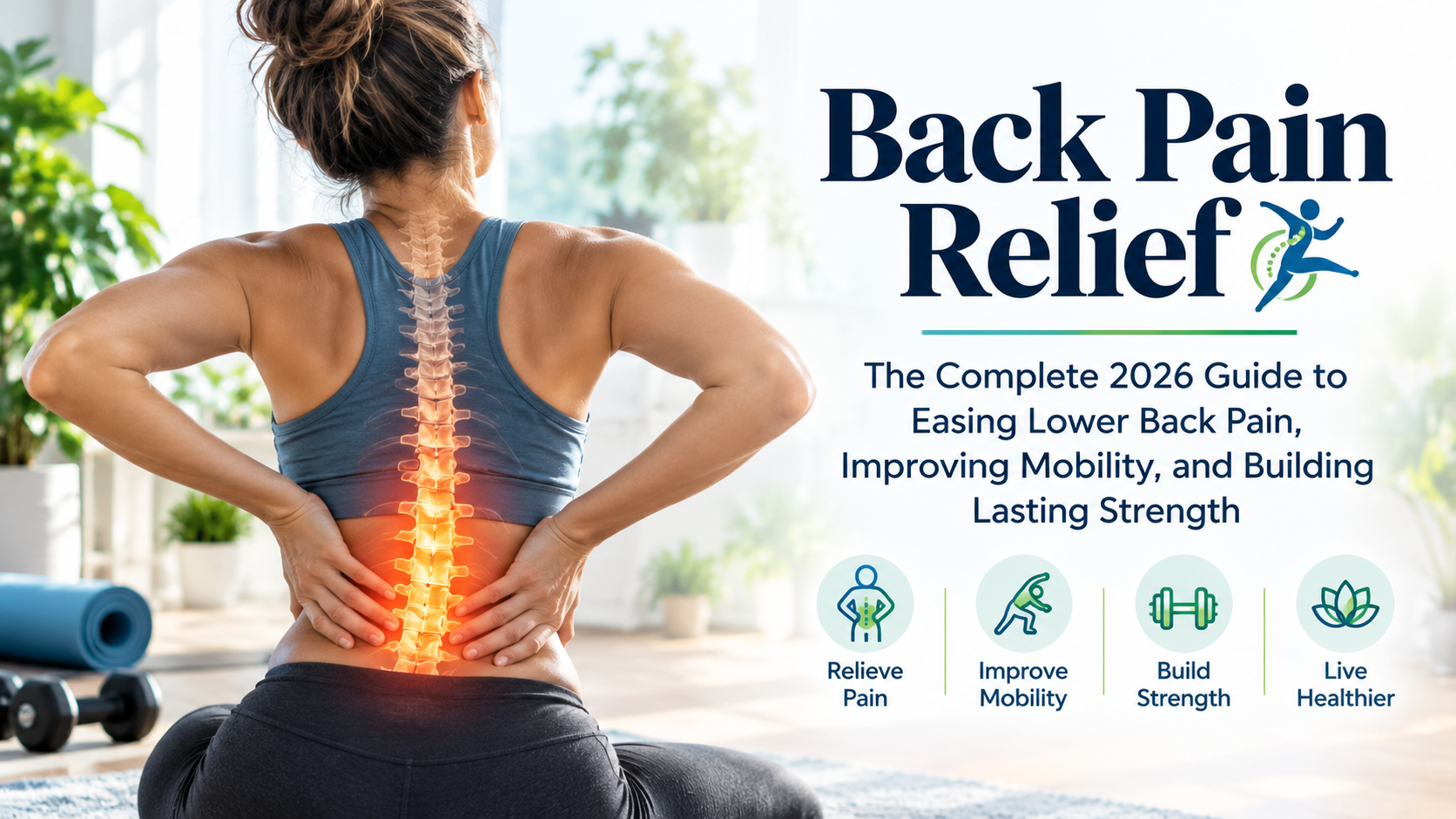


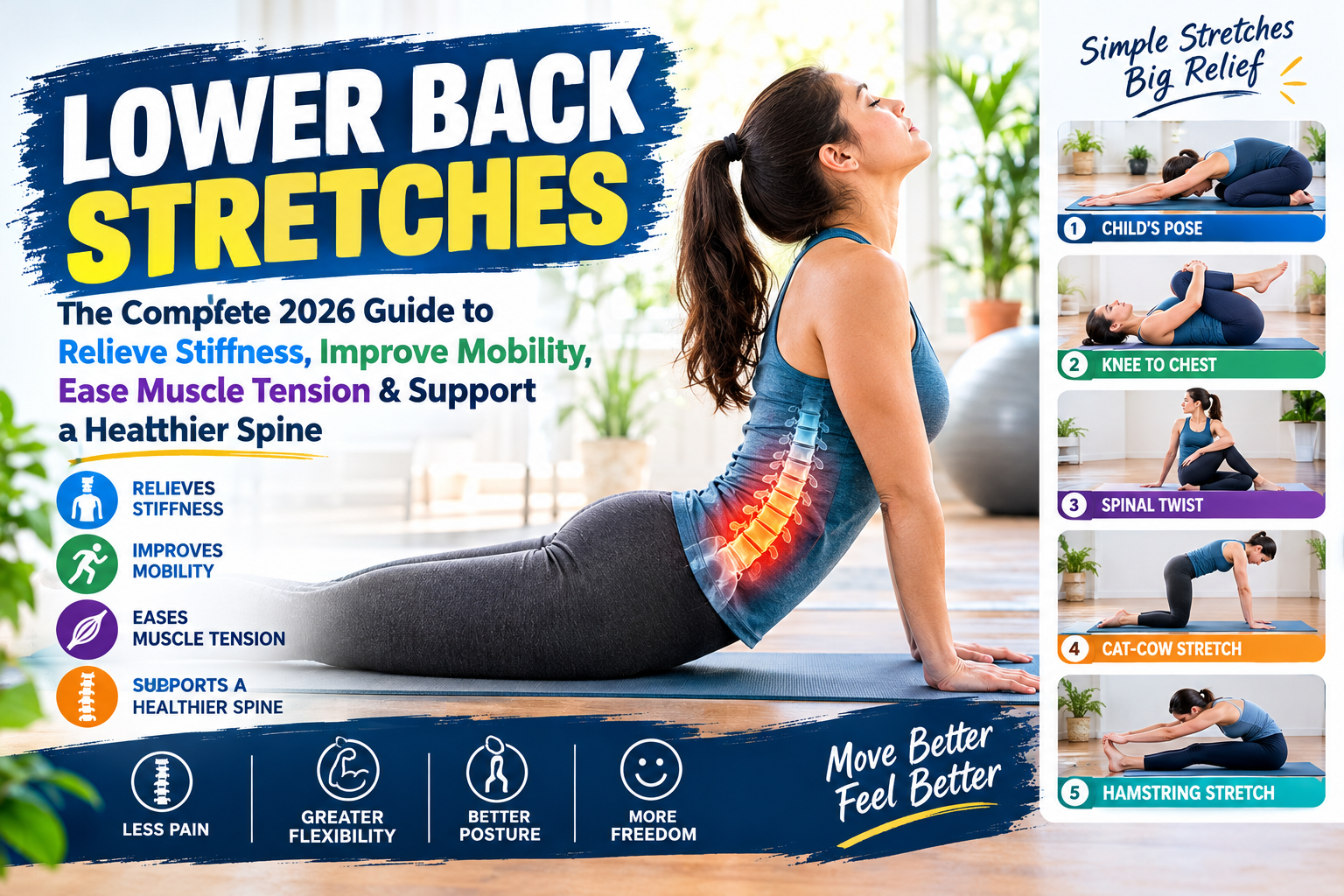
Lower back stiffness can make everyday activities feel harder than they should. Sitting at a desk, driving for hours, lifting groceries, or getting out of bed may leave your back feeling tight and uncomfortable. Gentle stretching can help improve flexibility, restore comfortable movement, and reduce tension when stiffness is related to tight muscles or prolonged inactivity.
The best lower back stretches target more than the lumbar spine alone. Tight hip flexors, stiff gluteal muscles, and limited hip mobility can affect how comfortably your body bends and moves. Combining gentle stretches with walking, strengthening exercises, and regular movement breaks can help support long-term back health.
However, stretching is not a cure for every type of back pain. A herniated disc, nerve irritation, spinal stenosis, or another medical condition may require a different approach. The goal is to find comfortable movements that suit your symptoms without forcing the body into painful positions.
This guide explains effective stretches, proper techniques, common mistakes, and safety tips to help you build a practical routine for better mobility.
Why Lower Back Stretching Matters
The lumbar spine supports the upper body and helps transfer forces between the torso and pelvis. Muscles around the back, abdomen, and hips work together to stabilize this region during walking, bending, and lifting. When you remain in one position for too long or suddenly increase physical activity, these muscles may feel stiff or uncomfortable.
Regular lower back stretches can improve flexibility and help you move more comfortably, especially when tightness is associated with prolonged sitting or reduced activity. Gentle movement may also help reduce the sensation of stiffness after waking up or finishing a long workday.
Stretching works best as part of a broader movement routine. Walking, strengthening the abdominal and hip muscles, and changing positions throughout the day can improve your ability to tolerate everyday activities. Flexibility alone does not guarantee a healthy back, and aggressively stretching an irritated area can sometimes make symptoms worse.
Cat-Cow Stretch for Gentle Spinal Mobility
The cat-cow stretch is a gentle movement that takes the spine through comfortable flexion and extension. It is often useful for people who feel stiff after sleeping or sitting for extended periods. Instead of holding one deep position, you move slowly between two positions while coordinating your breathing.
Begin on your hands and knees, with your hands beneath your shoulders and knees beneath your hips. Slowly round your back toward the ceiling while allowing your head to relax. Then gently lower your abdomen and lift your chest without forcing your lower back into a deep arch. Continue for eight to ten comfortable repetitions, moving smoothly and breathing naturally.
The aim is to explore comfortable spinal movement rather than achieve maximum range. If rounding or arching increases pain, reduce the movement or stop. People whose symptoms worsen with particular spinal positions should choose movements that feel comfortable rather than following a stretch simply because it is popular.
Child’s Pose for Back and Hip Relaxation
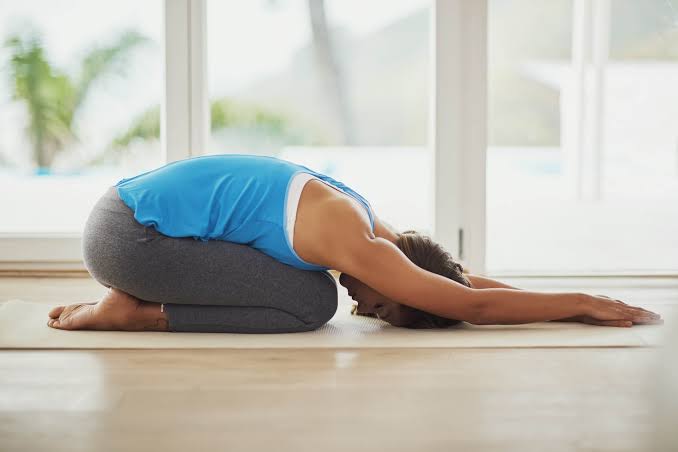
Child’s pose gently lengthens the muscles around the back and hips. Many people find it relaxing after a demanding day or a light workout. It can also provide a comfortable resting position between other mobility exercises.
Start on your hands and knees, then slowly move your hips backward toward your heels. Extend your arms forward or rest them alongside your body, depending on which position feels better. Relax your shoulders and breathe steadily while holding the position for approximately 15 to 30 seconds.
You do not need to force your hips all the way toward your heels. If your knees feel uncomfortable, place a folded towel beneath them or separate your knees slightly. If the forward-bending position causes pain that travels down your leg, stop and choose a more suitable movement.
Knee-to-Chest Stretch for Gentle Lower Back Relief
The knee-to-chest stretch gently moves the hip and lumbar spine into flexion. It may help people who experience mild muscular tightness and find this position comfortable. The single-leg version allows you to control the stretch without placing excessive pressure on both hips simultaneously.
Lie on your back with your knees bent and feet flat on the floor. Bring one knee toward your chest and hold it gently with both hands around the thigh or shin, wherever comfortable. Keep the other leg bent or extended according to your comfort. Hold for 15 to 30 seconds, then release slowly and repeat on the opposite side.
Avoid pulling forcefully or holding your breath. This stretch is not suitable for everyone, particularly when bending forward aggravates a disc-related problem or nerve symptoms. If you experience increasing pain, tingling, or numbness, stop the exercise.
Pelvic Tilts for Core Control and Mobility
Pelvic tilts are a simple exercise for learning how to move the pelvis and lumbar spine in a controlled way. Although they are not a deep stretch, they can help people become more comfortable with gentle spinal movement and abdominal muscle engagement.
Lie on your back with your knees bent and feet flat on the floor. Gently tighten your abdominal muscles and tilt your pelvis so your lower back moves slightly toward the floor. Relax back to your starting position without forcing an exaggerated arch. Repeat eight to twelve times while breathing normally.
The movement should be small and controlled. Avoid pushing through pain or lifting your hips off the floor. Pelvic tilts can complement a mobility routine, but persistent back pain may require a more individualized exercise plan.
Figure-Four Stretch for Tight Glutes and Hips
The figure-four stretch targets the gluteal muscles and external rotators of the hip. These muscles contribute to pelvic movement and help control the position of the legs during walking, climbing stairs, and exercise. When the hips feel tight, gentle stretching may improve comfort during these activities.
Lie on your back with both knees bent. Place your right ankle over your left thigh, just above the knee, forming a figure-four shape. If comfortable, hold behind the left thigh and gently draw it toward your body until you feel a mild stretch in the right buttock. Hold for 15 to 30 seconds, then switch sides.
Keep your head and shoulders relaxed, and do not press forcefully on the crossed knee. You should feel the stretch around the hip or buttock rather than sharp pain in the knee or lower back. If the movement causes radiating leg symptoms, release the position.
Hip Flexor Stretch for People Who Sit Frequently
The hip flexors help lift the thigh toward the torso. Spending long periods sitting keeps these muscles in a shortened position, which may contribute to a feeling of tightness when standing upright or extending the hips. Stretching them gently can improve hip mobility for some people.
Begin in a half-kneeling position with one knee on a padded surface and the opposite foot in front. Keep your torso upright and gently tighten the abdominal muscles. Shift your pelvis forward slightly until you feel a stretch at the front of the hip on the kneeling side. Hold for 15 to 30 seconds, then switch sides.
Avoid arching your lower back to create a stronger stretch. The movement should come primarily from the hip, not from forcing the lumbar spine forward. If kneeling is uncomfortable, use a supported standing variation instead.
Hamstring Stretch for Better Leg Flexibility
The hamstrings run along the back of the thigh and help control movement at the hip and knee. Limited hamstring flexibility can make certain bending movements feel restricted, although tight hamstrings are not necessarily the cause of lower back pain.
Lie on your back with both knees bent. Raise one leg comfortably and hold behind the thigh, keeping the knee slightly bent if needed. Slowly straighten the knee until you feel a gentle stretch along the back of the thigh. Hold for 15 to 30 seconds and repeat on the other side.
Do not pull the leg so far that your back rounds forcefully or symptoms travel down the leg. A mild pulling sensation in the hamstring is expected; sharp pain, tingling, or numbness is not. Gentle stretching should improve comfort rather than create a stronger pain response.
Best Lower Back Stretches at a Glance
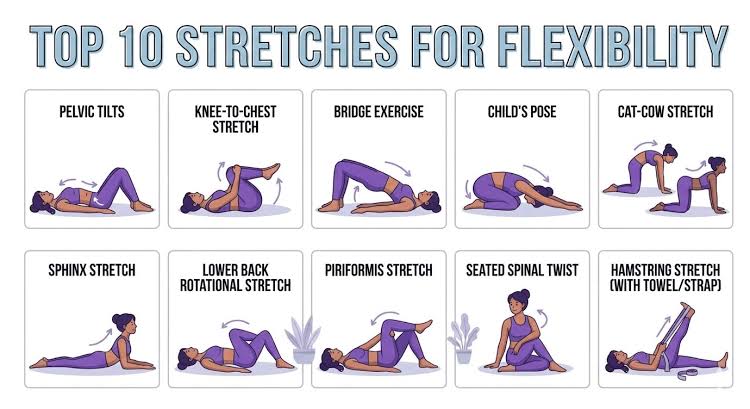
| Stretch | Main target | Suggested duration |
|---|---|---|
| Cat-cow | Spinal mobility | 8–10 repetitions |
| Child’s pose | Back and hip relaxation | 15–30 seconds |
| Knee-to-chest | Hip and lumbar mobility | 15–30 seconds per side |
| Pelvic tilts | Controlled pelvic movement | 8–12 repetitions |
| Figure-four | Gluteal muscles and hip rotators | 15–30 seconds per side |
| Hip flexor stretch | Front of the hip | 15–30 seconds per side |
| Hamstring stretch | Back of the thigh | 15–30 seconds per side |
These timings are general starting points, not strict requirements. Begin with a comfortable range and adjust according to your mobility, experience, and symptoms.
How to Build a Safe Stretching Routine
A practical routine does not need to be long. Start with three to five minutes of gentle walking or other easy movement, then choose a few stretches that address your main areas of stiffness. Move slowly, breathe naturally, and avoid bouncing or forcing your joints into uncomfortable positions.
Performing lower back stretches consistently may be more useful than doing an intense session once a week. For example, a person who works at a desk could take a short movement break during the day and complete a gentle mobility routine after work. Someone who exercises regularly might use comfortable stretches after a light warm-up or training session.
A mild pulling sensation is usually acceptable, but sharp, worsening, or radiating pain is a reason to stop. Stretching should not produce increasing numbness, tingling, or weakness. If symptoms repeatedly worsen with a particular movement, avoid that stretch until you have received appropriate guidance.
Common Stretching Mistakes to Avoid
One common mistake is forcing a deeper stretch in the belief that more intensity produces faster results. Aggressive pulling can irritate sensitive muscles, joints, or nerves. A comfortable stretch held with relaxed breathing is generally a better starting point than pushing toward the maximum possible range.
Another mistake is treating stretching as the only solution. Back discomfort can involve reduced strength, nerve irritation, joint conditions, or medical problems that flexibility exercises cannot resolve. Combining mobility work with regular activity and appropriate strengthening is often a more balanced approach.
Avoid copying an exercise routine without considering your symptoms. For instance, someone who feels worse when bending forward may not tolerate repeated knee-to-chest stretches or child’s pose. Another person may find these movements comfortable and helpful. The right routine is the one that supports comfortable movement without aggravating symptoms.
When to Seek Medical Advice
Stretching may help uncomplicated stiffness, but it is not appropriate treatment for every back condition. Seek professional advice if pain persists, repeatedly returns, significantly limits daily activities, or travels down the leg with numbness or weakness. A healthcare professional can assess possible causes and recommend suitable exercises or other treatments.
Seek emergency care for new loss of bladder or bowel control, difficulty urinating associated with back pain, numbness around the groin or anus, or rapidly worsening leg weakness. These symptoms can indicate serious nerve compression. Back pain accompanied by fever, major trauma, or feeling seriously unwell also requires prompt assessment.
Do not use stretching to delay care when warning signs are present. Identifying the underlying problem is more important than completing a routine.
Frequently Asked Questions
What are the best lower back stretches for beginners?
Cat-cow, gentle pelvic tilts, and a comfortable single knee-to-chest stretch are common starting points for people with uncomplicated stiffness. Begin with small movements and short holds, then increase gradually if symptoms remain comfortable. No stretch is suitable for everyone, so avoid any movement that causes sharp or radiating pain.
How often should I stretch my lower back?
Many people can begin with a short, gentle routine once a day, adjusting the frequency according to comfort and recovery. Regular movement breaks throughout the day may also help people who sit for long periods. If stretching repeatedly worsens symptoms, stop the aggravating movement and seek professional guidance.
Can stretching relieve lower back pain immediately?
Stretching may temporarily reduce stiffness or improve comfort, particularly when symptoms are associated with muscle tension or prolonged sitting. However, results vary, and some conditions can worsen with particular movements. Lasting improvement may require strengthening, activity changes, or treatment for the underlying cause.
Should I stretch when my lower back hurts?
Gentle movement may be helpful for uncomplicated back discomfort, but stretching through sharp pain is not recommended. Choose comfortable movements and stop if symptoms intensify, spread down the leg, or cause numbness. Severe or persistent pain should be assessed by a healthcare professional.
Are lower back stretches enough to prevent future pain?
Stretching can support flexibility and mobility, but it is rarely the complete solution on its own. Regular physical activity, trunk and hip strengthening, adequate sleep, and gradual increases in exercise can also help support back health. People with recurring symptoms may benefit from a personalized exercise program.
Is it better to stretch in the morning or at night?
Either time can work. Gentle morning mobility may help reduce stiffness after sleeping, while an evening routine may provide a comfortable transition after a day of sitting or standing. Consistency and choosing movements that suit your symptoms are more important than the exact time.
Conclusion
Lower back stiffness can interfere with everyday comfort, but gentle mobility exercises may help improve flexibility and make normal movement easier. Cat-cow, child’s pose, knee-to-chest, pelvic tilts, figure-four, hip flexor, and hamstring stretches address different areas that contribute to hip and spinal movement.
The most effective approach combines appropriate stretching with regular activity, gradual strengthening, and attention to symptoms. Start gently, avoid forcing uncomfortable positions, and remember that more stretching is not always better.
The key takeaway is simple: use movement to build comfort and confidence, not to push through pain. If symptoms persist, worsen, or include warning signs, seek medical advice before continuing your routine.