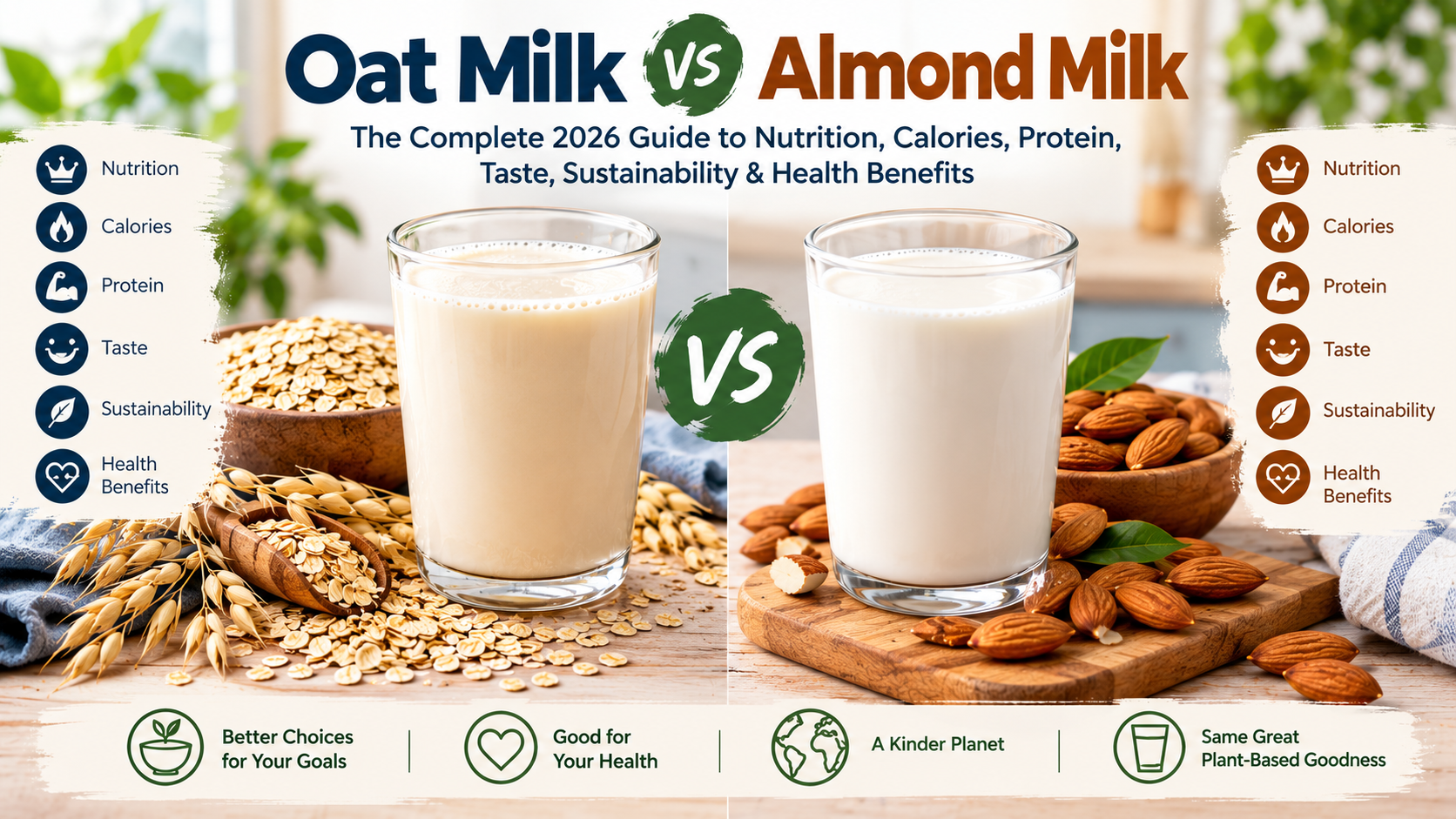
Walk into almost any supermarket today and you’ll find an impressive selection of plant-based milk. Oat milk and almond milk are two of the most popular choices, but they are quite different once you look beyond the packaging.
The oat milk vs almond milk debate usually comes down to a few practical questions: Which has fewer calories? Which provides more protein? Which tastes better in coffee? Which is better for cooking? And what about sugar, nutrition and environmental impact?
There isn’t one answer that works for everyone. Oat milk tends to be creamy, slightly sweet and especially popular in coffee, while almond milk is generally lighter, lower in calories and mildly nutty. The nutritional value can also change significantly from one brand to another, so reading the label matters.
For most people, a good starting point is an unsweetened, fortified product that fits their diet and intended use. From there, the differences become much easier to understand.
Oat Milk vs Almond Milk: What Is the Difference?
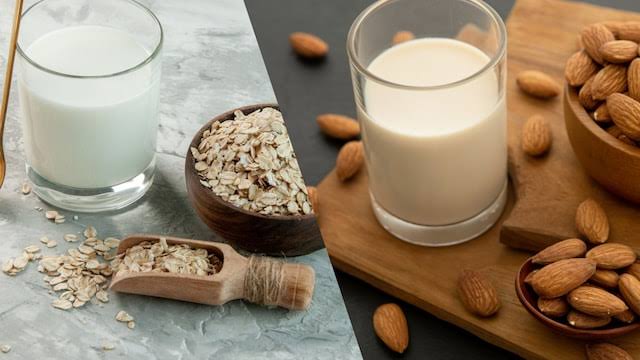
Oat milk is made primarily from oats and water. Almond milk is made from almonds and water. Commercial versions usually contain additional ingredients, such as vitamins, minerals, oils, stabilizers or sweeteners, depending on the brand and the type of product.
The easiest difference to notice is texture. Oat milk is usually thicker and creamier, with a mild sweetness that comes from the oats. Almond milk tends to be thinner and lighter, with a subtle nutty taste. Think of oat milk as the more “creamy latte” option and almond milk as the lighter, more refreshing alternative.
That difference becomes useful in everyday life. Oat milk can make coffee feel richer and work nicely in creamy recipes, while almond milk is convenient for cereal, smoothies and people who simply prefer a lighter drink. Neither is automatically healthier in every situation because the right choice depends on calories, protein, sugar, allergies and the rest of the diet.
Nutrition Comparison: Calories, Protein, Carbohydrates and Fat
When comparing oat milk vs almond milk, it’s important to compare similar products. An unsweetened almond milk and a sweetened oat milk are not really an apples-to-apples comparison. Barista versions can also contain additional oils and other ingredients that change their nutrition.
Here is a general comparison of typical unsweetened products:
| Nutritional factor | Typical unsweetened oat milk | Typical unsweetened almond milk | What it means |
|---|---|---|---|
| Calories | Moderate | Usually lower | Almond milk is often useful for lower-calorie diets |
| Carbohydrates | Higher | Very low | Oat milk generally contains more carbohydrates |
| Protein | Usually modest | Usually low to modest | Neither standard version is a high-protein drink |
| Fat | Low to moderate | Usually low | Formulas vary by brand |
| Fiber | Some | Usually very little | Oat beverages may retain some oat-derived components |
| Calcium | Often fortified | Often fortified | Check the nutrition label |
| Vitamin D | Often fortified | Often fortified | Fortification varies |
| Added sugar | Can be high in sweetened versions | Can be high in sweetened versions | Unsweetened versions are usually easier to manage |
The table is useful, but it shouldn’t be treated as a universal rule. Recipes and formulations vary. One oat milk may contain considerably more calories than another, while one almond milk may have more protein because the manufacturer has specifically added it.
This is why the nutrition panel is more useful than the large claims printed on the front of the carton. Look at calories, protein, carbohydrates, added sugar, calcium and vitamin D before deciding whether a particular product fits your needs.
Calories and Weight Management
For anyone watching calorie intake, oat milk vs almond milk can be a noticeable comparison. Unsweetened almond milk is commonly much lower in calories than oat milk, making it an appealing option when you’re trying to keep everyday drinks relatively light.
But there’s an important catch: the difference in your morning coffee may not matter much if the drink also contains flavored syrup, sugar or a large serving of cream. A few tablespoons of sweetener can easily change the nutritional picture.
The same principle applies to smoothies and breakfast bowls. If you use a small amount of oat milk in a protein-rich smoothie, the extra calories may be insignificant compared with the nutritional value of the whole meal. On the other hand, someone drinking several large glasses of sweetened oat milk every day may notice the additional calories.
The practical solution is simple: look at the serving size and choose unsweetened versions when reducing added sugar and unnecessary calories is a priority.
Protein, Fiber and Satiety
Protein is one area where oat milk vs almond milk can be misunderstood. Neither traditional oat milk nor almond milk should be considered a major protein source. Their protein content is generally much lower than that of cow’s milk, although some newer products are specifically formulated with additional protein.
If you’re building a high-protein breakfast, relying on plant milk alone won’t get you very far. Eggs, Greek yogurt, cottage cheese, tofu, beans, seeds and other protein-rich foods can do much more of the heavy lifting.
Oat milk may contribute more carbohydrates and some oat-derived components, while almond milk is usually lighter. But satiety is about the whole meal. A smoothie containing protein-rich yogurt, fruit, chia seeds and unsweetened plant milk will generally be far more satisfying than a sweetened glass of plant milk on its own.
Sugar and Added Ingredients
The words “plant-based” or “dairy-free” don’t automatically mean a product is low in sugar. This is one of the easiest traps to fall into when shopping for milk alternatives.
Sweetened varieties of both oat and almond milk can contain added sugar. Vanilla-flavored versions can contain even more. If you’re drinking a glass every day, those small amounts can add up over time.
Ingredient lists are worth checking too. Some oat milks contain oils, gums or emulsifiers to produce a smoother texture and help the milk perform better in coffee. Almond milk can also contain stabilizers and other ingredients to improve its consistency.
None of these ingredients automatically makes a product bad. The point is simply to know what you’re buying. A useful habit is to compare the nutrition panel and ingredient list rather than choosing based solely on words such as “natural,” “clean” or “healthy.”
Taste, Texture and Coffee Performance
Taste is probably the most personal part of the oat milk vs almond milk comparison. Oat milk usually has a creamy, slightly sweet flavor that works particularly well with espresso. Almond milk is lighter and often has a mild nutty taste.
Coffee is where the difference becomes especially obvious. Many barista-style oat milks are designed to steam and foam, giving lattes and cappuccinos a smooth, almost silky texture. That’s one reason oat milk has become such a familiar sight in coffee shops.
Almond milk can work well in coffee too, particularly if you prefer a lighter drink. However, some varieties may separate when exposed to hot, acidic coffee. If your goal is a good latte, look for a product specifically designed for coffee rather than assuming every carton will behave the same way.
A simple real-world rule works here: if you like a rich, creamy latte, oat milk is often a natural fit. If you prefer a lighter coffee with a subtle nutty note, almond milk may be more appealing.
Cooking, Baking and Smoothies
In the kitchen, oat milk vs almond milk isn’t necessarily about which one has the better nutrition label. It’s about what the recipe needs.
Oat milk’s thicker texture can be useful in pancakes, oatmeal, creamy soups, sauces and baked goods. It can add body without overpowering the other ingredients. For example, an unsweetened oat milk can make a dairy-free pancake batter feel richer without requiring a heavy cream substitute.
Almond milk is often better when you want the liquid to stay relatively light. It works nicely in smoothies, cereal, overnight oats and many baking recipes. Unsweetened almond milk is especially versatile because it doesn’t add much sweetness or a strong flavor.
One thing to watch is flavored milk. Vanilla almond milk might be delicious in a smoothie but can be surprisingly awkward in a savory sauce. For general cooking, unsweetened varieties are usually the safest choice because you control the sweetness yourself.
Allergies, Intolerances and Dietary Considerations
Both beverages can be useful alternatives to dairy, but they’re not suitable for everyone. Almond milk contains tree nuts, so people with almond or certain tree-nut allergies need to avoid it and check labels carefully.
Oat milk avoids the nut issue, but oats introduce another consideration for people who need to avoid gluten. Pure oats are naturally gluten-free, yet cross-contact can occur during farming, transportation and processing. People with celiac disease or a medically necessary gluten-free diet should look for appropriate gluten-free labeling or certification.
Digestive tolerance can also vary. If one product causes bloating or discomfort, don’t automatically assume that all plant milks will have the same effect. Ingredients such as added fibers, gums, sweeteners or other additives may be responsible.
When a particular product doesn’t agree with you, checking the full ingredient list can be surprisingly helpful. Sometimes the issue isn’t the oat or almond itself but something else in the carton.
Calcium, Vitamin D and Fortification
One advantage of many commercial plant milks is fortification. Manufacturers often add calcium and vitamin D, and some products also contain nutrients such as vitamin B12.
This matters because replacing dairy milk isn’t simply a matter of swapping one white liquid for another. Cow’s milk naturally provides several nutrients, while plant beverages vary widely in what they contain.
If you’re using plant milk regularly, check the nutrition panel for calcium and vitamin D. Fortified products can make it easier to include these nutrients in your diet, while unfortified versions may contribute very little.
The same idea applies to protein and vitamin B12. If you’re relying heavily on plant-based foods, it’s worth looking at your overall dietary pattern rather than assuming one carton provides everything you need.
Sustainability and Environmental Considerations
The environmental side of oat milk vs almond milk is more complicated than many headlines suggest. Both are plant-based beverages, but the crops used to make them have different agricultural requirements.
Almond production has received particular attention because almonds are grown extensively in irrigated agricultural regions, especially California. Water use is therefore an important part of the almond sustainability conversation.
Oats generally have a different agricultural footprint and often require less irrigation than almonds, although the exact impact depends on where and how the crop is grown. Farming methods, climate, transportation, packaging and processing all matter too.
This is why it is difficult to judge the environmental impact of a carton based only on its main ingredient. The broader picture includes the entire supply chain. Even something as simple as buying only what you will actually use can help reduce food waste.
Which Milk Works Better for Different Goals?
The practical side of oat milk vs almond milk becomes easier when you stop looking for one universal winner and instead match the beverage to the job.
| Goal | Generally useful choice | Reason |
|---|---|---|
| Lower-calorie beverage | Unsweetened almond milk | Often contains fewer calories |
| Creamy coffee | Oat milk | Usually richer and easier to foam |
| Smoothies | Either | Depends on desired texture and flavor |
| Baking | Oat milk | Creamier texture works well in many recipes |
| Lower added sugar | Unsweetened version of either | Gives you greater control |
| Nut-free diet | Oat milk | Avoids almonds |
| Higher protein | Protein-fortified product | Standard versions are usually modest in protein |
| Calcium intake | Fortified version | Can provide useful amounts of calcium |
| Light cereal topping | Almond milk | Mild and relatively thin |
| Creamy sauces | Oat milk | Adds more body |
Think about how you actually use plant milk. Someone who drinks one latte each morning has different priorities from someone who pours a full glass over cereal twice a day. The best product is the one that fits the person’s routine without creating unnecessary nutritional trade-offs.
It’s also perfectly reasonable to keep both in the refrigerator. You might prefer oat milk for coffee and almond milk for smoothies or cereal. Choosing between them doesn’t have to become a permanent commitment.
Common Problems and Practical Solutions
One common mistake is buying sweetened or flavored milk without realizing how much sugar it contains. The solution is easy: start with an unsweetened version and add sweetness yourself when needed. That gives you much more control.
Another mistake is assuming that every plant milk is nutritionally equivalent to dairy milk. It isn’t. If you’re replacing dairy regularly, pay attention to protein, calcium, vitamin D and vitamin B12 across your overall diet.
Coffee can create another headache. Some almond milks don’t foam particularly well, while certain oat milks can taste overly sweet. Choosing a barista-style product can help if coffee performance is important.
Finally, don’t judge an entire category based on one product. A disappointing almond milk doesn’t mean all almond milks taste the same, and a watery oat milk doesn’t represent every oat-based beverage. Brands use very different recipes.
Frequently Asked Questions
Is oat milk healthier than almond milk?
Neither is automatically healthier for everyone. Unsweetened almond milk is often lower in calories and carbohydrates, while oat milk is generally creamier and contains more carbohydrates. The right choice depends on your nutritional needs, dietary restrictions, taste preferences and the specific product you purchase.
Is oat milk or almond milk better for weight loss?
Unsweetened almond milk is often lower in calories, which can make it useful for people trying to reduce calorie intake. However, weight management depends on the overall diet rather than one beverage. Portion size, added sugar and what you eat alongside the drink all matter.
Does oat milk have more protein than almond milk?
Some oat beverages contain more protein than conventional almond milk, but neither standard variety is particularly high in protein. If protein is a priority, check the nutrition label and consider a product specifically formulated to provide more protein.
Is oat milk better for coffee?
Oat milk is often preferred for coffee because its creamy texture works well in lattes and many barista-style formulas are designed to foam and steam. Almond milk can also work well, especially for people who prefer a lighter drink, although performance varies considerably between brands.
Is almond milk healthier than oat milk for people with diabetes?
Unsweetened almond milk is generally much lower in carbohydrates than oat milk, which can make it easier to include in a carbohydrate-conscious diet. However, blood glucose management is individual, and the overall meal, portion size, medication, physical activity and total carbohydrate intake all matter.
Can oat milk and almond milk replace dairy milk?
They can replace dairy milk in many everyday situations, but they’re not nutritionally identical. Fortified plant milks can provide calcium and vitamin D, while standard varieties usually contain less protein than cow’s milk. If plant milk replaces dairy regularly, those nutritional differences should be considered across the overall diet.
Which has more sugar, oat milk or almond milk?
Sweetened versions of either beverage can contain significant amounts of added sugar. Unsweetened almond milk is generally very low in sugar, while oat milk naturally contains more carbohydrates. The nutrition label, particularly the added-sugar information, provides the clearest comparison.
Conclusion
The oat milk vs almond milk comparison doesn’t need to be complicated. Oat milk is generally creamier, slightly sweeter and particularly useful for coffee, cooking and recipes where you want more body. Almond milk is typically lighter and lower in calories, making it attractive for people who want a less substantial beverage.
Neither one deserves to be labeled the universally “healthier” choice. What matters more is the specific product, how much you drink and what the rest of your diet looks like. Unsweetened and fortified varieties are often a sensible place to start, while protein, calcium, vitamin D, added sugar and calories deserve a closer look.
The most useful takeaway is to choose the milk for the job. Oat milk can turn an ordinary latte into a creamy coffee-shop-style drink, while almond milk can keep a smoothie or bowl light and refreshing. Once you understand the labels and your own nutritional priorities, choosing between them becomes much less about marketing and much more about making a practical everyday decision.