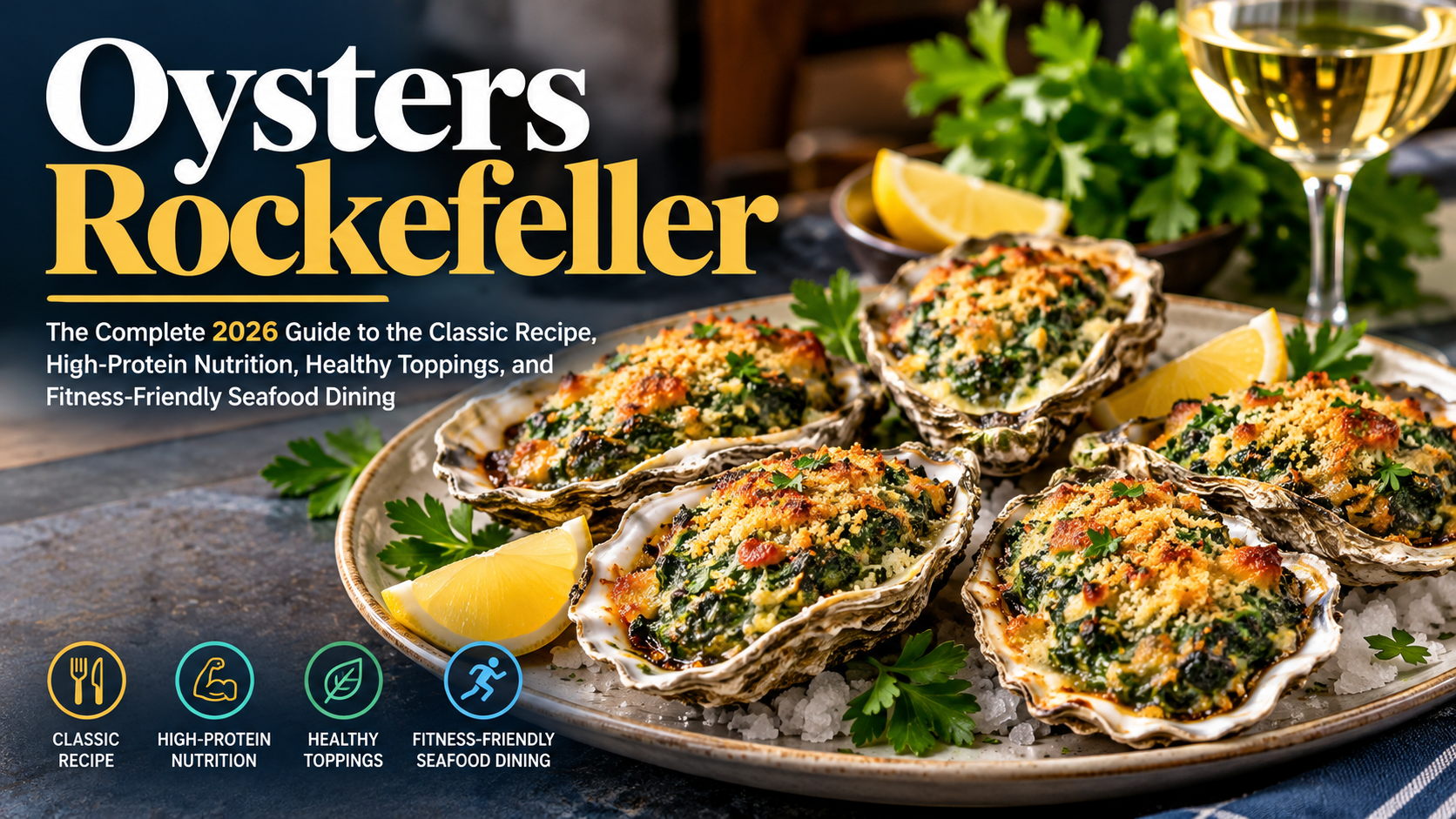
Oysters Rockefeller is a famous baked oyster dish known for its rich green herb topping, buttery flavor, and golden finish. Traditionally served in the shell, it combines oysters with ingredients such as parsley, other herbs, breadcrumbs, butter, and seasonings. The result is an elegant seafood appetizer that balances briny ocean flavor with savory richness.
For people interested in fitness and nutrition, this classic dish offers more than restaurant-style presentation. Oysters provide high-quality protein and important micronutrients, including zinc, vitamin B12, and iron. However, the final nutritional profile depends heavily on the amount of butter, breadcrumbs, cheese, and other toppings used.
With a few thoughtful ingredient choices, oysters Rockefeller can fit into a balanced eating pattern without sacrificing its signature flavor. This guide explores its history, traditional preparation, nutritional value, healthier variations, and food safety considerations.
What Is Oysters Rockefeller?

Oysters Rockefeller is a baked seafood appetizer made by placing oysters in their half shells beneath a rich topping of herbs, butter, and other savory ingredients. The topping is cooked until fragrant and lightly browned, creating a contrast between the tender oyster and its crisp or creamy coating.
The dish originated at Antoine’s restaurant in New Orleans in 1899. Restaurant tradition credits Jules Alciatore, son of founder Antoine Alciatore, with creating the recipe. It was named after John D. Rockefeller because its rich sauce was considered exceptionally lavish. The original formula has remained a closely guarded restaurant secret, and modern recipes vary considerably.
Although spinach is common in contemporary versions, historical accounts suggest that the original green topping may have relied on other herbs and vegetables. There is no single universally accepted recipe outside the restaurant’s own tradition. That flexibility makes the dish easy to adapt for different tastes and dietary priorities.
Ingredients Used in a Classic Rockefeller Recipe
The appeal of the dish comes from the interaction of fresh oysters, aromatic herbs, fat, and a savory topping. Oysters provide the main flavor, while parsley, celery, and other greens add freshness. Butter gives the mixture richness, and breadcrumbs help create a lightly crisp surface under the broiler.
A modern home-cooking version might use spinach, parsley, finely chopped celery, garlic, lemon juice, breadcrumbs, and a modest amount of butter or olive oil. Some recipes include Parmesan, Pernod, or another anise-flavored spirit, while others rely on herbs and seasoning alone. These are variations rather than requirements for an authentic preparation.
| Ingredient | Culinary purpose | Fitness-conscious adjustment |
|---|---|---|
| Fresh oysters | Protein and natural briny flavor | Keep the oyster portion generous |
| Spinach and parsley | Freshness, color, and micronutrients | Add extra greens |
| Butter | Richness and mouthfeel | Use a measured amount |
| Breadcrumbs | Texture and browning | Use a light whole-grain topping |
| Garlic and lemon | Aromatic depth and brightness | Season generously without excess salt |
| Parmesan, if used | Savory, salty flavor | Use a small amount for impact |
These adjustments preserve the dish’s central character while allowing you to control saturated fat, sodium, and added calories. The biggest difference often comes from portion size and topping quantity rather than removing every traditional ingredient.
Oysters Rockefeller Nutrition: Protein, Calories, and Key Nutrients

Oysters are nutrient-dense seafood that can contribute to a fitness-focused diet. They provide complete protein, which supplies the essential amino acids your body needs to maintain and repair muscle tissue. They also contain zinc, vitamin B12, iron, selenium, and other nutrients involved in normal immune function, energy metabolism, and red blood cell production.
However, the nutrition of oysters Rockefeller differs from that of plain cooked oysters. Butter, breadcrumbs, cheese, and rich sauces increase the energy content, while restaurant portions may contain more topping than a homemade serving. Exact calories and macros vary by recipe, oyster size, and serving quantity, so a single universal nutrition estimate would be misleading.
For people managing body weight, the dish can still fit into a balanced meal. Pair a moderate portion with a vegetable-rich side and a suitable protein source if needed. Rather than treating one appetizer as either a perfect fitness food or an unhealthy indulgence, consider the overall meal and your daily nutritional needs.
How Oysters Rockefeller Can Fit Into a Fitness Diet
Protein is particularly important for people who strength train, participate in sports, or want to maintain muscle while losing body fat. Oysters provide protein alongside minerals that support normal body functions. Including seafood as part of a varied diet can help you meet your nutritional needs without relying on the same protein sources every day.
The preparation method matters, too. A topping heavy in butter and cheese can make the dish considerably more energy-dense, which may be useful for someone who needs more calories but less convenient for someone working within a calorie target. Measuring the added fats and using herbs, garlic, and lemon for flavor can help you manage the balance.
For a fitness-friendly meal, serve baked oysters with roasted vegetables, a fresh salad, or a whole-grain side. If you are eating them after exercise, remember that recovery depends on your overall intake of protein, carbohydrates, fluids, and calories throughout the day. No single dish is required for muscle recovery, and oysters are not a substitute for a varied diet.
How to Make a Healthier Oysters Rockefeller Recipe
A lighter version can retain the dish’s signature savory topping without depending on large quantities of butter. Start with fresh oysters, chopped spinach, parsley, garlic, finely diced celery, lemon juice, and a small amount of olive oil or butter. Add a thin layer of breadcrumbs for texture and use Parmesan sparingly if you enjoy its salty, savory flavor.
Cook the greens briefly before combining them with the seasonings and topping each oyster. Arrange the shells securely on a baking tray, then bake in a preheated oven until the oysters are thoroughly cooked and the topping is lightly browned. Cooking times vary according to oyster size, oven temperature, and recipe, so use a reliable seafood food-safety guide rather than judging doneness by color alone.
The goal is not to remove every source of fat or flavor. A measured amount of butter can contribute richness, while herbs and citrus create complexity without requiring excessive seasoning. For a gluten-free variation, use certified gluten-free breadcrumbs or omit them and rely on the cooked greens and a small amount of grated cheese for texture.
Common Cooking Problems and How to Solve Them
One frequent problem is watery topping. Spinach and other greens release moisture as they cook, which can make the mixture slide off the oysters or turn soggy. Cook the greens until excess liquid evaporates, drain them if necessary, and avoid adding too much liquid seasoning. A drier topping generally browns more effectively.
Overcooked oysters can become firm and rubbery. Because oysters are relatively delicate, use a recipe with clear temperature and timing guidance, and avoid leaving them under the broiler longer than necessary just to brown the topping. If the surface needs additional color, finish briefly under close supervision rather than extending the cooking time substantially.
Food safety is equally important. Buy oysters from a reputable supplier, keep them properly refrigerated, and discard any raw oysters with broken shells or other signs of spoilage. Cooking reduces many food-safety risks, but raw or undercooked oysters can transmit harmful pathogens. People at increased risk of severe foodborne illness, including those with certain medical conditions or weakened immune systems, should avoid raw oysters and follow appropriate medical guidance.
Serving Ideas for Healthy Seafood Dining
The rich flavor of the dish makes it a natural appetizer, so a smaller serving can complement a meal without dominating it. Pairing it with a crisp salad, steamed vegetables, or grilled fish creates a seafood-focused menu with a range of textures and nutrients. Lemon wedges help brighten the flavor, while fresh parsley adds color and freshness.
For a casual fitness-oriented dinner, serve a few baked oysters alongside roasted potatoes and seasonal vegetables. For a more formal meal, combine them with a leafy salad and a lean protein dish, adjusting the portions to your appetite and energy needs. If sodium is a concern, use less added salt and remember that cheese, prepared breadcrumbs, and sauces may already contribute sodium.
A useful principle is to build the meal around your broader needs. Enjoying a rich appetizer occasionally can fit comfortably within a balanced eating pattern. Consistency across your everyday meals matters much more than labeling individual foods as either entirely healthy or unhealthy.
Frequently Asked Questions About Oysters Rockefeller
Are oysters Rockefeller high in protein?
Oysters naturally provide protein, but the amount in a serving depends on the number and size of the oysters. The topping contributes additional nutrients and calories but may not add much protein unless it includes ingredients such as cheese. For an accurate estimate, calculate the ingredients and serving size used in your specific recipe.
Are oysters Rockefeller healthy for weight loss?
They can fit into a weight-management plan when the serving size and topping ingredients suit your overall calorie needs. Oysters supply protein and micronutrients, while butter, cheese, and breadcrumbs increase the dish’s energy content. A lighter topping and vegetable-rich sides can make the meal easier to balance.
Can I eat oysters Rockefeller after a workout?
Yes, they can be part of a post-workout meal. Oysters provide protein, but your overall recovery also depends on adequate energy, carbohydrates when needed, fluids, and sufficient daily protein. Pairing the dish with a suitable carbohydrate source and vegetables can help create a more complete meal.
Are oysters Rockefeller made with spinach?
Many modern recipes use spinach, parsley, and other greens to create the familiar green topping. However, recipes vary, and spinach is not necessarily part of every version. The original preparation associated with Antoine’s restaurant in New Orleans remains a closely guarded secret, so contemporary recipes should be understood as interpretations of the classic.
Can oysters Rockefeller be made without breadcrumbs?
Yes. You can prepare a version without breadcrumbs by using cooked greens, herbs, garlic, and a small amount of cheese or another suitable topping. The texture will be less crisp, but the oysters can still develop a rich, savory flavor. People avoiding gluten should check all packaged ingredients for cross-contact and labeling information.
Are raw oysters safer than cooked oysters?
No. Raw oysters can carry pathogens that cause serious foodborne illness, even when they look and smell normal. Thorough cooking reduces the risk, although safe handling and storage remain important. People at increased risk of severe illness should avoid raw or undercooked oysters.
Conclusion: Enjoy a Classic Seafood Dish With a Balanced Approach
Oysters Rockefeller combines the culinary heritage of New Orleans with rich flavors, tender seafood, and a distinctive herb topping. Its oysters provide protein and valuable micronutrients, while the butter, breadcrumbs, and optional cheese contribute much of the dish’s richness and additional calories.
For fitness-conscious diners, the best approach is to pay attention to portions, measure added fats, include plenty of herbs and vegetables, and serve the dish as part of a balanced meal. Proper storage and thorough cooking are essential, particularly when preparing shellfish at home.
Ultimately, oysters Rockefeller can be both a special-occasion favorite and a thoughtful addition to a varied diet. The key is to enjoy the flavor, understand the ingredients, and make choices that support your personal nutrition goals without turning every meal into a strict set of rules.