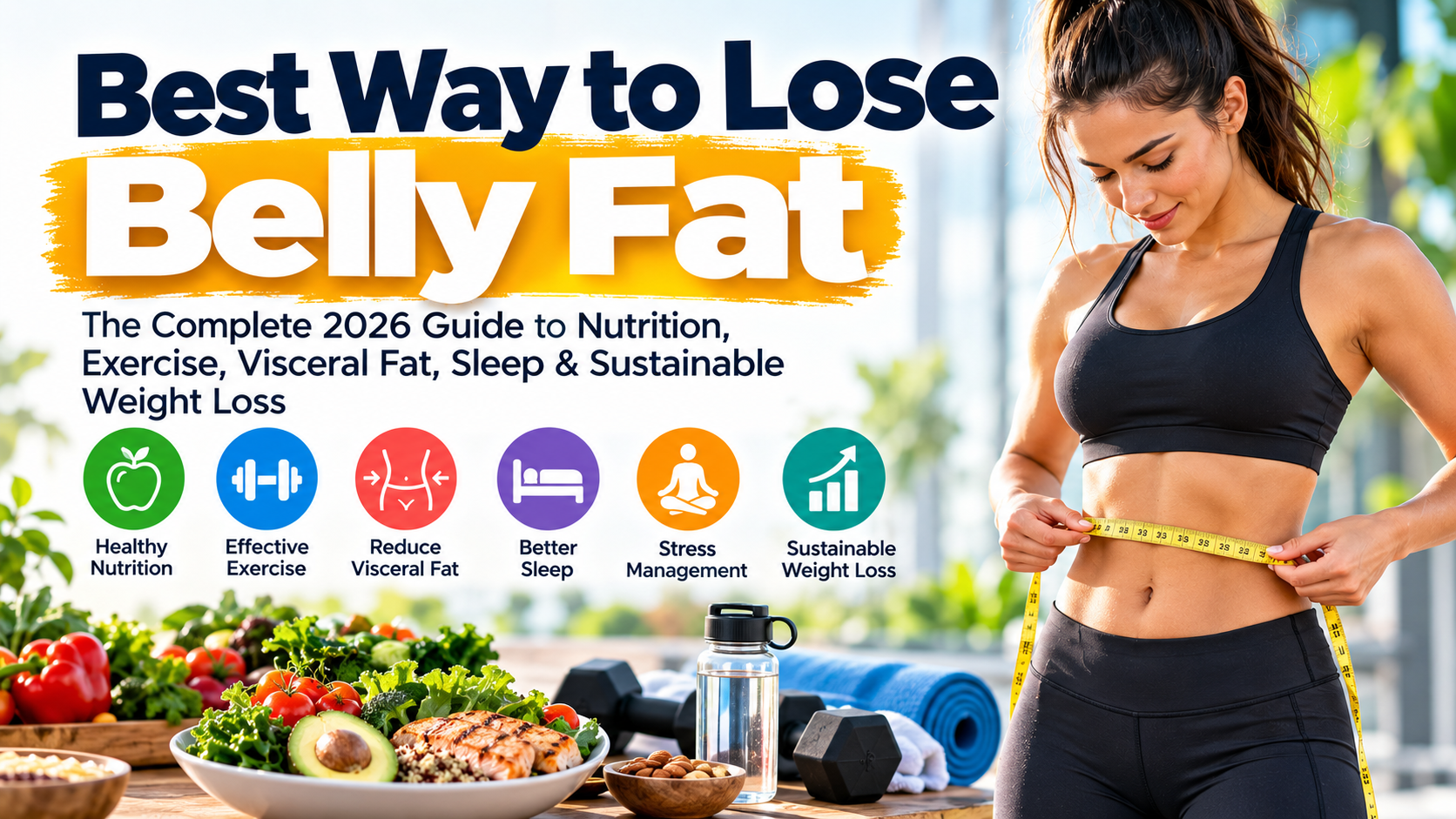
The best way to lose belly fat is not a single abdominal exercise, detox drink, or restrictive diet. Reducing abdominal fat generally requires a combination of sustainable eating habits, regular physical activity, adequate sleep, stress management, and gradual overall weight loss. Importantly, the body does not allow you to choose exactly where fat disappears first.
Belly fat includes both subcutaneous fat, which sits underneath the skin, and visceral fat, which is stored deeper inside the abdomen around internal organs. Excess visceral fat is associated with increased risks involving metabolic and cardiovascular health, making waist management more than a cosmetic concern.
The best way to lose belly fat therefore focuses on improving overall body composition rather than trying to “burn” fat from one specific location. The good news is that the same habits that reduce excess body fat can also improve cardiovascular fitness, blood sugar control, strength, sleep, and long-term health.
Why Belly Fat Is Different From Ordinary Body Fat
Not all abdominal fat is the same. Subcutaneous fat is the soft tissue that can be pinched beneath the skin, while visceral fat lies deeper within the abdominal cavity. Because visceral fat surrounds organs such as the liver and intestines, having excessive amounts is associated with a range of health concerns.
Genetics, age, hormones, activity levels, sleep, diet, medications, and overall energy balance can influence where the body stores fat. This explains why two people following similar routines may notice different changes around their waists. A person’s abdominal appearance is not a simple measure of effort or discipline.
Understanding this distinction also prevents a common mistake: assuming that hundreds of crunches will directly remove belly fat. Abdominal exercises can strengthen the rectus abdominis, obliques, and deeper core muscles, but they do not selectively remove the fat covering those muscles. Research-based guidance instead supports combining overall weight management with aerobic activity and resistance training.
Create a Sustainable Calorie Deficit Through Nutrition
For most people, the best way to lose belly fat begins with an eating pattern that creates a modest, sustainable calorie deficit. This does not require eliminating carbohydrates or surviving on tiny portions. NIDDK recommends a healthy eating pattern built around foods such as vegetables, fruits, whole grains, protein sources, beans, nuts, seeds, and appropriate healthy fats.
A useful real-world strategy is to improve meals rather than obsess over individual foods. A plate containing lean protein, vegetables, a high-fiber carbohydrate source, and a moderate amount of healthy fat can be more satisfying than a meal dominated by refined carbohydrates and sugary drinks. Replacing frequent calorie-dense beverages with water or unsweetened options can also reduce energy intake without making meals feel dramatically smaller.
The best way to lose belly fat through nutrition is therefore not a temporary “belly-fat diet.” It is an eating pattern that you can maintain after reaching your desired weight. Sustainable habits are particularly important because maintaining weight loss can become harder as the body adapts to a lower body weight.
Combine Cardio With Strength Training
Regular exercise increases energy expenditure and provides benefits that extend beyond the scale. Current guidance from the CDC and NIDDK recommends that adults generally work toward at least 150 minutes of moderate-intensity aerobic activity each week, alongside muscle-strengthening activity on at least two days.
Brisk walking, cycling, swimming, jogging, dancing, and rowing can all provide cardiovascular training. Strength exercises such as squats, lunges, rows, presses, deadlifts, and resistance-band movements can help build or maintain muscle. A combination is particularly useful because it addresses different aspects of fitness rather than relying entirely on calorie-burning cardio.
| Activity | Main benefit | Practical starting point |
|---|---|---|
| Brisk walking | Moderate cardio and daily movement | 20–30 minutes |
| Cycling | Cardiovascular conditioning | 20–40 minutes |
| Swimming | Full-body, low-impact cardio | 20–30 minutes |
| Strength training | Muscle and strength | 2–3 sessions weekly |
| Jogging | Higher-intensity aerobic work | Gradually progress |
| Core training | Abdominal strength and stability | 2–3 sessions weekly |
For someone currently inactive, starting below the full guideline and gradually increasing activity can be appropriate. Even short bouts of movement count, and NIDDK notes that physical activity can be accumulated in shorter sessions throughout the day.
Increase Daily Movement Beyond the Gym
One overlooked part of the best way to lose belly fat is non-exercise activity. Walking to nearby destinations, taking stairs, doing household chores, standing periodically, and taking short walking breaks can increase total daily movement without requiring a formal workout.
Imagine someone who exercises intensely for 45 minutes but then spends the remaining day sitting at a desk, commuting, and watching television. Another person might perform a moderate workout but also walk frequently throughout the day. Their total activity can be surprisingly different.
This is why step count and everyday movement can be useful alongside structured workouts. You do not need to transform every part of your day into exercise. Adding several short walking periods can gradually increase energy expenditure while remaining relatively easy to recover from.
Train Your Core Without Expecting Spot Reduction
Core exercises remain valuable even though they cannot selectively burn abdominal fat. Planks, dead bugs, bird dogs, reverse crunches, cable rotations, and controlled leg raises can improve trunk strength and stability. A stronger core can make everyday movements and other exercises more efficient.
The best way to lose belly fat is therefore not to abandon abdominal training, but to put it in the correct place within a complete program. Think of core exercises as building the structure underneath the surface while nutrition and full-body activity help reduce the overall layer of body fat covering it.
For example, a person could perform two or three short core sessions each week alongside squats, rows, presses, walking, and cycling. As body fat gradually decreases, stronger abdominal muscles may become more visible, but the timing and degree of visible definition vary substantially between individuals.
Prioritize Protein and High-Fiber Foods
Protein can help support muscle maintenance during weight loss, while high-fiber foods can contribute to fullness and improve overall diet quality. Foods such as eggs, fish, poultry, Greek yogurt, beans, lentils, tofu, vegetables, berries, oats, and whole grains can fit naturally into a balanced weight-management plan.
Fiber is particularly useful because many high-fiber foods require more chewing and can be more filling than highly refined alternatives. Replacing a low-fiber snack with fruit and yogurt, for example, may create greater satisfaction without requiring complicated diet rules.
This does not mean one nutrient independently melts abdominal fat. Rather, protein and fiber can make a calorie-controlled eating pattern easier to maintain. That consistency is a major part of the best way to lose belly fat over the long term.
Reduce Sugary Drinks and Highly Refined Foods
Liquid calories can be easy to overlook because beverages often provide less satiety than solid foods. Regular consumption of sugar-sweetened drinks can make it harder to maintain an appropriate calorie intake. NIDDK recommends limiting added sugars as part of a healthy eating pattern.
The solution does not require banning every enjoyable food. Instead, focus on frequency and portion size. A diet built mostly around minimally processed foods can still include occasional desserts or restaurant meals without turning the entire plan into an all-or-nothing system.
A practical rule is to make water, unsweetened beverages, vegetables, fruits, whole grains, and protein-rich foods the foundation of everyday eating. This creates room for flexibility while reducing the foods most likely to make a calorie deficit difficult to maintain.
Sleep and Stress Can Affect Weight Management
Sleep is an important part of the best way to lose belly fat because weight management is influenced by more than food and exercise. The CDC identifies adequate sleep and stress management as components of a healthy weight-management lifestyle.
Poor sleep can also make healthy routines harder to maintain. When someone is exhausted, preparing a balanced meal or completing a workout may feel considerably more difficult. Stress can similarly influence eating behavior, activity levels, and recovery.
A practical approach is to establish a consistent sleep schedule, create a relaxing pre-bed routine, and reduce unnecessary late-night screen stimulation. Stress management can include walking, breathing exercises, journaling, social connection, hobbies, or mindfulness. These habits do not replace nutrition and exercise, but they can make both easier to sustain.
Track Progress Beyond the Bathroom Scale
Body weight is useful, but it is not the only measurement worth tracking. Waist circumference can provide additional information about changes in abdominal size, while strength, fitness, clothing fit, and progress photos may provide useful context.
When measuring your waist, consistency matters. Use the same location and similar conditions each time rather than comparing measurements taken at random points during the day. NIDDK notes that waist size can provide information about health risk in addition to BMI.
The best way to lose belly fat should produce gradual changes rather than dramatic fluctuations. The CDC notes that people who lose weight gradually, around 1 to 2 pounds per week, are generally more likely to maintain the loss than people who lose weight faster.
Common Belly-Fat Mistakes and Better Solutions
One common mistake is relying on spot reduction. Performing hundreds of sit-ups may strengthen the abdominal muscles, but it does not force the body to use fat specifically from the stomach. The better solution is to combine full-body resistance training, aerobic activity, and a sustainable eating pattern.
Another mistake is choosing extreme diets that produce rapid short-term weight changes. Severe restriction can be difficult to maintain and may encourage cycles of restriction and overeating. A more practical solution is to make gradual changes that can continue after the initial weight-loss period.
A third mistake is ignoring recovery. More exercise is not automatically better if it produces persistent exhaustion or prevents consistent training. Progress comes from the interaction between training stimulus and recovery, so rest days, sleep, adequate nutrition, and manageable exercise volume all matter.
A Practical Weekly Plan for Reducing Overall Body Fat
A simple weekly routine can combine strength training, cardio, walking, and recovery without requiring hours in the gym. For example, three full-body strength sessions can be paired with several brisk walks and one or two additional cardio sessions. Beginners can start with shorter durations and gradually increase their workload.
The best way to lose belly fat is ultimately a routine that can survive busy weeks, travel, social events, and occasional setbacks. If a planned 45-minute workout cannot happen, a 20-minute walk is still useful. If one meal is heavier than planned, returning to normal eating at the next meal is more productive than abandoning the entire routine.
| Day | Example focus | Goal |
|---|---|---|
| Monday | Full-body strength + short walk | Build muscle and move more |
| Tuesday | Brisk walking or cycling | Cardiovascular activity |
| Wednesday | Full-body strength | Strength and muscle retention |
| Thursday | Walking + mobility | Active recovery |
| Friday | Full-body strength + core | Strength and stability |
| Saturday | Longer walk, cycling, or swimming | Aerobic fitness |
| Sunday | Rest or gentle movement | Recovery |
This structure can be adjusted according to fitness level, schedule, and health status. People with medical conditions or those beginning vigorous exercise after a long period of inactivity should discuss appropriate activity with a healthcare professional.
When Belly Fat May Require Medical Attention
Abdominal fat is influenced by numerous factors, including genetics, age, hormones, medications, medical conditions, and lifestyle. NIDDK specifically notes that these factors can affect weight management, meaning difficulty losing weight is not always explained by willpower or calorie intake alone.
If weight changes are unexplained, progress is accompanied by concerning symptoms, or obesity is affecting health, a healthcare professional can assess the situation. Evidence-based weight-management treatment may include nutritional counseling, physical activity, behavioral strategies, medication, or other interventions depending on individual circumstances.
A useful perspective is to treat waist reduction as one part of improving health rather than the sole measure of success. Better blood pressure, improved fitness, stronger muscles, better sleep, and healthier eating habits all matter.
Frequently Asked Questions
What is the best way to lose belly fat naturally?
The best way to lose belly fat naturally is to reduce overall excess body fat through a sustainable calorie-controlled eating pattern, regular aerobic activity, strength training, adequate sleep, and consistent daily movement. There is no reliable method for selectively removing fat from the abdomen, so the focus should be on whole-body health and gradual progress.
Can abdominal exercises remove belly fat?
Abdominal exercises can strengthen and develop the core muscles, but they cannot selectively remove the fat covering them. Sit-ups, planks, and other core movements can be valuable parts of a fitness program, while overall fat loss generally requires appropriate nutrition and full-body physical activity.
How long does it take to reduce belly fat?
The timeline varies according to starting body composition, calorie intake, activity, genetics, age, sleep, and other factors. Gradual weight loss is generally more sustainable than rapid loss. The CDC describes approximately 1 to 2 pounds per week as a gradual pace for many people, although individual results vary.
Does walking help reduce belly fat?
Yes. Walking increases physical activity and energy expenditure and can contribute to overall weight management. Brisk walking is also relatively accessible and can be accumulated in shorter sessions throughout the day. Regular walking combined with appropriate nutrition and strength training can form a practical fat-loss routine.
Does strength training help with abdominal fat?
Strength training can support muscle development and maintenance during weight loss and is an important component of a comprehensive fitness program. Research and clinical guidance support combining resistance exercise with aerobic activity rather than relying on one exercise type alone.
Can sleep affect belly fat?
Sleep is an important part of healthy weight management. Insufficient sleep can make it harder to maintain healthy eating and activity habits, while research has also associated inadequate sleep with increased visceral fat in some populations. Establishing consistent sleep habits can therefore support a broader weight-management strategy.
Conclusion
The best way to lose belly fat is a long-term strategy rather than a quick fix. Focus on a sustainable calorie deficit, nutritious foods, regular walking or other aerobic exercise, strength training, adequate protein and fiber, quality sleep, and effective stress management.
Most importantly, do not let abdominal exercises, detox products, extreme diets, or rapid-loss promises distract from the fundamentals. Visceral fat can respond to improvements in diet and physical activity, and even modest weight loss can provide meaningful health benefits.
The final takeaway is simple: you cannot command your body to burn fat from one exact location, but you can build habits that improve overall body composition and health. Consistency, patience, progressive exercise, and a sustainable eating pattern provide a far more reliable foundation than chasing the latest belly-fat shortcut.