

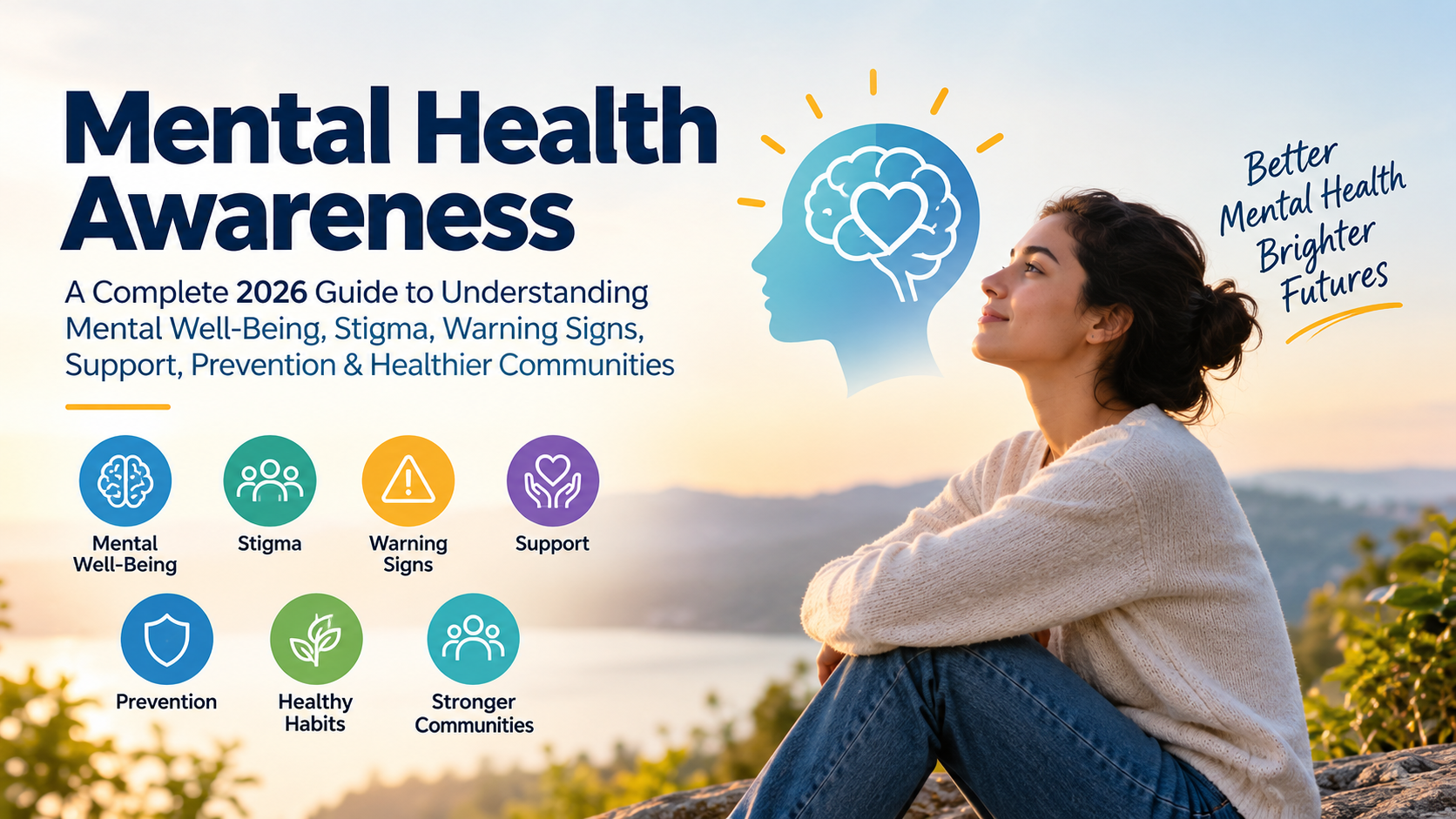
Mental health affects how people think, feel, behave, relate to others, handle stress, and function in everyday life. Mental health awareness helps individuals and communities recognize these dimensions of well-being before difficulties become more severe. It also encourages people to replace judgment with understanding and silence with appropriate support.
The World Health Organization (WHO) describes mental health as a state of well-being that helps people cope with life’s stresses, develop their abilities, learn, work, and contribute to their communities. Importantly, mental health is not simply the absence of mental illness.
A useful way to think about mental well-being is like physical fitness. Someone can appear physically healthy while experiencing an injury that is not immediately visible. Similarly, a person can smile, work, study, or socialize while privately struggling with anxiety, depression, trauma, burnout, loneliness, or another concern. Understanding this distinction is one of the central goals of mental health awareness.
What Mental Health Awareness Really Means
Mental health awareness means improving people’s understanding of mental well-being, mental health conditions, warning signs, risk factors, available support, prevention, and the importance of seeking appropriate care. It is not about diagnosing people from their behavior or labeling ordinary emotions as illnesses. Instead, it creates the knowledge needed to recognize when someone may need additional support.
Awareness also recognizes that mental health exists on a broad spectrum. A person can experience temporary stress after losing a job, grief following bereavement, anxiety before an important event, or sadness during a difficult period without necessarily having a mental disorder. At the same time, persistent or severe symptoms that interfere with daily functioning deserve attention. WHO notes that mental health is shaped by individual, family, community, social, and structural factors.
This distinction matters because both extremes can cause problems. Minimizing serious symptoms can delay professional support, while treating every uncomfortable emotion as a disorder can create unnecessary fear. Effective mental health awareness provides context, encourages compassion, and points people toward qualified assessment when appropriate.
Why Mental Health Awareness Matters in Everyday Life
Mental health influences relationships, education, employment, physical health, decision-making, sleep, motivation, and quality of life. When people understand common signs of psychological distress, they may be more likely to recognize changes in themselves or someone they care about. Early recognition does not guarantee a particular outcome, but it can make it easier to seek help before problems become increasingly disruptive.
The need is substantial. WHO reported in September 2026 that nearly one in seven people worldwide were living with a mental disorder based on 2023 estimates, with anxiety and depressive disorders among the most common. WHO also emphasizes that effective prevention and treatment options exist, while access to appropriate care remains inadequate for many people.
Consider an employee who has gradually stopped sleeping well, has difficulty concentrating, avoids colleagues, and no longer enjoys activities outside work. Without awareness, these changes might simply be described as laziness or a bad attitude. With better understanding, they can be recognized as possible signs of distress that deserve a supportive conversation and, when appropriate, professional evaluation.
Mental Health, Mental Illness, and Emotional Well-Being
Mental health and mental illness are related but not identical concepts. Everyone has mental health, just as everyone has physical health. A mental disorder, by contrast, involves clinically significant disturbances in cognition, emotional regulation, or behavior that are generally associated with substantial distress or impairment.
Emotional well-being includes the ability to experience and manage emotions, maintain meaningful relationships, adapt to challenges, and participate in daily activities. A healthy person can still feel sadness, anger, fear, disappointment, or stress. These emotions are part of normal human experience. The important consideration is their intensity, persistence, context, and effect on functioning.
| Area | What it can involve | When additional attention may help |
|---|---|---|
| Emotional health | Managing feelings and recovering from setbacks | Emotions become overwhelming or persistent |
| Psychological health | Thoughts, concentration, self-esteem, coping | Thinking becomes increasingly difficult or distressing |
| Social well-being | Relationships, belonging, communication | Isolation or conflict becomes persistent |
| Stress management | Adapting to pressure and change | Stress disrupts sleep, work, or daily activities |
| Daily functioning | Work, school, self-care, responsibilities | Normal activities become difficult to complete |
| Professional support | Therapy, medical care, counseling, or other services | Symptoms are severe, persistent, worsening, or unsafe |
Understanding these differences makes mental health awareness more accurate and less stigmatizing. It also helps people avoid the common mistake of assuming that one symptom automatically proves a diagnosis.

Common Signs That Someone May Be Struggling
Mental health concerns can appear through changes in mood, behavior, thinking, physical health, or daily routines. Possible signs include persistent sadness or anxiety, loss of interest in enjoyable activities, unusual irritability, concentration difficulties, sleep changes, appetite changes, fatigue, withdrawal from others, or difficulty completing normal responsibilities. NIMH recommends considering professional help when severe or distressing symptoms persist for two weeks or more, particularly when everyday functioning is affected.
However, warning signs should be interpreted within context. A student may sleep poorly during examinations, for example, while a new parent may experience temporary exhaustion after major life changes. The presence of one symptom does not establish a mental health condition. A pattern that persists, intensifies, causes significant distress, or interferes with life deserves closer attention.
A practical principle is simple: notice changes, avoid assumptions, and encourage appropriate support. Instead of saying, “You are depressed,” a friend might say, “I’ve noticed you’ve seemed withdrawn and exhausted lately, and I’m concerned about you.” This approach opens the door to conversation without pretending to provide a clinical diagnosis.
The Role of Stigma and Why Language Matters
Stigma can be one of the largest barriers to seeking mental health support. People may fear being judged as weak, unstable, unreliable, or incapable. Others may worry about discrimination at school, work, within relationships, or in their communities. WHO identifies stigma and discrimination as major challenges that can reduce help-seeking and negatively affect the lives of people living with mental health conditions.
Language can either reinforce these attitudes or help change them. Describing someone as a person “living with depression” is generally more person-centered than reducing their identity to a diagnosis. Similarly, saying that someone is “experiencing emotional distress” can be more constructive than casually calling them “crazy” or “weak.”
Good mental health awareness does not mean pretending that every experience is positive. It means discussing difficult experiences accurately and respectfully. A workplace that encourages reasonable conversations about stress, burnout, counseling, and psychological safety can create a very different environment from one where employees feel that asking for help will damage their reputation.
How Mental Health Awareness Supports Early Intervention
Early intervention focuses on recognizing concerns and connecting people with appropriate support before difficulties become more entrenched. It may involve talking with a primary care professional, psychologist, psychiatrist, counselor, social worker, school support professional, or another qualified provider depending on the person’s circumstances.
NIMH advises people to describe symptoms specifically when speaking with a health professional, including when symptoms began, how often they occur, how severe they are, and whether recent stressors or life changes may be involved. This information can help a professional understand the situation and determine appropriate next steps.
The problem–solution relationship is straightforward. Problem: someone notices persistent changes but assumes they must simply “push through.” Solution: treat significant changes as information rather than personal failure, discuss them with a trusted person, and seek qualified assessment when needed. This does not mean every difficult period requires treatment; it means serious or persistent concerns should not automatically be ignored.
Practical Ways to Build Better Mental Health Awareness
Awareness becomes meaningful when it changes everyday behavior. Families can create spaces where children and adults can discuss emotions without immediate criticism. Schools can teach age-appropriate emotional literacy, coping skills, peer support, and pathways to professional assistance. Workplaces can provide psychologically safer environments, reasonable support systems, and clear information about available resources.
Individuals can also develop basic mental health literacy. Learning the difference between stress and prolonged distress, understanding common symptoms, maintaining social connections, exercising regularly, getting adequate sleep, eating consistently, and making time for restorative activities can all contribute to well-being. NIMH specifically highlights physical activity, healthy meals, hydration, sleep, social connection, and other self-care practices as useful components of mental health care.
At the community level, awareness should go beyond posters and awareness days. Effective programs can involve people with lived experience, mental health professionals, educators, healthcare systems, employers, families, and community organizations. WHO’s 2026 World Mental Health Day campaign emphasizes meaningful involvement of people with lived experience in shaping mental health services and decisions.
Supporting Someone With a Mental Health Concern
Supporting another person does not require becoming their therapist. Often, the most useful first step is listening without immediately trying to solve the problem. A calm statement such as “I’m here to listen” can be more helpful than a lecture about staying positive. The goal is to create connection while respecting the person’s autonomy.
If someone appears to be struggling, practical support can also matter. Offering to help them contact a professional, accompany them to an appointment, assist with everyday responsibilities, or simply check in regularly may reduce isolation. It is important to respect boundaries while taking serious warning signs seriously.
For someone experiencing suicidal thoughts or immediate danger, the situation requires urgent help rather than casual reassurance. NIMH identifies warning signs such as talking about wanting to die, feeling hopeless or trapped, withdrawing from others, giving away important possessions, making a suicide plan, extreme mood changes, or increased substance use.
In an immediate life-threatening emergency, contact local emergency services or an appropriate crisis service. In the United States, people can call or text 988 for the 988 Suicide & Crisis Lifeline. Crisis resources differ by country, so local emergency and mental health services should be used elsewhere.
Mental Health Awareness Across Different Life Stages
Mental well-being changes throughout life. Children may communicate distress through behavior, changes in school performance, irritability, physical complaints, or withdrawal rather than directly describing emotional difficulties. Adolescents may experience pressures involving identity, relationships, school, social environments, family expectations, and digital spaces.
Adults may encounter workplace stress, financial pressure, caregiving responsibilities, relationship difficulties, chronic illness, grief, or major transitions. Older adults may face bereavement, social isolation, changing independence, physical health challenges, and other life changes. These circumstances do not automatically cause mental illness, but they can influence psychological well-being and the need for support.
For this reason, mental health awareness should never be built around one age group or one stereotype. WHO emphasizes that mental health is influenced across the life course by social and environmental conditions, including poverty, violence, discrimination, chronic stress, and social isolation.
Building a Culture of Mental Health Awareness
A healthy culture begins when people stop treating mental health as a private weakness and start treating it as an important part of overall health. This does not mean forcing people to disclose personal experiences. Privacy, consent, dignity, and individual choice remain essential.
Organizations can contribute by making support information easy to find, training managers or educators to recognize concerning changes without diagnosing people, establishing clear referral pathways, and addressing discrimination. Families can contribute by listening, using respectful language, and taking concerns seriously. Communities can contribute by making services accessible and involving people with lived experience in program design.
As WHO explains, mental health is shaped by where people live, learn, work, and connect. That means meaningful mental health awareness cannot stop at individual self-care. It also requires attention to social connection, safe environments, access to healthcare, economic conditions, human rights, and community support.
Frequently Asked Questions About Mental Health Awareness
What is mental health awareness?
Mental health awareness is the process of increasing understanding about mental well-being, mental health conditions, risk factors, warning signs, prevention, treatment, and available support. Its purpose is to improve mental health literacy, reduce stigma, encourage appropriate help-seeking, and create environments where people can discuss psychological concerns respectfully.
Why is mental health awareness important?
Mental health awareness matters because people may not recognize that persistent emotional, behavioral, cognitive, or physical changes can be signs of psychological distress. Better awareness can encourage earlier conversations, reduce harmful stereotypes, improve understanding of treatment and recovery, and make communities more supportive of people experiencing mental health challenges.
What are common signs of poor mental health?
Possible signs include persistent sadness or anxiety, major changes in sleep or appetite, loss of interest in usual activities, concentration problems, fatigue, irritability, social withdrawal, feelings of hopelessness, and difficulty managing everyday responsibilities. These signs can have many causes, so they should not be treated as a diagnosis without appropriate professional assessment.
How can I improve my own mental health?
Helpful foundations include regular physical activity, sufficient sleep, nutritious meals, hydration, meaningful social connection, enjoyable low-stress activities, and appropriate professional support when needed. NIMH notes that self-care can support overall well-being and can complement treatment and recovery for people living with mental illness.
How can I help a friend who is struggling?
Start with empathy and listening rather than judgment or immediate advice. Let the person know that you care, encourage appropriate professional support, and offer practical assistance where suitable. If there are signs of imminent danger or suicide risk, seek urgent professional or emergency assistance rather than trying to manage the situation alone.
Does talking about mental health encourage negative thinking?
Open, responsible conversations do not inherently create mental health problems. In fact, reducing silence and stigma can make it easier for people to recognize concerns and seek support. The goal of mental health awareness is not to focus endlessly on problems but to build accurate knowledge, resilience, connection, prevention, and access to appropriate care.
Conclusion: Turning Awareness Into Meaningful Action
Mental health awareness is ultimately about understanding people more accurately. It recognizes that psychological well-being can change over time, that mental health conditions are real and treatable, and that distress should not automatically be interpreted as weakness or personal failure.
The strongest approach combines individual awareness with supportive families, informed schools, healthier workplaces, accessible healthcare, evidence-based treatment, and communities that challenge stigma. Awareness is most valuable when it leads to practical action: noticing meaningful changes, listening without judgment, seeking qualified help when appropriate, and making it easier for others to do the same.
The final insight is simple: mental health deserves the same seriousness, compassion, and respect we give to physical health. Mental health awareness is not merely about knowing the terminology—it is about creating a culture where people can recognize difficulties earlier, access appropriate support, and maintain their dignity throughout the process.