
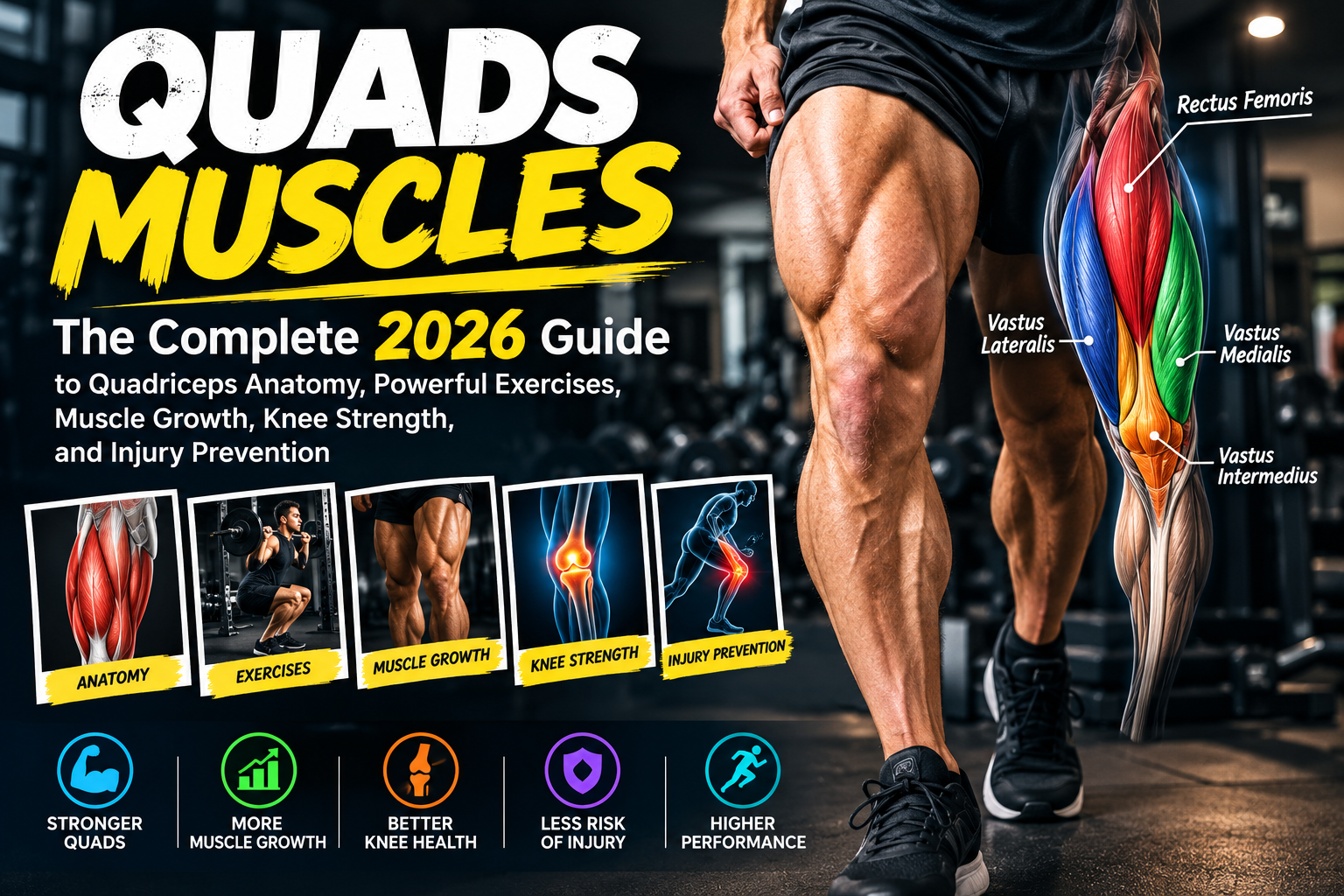
The quads muscles, commonly called the quadriceps, are the large group of muscles at the front of your thighs. They help you straighten your knees, stand up from a chair, climb stairs, run, jump, and perform lower-body exercises such as squats and lunges. Whether your goal is building bigger legs, improving athletic performance, or maintaining everyday mobility, strong quadriceps play an essential role.
Understanding how these muscles work makes training more effective. Instead of relying on endless squats or heavy weights, you can combine targeted exercises, appropriate resistance, good technique, recovery, and progressive overload. This guide explains quadriceps anatomy, the best exercises for growth, common training mistakes, nutrition, and practical ways to develop stronger, more functional legs.
What Are the Quads Muscles?
The quadriceps femoris is a group of four muscles located at the front of each thigh. Together, they are primarily responsible for knee extension, the movement that straightens your leg. One part also helps flex the hip, making the group important for walking, sprinting, jumping, and rising from a seated position.
These muscles work with the hamstrings, glutes, calves, and other lower-body muscles to coordinate movement. During a squat, for example, the quadriceps control knee bending as you lower yourself and produce force as you stand back up. They also help stabilize the knee during everyday activities and sports.
The quadriceps attach to the patella, or kneecap, through the quadriceps tendon. The patellar tendon then connects the kneecap to the tibia, the larger bone in the lower leg. This connected structure transfers muscular force to the lower leg, allowing the knee to straighten efficiently.
Quadriceps Anatomy: The Four Main Muscles

Although the quadriceps function as a group, each muscle has a slightly different position and role. Learning their basic anatomy helps you understand why a combination of compound exercises and targeted movements is useful.
- Rectus femoris: Runs down the middle of the front thigh. It helps extend the knee and flex the hip, so it contributes to movements such as kicking and lifting the thigh.
- Vastus lateralis: Located on the outer portion of the thigh, it is generally the largest quadriceps muscle and contributes strongly to knee extension.
- Vastus medialis: Sits on the inner side of the thigh near the knee. Its fibers, including the lower portion often called the VMO, contribute to knee extension and coordinated patellar movement.
- Vastus intermedius: Lies beneath the rectus femoris, between the vastus lateralis and vastus medialis. It helps extend the knee.
These muscles share the work of straightening the knee, so no single exercise perfectly isolates each one. Squats, leg presses, and knee extensions can all train the quadriceps, but the amount of emphasis varies with joint angles, resistance, technique, and individual anatomy.
Best Exercises for Quads Muscles Growth and Strength


Building stronger thighs generally requires a mixture of multi-joint movements and exercises that directly load knee extension. Compound exercises train several muscle groups together, while isolation movements allow you to challenge the quadriceps without requiring as much coordination from the rest of the body.
The best exercise is one you can perform with controlled technique, a suitable range of motion, and resistance that matches your ability. You do not need to use every exercise in one session. Choose a few that fit your equipment, experience, and recovery needs, then gradually increase the training challenge.
Squats
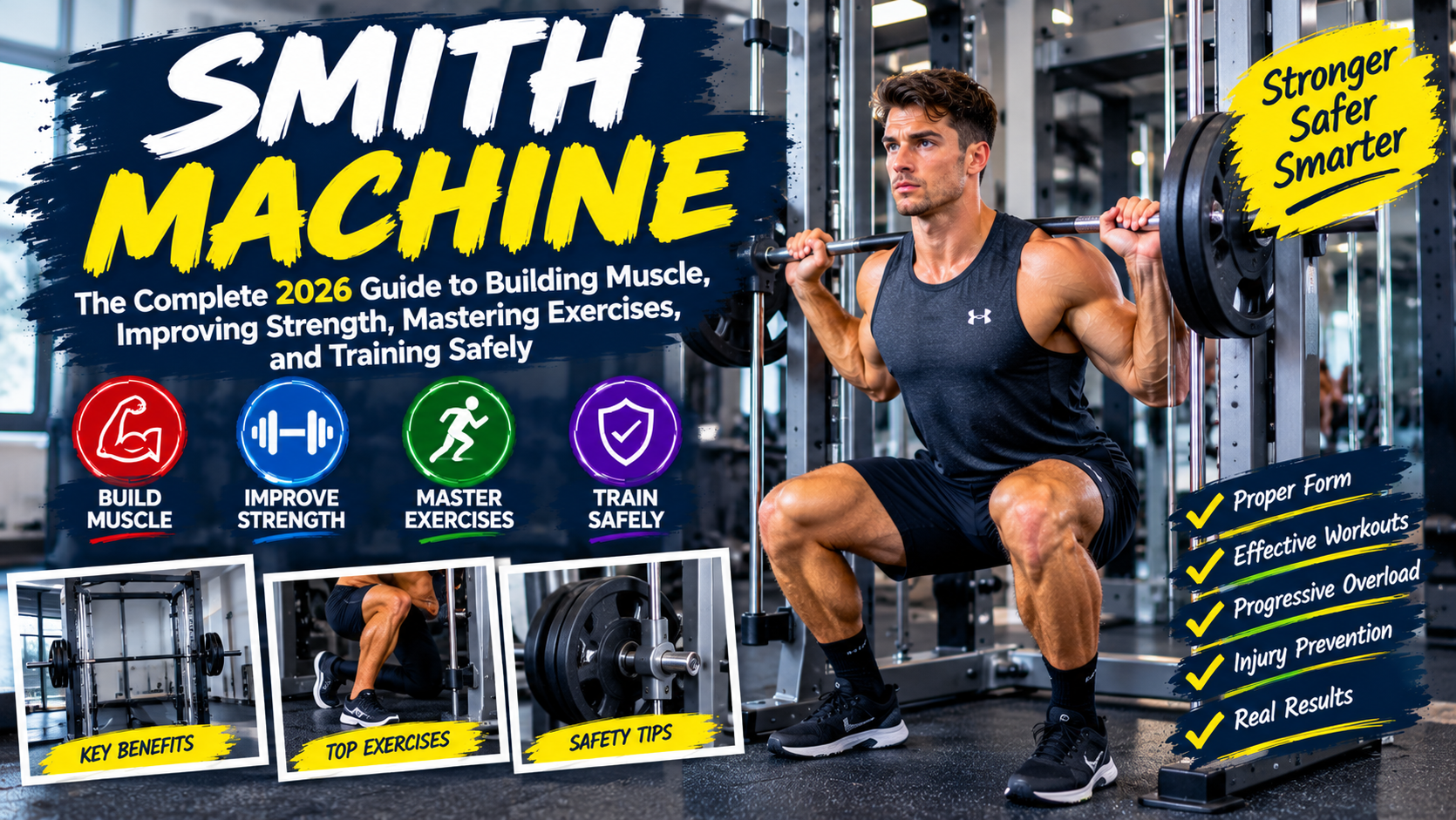
Squats are a foundational lower-body exercise that trains the quadriceps alongside the glutes and other supporting muscles. Keep your feet stable, brace your torso, and lower yourself under control while allowing your knees to travel naturally in line with your toes. Use a depth you can manage without losing balance or experiencing concerning pain.
A front squat or goblet squat often encourages a more upright torso than some back-squat variations, which can increase the knee-extension demands for many lifters. However, the best variation depends on mobility, comfort, technique, and training goals.
Leg presses
The leg press allows you to train knee and hip extension while supporting your torso against a machine. It can be useful for accumulating quadriceps training volume without the same balance demands as a free-weight squat. Lower the platform only as far as you can while keeping your pelvis and lower back supported.
Avoid locking your knees forcefully at the top or loading the machine so heavily that you shorten the movement considerably. A controlled repetition through a comfortable range is generally more productive than chasing weight at the expense of technique.
Leg extensions
Leg extensions directly target knee extension and make it easier to train the quadriceps without a squat or hip-dominant movement. Adjust the machine so its pivot aligns approximately with your knee joint, and position the pad comfortably on the lower part of your shin. Lift smoothly and lower the weight with control.
This exercise can complement squats and leg presses, particularly when your program needs more direct quadriceps work. If you have a knee injury or pain, the appropriate range and resistance may need to be adjusted with guidance from a qualified clinician.
Split squats and lunges
Split squats and lunges train each leg individually, helping develop balance, coordination, and side-to-side strength. A Bulgarian split squat, with the rear foot elevated, can challenge the front leg substantially. Start with body weight or light dumbbells before adding resistance.
Use a stable stance and let the front knee move naturally as you lower your body. A longer stride may shift more demand toward the hip, while a shorter stance and more forward knee travel may increase quadriceps involvement for some people. Comfort and control should determine your setup.
How to Train Your Quads for Muscle Growth
Effective quadriceps training depends on consistency, sufficient training volume, and progressive overload. Progressive overload means gradually increasing the challenge placed on your muscles through additional repetitions, slightly heavier resistance, improved control, or a suitable increase in range of motion. You do not need to add weight every workout; progress can be gradual and should never come at the expense of technique.
For many beginners, training the quadriceps twice per week is a practical starting point. More experienced lifters may benefit from additional volume, but recovery, exercise selection, and overall training demands matter more than following a rigid schedule. Start with a manageable workload and adjust it according to performance and recovery.
| Exercise | Main benefit | Suggested starting volume |
|---|---|---|
| Squats | Overall leg strength and quadriceps development | 3 sets of 6–10 reps |
| Leg press | Stable, resistance-based leg training | 3 sets of 8–12 reps |
| Leg extensions | Direct quadriceps stimulation | 2–3 sets of 10–15 reps |
| Split squats | Single-leg strength and coordination | 2–3 sets of 8–12 reps per leg |
These are general starting suggestions, not mandatory targets. Rest long enough to perform each set with good technique, and adjust the load to your training experience. Most working sets should feel challenging while still allowing you to maintain control and finish with sound form.
A useful training cue is, “Control the lowering phase, then drive up smoothly.” Lowering the weight under control helps you maintain positioning and avoid relying on momentum. Muscle growth also requires adequate recovery, so allow enough time between demanding sessions rather than training hard through persistent soreness or declining performance.
Common Quadriceps Training Mistakes and How to Fix Them
One common mistake is using more weight than you can control. This often leads to shallow squats, bouncing repetitions, or relying on other muscles to complete the movement. The solution is to reduce the load, establish a comfortable range of motion, and increase resistance only when you can maintain consistent technique.
Another mistake is assuming that knee movement over the toes is always dangerous. During many normal movements, the knees naturally travel forward. The amount of forward movement depends on your body proportions, ankle mobility, exercise variation, and technique. Rather than forcing your knees to remain behind your toes, focus on stable foot contact, controlled movement, and a range that suits your current capacity.
Skipping warm-ups can also make a workout feel less comfortable, especially when moving straight into heavy sets. Begin with a few minutes of easy movement and perform lighter practice sets of your first exercise. If you experience sharp pain, swelling, knee instability, or symptoms that persist or worsen, stop the aggravating movement and seek appropriate medical advice.
Nutrition and Recovery for Stronger Quadriceps
Muscle development requires more than lifting weights. Your body needs enough energy, protein, carbohydrates, fluids, and sleep to support training and repair. Include protein-rich foods such as eggs, fish, chicken, dairy products, tofu, lentils, or beans throughout the day. Carbohydrate sources such as rice, oats, potatoes, fruit, and whole grains can help fuel demanding workouts.
Total daily protein needs vary with body size, activity level, and goals. For many healthy adults who train regularly, approximately 1.4–2.0 grams of protein per kilogram of body weight per day is a commonly used range for supporting muscle growth and recovery. People with relevant medical conditions should seek individualized advice before making major dietary changes.
Sleep is equally important. Most adults should aim for at least seven hours per night, with individual needs varying. On recovery days, light walking or comfortable mobility work may help you stay active without adding substantial training stress. If your legs remain unusually sore, your strength declines, or fatigue accumulates, reduce the workload and reassess your recovery.
Quads Muscles, Knee Health, and Everyday Mobility
Strong quadriceps contribute to many everyday tasks, including climbing stairs, standing up from a chair, getting up from the floor, and controlling your body when walking downhill. They also play a significant role in running, jumping, and changing direction during sports. Building strength gradually can help improve your ability to perform these activities with confidence.
However, stronger quadriceps do not guarantee freedom from knee pain or injury. Knee health depends on several factors, including joint structures, training history, movement demands, recovery, and other surrounding muscles. Balanced lower-body training should therefore include the glutes, hamstrings, calves, and hip muscles rather than focusing exclusively on the front of the thighs.
People recovering from knee surgery or dealing with conditions such as patellofemoral pain should follow an individualized exercise plan. A physiotherapist can help determine appropriate movements, resistance, and range of motion. Avoid treating persistent pain as something you must simply push through to build stronger legs.
Frequently Asked Questions About Quads Muscles
How many muscles make up the quadriceps?
The quadriceps consist of four muscles: rectus femoris, vastus lateralis, vastus medialis, and vastus intermedius. Together, they form the large muscle group at the front of the thigh and work primarily to straighten the knee.
What is the best exercise for quadriceps growth?
Squats, leg presses, and leg extensions are all effective choices when performed with suitable technique and progressive resistance. No single exercise is best for everyone. Combining a compound movement with a direct quadriceps exercise can provide a practical balance of overall strength and targeted muscle development.
How often should I train my quads?
Many people can start with two quadriceps-focused sessions per week, allowing sufficient recovery between demanding workouts. The ideal frequency depends on training experience, total exercise volume, sleep, nutrition, and other physical activities. Increase frequency only if you can recover and maintain good performance.
Can I build quadriceps muscles at home?
Yes. Bodyweight squats, reverse lunges, split squats, step-ups, and wall sits can challenge the quadriceps without a gym membership. As these exercises become easier, you can increase repetitions, slow the lowering phase, use a greater comfortable range of motion, or add suitable external resistance.
Why are my quadriceps sore after a workout?
Muscle soreness can occur after unfamiliar exercise or a challenging session, particularly when your muscles perform a lot of controlled lowering work. It often improves over several days. Severe pain, significant swelling, unusual weakness, or symptoms that do not improve should not automatically be attributed to normal soreness.
Do quadriceps exercises help with knee stability?
The quadriceps contribute to knee movement and control, so strengthening them can support functional movement. However, knee stability also depends on other muscles, ligaments, joint structures, balance, and coordination. Anyone with recurring knee pain or instability may benefit from assessment by a qualified healthcare professional.
Conclusion: Build Stronger, More Functional Quadriceps
The quads muscles are essential for knee extension, lower-body strength, athletic performance, and everyday movement. Understanding the four quadriceps muscles makes it easier to choose exercises that develop the front of the thighs while supporting balanced leg training.
For sustainable progress, combine squats or leg presses with direct knee-extension work and single-leg exercises. Use controlled technique, increase resistance gradually, eat enough nutritious food, and prioritize recovery. Avoid chasing heavy weights when your form begins to break down, and address persistent pain rather than ignoring it.
The key takeaway is simple: stronger thighs are built through consistent, well-planned training, not one perfect exercise. Choose movements you can perform safely, track your progress, and give your body enough time to adapt.