

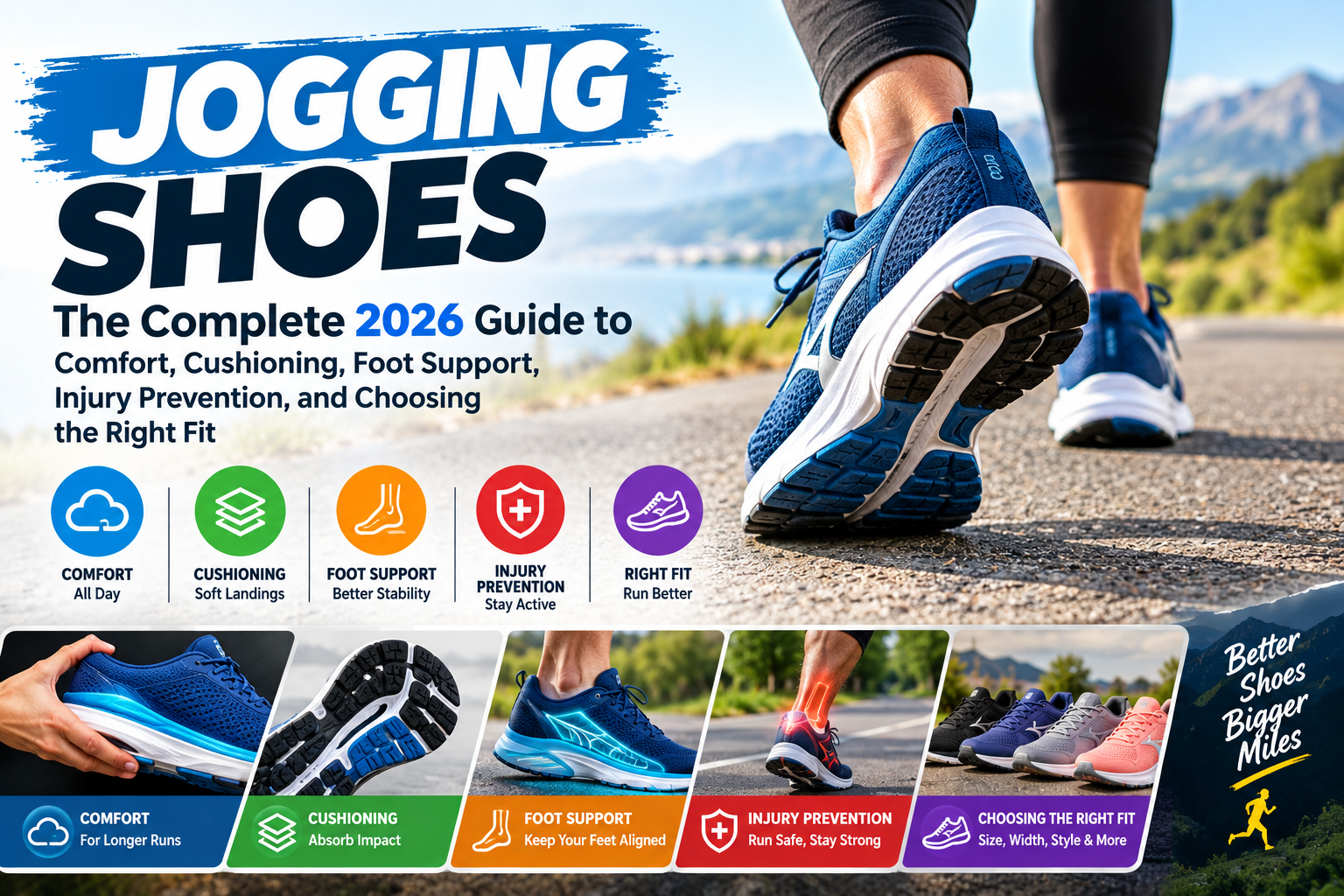
Choosing the right jogging footwear can make your running routine more comfortable, consistent, and enjoyable. Whether you jog around your neighborhood, use a treadmill, or follow a structured fitness plan, your shoes influence how your feet feel, how securely you move, and how well the footwear suits your running surface.
However, the most expensive pair is not necessarily the best choice. Foot shape, running experience, training frequency, preferred terrain, and personal comfort all matter. Understanding cushioning, stability, fit, breathability, and durability helps you select footwear that supports your needs rather than relying on marketing claims.
This guide explains what to look for, how different shoe types compare, when to replace worn footwear, and how to avoid common buying mistakes.
What Are Jogging Shoes and Why Do They Matter?
Jogging shoes are athletic footwear designed to support repeated running movements through features such as cushioning, flexible uppers, durable outsoles, and secure foot retention. Compared with many casual sneakers, they are generally engineered specifically for the repetitive impact and forward movement associated with running.
During a jog, your feet repeatedly contact the ground while your muscles and joints coordinate to absorb and produce force. Suitable footwear can improve comfort, provide traction, and help accommodate your individual running mechanics. However, no shoe can eliminate impact or guarantee that you will avoid injuries. Training volume, recovery, strength, running technique, and previous injury history also influence running comfort and risk.
For example, someone jogging for 20 minutes on a treadmill may prioritize lightweight cushioning and breathability. A person running on uneven park paths may place greater importance on outsole grip and secure footing. Matching footwear to your actual routine is more useful than choosing a pair simply because it is popular.
Key Features to Look for When Choosing Jogging Shoes

The best footwear balances comfort, fit, support, and durability. These features work together: a well-cushioned shoe may still feel uncomfortable if the toe box is too narrow, while an attractive lightweight design may not offer the traction needed for your usual route.
Start by considering where you run, how often you train, and whether you have specific comfort requirements. If possible, try shoes later in the day, when your feet may be slightly larger, and wear the socks you normally use for jogging. Walk and jog briefly in the shoes to check whether they feel secure without pressure points.
Cushioning and Midsole Comfort
The midsole is the layer between your foot and the outsole. It often uses foam materials designed to provide cushioning, compress under load, and recover their shape during movement. Some shoes offer a soft, plush feel, while others have a firmer, more responsive ride.
More cushioning is not automatically better. A soft shoe may feel comfortable to one runner but unstable to another, while a firmer design may suit someone who prefers a more direct ground feel. Focus on how the shoe feels during movement rather than assuming a particular foam technology will improve performance or prevent injury.
Fit, Toe Box, and Heel Security
Fit is one of the most important considerations. Your toes should have enough room to spread naturally, and the front of the shoe should not press painfully against your longest toe. At the same time, your heel should remain secure without excessive slipping or rubbing.
A shoe that feels tight across the forefoot can cause discomfort during longer sessions, particularly as your feet warm up and swell slightly. Do not assume that sizing up will solve every fit problem: a wider model may be more suitable than a longer one. Try both feet because their sizes can differ, and use the larger foot to guide your choice.
Breathability and Upper Materials
Many running shoes use engineered mesh or other lightweight textiles to improve airflow and reduce excess heat around the foot. Breathable uppers can be especially useful in warm weather or during indoor treadmill workouts. However, extremely open materials may offer less protection against cold weather, rain, or debris.
Look for smooth internal construction and secure lacing that holds the foot comfortably in place. If the upper creases awkwardly, rubs your toes, or creates pressure over the top of your foot, another design may fit better.
Outsole Grip and Durability
The outsole is the part of the shoe that contacts the ground. Rubber compounds and tread patterns influence traction, durability, and flexibility. Road-running shoes typically emphasize smooth, predictable contact with pavement, while trail-running models often feature more pronounced lugs for dirt, gravel, and uneven terrain.
Think about your regular route before choosing an outsole. Deep trail lugs may feel unnecessary on a treadmill, whereas a smooth road outsole may provide insufficient grip on muddy paths. A versatile road shoe can work for sidewalks and paved park trails, but specialized terrain may call for a different design.
Types of Jogging Shoes for Different Running Needs


Running footwear comes in several broad categories, and the right one depends on comfort, terrain, and individual movement preferences. Neutral running shoes generally provide cushioning without pronounced stability features. Stability shoes include design elements intended to influence how the foot moves during the gait cycle, although their effects vary between runners and models.
Trail-running shoes are designed for uneven outdoor surfaces, often using grippier outsoles and uppers that offer additional protection. Lightweight performance shoes prioritize low weight and responsiveness, but some are designed for faster workouts rather than everyday easy jogging. Daily trainers are often versatile options for regular runs because they balance cushioning, durability, and comfort.
| Shoe type | Best suited for | Main consideration |
|---|---|---|
| Neutral running shoes | Runners who find them comfortable and suitable | Cushioning and natural-feeling movement |
| Stability shoes | Runners who prefer their support features | Comfort during movement, not labels alone |
| Trail-running shoes | Dirt paths, gravel, and uneven terrain | Grip, protection, and surface conditions |
| Lightweight performance shoes | Faster training sessions or racing | Responsiveness and intended use |
| Daily trainers | Regular jogging and general running | Versatility, comfort, and durability |
You do not need a specialized shoe for every activity. Many beginners can start with a comfortable daily trainer that suits their usual surface. If you later add trail runs, speed sessions, or longer distances, you can consider footwear designed for those specific demands.
How to Choose the Right Shoe for Your Foot Type
Foot shape and running mechanics can influence how footwear feels. Some people have wide forefeet, others have narrow heels, and some prefer more room around the toes. Shoe brands also differ in their sizing and construction, so the same labeled size can fit differently across models.
Pronation describes the natural inward rolling movement of the foot during walking and running. It is a normal part of movement, not automatically a problem that requires correction. A stability shoe may feel helpful for some runners, but pronation alone does not determine which shoe is best. Comfort, fit, training history, and professional assessment when needed are more useful guides than trying to force every foot into one ideal pattern.
If you experience persistent discomfort, recurring injuries, or difficulty finding a comfortable fit, a podiatrist or qualified healthcare professional can assess your needs. Custom orthotics are not necessary for every runner, and shoes marketed for a particular foot type should not be treated as medical treatment.
How Much Should You Spend on Jogging Shoes?
The right budget depends on how frequently you run, the features you need, and the options available in your market. Entry-level shoes can work well for casual jogging, while more expensive models may offer specialized foam, lighter materials, or particular construction features. A higher price does not automatically mean better comfort or greater injury protection.
Rather than paying extra for every new technology, prioritize fit, intended use, construction quality, and return policies. If you jog several times a week, durability and consistent comfort may matter more than a small weight difference. If you run occasionally, a reliable general-purpose model may be sufficient.
Compare the exact model across reputable retailers, check whether the shoes are intended for road or trail use, and review the manufacturer’s sizing guidance. Avoid counterfeit products and be cautious with heavily discounted listings that lack credible seller information.
When Should You Replace Your Running Shoes?
Running footwear gradually changes as its midsole compresses, outsole wears down, and upper loses some of its original structure. A commonly used starting guideline is to consider replacement after roughly 300–500 miles, or about 480–800 kilometers, but actual lifespan varies with body weight, running surface, shoe construction, and usage.
Look for visible outsole wear, damaged uppers, reduced traction, or changes in comfort that appear alongside regular use. You might also notice that your shoes feel less stable or that familiar runs become uncomfortable. These signs are more informative when considered together than any single mileage figure.
Do not wait for a shoe to fall apart if it no longer feels suitable. Conversely, a shoe is not automatically worn out simply because it has reached a particular distance. Track mileage if helpful, inspect your footwear regularly, and replace it when its condition or comfort has noticeably deteriorated.
Common Buying Mistakes and How to Avoid Them
One frequent mistake is buying shoes based only on appearance or brand reputation. A stylish pair can still create heel rubbing, toe pressure, or discomfort during longer runs. Try the specific model whenever possible, and do not assume that a shoe will become comfortable simply because it is expensive.
Another mistake is choosing the wrong type for the surface. Road shoes may lack the grip needed for technical trails, while aggressive trail shoes can feel cumbersome on smooth pavement. Match the outsole and construction to your regular route, and consider weather conditions if you run outdoors.
Finally, avoid changing footwear and training intensity dramatically at the same time. A new shoe may feel different from your old pair, and suddenly increasing distance or speed can add further stress. Introduce changes sensibly, build mileage gradually, and stop if you develop significant or persistent pain.
Frequently Asked Questions About Jogging Shoes
Are jogging shoes different from regular sneakers?
Yes. Running footwear is generally designed around repeated running movements, with features such as a running-specific midsole, secure upper, and outsole suited to the intended surface. Casual sneakers may be comfortable for everyday wear but are not necessarily designed for regular jogging.
How much room should there be in the toe box?
Your toes should be able to spread comfortably without pressing against the front or sides of the shoe. A small amount of space ahead of your longest toe is commonly recommended, but the overall shape matters just as much as the measurement. The heel should also remain secure while you walk and jog.
Are cushioned shoes better for beginners?
Cushioned shoes can feel comfortable for beginners, but the best amount of cushioning is individual. Some runners prefer a soft ride, while others feel more stable in a firmer shoe. Choose a pair that fits well and feels comfortable during movement instead of assuming maximum cushioning is always best.
Can I use running shoes for gym workouts?
They can work for light cardio and general fitness sessions, but running shoes may be less suitable for heavy strength training. Their elevated, compressible midsoles can feel less stable during heavy squats or deadlifts. For lifting, a stable training shoe or another appropriate footwear option may be preferable.
How long do jogging shoes usually last?
Many running shoes are considered for replacement after approximately 300–500 miles, although the actual lifespan varies considerably. Monitor outsole wear, cushioning, stability, and comfort rather than relying on mileage alone. Frequent running on rough surfaces may wear shoes faster than occasional use on a treadmill.
Do expensive running shoes prevent injuries?
No shoe price or design can guarantee injury prevention. Comfortable footwear that suits your feet and running surface can help support your training, but injury risk also depends on training progression, recovery, strength, and previous health issues. Choose shoes for fit and function rather than marketing promises.
Conclusion: Find Footwear That Supports Your Running Goals
The best jogging shoes are the ones that fit comfortably, suit your running surface, and provide the features you need for your training routine. Cushioning, toe-box space, heel security, breathability, and outsole grip all contribute to the overall experience, but no single design works perfectly for everyone.
Start with your actual needs rather than a brand name or price tag. Try the shoes on, check how they feel while moving, and choose a design that supports your usual activities. Replace worn footwear when its condition or comfort declines, and build your running routine gradually.
Ultimately, good footwear should help you focus on the run rather than your feet. A comfortable, well-fitting pair combined with sensible training and adequate recovery creates a stronger foundation for consistent, enjoyable running.