

The hip adductor machine is a popular piece of gym equipment designed to strengthen the inner thigh muscles, improve hip control, and support a balanced lower-body training routine. Whether your goal is building stronger legs, improving athletic performance, or developing your lower body, this machine offers a controlled way to train muscles that often receive less attention than the quadriceps, hamstrings, and glutes.
Although the movement looks simple, effective training requires more than squeezing your legs together. Seat positioning, resistance selection, range of motion, and controlled repetitions all influence how comfortably and productively you exercise. Understanding these details can help you get more from each session while reducing unnecessary strain on your hips and groin.
This guide explains how the machine works, which muscles it targets, how to perform the exercise correctly, and how to incorporate it into a balanced strength-training program.
What Is the Hip Adductor Machine?

The hip adductor machine is a resistance-training machine that strengthens the muscles responsible for moving your thighs toward the centerline of your body. You sit with your legs positioned against padded supports and bring your thighs inward against resistance, then return them outward under control.
This movement is called hip adduction. It differs from hip abduction, which involves moving the thighs away from the body’s midline. Most commercial gyms have separate machines for these movements, although some equipment combines both functions.
The exercise is useful because it provides a stable setup and adjustable resistance. Beginners can learn the movement without balancing free weights, while experienced lifters can use it to add targeted inner-thigh training after compound exercises such as squats, lunges, and leg presses.
Muscles Worked by the Hip Adductor Machine
The primary muscles involved are the hip adductors, a group located along the inner thigh. These muscles help bring the legs together and contribute to pelvic stability, walking, running, and changes of direction. They also assist with controlling the position of the femur during many lower-body activities.
The main muscles include the adductor magnus, adductor longus, adductor brevis, gracilis, and pectineus. Their contributions vary with hip position and the demands of the movement. The adductor magnus is particularly substantial and also contributes to hip extension, depending on which portion is involved and the position of the hip.
| Muscle | Primary function | Relevance to training |
|---|---|---|
| Adductor magnus | Hip adduction and assistance with extension | Supports lower-body strength |
| Adductor longus | Brings the thigh inward | Contributes to controlled leg movement |
| Adductor brevis | Assists hip adduction | Supports hip control |
| Gracilis | Adducts the thigh and assists knee flexion | Contributes to inner-thigh function |
| Pectineus | Assists adduction and hip flexion | Helps coordinate hip movement |
The abdominal muscles, pelvic stabilizers, and other lower-body muscles may also contribute indirectly by helping maintain a stable sitting position. However, the machine is primarily an isolation exercise rather than a comprehensive workout for the entire lower body.
How to Use the Hip Adductor Machine With Proper Form
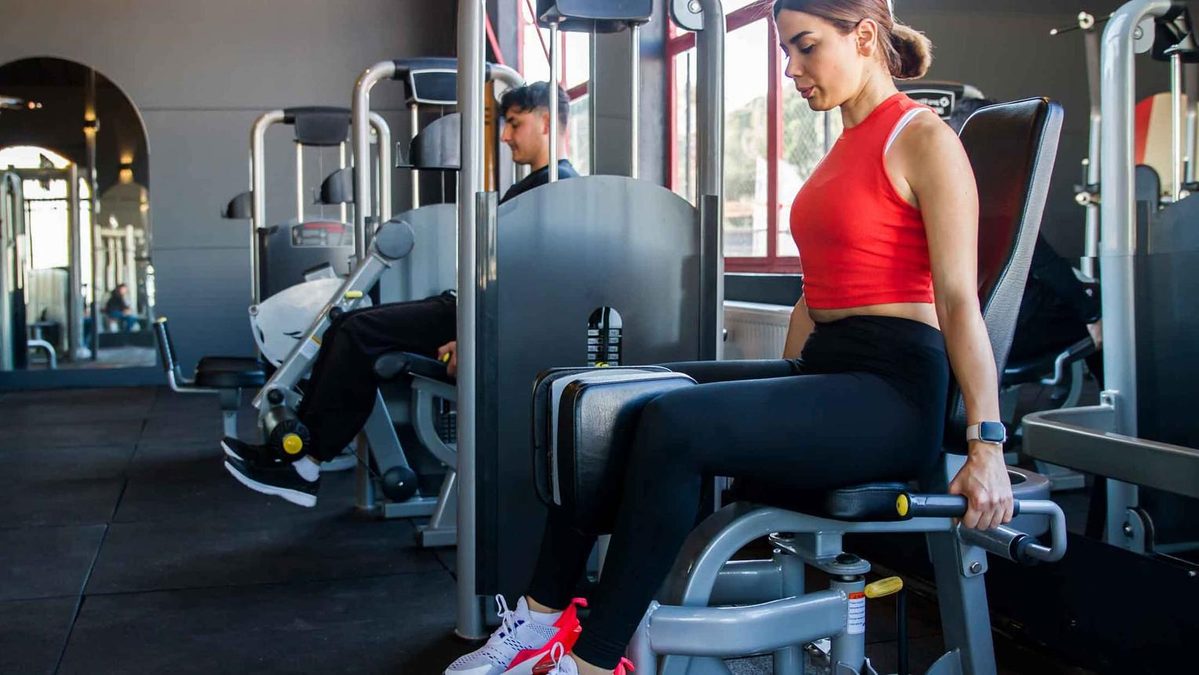
Start by adjusting the seat and backrest so your hips are supported and your knees align comfortably with the machine’s pivot points, where the design allows. Position your inner thighs against the pads and select a light resistance for your first set. Your back should remain supported, your pelvis stable, and your feet relaxed on the footrests.
Begin with your legs comfortably apart, without forcing your hips into an extreme stretch. Exhale as you squeeze your thighs inward in a smooth, controlled motion. Pause briefly when your legs approach each other, then return to the starting position slowly while resisting the machine’s pull. Keep your movements deliberate rather than allowing the weight stack to slam between repetitions.
A useful coaching cue is: “Bring your thighs together smoothly, then control the return.” This encourages consistent effort throughout the repetition instead of relying on momentum.
Avoid leaning forward aggressively, bouncing at the widest position, or using your hands to force your legs farther apart. If you experience sharp groin pain, pinching, or unusual hip discomfort, stop and reassess your positioning and resistance. Persistent pain should be evaluated by a qualified healthcare professional.
Benefits of Inner-Thigh Training
One of the main benefits of the machine is targeted adductor strengthening. These muscles contribute to everyday movements such as walking, climbing stairs, getting out of a car, and changing direction while playing sports. Stronger adductors can support these activities as part of an overall lower-body conditioning program.
The exercise can also complement strength training for sports that involve lateral movement, including football, basketball, tennis, and hockey. The adductors help control the legs during acceleration, deceleration, and directional changes. However, machine training alone does not guarantee improved athletic performance; sport-specific drills, balance, and full-body strength work remain important.
Another advantage is accessibility. The supported seated position makes it relatively straightforward to learn, and resistance can be increased gradually. For people who want to strengthen their inner thighs without adding another technically demanding compound lift, it offers a convenient option.
It is important to distinguish muscle strengthening from fat loss. Training the inner thighs does not selectively burn fat from that area. Changes in body fat depend on overall energy balance, physical activity, nutrition, and individual physiology. The machine can develop the underlying muscles, but it cannot determine where the body loses fat.
Common Mistakes and How to Fix Them
Using too much weight is a common problem. Heavy resistance may cause you to jerk your legs inward, hold your breath, or lose control as the pads move outward. The solution is to reduce the load until you can complete each repetition with steady movement and a comfortable range of motion.
Another mistake is stretching too aggressively at the starting position. A wider opening does not automatically produce better results. If your hips or groin feel strained, reduce the range until the movement feels controlled and pain-free. Machine geometry and individual hip mobility differ, so there is no single ideal starting angle for everyone.
| Mistake | Why it matters | How to correct it |
|---|---|---|
| Excessive resistance | Encourages momentum and poor control | Reduce the weight |
| Bouncing at the widest point | Increases uncontrolled loading | Use a comfortable range |
| Moving too quickly | Reduces control over each repetition | Slow both phases |
| Poor seat adjustment | May create awkward hip positioning | Adjust for comfort and alignment |
| Holding your breath | Can disrupt normal breathing | Exhale inward and inhale on return |
| Training through pain | May aggravate an existing problem | Stop and assess the cause |
Consistency matters more than dramatic movements. If you can complete a set without swinging, straining, or losing your position, you are more likely to maintain a repeatable training stimulus and track your progress accurately.
Sets, Reps, and Workout Programming
For general strength and muscle development, a practical starting point is two to four sets of 10–15 repetitions. Choose a load that challenges you while allowing smooth technique, and finish most sets with approximately one to three repetitions left in reserve. Beginners may benefit from starting with two sets while learning the movement.
You can place the exercise after compound lower-body movements in a leg workout. For example, a session might include squats, Romanian deadlifts, leg presses, and then targeted inner-thigh work. This sequence prioritizes movements that involve several muscle groups before finishing with isolation exercises.
Rest for approximately 60–120 seconds between sets, adjusting the interval according to fatigue and your overall workout. When you can complete the upper end of your repetition range comfortably, consider increasing the resistance by a small amount. Record your settings and repetitions so you can distinguish genuine progress from changes in seat position or range of motion.
Training frequency depends on your complete program. One or two weekly sessions may be sufficient for many recreational lifters, particularly when other exercises already involve the adductors. Allow adequate recovery between demanding sessions, especially if you also participate in sports involving sprinting or rapid changes of direction.
Hip Adductor Machine vs. Hip Abductor Machine
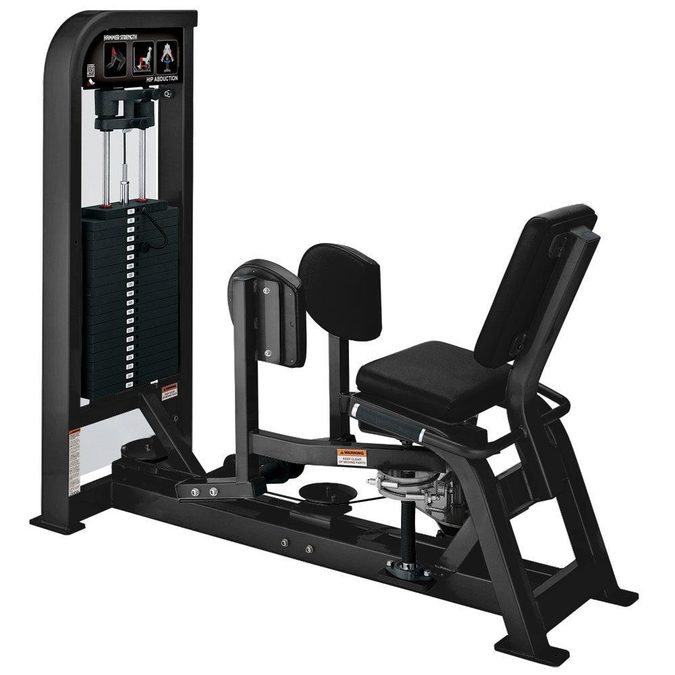
Although their names sound similar, these machines train opposite movement patterns. The adductor machine brings the thighs inward, while the abductor machine moves them outward. Hip adduction primarily involves the inner-thigh muscles, whereas hip abduction recruits muscles such as the gluteus medius and gluteus minimus, along with contributions from other hip muscles.
Both movements can be useful in a balanced lower-body program. The gluteal muscles help control the pelvis and femur during walking and single-leg activities, while the adductors contribute to bringing the thigh inward and stabilizing the hip. Training both groups can provide broader coverage than focusing exclusively on one machine.
Neither exercise is a substitute for squats, lunges, step-ups, or other functional movements. Compound exercises challenge coordination and multiple muscle groups simultaneously, while these machines offer a more targeted way to add resistance to specific hip movements.
FAQs About the Hip Adductor Machine
Does the hip adductor machine build inner-thigh muscle?
Yes, regular training can strengthen and develop the inner-thigh muscles when you use suitable resistance, sufficient training volume, and progressive overload. Results also depend on nutrition, recovery, and your overall exercise routine. Start with controlled repetitions and increase resistance gradually as your technique improves.
Can this machine reduce inner-thigh fat?
No. The exercise strengthens the adductors but does not selectively remove fat from the inner thighs. Fat loss occurs across the body according to individual physiology and overall energy balance. A combination of resistance training, regular physical activity, and appropriate nutrition is more useful for changing body composition.
How many sets should beginners perform?
Beginners can start with two sets of 10–15 repetitions using a manageable load. Focus on comfortable positioning and smooth movement before increasing the resistance. If your technique deteriorates or you experience discomfort, reduce the load or shorten the range of motion.
Is the hip adductor machine good for athletes?
It can be a useful accessory exercise because the adductor muscles contribute to running, lateral movement, and directional changes. However, athletic performance also depends on coordination, speed, sport-specific practice, and whole-body strength. Machine work should complement rather than replace these activities.
Should I use the adductor and abductor machines together?
You can include both in the same workout if they fit your goals and total training volume. The adductor machine trains the inner thighs, while the abductor machine emphasizes moving the legs outward and recruits important hip stabilizers. Choose resistance and volume that allow both exercises to be performed comfortably.
Is the machine safe for people with hip or groin pain?
Not necessarily. Although the movement is controlled, it still loads the muscles and joints around the hip. Anyone with existing hip or groin pain, a recent injury, or recent surgery should seek appropriate clinical guidance before using the machine. Stop if the exercise causes sharp pain or worsening symptoms.
Conclusion
The hip adductor machine provides a practical way to strengthen the inner thighs, improve control of hip movement, and complement a well-rounded lower-body workout. Its simplicity makes it accessible to beginners, while adjustable resistance allows experienced lifters to incorporate targeted work into a more advanced program.
For the best results, prioritize comfortable positioning, controlled repetitions, gradual progression, and adequate recovery. Combine the exercise with compound lower-body movements and other hip-strengthening activities rather than relying on one machine to meet every fitness goal.
The most important takeaway is that effective inner-thigh training comes from consistent, controlled effort—not the heaviest weight on the stack or the widest possible stretch. Focus on good technique, train the entire lower body, and let steady progress guide your results.