Building wider shoulders can make a noticeable difference to your upper-body appearance and overall strength. While overhead presses develop several shoulder muscles, isolation exercises are particularly useful when you want to give the side deltoids more focused attention. One of the most effective options is the cable lateral raise, a popular gym exercise that provides resistance throughout much of the lifting movement.
Unlike dumbbells, which provide the greatest resistance when your arm approaches horizontal, a cable machine creates a different resistance angle that can challenge the shoulder through a broader portion of the range of motion. With controlled technique, appropriate weight, and consistent training, this movement can help develop rounder shoulders and improve muscular balance.


What Is a Cable Lateral Raise?
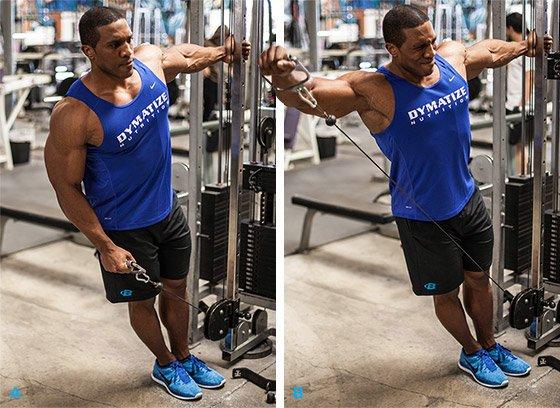
A cable lateral raise is a shoulder isolation exercise performed using a low cable pulley. You hold a handle in one hand and lift your arm outward, away from your body, until it approaches shoulder height. The movement primarily targets the lateral deltoid, the middle portion of the shoulder muscle responsible for raising your arm out to the side.

The exercise is popular in bodybuilding and general strength training because it allows you to train one shoulder at a time and adjust resistance in small increments. This makes it easier to focus on technique, manage differences between sides, and choose a load that suits your current strength level.
The cable’s direction of pull also changes the exercise’s resistance profile. Depending on your position relative to the machine, the shoulder may experience meaningful tension even when your arm is near the starting position. This can make cables a useful alternative or complement to dumbbell lateral raises.
Muscles Worked During Cable Lateral Raises

The main muscle involved is the lateral deltoid, often called the side delt. It contributes to shoulder width and helps move the upper arm away from the body through shoulder abduction. Developing this muscle can create a fuller shoulder appearance, particularly when combined with balanced upper-body training.
Other muscles assist with stabilisation and movement. The anterior deltoid may contribute depending on your arm path, while the supraspinatus, part of the rotator cuff, helps initiate shoulder abduction. The trapezius and other scapular muscles help control the shoulder blade during the movement.
Your core muscles also work to keep your torso stable, especially when performing the exercise one arm at a time. However, the goal is not to turn it into a whole-body movement. Keeping your body relatively still allows the shoulder muscles to perform the work rather than relying on momentum.
Benefits of Cable Lateral Raises

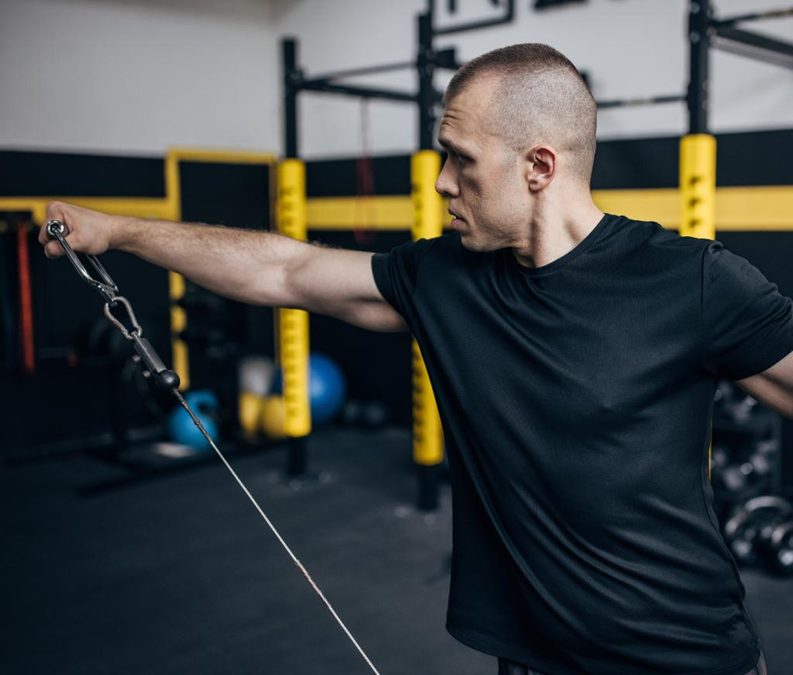

One of the biggest benefits is focused side-delt development. The lateral deltoid can be difficult to train directly with compound movements alone, so isolation exercises provide an opportunity to add targeted volume. Over time, progressive resistance and consistent training can contribute to greater shoulder muscle size.
Another advantage is adjustable resistance. Most cable machines allow relatively small weight increases, which helps you progress gradually rather than making large jumps. This is useful because lateral raises are typically performed with lighter loads than heavy pressing exercises, and even a small increase can make a difference to exercise difficulty.
The movement also allows flexibility in body positioning. You can stand beside the machine, hold the cable behind your body, or use a slight forward lean. These adjustments change the line of pull and how the movement feels. The best variation is the one that lets you maintain controlled technique without shoulder discomfort.
How to Perform a Cable Lateral Raise With Proper Form

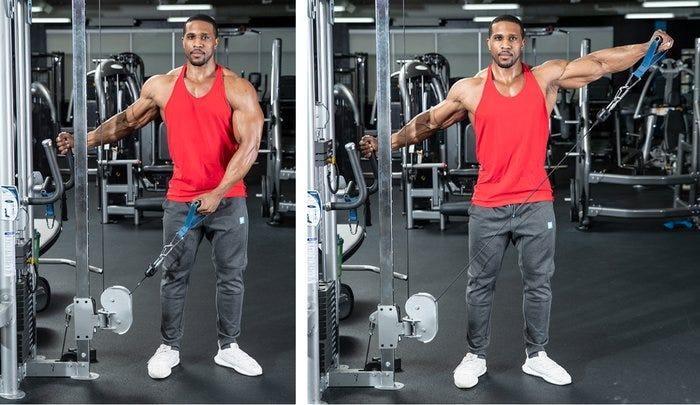

Good technique is more important than lifting heavy weight. Start by attaching a single handle to the lowest pulley setting. Stand sideways to the machine and hold the handle with the hand farthest from the pulley, allowing the cable to pass in front of or behind your body depending on your chosen setup.
Follow these technique cues:
- Stand upright with your feet about hip-width apart.
- Hold the handle with a relaxed grip and keep a slight bend in your elbow.
- Brace your abdomen and keep your shoulders relaxed.
- Lift your arm outward in a smooth, controlled arc.
- Stop around shoulder height or slightly below if that is more comfortable.
- Pause briefly, then lower the handle slowly to the starting position.
- Keep your torso stable instead of leaning or swinging to lift the weight.
Imagine moving your elbow outward rather than pulling the handle upward with your hand. This cue can help maintain a consistent arm path and reduce unnecessary wrist movement. Keep your elbow slightly bent throughout the repetition rather than locking it straight.
Avoid shrugging your shoulder toward your ear or lifting your arm far above shoulder height simply to increase the range. A controlled repetition with an appropriate load is generally more productive than a heavy repetition performed with poor mechanics.
Common Mistakes and How to Fix Them
One frequent mistake is using too much weight. When the load is excessive, people often swing their torso, bend their knees, or jerk the handle upward. These movements reduce the control of the exercise and make it harder to focus on the lateral deltoid. Reduce the resistance until you can complete each repetition smoothly.
Another common issue is shrugging. Excessive shoulder elevation can cause the upper trapezius to dominate the movement. Keep your neck relaxed and avoid pulling your shoulder toward your ear. Your shoulder blade will naturally move during arm elevation, so the goal is not to hold it rigidly down and back, but to avoid unnecessary tension.
A third mistake is rushing the lowering phase. The eccentric portion of the repetition is an important part of resistance training. Lower the handle gradually instead of allowing the weight stack to pull your arm back suddenly. If you experience sharp pain, pinching, or persistent discomfort, stop and reassess your technique rather than pushing through it.
Best Variations for Shoulder Development


Different variations can help you find a comfortable resistance angle and add variety to your shoulder workouts. You do not need to perform every version in the same session. Choose one or two that fit your training goals and allow consistent execution.
Behind-the-Body Cable Lateral Raise
In this variation, the cable passes behind your body at the starting position. This setup can provide tension early in the movement and may feel comfortable for people who prefer their arm to begin slightly behind the torso.
Keep your shoulder in a natural position and avoid forcing the arm backward. The aim is a controlled lateral raise, not an exaggerated shoulder stretch.
Leaning Cable Lateral Raise
Hold a stable machine support with your free hand and lean slightly away from the pulley. This changes the angle between your arm and the cable, potentially making the beginning of the movement more challenging.
Keep your body steady and avoid leaning so far that balance becomes difficult. Use a lighter load until you become familiar with the altered resistance.
Two-Arm Cable Lateral Raise
This version uses two low pulleys, one for each hand. Lift both arms outward at the same time while maintaining a controlled posture. It can save time and create a balanced training experience, although it requires access to a suitable cable station.
If one side feels weaker or less coordinated, single-arm training may make it easier to focus on that side. Avoid increasing the weight simply because both arms are working together.
Cable Lateral Raise vs. Dumbbell Lateral Raise
Both exercises target the lateral deltoid, but their resistance patterns differ. Dumbbells rely on gravity, so the shoulder experiences relatively little external resistance when the arms hang close to the body. Resistance increases as the arms move outward toward shoulder height.
Cable exercises use a pulley system, allowing the resistance direction to come from a different angle. This can provide a more consistent challenge through parts of the range of motion, depending on where you stand and how the cable is positioned.
| Feature | Cable lateral raise | Dumbbell lateral raise |
|---|---|---|
| Resistance source | Cable and weight stack | Gravity acting on dumbbells |
| Resistance profile | Depends on pulley angle and body position | Increases as arms approach horizontal |
| Loading adjustments | Often available in small increments | Depends on available dumbbell sizes |
| Training style | Easy to train one side independently | Single-arm or two-arm options |
| Equipment | Cable machine | Dumbbells |
| Main target | Lateral deltoid | Lateral deltoid |
Neither option is automatically superior. Cables can be useful for changing the resistance angle, while dumbbells are convenient and widely available. Including both across different training sessions can provide variety without making your routine unnecessarily complicated.
Sets, Reps, and Training Frequency
The cable lateral raise is generally best performed with moderate or lighter resistance and controlled repetitions. Since the lateral deltoid is a relatively small muscle, you do not need to use the heaviest available load to make the exercise challenging.
| Training goal | Sets | Repetitions | Rest |
|---|---|---|---|
| Beginner technique | 2–3 | 12–15 | 60–90 seconds |
| Muscle growth | 3–4 | 10–20 | 60–90 seconds |
| Muscular endurance | 2–3 | 15–25 | 45–60 seconds |
| Experienced lifters | 3–4 | 12–20 | 60–120 seconds |
These are general guidelines, not fixed requirements. Your total weekly shoulder volume should account for overhead presses, chest exercises, and other movements that already involve the deltoids. For many people, training the side delts two or three times per week with adequate recovery can be a practical approach.
Progress gradually by adding repetitions, improving control, or increasing resistance when your current workload becomes manageable. You do not need to reach complete muscular failure on every set. Maintaining good form and recovering between sessions are essential for sustainable progress.
How to Add Cable Lateral Raises to Your Shoulder Workout
This isolation movement usually fits well after compound exercises such as overhead presses. Pressing movements allow you to train several upper-body muscles together, while lateral raises provide additional direct work for the side deltoids.
A simple shoulder session might include an overhead press, a lateral raise variation, a rear-delt exercise, and an appropriate amount of rotator cuff or upper-back work. The exact combination depends on your training experience, weekly schedule, and overall exercise volume.
Avoid adding excessive sets just because the movement feels manageable with a light weight. Shoulder development depends on a balanced routine, sufficient recovery, and progressive training. If you already perform several pressing exercises for chest and shoulders, account for that workload before adding more isolation volume.
Frequently Asked Questions
Is the cable lateral raise good for building bigger shoulders?
Yes. It is an effective isolation exercise for targeting the lateral deltoid, which contributes to shoulder width. Consistent training, progressive resistance, adequate protein, and recovery can support muscle growth over time.
Should I use heavy weight for cable lateral raises?
Heavy resistance is not necessary. Choose a load that allows you to lift smoothly without swinging your body, shrugging excessively, or shortening the movement. Controlled repetitions are more useful than lifting a weight you cannot manage properly.
How many repetitions should I perform?
A range of 10–20 repetitions works well for many people, although higher or lower ranges can also be useful depending on the load and training goal. Focus on completing each repetition with consistent technique and a controlled lowering phase.
Are cable lateral raises better than dumbbell lateral raises?
Neither exercise is universally better. Cables allow you to adjust the resistance angle, while dumbbells provide a simple and accessible way to train the side deltoids. Your equipment, comfort, and training preferences can determine which one works best.
Can beginners perform cable lateral raises?
Yes. Beginners can start with a light weight, learn the correct arm path, and gradually increase repetitions or resistance. Single-arm training can also help beginners concentrate on balance and movement control.
Should I feel cable lateral raises in my traps?
Some upper-trapezius involvement is normal because the shoulder blade moves as your arm rises. However, excessive shrugging may indicate that the weight is too heavy or your technique needs adjustment. Keep your neck relaxed and focus on controlled arm elevation.
How often should I train my side delts?
Many people can train their side delts two or three times per week, depending on their total shoulder workload and recovery. Allow adequate time between demanding sessions and remember that pressing exercises also contribute to overall shoulder training volume.
Conclusion
The cable lateral raise is a valuable shoulder exercise for developing the lateral deltoids, improving upper-body proportions, and adding targeted work to a strength-training routine. Its adjustable resistance and single-arm setup make it useful for beginners and experienced lifters alike.
Focus on controlled repetitions, a comfortable range of motion, and a weight that allows you to maintain proper form. Combine the exercise with balanced shoulder training, sufficient nutrition, and consistent recovery to support long-term progress.
The biggest takeaway is that wider shoulders are not built by lifting the heaviest weight on the cable machine. They develop through consistent, well-controlled training that challenges the side delts while keeping the shoulders healthy and comfortable.