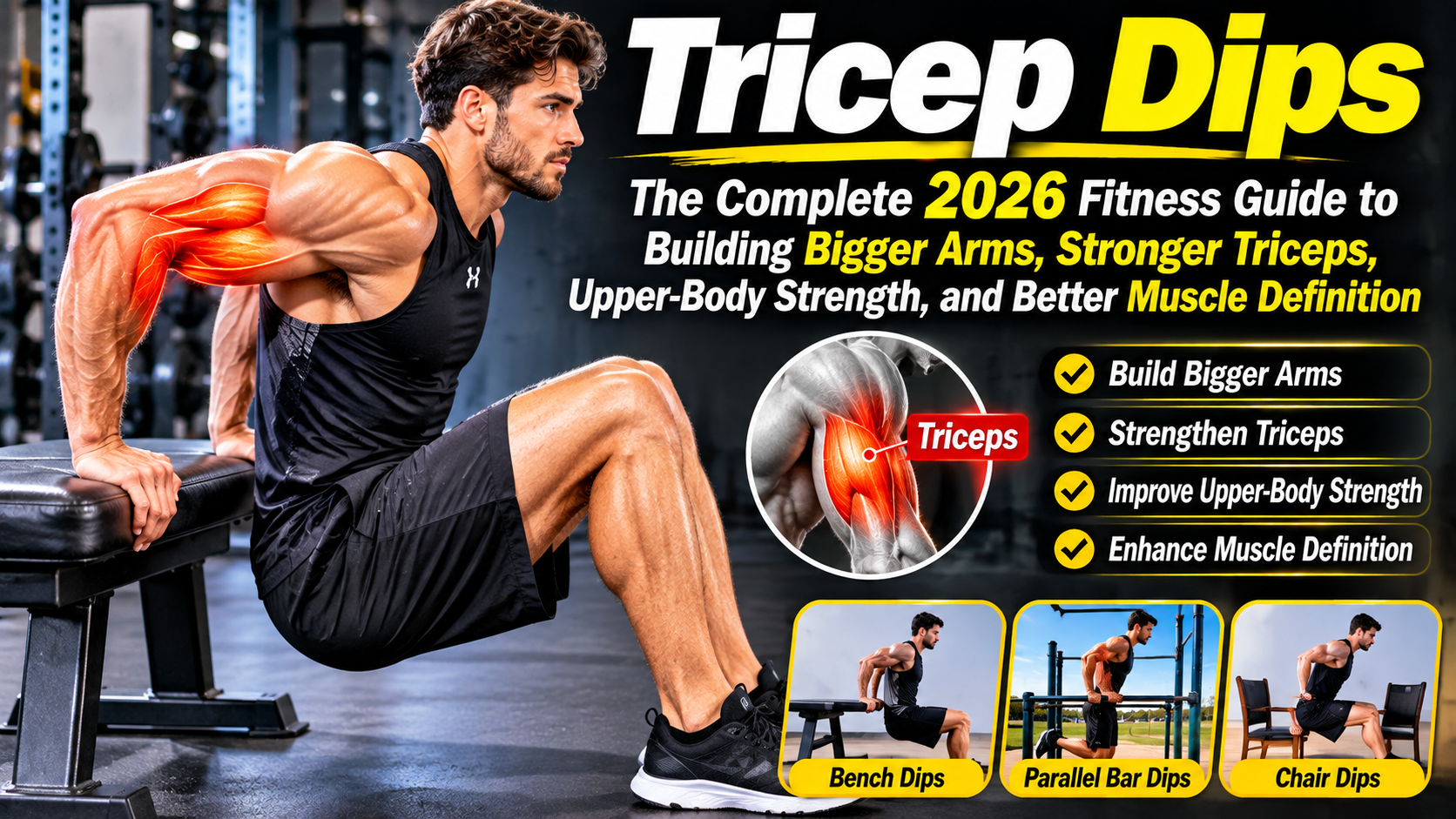
Strong, well-developed arms are not built through biceps exercises alone. The triceps, located along the back of the upper arm, contribute significantly to arm size, pressing strength, and overall upper-body development. One effective bodyweight movement for training these muscles is the dip, which uses controlled elbow extension to challenge the triceps while engaging the shoulders and chest.
Tricep dips are a resistance exercise performed by lowering and raising the body using the arms, usually with the hands positioned on a stable bench, chair, or parallel bars. They are popular because they require relatively little equipment and can be incorporated into home workouts, gym routines, and upper-body strength programs.
However, proper technique matters. Incorrect hand positioning, excessive shoulder extension, and uncontrolled movement can increase joint stress. Understanding the muscles involved, exercise variations, training volume, and common mistakes helps make this movement more effective and comfortable.
What Are Tricep Dips and How Do They Work?

This exercise involves supporting your body with your hands, bending your elbows to lower your hips, and extending your arms to return to the starting position. The triceps brachii perform most of the elbow-extension work, while other upper-body muscles help stabilize the movement.
The exercise can be performed using a workout bench, sturdy chair, dip station, or parallel bars. Bench variations generally allow beginners to learn the movement with a relatively accessible setup, while parallel-bar versions involve supporting more of the body’s weight.
Unlike isolation exercises such as cable pushdowns, dips require several muscles to coordinate throughout the movement. This makes them useful for developing functional pressing strength alongside muscular endurance and upper-arm development.
Muscles Worked During Tricep Dips
The primary target is the triceps brachii, a three-headed muscle located at the back of the upper arm. Its main function is extending the elbow, making it essential for pushing movements such as push-ups, bench presses, and overhead presses.

The three triceps heads contribute differently to arm movement:
- Long head: Runs along the back of the upper arm and also crosses the shoulder joint.
- Lateral head: Located on the outer portion of the triceps and contributes to the visible horseshoe-shaped appearance.
- Medial head: Lies deeper beneath the other heads and assists with elbow extension.
The pectoralis major, anterior deltoids, and muscles around the shoulder blades also contribute to stabilization and movement. However, the exercise should not be treated as an isolated chest or shoulder workout.
Although all three triceps heads participate, changing body position does not guarantee complete isolation of one particular head. A balanced arm-training routine should include different elbow-extension exercises and shoulder positions.
Benefits of Tricep Dips for Muscle Growth and Strength

One major benefit is improved triceps strength. Because the movement requires the arms to support and move body weight, it challenges the muscles through a demanding pressing pattern. Over time, progressive training can improve elbow-extension strength and contribute to better performance in other upper-body exercises.
Another advantage is muscle development. Consistent resistance training combined with adequate protein intake, recovery, and progressive overload can stimulate muscle hypertrophy. Stronger triceps can also improve the appearance and proportions of the upper arms.
Additional benefits include:
- Improved upper-body pushing strength.
- Better muscular endurance.
- Increased bodyweight exercise capability.
- Greater training variety without expensive equipment.
- Improved coordination and upper-body control.
- Convenient home and gym workout options.
For example, someone who struggles with pressing exercises may benefit from strengthening the triceps through appropriately scaled movements. However, dips should complement rather than replace a balanced strength-training program.
How to Perform Tricep Dips With Proper Form
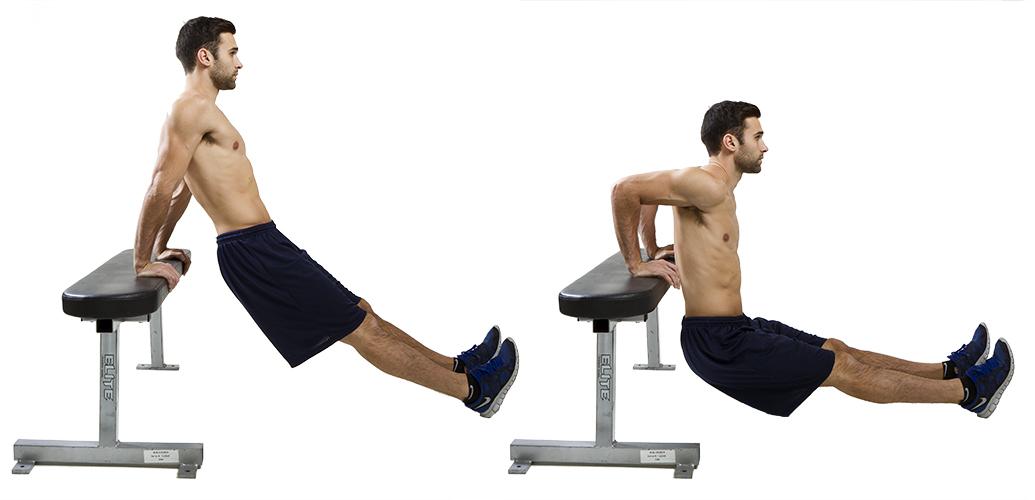
Correct technique helps target the intended muscles while reducing unnecessary shoulder and elbow stress. Before starting, select a stable surface that cannot slide or tip during exercise.
Sit on the edge of a sturdy bench and place your palms beside your hips, with your fingers pointing forward. Move your feet forward and carefully slide your hips off the edge while keeping your hands firmly planted.
Bend your elbows to lower your body slowly. Keep your shoulders controlled and avoid dropping into an excessively deep position. Once you reach a comfortable range of motion, press through your palms and straighten your elbows to return to the starting position.
Key technique reminders:
- Keep your hands approximately shoulder-width apart.
- Maintain controlled shoulder positioning.
- Keep your elbows pointing generally backward.
- Lower your body slowly rather than dropping.
- Avoid forcing your shoulders into excessive extension.
- Stop if you experience sharp or unusual joint pain.
A useful coaching principle is to prioritize a comfortable range of motion over depth. Lowering farther does not automatically produce better muscle growth, particularly if it causes shoulder discomfort.
Best Variations for Different Fitness Levels
Different dip variations allow people to adjust resistance, stability, and exercise difficulty. Beginners should prioritize control and comfortable movement before progressing toward more demanding versions.
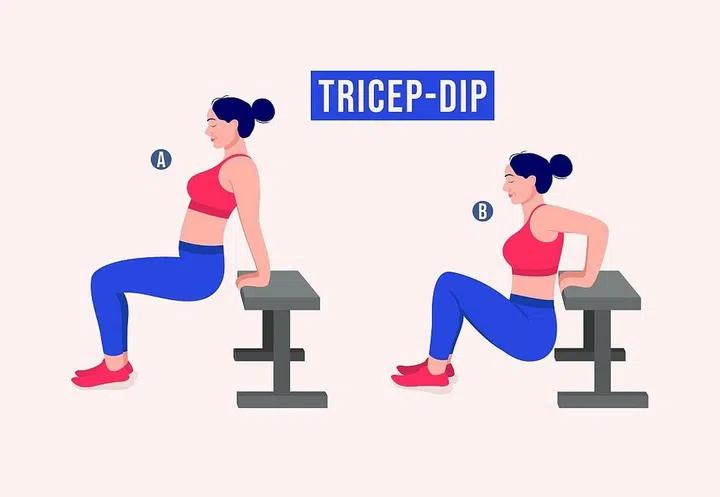

Bench dips: A common starting variation that uses a bench or sturdy platform. Beginners can keep their knees bent to make positioning easier, although this does not eliminate shoulder stress.
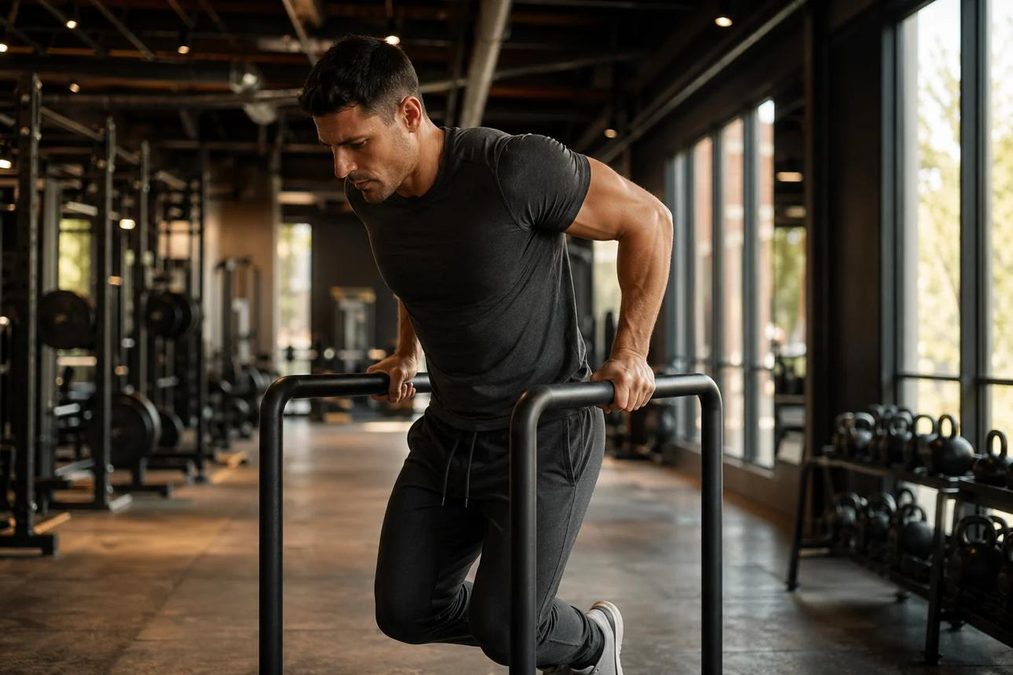
Parallel-bar dips: These require greater upper-body strength because the arms support the body without assistance from the feet. A more upright torso can emphasize triceps involvement, although chest and shoulder muscles remain active.
Assisted dips: Resistance bands or an assisted dip machine reduce the amount of body weight being lifted. This allows beginners to practice movement mechanics while gradually building strength.
Weighted dips: Experienced trainees can add resistance using an appropriate dip belt. Additional weight increases training demands and should only be introduced after mastering controlled bodyweight repetitions.
Common Mistakes That Reduce Results and Increase Injury Risk
Even a relatively simple bodyweight exercise can become problematic when performed with poor technique. One common mistake is lowering the body too deeply. Excessive shoulder extension can place unnecessary stress on the front of the shoulder, particularly in people with limited mobility or previous injuries.
Another problem is allowing the shoulders to roll forward or shrug toward the ears. This can interfere with stable movement and make the exercise less comfortable. Keeping the shoulders controlled and avoiding exaggerated depth are important adjustments.
Other mistakes include bouncing at the bottom, using momentum, rushing repetitions, and attempting too many repetitions before developing sufficient strength. If bench dips cause shoulder discomfort, replacing them with cable pushdowns, close-grip push-ups, or other tolerable triceps exercises may be more appropriate.
Tricep Dips Workout Plan for Muscle Growth
The best training approach depends on experience, recovery, and overall workout structure. Beginners should focus on mastering technique with manageable resistance, while experienced lifters can gradually increase repetitions or external loading.
| Fitness level | Sets | Repetitions | Rest |
|---|---|---|---|
| Beginner | 2–3 | 6–8 | 90 seconds |
| Intermediate | 3 | 8–12 | 90–120 seconds |
| Advanced | 3–4 | 6–12 | 2 minutes |
These are practical starting guidelines rather than universal requirements. Choose a variation that allows controlled repetitions without pain, and avoid training to complete muscular failure when technique begins to deteriorate.
For balanced arm development, combine this movement with cable triceps pushdowns, overhead triceps extensions, and appropriate compound pressing exercises. Allow sufficient recovery between demanding sessions, particularly when training the chest and shoulders on the same day.
Nutrition and Recovery for Bigger Triceps
Exercise provides the stimulus for muscle development, but nutrition and recovery help the body adapt. Adequate protein intake supports muscle repair, while carbohydrates provide energy for demanding resistance-training sessions.
Foods such as eggs, chicken, fish, Greek yogurt, beans, lentils, and tofu can contribute to daily protein requirements. For most healthy adults who regularly perform resistance training, approximately 1.4–2.0 grams of protein per kilogram of body weight per day is a commonly supported range.
Sleep is equally important. Consistent, sufficient sleep supports recovery, training performance, and overall health. Muscles also need time between challenging sessions to recover from training stress.
Progressive overload should be gradual. Increase repetitions, improve movement control, or introduce additional resistance only when the current variation feels manageable. Bigger arms develop through consistent training over time rather than repeatedly exhausting the muscles in individual workouts.
Frequently Asked Questions About Tricep Dips
Do tricep dips build bigger arms?
Yes. They can contribute to larger arms by challenging the triceps through resistance-based elbow extension. Consistent training, progressive overload, adequate protein, and sufficient recovery are necessary for meaningful muscle growth.
How many tricep dips should beginners perform?
Beginners can start with two or three sets of six to eight controlled repetitions using an appropriate variation. The priority should be learning proper technique rather than reaching a high repetition count.
Are bench dips better than parallel-bar dips?
Neither variation is universally better. Bench dips are accessible but can place the shoulders in substantial extension, while parallel-bar dips require greater strength and body control. Choose the variation that allows comfortable, controlled movement.
Do tricep dips work all three triceps heads?
Yes. The long, lateral, and medial heads all contribute to elbow extension during the movement. However, their involvement can vary with exercise mechanics, and complementary exercises help provide more comprehensive triceps training.
Can tricep dips cause shoulder pain?
They can cause discomfort in some individuals, particularly when performed too deeply or with poor shoulder positioning. People with existing shoulder injuries should seek professional guidance and select exercises that do not aggravate their symptoms.
Are tricep dips enough for complete arm development?
They are useful but should not be the only exercise in an arm-training routine. Combining different triceps movements with biceps exercises provides more balanced upper-arm development.
Can you perform tricep dips at home?
Yes. A stable, non-slipping workout bench or suitable exercise station can provide the necessary support. Always check equipment stability before starting and avoid using lightweight chairs or unstable furniture.
Conclusion: Build Stronger Arms With Consistent Triceps Training
Tricep dips are a valuable bodyweight exercise for developing upper-arm strength, improving pressing performance, and supporting muscular growth. Their accessibility makes them useful for home workouts and gym-based resistance programs, while different variations allow training difficulty to be adjusted according to experience.
However, effective results depend on more than completing repetitions. Proper technique, appropriate exercise selection, progressive overload, balanced nutrition, and recovery all contribute to long-term progress.
The most important takeaway is to focus on controlled movement and gradual strength improvements rather than chasing excessive repetitions or deeper ranges of motion. With consistent training and sensible programming, this exercise can become a productive part of a stronger, more balanced upper-body workout.