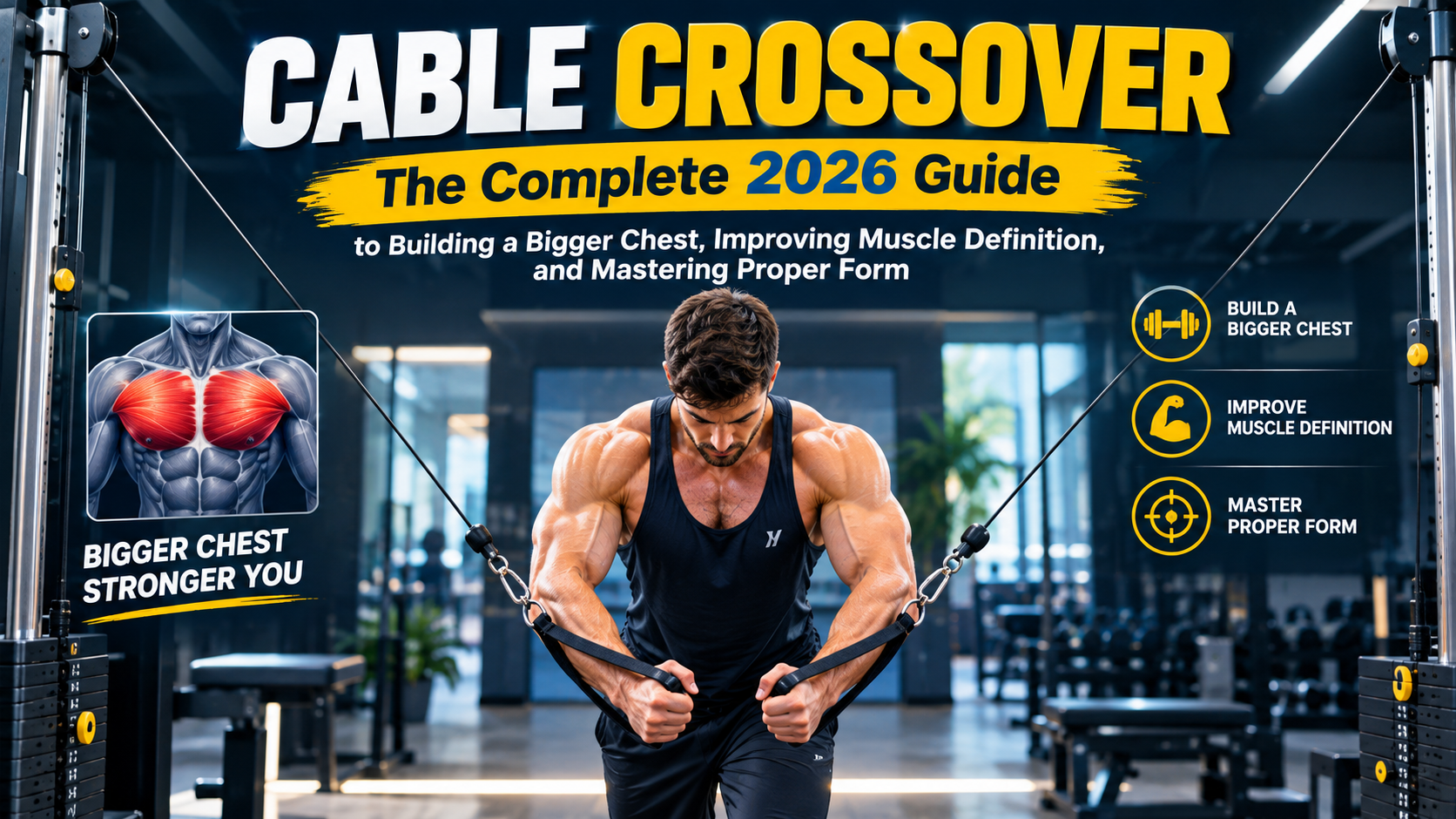
The cable crossover is a popular strength-training exercise for developing the chest, improving muscular control, and building a balanced upper body. Unlike many free-weight movements, it uses a cable machine to maintain tension throughout much of the movement, helping you focus on controlled repetitions and deliberate muscle contraction. Whether you train at a commercial gym or follow a structured bodybuilding program, this exercise can complement compound lifts such as the bench press and dumbbell press.
One of its biggest advantages is versatility. By adjusting the pulley height, changing your body position, and modifying the direction of your arms, you can emphasize different portions of the pectoral muscles. However, good results depend on more than simply bringing your hands together. Correct positioning, appropriate resistance, a comfortable range of motion, and consistent technique all influence how effectively you train.
This guide explains the muscles involved, proper execution, exercise variations, programming strategies, common mistakes, and practical ways to make each repetition more effective.
What Is a Cable Crossover?
A cable crossover is an isolation exercise performed on a cable machine, typically using two adjustable pulleys and individual handles. You stand between the pulleys, hold one handle in each hand, and bring your arms toward the front of your body in a controlled arc. The movement primarily targets the pectoralis major, the large muscle group responsible for many chest movements.
The exercise is particularly useful for bodybuilding and hypertrophy training because you can adjust resistance in small increments and maintain relatively continuous muscular tension. Unlike a barbell bench press, which involves substantial elbow extension, this movement emphasizes bringing the upper arms across the torso. That makes it a useful accessory exercise rather than a complete replacement for pressing movements.
Think of the exercise as a controlled hugging motion against resistance. Your elbows remain slightly bent, your shoulders stay stable, and your hands travel along a comfortable arc instead of moving like a rigid press.
Muscles Worked During Cable Crossovers
The primary target is the pectoralis major, which includes the clavicular portion, commonly associated with the upper chest, and the sternocostal portion, which makes up much of the middle and lower chest. Both contribute to moving the upper arms inward across the body, although the emphasis changes with the direction of the movement.
Several supporting muscles also contribute to the exercise. The anterior deltoids assist with shoulder flexion, while the serratus anterior helps control the shoulder blades. The biceps and other elbow flexors contribute to maintaining the arm position, and the core muscles help stabilize the torso when you stand in a split stance.
The exact muscular emphasis depends on your setup rather than the exercise name alone.
| Muscle or region | Main contribution | Training consideration |
|---|---|---|
| Pectoralis major | Main chest contraction | Focus on bringing the upper arms inward |
| Upper chest | Assists with upward and inward arm movement | Use a low-to-high cable path |
| Middle chest | Contributes to horizontal arm adduction | Use a roughly shoulder-height pulley |
| Lower chest | Assists with downward and inward arm movement | Use a high-to-low cable path |
| Anterior deltoids | Assist with shoulder movement | Keep the shoulders controlled |
| Core muscles | Stabilize the torso | Avoid leaning or swinging |
Cable angle can influence regional emphasis, but no variation completely isolates one section of the chest. The pectoral muscles work together, and overall development still depends on consistent training, sufficient recovery, and progressive resistance.
How to Perform a Cable Crossover With Proper Form
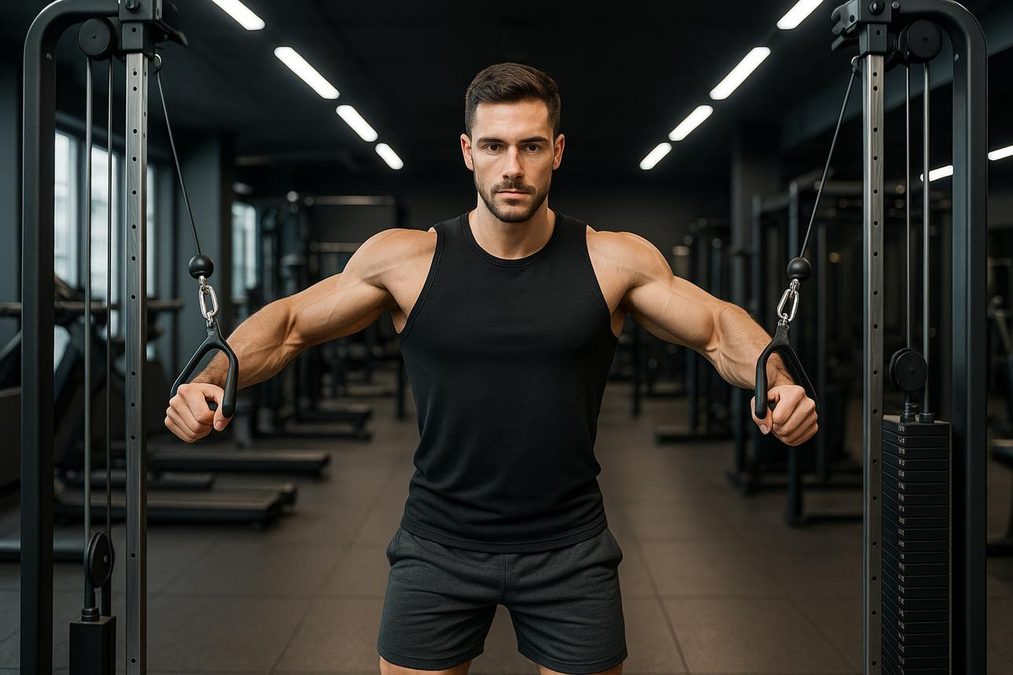
Correct technique starts before you move the handles. Set both pulleys to the desired height, attach the handles, and choose a manageable resistance. Stand in the center of the machine with one foot slightly forward or your feet comfortably staggered. Keep your chest naturally lifted, knees soft, and torso stable.
Hold the handles with your palms facing forward or slightly inward, depending on your preferred grip. Bend your elbows slightly and maintain that bend throughout most of the repetition. Begin with your arms open and move them forward in a smooth arc until your hands meet or comfortably cross in front of your torso. Pause briefly while contracting your chest, then return slowly to the starting position.
Your shoulders should remain controlled rather than rolling forward aggressively. Allow a comfortable stretch without forcing your arms excessively behind your body. The goal is to move through a productive range of motion, not to achieve the widest possible stretch at any cost.
A useful coaching cue is: “Move your upper arms toward each other, not just your hands.” This encourages you to focus on the chest’s action instead of turning the exercise into a wrist or forearm movement.
Best Cable Crossover Variations for Chest Development
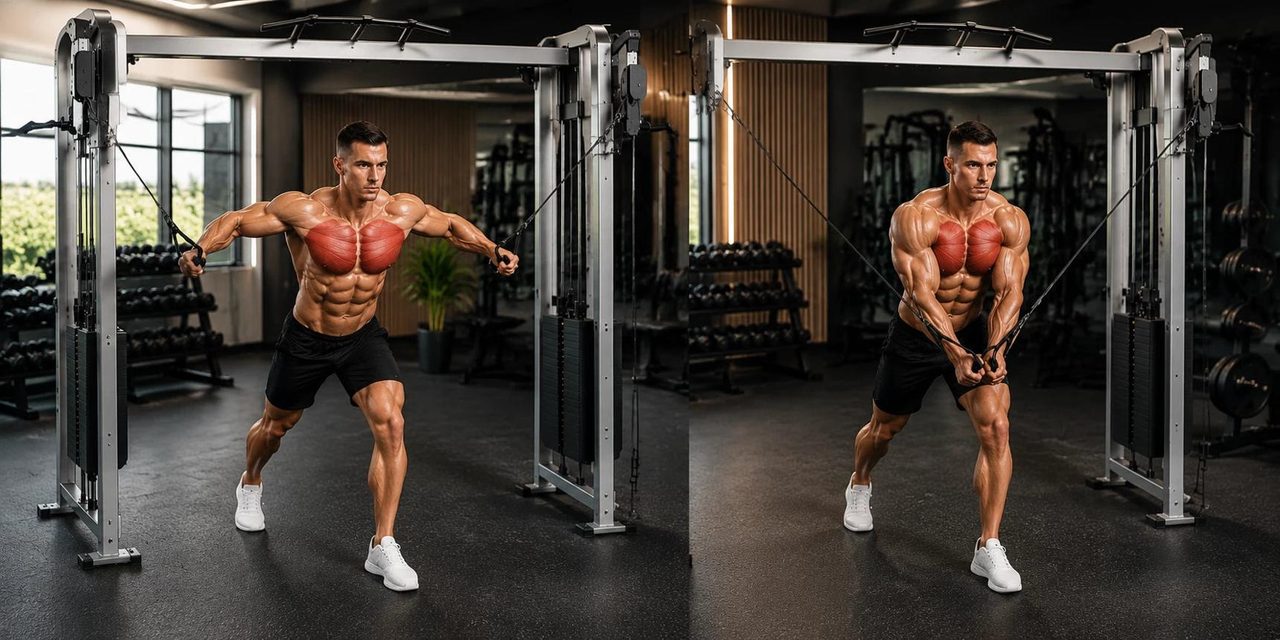
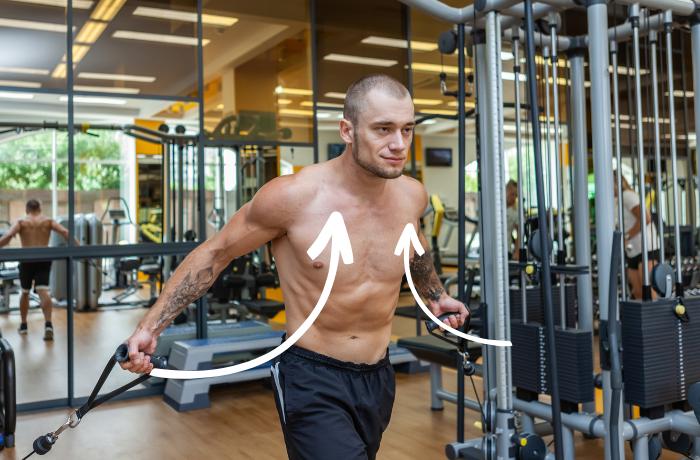
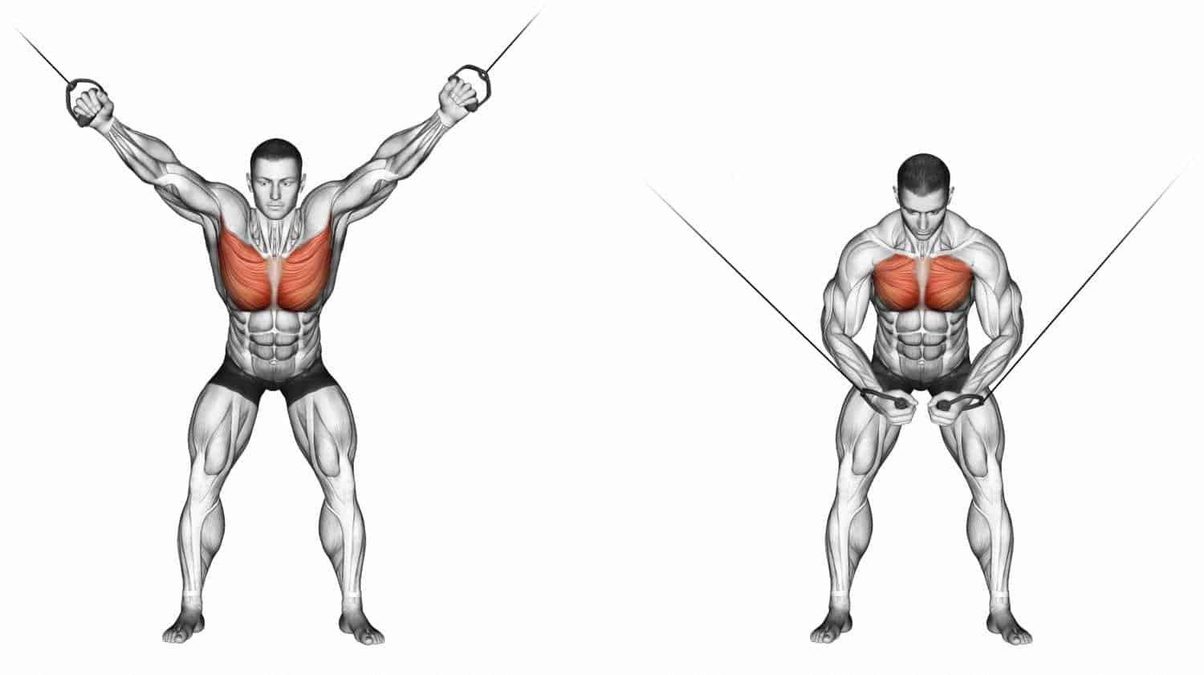
Changing the pulley height alters the direction of resistance relative to your shoulders. This allows you to introduce variety into your chest routine without changing machines or learning an entirely different exercise.
The best variation depends on your training goal, existing exercises, and comfort. You do not need to perform every variation in the same session. Select one or two that complement your pressing movements and allow you to maintain consistent technique.
Low-to-High Cable Fly
Set the pulleys near the bottom of the machine. Begin with your hands slightly outside your hips and bring them upward and inward toward your upper chest. This movement emphasizes shoulder flexion alongside horizontal adduction, making it a useful choice for people who want to give the clavicular portion of the pectoralis major additional attention.
Avoid lifting your hands excessively high or shrugging your shoulders toward your ears. Finish around the upper chest or collarbone area, depending on your body proportions and comfort.
Mid-Height Cable Fly
Position the pulleys around chest or shoulder height and bring the handles together in front of your torso. This variation provides a straightforward horizontal adduction pattern and is easy to incorporate into a general chest workout.
It works well after bench presses or dumbbell presses because the setup is simple and the movement is easy to control. Focus on smooth repetitions rather than using heavy resistance that changes the exercise into a swinging movement.
High-to-Low Cable Fly
Set the pulleys above shoulder height and sweep your hands downward and inward toward your lower chest or upper abdomen. The downward path can emphasize the sternocostal fibers in a way that complements low-to-high movements.
Keep your torso steady and avoid bending forward excessively to move more weight. If you feel pinching in the front of your shoulders, reduce the range of motion, lower the resistance, or try a different pulley position.
Benefits of Cable Crossover Training
One major benefit is adjustable resistance. Most cable machines allow small weight changes, making it easier to increase training difficulty gradually. This supports progressive overload, an important principle for muscle growth when combined with appropriate volume, effort, nutrition, and recovery.
Another advantage is the ability to train the chest through a controlled arc without having to balance a barbell. This can make it easier to concentrate on the target muscles, especially near the end of a workout when you want additional chest volume without adding another heavy pressing exercise.
The movement also offers flexibility. You can use different pulley heights, unilateral variations, or a seated setup to accommodate your training environment and preferences. Unilateral repetitions can help you notice differences in coordination between sides, although they do not automatically correct strength imbalances.
However, cables are not inherently superior to free weights. Bench presses, push-ups, and dumbbell presses remain valuable for developing pressing strength. Combining these movements with isolation exercises often produces a more complete chest-training program.
Common Mistakes and How to Fix Them
Using too much weight is one of the most frequent mistakes. When resistance exceeds your ability to control it, you may lean forward, jerk the handles, or turn the movement into a partial press. Reduce the load until you can maintain a stable torso and consistent elbow position throughout each repetition.
Another common problem is allowing the shoulders to roll forward excessively at the finish. Although the shoulder blades move naturally during arm movements, forcing the shoulders forward can create discomfort and reduce control. Keep the movement smooth and stop when your hands reach a comfortable position.
Other mistakes include locking the elbows, rushing the return phase, and stretching too deeply at the starting position. Each can reduce exercise quality or increase unnecessary joint stress.
| Common mistake | Why it matters | Practical solution |
|---|---|---|
| Excessive weight | Encourages swinging and poor control | Reduce the load |
| Fully locked elbows | Changes joint loading and movement mechanics | Maintain a slight elbow bend |
| Rushed repetitions | Reduces control during the return | Lower the handles slowly |
| Overstretching | May irritate the shoulders | Use a comfortable range |
| Inconsistent pulley height | Makes progress difficult to compare | Record your setup |
| Excessive torso movement | Shifts effort away from controlled chest work | Use a stable stance |
If an exercise causes sharp pain, numbness, or persistent shoulder discomfort, stop rather than attempting to push through it. Adjustments may help with ordinary positioning discomfort, but persistent symptoms warrant assessment by a qualified healthcare professional.
Sets, Reps, and Workout Programming
For muscle growth, many people can begin with two to four sets of approximately 10–15 repetitions, using a resistance that allows good technique and leaves around one to three repetitions in reserve. These are practical starting guidelines rather than universal requirements. Training experience, recovery capacity, and the rest of your workout should determine the final prescription.
A chest session might begin with a bench press, followed by an incline dumbbell press, and finish with cable flyes. This order places demanding compound movements first, when you are relatively fresh, while using the isolation exercise to add targeted volume afterward.
Rest for approximately 60–120 seconds between sets, extending the interval when needed to recover your breathing and maintain performance. Progress by gradually increasing repetitions or resistance when you can complete your target range with consistent form. Avoid increasing weight simply because a number on the machine looks impressive.
For beginners, two or three weekly chest-training sessions may be appropriate if total weekly volume and recovery are managed carefully. More experienced lifters can distribute their training across additional sessions. Muscle growth occurs through the combined effects of training stimulus, adequate protein and energy intake, sleep, and recovery—not through one exercise alone.
Cable Crossover vs. Chest Press and Dumbbell Fly
The cable crossover differs from a chest press because it places less emphasis on elbow extension and more on bringing the upper arms across the torso. A chest press allows you to use heavier loads and develop pressing strength, while a cable fly is better suited to controlled isolation work.
Dumbbell flyes also emphasize chest adduction, but their resistance changes considerably with arm position. Dumbbells create greater external torque when the arms are extended away from the body and less when the weights are directly above the shoulders. Cables can maintain a useful resistance challenge across a broader portion of the movement, depending on the pulley arrangement.
Neither option is universally best. If your goal is maximal pressing strength, prioritize pressing exercises. If you want additional chest volume and controlled contractions, cables may be an excellent complement. If you train at home without a cable station, dumbbell flyes and push-ups can still contribute to a well-designed program.
FAQs About Cable Crossover Training
Is a cable crossover good for building chest muscle?
Yes, it can help build chest muscle when performed consistently with appropriate resistance, sufficient training volume, and gradual progression. It is especially useful as an accessory movement after compound presses. However, results also depend on nutrition, sleep, and the overall quality of your training program.
Which cable crossover variation is best for the upper chest?
The low-to-high variation is commonly used to emphasize the upper chest because the movement combines upward arm movement with bringing the arms inward. It does not isolate the upper chest completely, so combine it with incline pressing if upper-chest development is a priority.
How many repetitions should I perform?
A range of 10–15 repetitions is a practical starting point for many people pursuing hypertrophy. Lower or higher repetition ranges can also work when resistance, effort, and technique are appropriate. Choose a load that allows controlled movement without swinging or painful stretching.
Should I do cable crossovers before or after bench presses?
Most people should perform bench presses first because they are more demanding compound movements that benefit from greater freshness. Perform fly variations afterward to add chest volume. If your program specifically prioritizes fly technique or chest isolation, the order may be adjusted.
Can beginners use a cable machine for chest training?
Yes. Beginners can use the machine with light resistance while learning the movement pattern. Start with a comfortable range of motion, maintain a slight elbow bend, and avoid excessive stretching. If you are unfamiliar with the equipment, ask a qualified gym instructor to demonstrate the setup.
Are cable crossovers better than dumbbell flyes?
Neither exercise is automatically better for everyone. Cables offer adjustable pulley angles and can maintain useful resistance through much of the movement, while dumbbells are more accessible in gyms or home setups without cable stations. Your comfort, equipment, and ability to control each repetition should guide your choice.
Can I perform cable crossovers every day?
Daily chest isolation training is usually unnecessary for most recreational lifters. Repeated hard sessions can interfere with recovery, particularly when combined with bench presses, push-ups, and other chest exercises. Schedule training according to your total weekly workload and allow enough recovery to maintain performance.
Conclusion
The cable crossover is a versatile chest exercise that can improve your training routine through controlled resistance, adjustable movement angles, and focused muscular contractions. Its greatest value comes from complementing compound pressing movements rather than replacing them.
For the best results, choose a comfortable pulley height, maintain a slight bend in your elbows, control both the inward and outward phases, and progress gradually as your technique improves. Pair your training with sufficient nutrition, consistent recovery, and a balanced weekly program.
The key takeaway is simple: better chest development comes from purposeful repetitions, not simply heavier weights. Master the movement first, train consistently, and use this exercise as one part of a complete approach to building a stronger, more developed chest.