

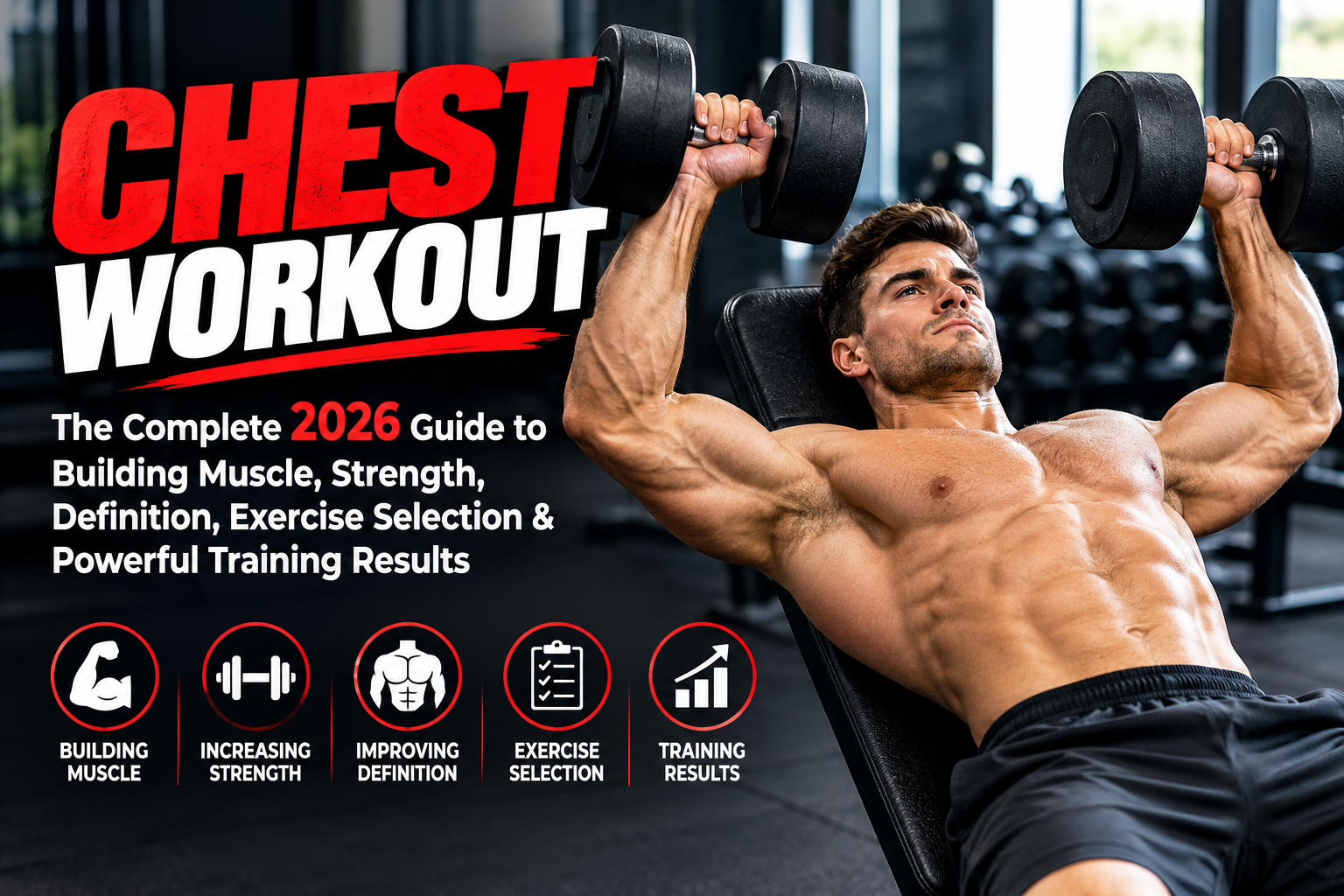
A well-designed chest workout is about much more than pushing heavy weight. Building the chest effectively requires a combination of smart exercise selection, progressive overload, controlled technique, adequate recovery, and consistent training. Whether the goal is muscular development, pressing strength, improved athletic performance, or a more balanced physique, understanding how the chest works makes every training session more productive.
The chest is primarily made up of the pectoralis major and pectoralis minor. The pectoralis major includes different fiber orientations that contribute to horizontal pressing, arm movement, and shoulder positioning. Exercises such as the barbell bench press, dumbbell press, incline press, push-up, and cable fly can train these functions from different angles.
The best approach is not simply to collect as many exercises as possible. Effective training means creating enough mechanical tension to stimulate adaptation while maintaining technique that allows the target muscles to do meaningful work.
How the Chest Muscles Work
The pectoralis major is the large, visible muscle covering much of the front of the chest. Its clavicular portion contributes strongly to movements performed at an incline, while the sternal portion is heavily involved in horizontal pressing and movements that bring the upper arm toward the body’s midline. The pectoralis minor sits underneath the larger muscle and contributes to movement and stabilization of the shoulder blade.
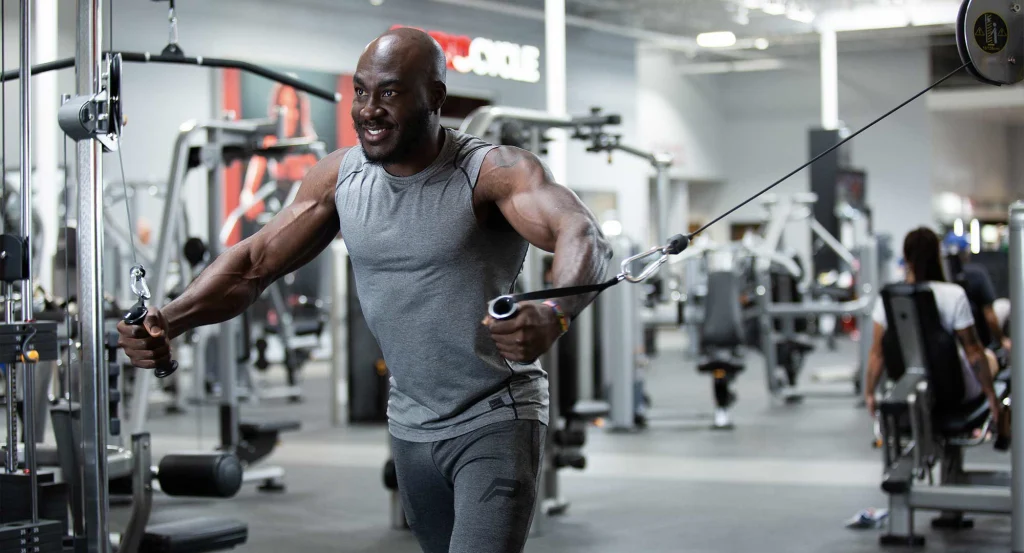
Understanding this anatomy helps explain why different exercises feel different. A flat press generally emphasizes the central and lower portions of the pectoralis major, while an incline press increases the contribution of the clavicular fibers. Cable fly variations can provide resistance through a different portion of the movement and are useful for controlled chest adduction.
A productive chest workout therefore does not need dozens of movements. A few well-selected exercises can provide comprehensive stimulation when they are performed with appropriate range of motion, resistance, and training volume.
Best Chest Exercises for Muscle Growth
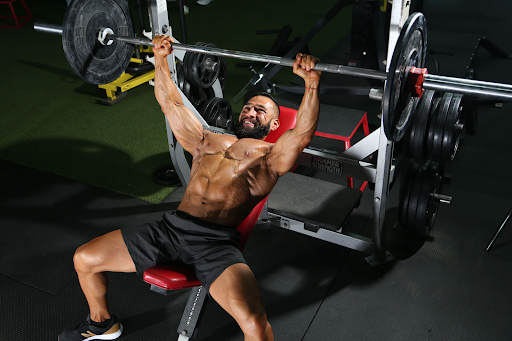
The barbell bench press remains one of the most recognizable compound chest exercises because it allows substantial loading while training the pectorals, anterior deltoids, and triceps. Dumbbell presses provide greater freedom of movement and can help address left-to-right strength differences. Neither is automatically superior; the best choice depends on individual structure, comfort, technique, and training goals.
Incline dumbbell presses are useful when greater emphasis on the upper chest is desired. Cable flyes and machine flyes can complement pressing movements by providing a chest-focused exercise with less involvement from the triceps. Push-ups are another highly effective option, particularly when equipment is limited.
| Exercise | Primary Emphasis | Main Benefit | Typical Use |
|---|---|---|---|
| Barbell bench press | Pectoralis major | Heavy loading | Strength and mass |
| Dumbbell bench press | Chest and stabilizers | Independent arm movement | Hypertrophy |
| Incline dumbbell press | Upper chest | Clavicular fiber emphasis | Upper-body development |
| Cable fly | Chest adduction | Controlled resistance | Hypertrophy and finishing work |
| Machine chest press | Chest | Stability and easy loading | Muscle-focused training |
| Push-up | Chest, triceps, shoulders | Accessible compound movement | Home or supplemental training |
A strong chest workout often combines a compound press with another pressing pattern and a fly or similar isolation movement. This creates a useful balance between heavy mechanical tension and focused muscular work without making the session unnecessarily long.
Building an Effective Chest Workout
An effective session usually begins with a compound movement when strength and muscle gain are priorities. After warming up, a lifter might perform a flat press followed by an incline press and finish with cable flyes or another controlled chest isolation exercise. The precise number of sets depends on training experience, weekly frequency, recovery, and the rest of the program.
Training volume should also be considered across the entire week rather than judging one session in isolation. Someone who trains chest twice weekly may distribute pressing and isolation work between both sessions instead of trying to complete everything on one day. This can improve performance and make recovery easier to manage.
For many people, a chest workout works well when most working sets are performed with controlled repetitions and sufficient effort while leaving a small amount of capacity before complete muscular failure. Going to failure occasionally can be useful, particularly with safer isolation movements, but every set does not need to become an all-out effort.
Chest Training for Strength and Muscle Growth
Strength and hypertrophy overlap, but they are not identical goals. Strength-focused training generally emphasizes heavier loads and lower repetition ranges on major compound movements, while muscle-building programs often use moderate repetitions and accumulate more total volume. Both approaches can increase muscle size when training is structured effectively.
Progressive overload is central to long-term development. This does not always mean adding weight every session. Progress can also come from completing more repetitions with the same load, improving technique, increasing range of motion, adding a carefully managed set, or achieving better control.
A useful principle is simple: “Make the target muscle work harder, not merely the number on the bar go higher.” If increasing weight causes shortened repetitions, bouncing the bar, or excessive shoulder involvement, the apparent progression may actually reduce the quality of the stimulus.
Chest Workout Technique and Form
Technique determines how efficiently an exercise trains its intended muscles. During a bench press, the feet should remain stable, the upper back should be appropriately positioned, and the bar should be controlled rather than dropped toward the chest. The exact grip width can vary according to body proportions and comfort, but extreme positions may place unnecessary stress on the shoulders or wrists.
For dumbbell presses, lowering the weights under control and pressing through a comfortable range of motion generally provides more useful stimulus than chasing excessive depth. During fly movements, maintaining a slight bend in the elbows can reduce unnecessary joint stress while allowing the chest to perform the primary movement.
The goal of a chest workout is not to make every repetition look dramatic. Quality repetitions are usually controlled, repeatable, and performed through a range of motion that the individual can manage safely. Good technique also makes progress easier to measure because each repetition is performed under relatively consistent conditions.
Common Chest Training Mistakes and Their Solutions
One common problem is using too much weight. Heavy loads can be valuable, but excessive resistance often causes the shoulders and triceps to dominate while the chest receives less effective tension. The solution is to reduce the load enough to maintain controlled movement and appropriate positioning.
Another mistake is training the chest frequently without allowing sufficient recovery. Muscle growth occurs through adaptation after training, not simply during the workout itself. Sleep, nutrition, rest days, and overall training stress all influence recovery.
Neglecting the upper chest is another frequent programming issue. Performing only flat presses can create a repetitive stimulus. Including an incline press can add variety and increase emphasis on the clavicular portion of the pectoralis major. At the same time, an excessive number of incline exercises is unnecessary; balanced programming is more useful than chasing a perfect angle.
Chest Training at Home Without a Full Gym
A gym is not essential for developing the chest. Push-ups can become progressively challenging through variations involving different hand positions, elevated feet, pauses, slower eccentric phases, or external resistance when appropriate. Resistance bands and adjustable dumbbells can also provide substantial training possibilities.
The principle remains the same: the muscles need a progressively challenging stimulus. If standard push-ups become easy, simply performing endless repetitions may not be the most efficient approach. Increasing resistance or selecting a more difficult variation can create a stronger training stimulus while keeping the session manageable.
For home lifters, a chest workout can therefore be highly effective with limited equipment when exercise difficulty, repetition quality, and progression are deliberately managed.
Recovery, Nutrition and Chest Development
Training provides the stimulus, but recovery provides the environment in which adaptation occurs. Adequate protein, sufficient calories for the individual’s goal, hydration, and quality sleep all support muscle repair and performance. A person trying to gain muscle generally needs a different nutritional strategy from someone primarily focused on fat loss.
Protein-rich foods such as eggs, dairy products, lean meats, fish, legumes, tofu, and other suitable sources can help support daily protein intake. Carbohydrates can also be valuable because they provide energy for demanding resistance sessions. There is no single perfect diet for chest development; consistency and appropriate overall nutrition matter more than one specific food.
Recovery also means managing training fatigue. If pressing performance repeatedly declines, joints become irritated, or soreness remains unusually high, reducing training stress may be more productive than adding additional exercises.
How Often Should You Train the Chest?
Training frequency should fit the entire resistance-training program. Many lifters can make excellent progress by training the chest once or twice per week, provided the total weekly workload is appropriate and recovery is adequate. Frequency is less important than consistently applying effective training principles.
For someone training twice weekly, one session could emphasize heavier pressing while the other uses moderate loads, incline work, and controlled isolation exercises. This approach can distribute volume more effectively and allow better performance across individual sets.
The best chest workout schedule is therefore the one that fits the person’s recovery capacity, experience, other upper-body training, and long-term goals rather than following a rigid calendar.
Frequently Asked Questions About Chest Training
What is the best exercise for building the chest?
The barbell bench press is an excellent compound exercise for developing pressing strength and chest mass, while dumbbell presses, incline presses, machine presses, and cable flyes provide useful complementary stimuli. The most effective exercise is ultimately one that can be performed safely, progressively, and consistently while producing meaningful chest tension.
How many exercises should a chest workout include?
Most people do not need a large number of exercises in one session. Around three to four carefully selected movements can provide substantial stimulus when sets are performed with good technique and sufficient effort. Exercise quality, weekly volume, progression, and recovery are generally more important than having a long list of movements.
Can push-ups build a bigger chest?
Yes. Push-ups can build chest muscle when they provide sufficient resistance and are performed progressively. Beginners may experience significant development from standard push-ups, while experienced lifters may need harder variations or added resistance to continue creating an adequate stimulus.
How can I build my upper chest?
Incline pressing movements can increase the contribution of the clavicular portion of the pectoralis major. An incline dumbbell press or incline machine press can be incorporated into a balanced program. The incline should be moderate enough to maintain chest involvement rather than turning the movement into primarily a shoulder exercise.
How long should a chest workout take?
A focused session can often be completed in roughly 45 to 60 minutes, including warm-up and rest periods. Longer workouts are not automatically better. Once performance and technique begin deteriorating because of accumulated fatigue, additional exercises may provide diminishing returns.
How long does it take to see chest muscle growth?
Visible progress varies according to training experience, genetics, nutrition, body composition, recovery, and consistency. Beginners may notice changes relatively quickly, while experienced lifters often progress more gradually. Measuring strength, repetitions, photographs, and body measurements can provide a more reliable picture than relying solely on daily visual changes.
Conclusion
A successful chest workout is built on fundamentals rather than complicated routines. Effective pressing movements, appropriate isolation work, controlled technique, progressive overload, adequate nutrition, and sufficient recovery provide the foundation for developing a stronger and more muscular chest.
The biggest mistake is assuming that more exercises automatically produce better results. A focused program performed consistently can outperform a complicated routine filled with unnecessary volume. Learn the movement patterns, choose exercises that suit your structure, progress gradually, and treat recovery as part of the training process.
The final insight is straightforward: build your chest by making quality work repeatable and progressive. Strength and muscle development are long-term adaptations, and the best results come from a training approach you can execute consistently for months and years.