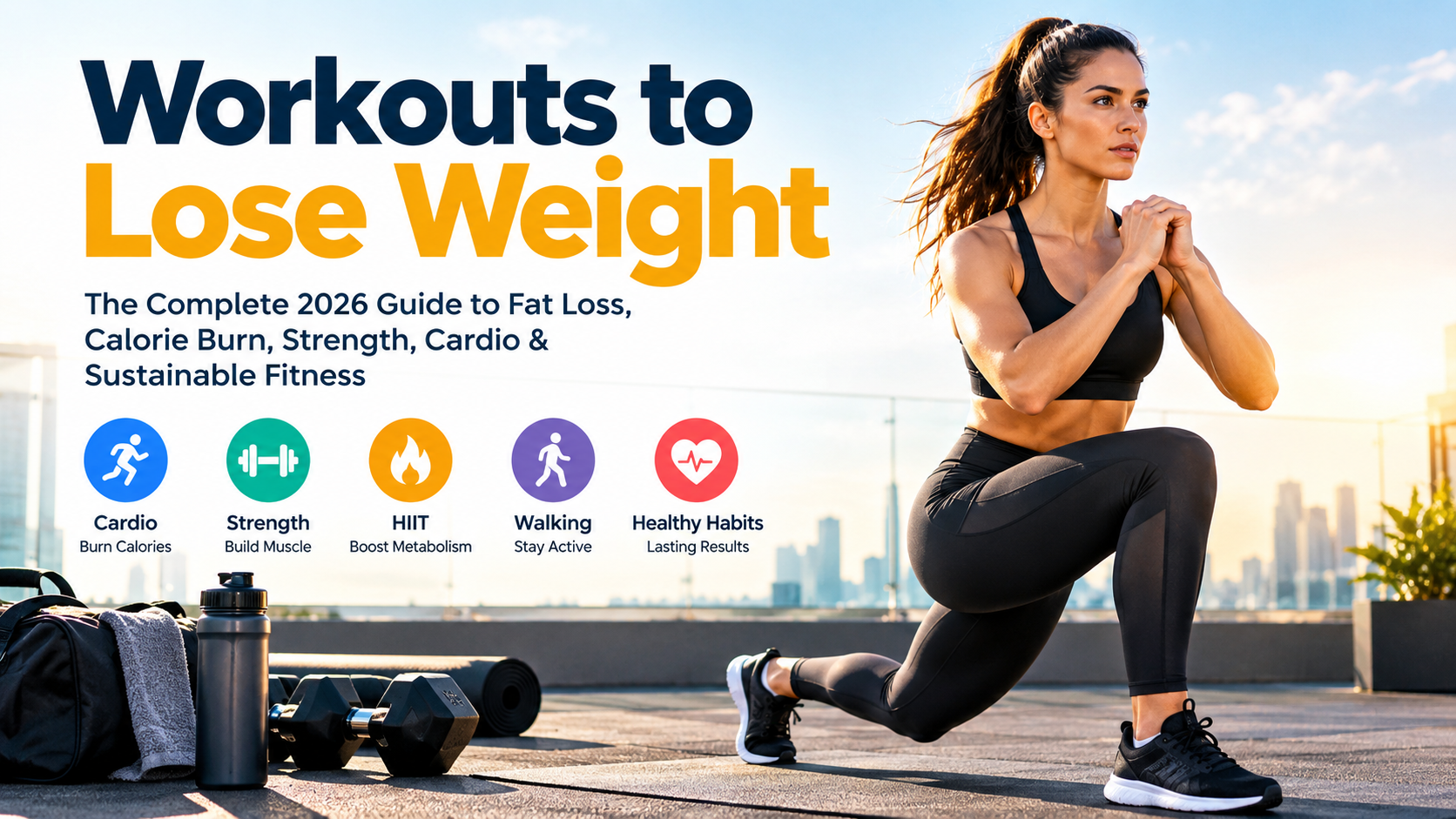
Losing weight is rarely about finding one magical exercise. The most effective approach combines regular movement, resistance training, cardiovascular exercise, adequate recovery, and eating habits that create a sustainable calorie deficit. The goal is not simply to burn as many calories as possible during one session, but to build a routine you can consistently follow for months.
The best workouts to lose weight can look very different depending on your fitness level, schedule, equipment, age, and preferences. Someone who is new to exercise may make excellent progress with brisk walking and basic strength exercises, while an experienced gym-goer may benefit from resistance training combined with intervals and steady-state cardio.
Weight loss also involves more than the number on a scale. Changes in waist circumference, fitness, strength, energy, body composition, and daily activity can provide useful information about progress. A practical program should therefore focus on improving overall fitness while gradually reducing excess body fat.
How Workouts Support Weight Loss
Exercise contributes to weight management by increasing energy expenditure and helping you maintain an active lifestyle. Cardiovascular activities such as walking, cycling, swimming, jogging, and rowing can raise heart rate and increase calorie expenditure. Resistance training adds another important component by challenging muscles and supporting strength and lean mass during a weight-loss phase.
A useful way to think about exercise is as part of a larger energy-balance equation. If you consistently consume more energy than your body uses, weight tends to increase; if you consistently use more energy than you consume, weight tends to decrease. Exercise can help create that difference, but nutrition, sleep, stress, and everyday movement matter too.
The most effective workouts to lose weight are therefore not necessarily the hardest. A routine that leaves you exhausted after three days but gets abandoned the following week is less useful than moderate training that becomes part of your normal lifestyle.
“The best workout is the one that challenges you enough to progress without making consistency impossible.”
Best Types of Workouts for Fat Loss
A balanced fat-loss program can include several forms of exercise. Cardio improves cardiovascular fitness and increases energy expenditure, while strength training helps develop and maintain muscle. High-intensity interval training can provide a time-efficient challenge, whereas walking offers an accessible way to increase daily activity without placing excessive demands on recovery.
For many people, combining different training styles works better than relying exclusively on one. For example, three resistance-training sessions, two cardio sessions, and regular walking can create a well-rounded weekly routine. This approach also reduces boredom because each workout serves a different purpose.
| Workout type | Main benefit | Beginner-friendly? | Typical use |
|---|---|---|---|
| Brisk walking | Low-impact calorie expenditure | Yes | Daily activity and recovery |
| Strength training | Muscle and strength development | Yes | 2–4 sessions weekly |
| Cycling | Cardio with lower joint impact | Yes | Steady-state conditioning |
| Jogging | Cardiovascular fitness | Sometimes | Moderate cardio |
| HIIT | Time-efficient conditioning | Better with a base | Short sessions |
| Swimming | Full-body cardiovascular exercise | Yes | Low-impact cardio |
| Circuit training | Strength plus cardio | Yes | Efficient full-body sessions |
The important distinction is that calorie burn during a workout is only one part of the picture. A sustainable training plan should also improve fitness and help you remain active outside the gym.
Strength Training for Weight Loss
Strength training deserves a central place in a weight-loss program because losing weight is not simply about becoming lighter. Maintaining muscle while reducing body fat can contribute to a stronger, more functional physique. Exercises such as squats, lunges, push-ups, rows, shoulder presses, deadlifts, and hip bridges can train major muscle groups efficiently.
Beginners do not need complicated bodybuilding programs. A full-body routine performed two or three times per week can provide a strong foundation. Start with manageable resistance, focus on controlled technique, and gradually increase repetitions, resistance, or training volume as your fitness improves.
Among the most useful workouts to lose weight, resistance sessions have another practical advantage: they can be progressively adjusted. Instead of endlessly adding cardio, you can gradually make strength exercises more challenging as your body adapts.

Cardio and HIIT for Calorie Expenditure
Cardiovascular exercise includes everything from a relaxed walk to vigorous interval training. Moderate activities such as brisk walking, cycling, swimming, and elliptical training are often easier to perform consistently than very intense workouts. They can also fit naturally into a busy schedule.
HIIT, or high-intensity interval training, alternates short periods of harder effort with recovery periods. A simple example might involve cycling hard for 30 seconds followed by 60–90 seconds of easier cycling, repeated several times. HIIT can be useful when time is limited, but it is not automatically superior to every other form of exercise for long-term weight management.
The smartest use of workouts to lose weight is often to combine cardio intensity levels. Easy walking and steady-state cardio can provide a foundation, while occasional intervals add variety and challenge. This reduces the temptation to make every workout extremely difficult.
Walking as an Underrated Fat-Loss Tool
Walking is one of the simplest ways to increase physical activity. It requires little equipment, can be performed almost anywhere, and can be divided into short sessions throughout the day. Someone who currently spends most of the day sitting may see a meaningful lifestyle change simply by adding regular walks.
A practical strategy is to build walking around existing routines. Walk after meals, take the stairs when appropriate, park farther away, or schedule a dedicated evening walk. Increasing daily movement can be particularly useful for people who struggle with long gym sessions.
Walking may not feel as dramatic as an intense workout, but sustainable weight management is built from repeated behaviors. Ten minutes here and fifteen minutes there can accumulate into a substantial increase in weekly activity.
A Weekly Workout Structure That Works
A balanced schedule should give different physical qualities enough attention without overwhelming recovery. For example, a beginner might perform full-body strength training on Monday, Wednesday, and Friday, use Tuesday and Saturday for brisk walking or moderate cardio, and keep Thursday or Sunday lighter.
Someone with more training experience could use a similar framework while increasing resistance, duration, or cardio intensity. The exact schedule matters less than progressive consistency. Rest days are not wasted days; they allow muscles, connective tissues, and the nervous system to recover.
| Day | Example training focus | Intensity |
|---|---|---|
| Monday | Full-body strength | Moderate |
| Tuesday | Brisk walking or cycling | Easy–moderate |
| Wednesday | Full-body strength | Moderate |
| Thursday | Walking and mobility | Easy |
| Friday | Full-body strength + short cardio | Moderate |
| Saturday | Longer walk, cycling, or swimming | Moderate |
| Sunday | Rest or gentle movement | Easy |
These workouts to lose weight should be adjusted according to fitness level. Someone experiencing persistent fatigue, unusual pain, or difficulty recovering should reduce training demands rather than assuming more exercise will produce faster results.
Common Problems That Slow Progress
One common mistake is trying to compensate for an inconsistent diet with increasingly intense workouts. Exercise can support calorie expenditure, but it is surprisingly easy to consume enough additional food to offset a portion of that expenditure. Building sensible eating habits alongside exercise is therefore important.
Another problem is doing too much too soon. A beginner who immediately starts daily HIIT, long-distance running, and heavy strength sessions may experience excessive soreness or injury risk. Gradual progression is usually more sustainable. Start with a manageable workload and increase it as your body adapts.
A third issue is judging progress exclusively by daily scale readings. Body weight naturally fluctuates because of hydration, food volume, sodium intake, and other factors. Looking at longer-term trends alongside waist measurements, strength, fitness, and how clothing fits can provide a more useful picture.
Nutrition, Sleep and Recovery Matter
Exercise works best when supported by appropriate nutrition. Protein-rich foods, vegetables, fruits, whole grains, healthy fats, and adequate hydration can form the foundation of a balanced eating pattern. Portion sizes and total calorie intake also matter when the goal is reducing body weight.
Recovery is equally important. Sleep supports physical recovery and helps you maintain the energy needed for regular training. If every workout leaves you exhausted and your sleep is consistently poor, increasing exercise volume may not be the solution.
Successful workouts to lose weight should fit into a complete lifestyle rather than becoming a punishment for eating. Training should help you become stronger, fitter, and more capable while nutrition supports gradual changes in body composition.
How to Progress Without Burning Out
Progress does not require making every workout harder. You can improve by adding a few repetitions, increasing resistance slightly, walking for longer, improving exercise technique, or reducing unnecessary rest between appropriate exercises. These small changes create progressive overload without turning every session into a test of willpower.
It is also useful to establish minimum targets. For example, on a busy day, a 20-minute walk may be your minimum activity goal. On a day with more time, you might complete a full strength session. This flexible mindset prevents the “all or nothing” pattern that causes many fitness routines to collapse.
The strongest workouts to lose weight are ultimately those that remain challenging enough to produce adaptation while still allowing you to return and train again.
Safety and Sustainable Exercise Habits
People with existing medical conditions, significant joint problems, or a long period of inactivity may benefit from professional guidance before beginning vigorous exercise. Pain that is sharp, persistent, or worsening should not simply be ignored in the belief that discomfort means the workout is effective.
Warm up gradually, learn proper exercise technique, use appropriate footwear and equipment, and increase training demands progressively. Beginners should prioritize movement quality before chasing heavier weights or higher intensity.
Fitness is a long-term process. The objective is not to complete the most brutal workout possible but to create a routine that improves physical capacity while supporting everyday life.
Frequently Asked Questions
What are the best workouts to lose weight for beginners?
Beginners can start with brisk walking, basic resistance exercises, cycling, swimming, or low-impact circuit training. A combination of strength training and moderate cardio can build fitness while increasing physical activity. Starting with manageable sessions and gradually increasing duration or resistance is generally more sustainable than immediately choosing high-intensity workouts.
How often should you exercise to support weight loss?
A practical routine can include several days of moderate physical activity combined with regular strength training. The ideal amount depends on your current fitness, schedule, recovery, and health status. Consistency matters more than attempting an extreme weekly schedule that you cannot maintain.
Can walking really help with weight loss?
Yes, walking can contribute to weight management by increasing daily physical activity and energy expenditure. Its major advantage is accessibility. Walking can often be performed regularly without the recovery demands associated with very intense training, making it a useful component of a long-term fitness routine.
Is strength training useful for losing body fat?
Strength training can be highly valuable because it develops muscular strength and helps support lean body mass during a period of weight loss. Exercises that train the legs, back, chest, shoulders, arms, and core can create a balanced program while improving functional fitness.
Are HIIT workouts better than steady-state cardio?
HIIT is not automatically better for every person or every goal. It provides a time-efficient way to perform challenging cardiovascular exercise, while steady-state activities can be easier to recover from and perform more frequently. Combining different forms of cardio can create a more sustainable training routine.
How long does it take to see results from exercise?
The timeline varies considerably between individuals because results depend on starting body composition, nutrition, activity levels, training consistency, sleep, and other factors. Improvements in stamina, strength, and daily energy may occur before obvious changes in body weight. Tracking several indicators over time provides a more complete picture of progress.
Conclusion
Effective workouts to lose weight are not built around a single exercise, secret technique, or exhausting daily routine. They combine resistance training, cardiovascular activity, walking, recovery, sensible nutrition, and gradual progression. The strongest program is one that challenges your body while remaining realistic enough to continue week after week.
For beginners, starting with full-body strength sessions and regular walking can establish a dependable foundation. As fitness improves, cycling, swimming, jogging, circuits, or carefully introduced intervals can add variety and challenge.
The final takeaway is simple: fat loss is a long-term process, and consistency beats intensity when intensity cannot be sustained. Build a routine you can repeat, progress gradually, recover properly, and measure success through more than the scale.