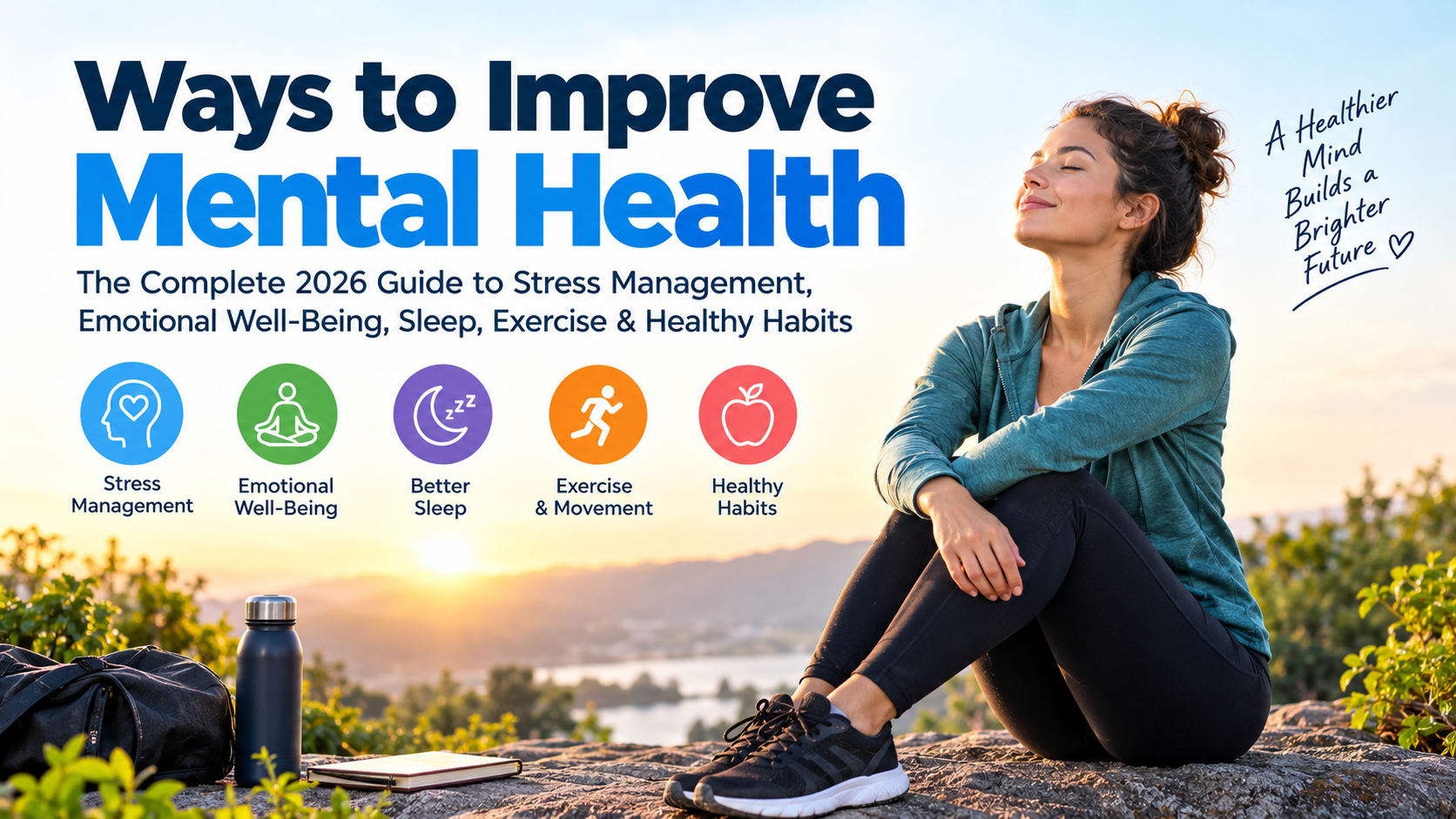
Mental health is not simply the absence of stress, sadness, or difficult emotions. It is a broader part of well-being that affects how you think, feel, relate to other people, make decisions, handle pressure, and function in everyday life. Just as physical fitness develops through repeated habits, emotional and psychological well-being can be supported through consistent behaviors and appropriate care.
The most useful ways to improve mental health are usually practical rather than dramatic. Better sleep, regular movement, meaningful relationships, manageable routines, nutritious food, time outdoors, relaxation skills, healthy boundaries, and professional support can all contribute to a stronger foundation. No single habit works for everyone, and improvement often comes from combining several small changes.
Mental health can also change over time. Learning practical ways to improve mental health can make everyday coping more intentional. A demanding job, relationship difficulty, financial pressure, grief, illness, loneliness, or major life transition can affect even someone who normally feels well. That is why a useful approach focuses not on being positive all the time, but on building resilience, recognizing warning signs, and knowing when additional support is needed.
Understand What Mental Health Really Means
Mental health includes emotional, psychological, and social well-being. It influences how people cope with everyday stress, learn, work, communicate, solve problems, and maintain relationships. Good mental health does not mean feeling happy every day. A psychologically healthy person can experience grief, anger, anxiety, disappointment, or frustration while still having ways to process those emotions and continue functioning.
This distinction matters because unrealistic expectations can create another layer of pressure. Someone may think they are failing at self-care because they still feel anxious after exercising or because meditation does not immediately remove stress. A better goal is improved coping capacity: recovering after difficult moments, maintaining supportive relationships, making room for rest, and responding to problems with greater flexibility.
Build a Sleep Routine That Protects Your Mind
Sleep is closely connected with mood, concentration, memory, stress regulation, and daily energy. A consistent sleep and wake schedule can be more useful than simply trying to spend more time in bed. A dark, comfortable sleeping environment and a calmer pre-bed routine can also support better sleep quality.
If poor sleep has become a cycle, start by reducing the friction around bedtime. Keep a reasonably consistent schedule, limit stimulating activities before bed, and avoid turning the bedroom into an extension of the workplace. If racing thoughts are the problem, writing tomorrow’s tasks in a notebook before bed can give the brain a place to store them instead of repeatedly rehearsing them.
One of the practical ways to improve mental health is therefore to treat sleep as a daily health behavior rather than a luxury reserved for weekends. Better rest can make exercise, concentration, emotional regulation, and social interaction easier the following day.
Move Your Body Regularly
Physical activity can support mental well-being by improving mood, reducing stress, supporting sleep, and increasing opportunities to spend time outside or around other people. It does not have to mean intense gym sessions. Walking, cycling, swimming, dancing, recreational sports, household activity, and strength training can all contribute to a more active lifestyle.
For someone who feels overwhelmed, the problem is often not knowing that exercise is useful but making it feel achievable. A 15-minute walk after work may be more realistic than promising a demanding one-hour workout every day. Once the habit becomes familiar, duration or intensity can gradually increase.
The most sustainable ways to improve mental health through movement are those that fit real life. Exercise should be a source of support, not another standard that creates guilt when a busy day gets in the way.
Strengthen Social Connection
Human beings are social creatures, and supportive relationships can provide emotional reassurance, practical assistance, perspective, and a sense of belonging. Social connection does not require having a huge circle of friends. One trustworthy person who listens without immediately judging or fixing the situation can be extremely valuable.
Loneliness can also occur while someone is surrounded by people. The issue is not simply the number of interactions but their quality. A useful strategy may be scheduling a weekly call with a family member, having coffee with a friend, joining a walking group, participating in a community activity, or checking in with someone who has been difficult to reach.
A simple message such as “I have had a stressful week and could use some company” can be more effective than waiting until distress becomes overwhelming. Meaningful connection is one of the ways to improve mental health because it creates a support system that can be used before a crisis develops.
Learn Practical Stress-Management Skills
Stress is a normal response to demands, but prolonged or overwhelming stress can interfere with sleep, concentration, relationships, and everyday functioning. Effective stress management is less about eliminating every stressful event and more about improving the way you respond to pressure.
Breathing exercises, mindfulness, journaling, time in nature, progressive muscle relaxation, enjoyable hobbies, and short periods away from screens can create useful pauses during demanding days. The key is repetition. A five-minute breathing practice used regularly may become more useful than a long relaxation session attempted only when stress has already reached its peak.
Consider a common workplace scenario: an overflowing inbox creates the feeling that everything is urgent. Instead of responding randomly, someone might pause, write down the three most important tasks, silence nonessential notifications, and complete one task before moving to the next. The external workload has not disappeared, but the response to it has become more organized.
Eat for Brain and Body Health
Nutrition cannot replace mental health treatment, but eating patterns influence energy, physical health, and the ability to maintain daily routines. Regular meals built around nutrient-dense foods can provide a more stable foundation than frequently skipping meals and relying heavily on highly processed convenience foods.
A balanced eating pattern can include vegetables and fruit, whole grains, protein-rich foods, legumes, nuts and seeds, and appropriate sources of healthy fats. Hydration also matters, particularly during hot weather or physical activity. Excessive alcohol or recreational drug use can complicate mood, sleep, judgment, and recovery, making existing difficulties harder to manage.
Food should not become another source of perfectionism. The useful principle is consistency rather than an ideal diet. Small improvements that can be maintained for months generally make more sense than restrictive rules that create stress and are difficult to follow.
Create Healthy Boundaries and Manage Digital Overload
Constant notifications can keep the brain in a state of perceived availability. Work messages, social media feeds, breaking news, and group chats can make it difficult to experience genuine downtime. Digital tools are useful, but unlimited access to them can become mentally exhausting.
Set clear boundaries around when you are available. Turning off nonessential notifications, creating phone-free meals, avoiding work messages immediately before bed, and taking short screen breaks can help restore attention. Curating social media feeds also matters; repeatedly consuming material that triggers anger, comparison, fear, or inadequacy can affect emotional well-being.
These are among the ways to improve mental health that require little money or specialized equipment. The objective is not to abandon technology but to make its role intentional rather than automatic.
Practice Self-Compassion Instead of Constant Self-Criticism
Self-compassion means responding to personal mistakes and difficulties with the same basic understanding you might offer someone you care about. It does not mean avoiding responsibility. Instead, it separates useful self-correction from harsh self-attack.
Imagine missing an important deadline. A destructive response might be, “I always ruin everything.” A more constructive response would identify what happened, acknowledge the consequence, and determine what needs to change next time. The second approach does not excuse the mistake; it creates a clearer path toward solving it.
For many people, one of the hardest ways to improve mental health is changing the internal conversation. Replacing absolute language such as “always,” “never,” and “I’m useless” with specific observations can reduce unnecessary emotional escalation and make problem-solving easier.
Build Meaning, Routine and Enjoyable Activities
Mental well-being benefits from having activities that provide purpose, pleasure, mastery, or connection. These might include learning a skill, caring for plants, cooking, reading, volunteering, practicing a sport, creating art, spending time with family, or working toward a meaningful personal goal.
Routine is especially valuable during periods when motivation is low. Instead of waiting to feel motivated before doing something beneficial, create small anchors in the day. Getting dressed at a consistent time, eating regular meals, taking a walk, completing one important task, and contacting another person can provide structure when everything feels disorganized.
Enjoyment also deserves attention. People sometimes remove hobbies from their schedules when life becomes busy, yet enjoyable activities are not necessarily wasted time. They can provide recovery, identity, social connection, creativity, and a break from constant performance.
Know When Self-Care Is Not Enough
Self-care can support well-being, but it should not be treated as a substitute for professional treatment when symptoms are persistent, severe, or interfering with daily life. Ongoing changes in sleep or appetite, loss of interest in normal activities, significant difficulty concentrating, persistent hopelessness, or problems completing usual responsibilities are reasons to speak with a qualified healthcare professional.
Treatment can take different forms depending on the situation. A primary care clinician may help assess symptoms and guide next steps, while psychologists, psychiatrists, counselors, and other qualified professionals may provide specialized support. Therapy, medication, or a combination may be appropriate for some conditions, while treatment decisions should be individualized.
A useful rule is simple: if emotional or psychological symptoms are making ordinary life substantially harder, seeking help is a form of health care, not a personal failure. Professional support can work alongside everyday habits rather than replacing them.
A Simple Mental Wellness Framework
| Area | Practical habit | Why it matters |
|---|---|---|
| Sleep | Keep a consistent sleep schedule | Supports mood, attention, and recovery |
| Movement | Walk, exercise, or stay physically active | Supports mood, sleep, and overall health |
| Connection | Maintain regular contact with supportive people | Reduces isolation and provides support |
| Stress | Use breathing, mindfulness, journaling, or relaxation | Helps manage everyday pressure |
| Nutrition | Eat regular, balanced meals and stay hydrated | Supports energy and physical well-being |
| Digital habits | Create periods away from notifications | Protects attention and downtime |
| Purpose | Make time for meaningful activities | Supports motivation and identity |
| Professional care | Seek help when symptoms persist or impair life | Provides assessment and treatment when needed |
The value of this framework is its flexibility. A person does not need to perfect every category at once. Someone struggling with sleep might begin there, while another person experiencing loneliness might start by reconnecting with a trusted friend.
The most useful ways to improve mental health are often cumulative. A short daily walk, consistent bedtime, weekly social activity, regular meals, and a few minutes of stress management may seem insignificant individually, but together they can reshape the structure of a person’s week.
Problem-Solution Strategies for Difficult Days
When motivation disappears, reduce the size of the task rather than abandoning the habit completely. If a full workout feels impossible, take a short walk. If cleaning the entire home feels overwhelming, clear one surface. If replying to every message feels exhausting, contact one trusted person. Smaller actions can preserve momentum without demanding an unrealistic level of energy.
When the mind becomes crowded with worries, externalize the problem. Write down what is within your control, what requires action later, and what cannot be solved today. This turns an abstract cloud of anxiety into separate problems that can be considered individually.
These strategies do not eliminate serious mental health conditions, and they should not be presented as universal cures. Their value is that they make ordinary self-care more manageable while helping a person recognize when additional support is needed.
Frequently Asked Questions
What are the most effective ways to improve mental health?
The most useful approach usually combines several foundations: adequate sleep, regular physical activity, supportive relationships, nutritious food, stress-management skills, meaningful activities, healthy boundaries, and professional care when needed. The right combination varies by individual, and persistent or severe symptoms should be assessed by a qualified healthcare professional.
Can exercise improve mental health?
Yes. Regular physical activity is associated with benefits for mood, anxiety symptoms, sleep, cognitive health, and overall well-being. Exercise can be as simple as walking or recreational activity; it does not have to be a demanding gym program to contribute to a healthier lifestyle.
How does sleep affect mental well-being?
Sleep supports emotional regulation, concentration, memory, and physical recovery. Poor or inconsistent sleep can make stress and difficult emotions harder to manage. Maintaining a regular sleep schedule and creating a calm bedtime environment are practical starting points.
Can social connection really make a difference?
Supportive relationships can provide emotional support, practical help, belonging, and perspective during stressful periods. Quality matters more than having a large number of contacts. Regular interaction with trusted people can become an important protective part of a person’s overall well-being.
When should someone seek professional mental health support?
Professional support is appropriate when symptoms are severe, persistent, worsening, or interfere with sleep, work, relationships, self-care, or normal activities. A qualified healthcare professional can help determine what type of assessment or treatment may be appropriate.
What should someone do during a mental health crisis?
If someone is in immediate danger, has thoughts of suicide, or may harm themselves or another person, urgent help is needed. Contact local emergency services or a crisis service available in the person’s country, and stay with the person when it is safe to do so. If you are in the United States, 988 is available for crisis support by call or text.
Conclusion
The best ways to improve mental health are rarely based on one dramatic change. Stronger well-being is usually built through ordinary behaviors repeated consistently: sleeping well, moving regularly, staying connected, managing stress, eating balanced meals, protecting personal boundaries, practicing self-compassion, and making space for meaningful activities.
At the same time, self-care has limits. Persistent distress, major changes in functioning, or symptoms that interfere with everyday life deserve professional attention. Mental health care and healthy lifestyle habits can work together, giving people both practical daily support and appropriate clinical care when necessary.
The final insight is simple: mental well-being is something worth maintaining before life becomes overwhelming. Small, sustainable actions can strengthen the foundation, while reaching out for professional support when needed can provide the additional care that self-help alone cannot offer.