

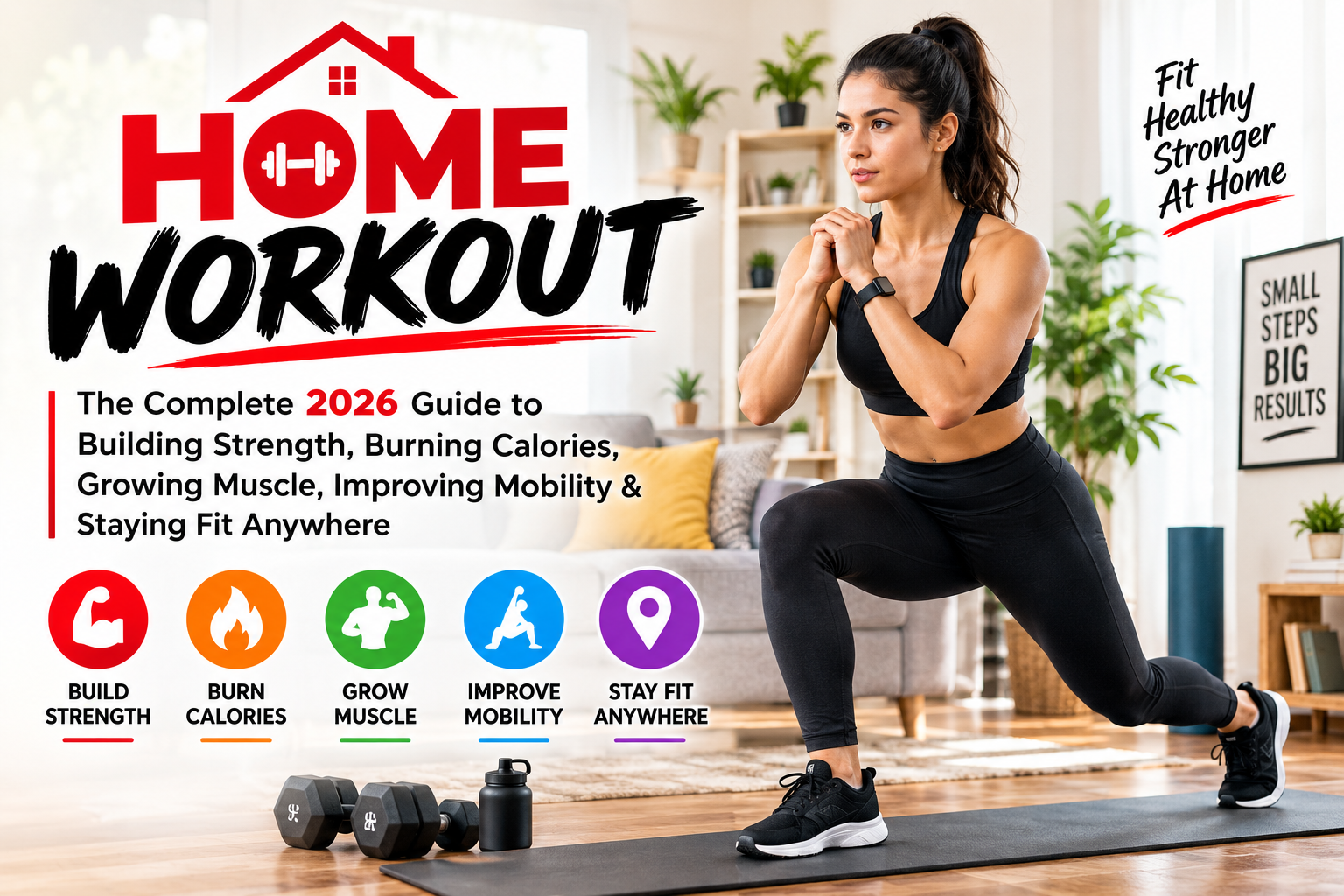
A home workout can be far more effective than many people assume. You do not need an expensive gym membership, a room filled with machines, or hours of free time to improve strength, cardiovascular fitness, mobility, and body composition. With smart exercise selection and consistent progression, a small space can become a surprisingly effective training environment.
The biggest advantage is convenience. When training is available in your living room, garage, bedroom, or outdoor space, common barriers such as commuting, crowded equipment, and limited opening hours disappear. That convenience can make consistency easier, which is one of the most important factors in achieving long-term fitness results.
A successful routine should combine resistance training, cardiovascular activity, mobility, core stability, and adequate recovery. Whether your goal is building muscle, losing body fat, improving athletic performance, or simply becoming stronger for everyday life, the principles remain remarkably similar: train consistently, challenge your body progressively, and recover intelligently.
What Is a Home Workout?
A home workout is a structured exercise session performed primarily at home using bodyweight, free weights, resistance bands, cardio equipment, or household-friendly training tools. It can range from a short bodyweight circuit to a complete resistance-training program.
The flexibility of home training makes it suitable for different fitness levels. A beginner might start with squats, wall push-ups, glute bridges, and marching in place, while an experienced trainee could perform weighted squats, dumbbell presses, Romanian deadlifts, rows, and interval conditioning.
The important distinction is between exercising randomly and following a progressive program. Ten minutes of movement is useful, but a structured routine gives you a clearer path toward measurable improvements in strength, endurance, mobility, and fitness.
Benefits of Training at Home
One major advantage of a home workout is efficiency. You can begin training within minutes rather than spending time traveling to a gym. This makes shorter sessions realistic, particularly for people with demanding work schedules, family responsibilities, or unpredictable days.
Home training can also encourage consistency because it removes several psychological barriers. You do not need to worry about whether equipment is available or whether other people are watching your technique. For some beginners, that private environment makes it easier to establish a regular exercise habit.
There is also financial flexibility. Bodyweight exercises require virtually no equipment, while a few adjustable dumbbells or resistance bands can dramatically expand your exercise library. The goal should not be to own every piece of fitness equipment but to have enough resistance and variety to keep progressing.
Best Exercises for a Full-Body Routine
A well-designed home workout should cover the major movement patterns rather than focusing exclusively on one body part. Squatting movements train the lower body, pushing exercises challenge the chest and triceps, pulling movements develop the back and biceps, and hip-hinge exercises target the posterior chain.
Core exercises should also go beyond endless crunches. Planks, dead bugs, bird dogs, side planks, and loaded carries train the trunk to resist unwanted movement while improving stability. Mobility drills for the hips, shoulders, ankles, and thoracic spine can complement strength work and improve movement quality.
| Training goal | Effective home exercise | Equipment | Primary focus |
|---|---|---|---|
| Leg strength | Squat | Optional dumbbell | Quads, glutes |
| Glute development | Glute bridge | Optional band | Glutes, hamstrings |
| Chest strength | Push-up | None | Chest, shoulders, triceps |
| Back strength | Dumbbell row | Dumbbells | Upper back, lats |
| Hamstrings | Romanian deadlift | Dumbbells | Hamstrings, glutes |
| Shoulder strength | Overhead press | Dumbbells/bands | Deltoids, triceps |
| Core stability | Plank | None | Abdominals, trunk |
| Cardio | Jumping jacks | None | Cardiovascular fitness |
These movements can be modified according to fitness level. For example, push-ups can begin against a wall or elevated surface before progressing toward floor repetitions. Squats can initially use bodyweight before additional resistance is introduced.
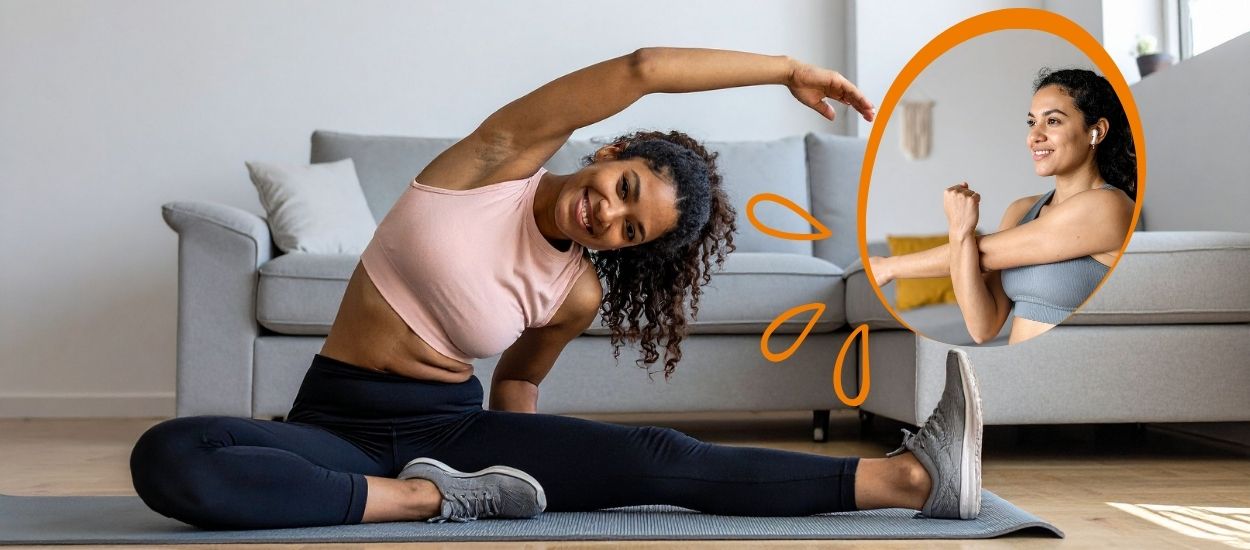
Home Workout for Beginners
Beginners should approach a home workout as an opportunity to develop movement skills rather than a test of maximum effort. Start with exercises that are easy to understand and control, then gradually increase the difficulty.
A simple full-body session might include bodyweight squats, incline push-ups, glute bridges, resistance-band or dumbbell rows, reverse lunges, and a plank. Performing controlled sets with comfortable rest can establish a foundation without producing excessive fatigue.
A common mistake is trying to imitate advanced fitness videos immediately. Someone who has not exercised consistently does not need burpees, high-volume jump squats, or extremely difficult circuits on the first day. Progress should be challenging enough to encourage adaptation but manageable enough to support the next session.
Home Workout for Muscle Growth
Building muscle at home requires the same fundamental principle used in a gym: the muscles must receive enough resistance and progressive training stimulus. Bodyweight exercises can work extremely well, particularly when variations become difficult enough to challenge the target muscles.
Equipment makes progression easier. Adjustable dumbbells, resistance bands, kettlebells, and a sturdy bench can create numerous loading possibilities. Exercises such as goblet squats, dumbbell presses, rows, Romanian deadlifts, lateral raises, curls, and triceps extensions can provide comprehensive resistance training.
Progressive overload can involve adding resistance, increasing repetitions, adding sets, improving range of motion, or advancing to a more challenging variation. If you can perform 10 push-ups comfortably today, progressing toward 15 controlled repetitions represents improvement even without adding external weight.
Home Workout for Weight Loss
A home workout can support weight loss by increasing physical activity and helping preserve lean muscle during a calorie deficit. However, exercise alone does not determine fat loss. Overall energy balance, dietary intake, sleep, daily activity, and consistency all influence the result.
Combining resistance training with cardiovascular exercise is particularly useful. Strength exercises help provide a stimulus for maintaining muscle, while brisk walking, cycling, jogging, dancing, or interval training can increase energy expenditure and cardiovascular fitness.
A practical approach is to focus on sustainable habits rather than trying to burn as many calories as possible in every session. A moderate routine performed consistently for months is usually more valuable than an exhausting program that becomes impossible to maintain.
Cardio and Conditioning at Home
Cardiovascular training does not require a treadmill. Depending on your available space and fitness level, you can use brisk walking, stair climbing, marching, cycling, dancing, shadow boxing, jumping jacks, or low-impact intervals.
High-intensity interval training can be useful for experienced exercisers because short periods of harder effort are alternated with recovery periods. However, intensity should match fitness level. Beginners can achieve meaningful cardiovascular benefits through moderate continuous activity without performing maximal intervals.
Low-impact conditioning is particularly useful when jumping is uncomfortable. Marching quickly, step-ups, fast bodyweight movements, and cycling can elevate heart rate while reducing repetitive impact compared with some jumping exercises.
How to Structure a Weekly Routine
The best home workout schedule balances training stimulus with recovery. A beginner could perform full-body resistance sessions on several non-consecutive days while using walking or light cardiovascular activity on other days.
For example, one session might emphasize squats, push-ups, rows, and core work, while another includes lunges, overhead presses, hip hinges, and conditioning. This variation allows different muscles and movement patterns to receive attention without turning every day into an exhausting workout.
Rest days are not wasted days. Recovery allows muscles and connective tissues to adapt to training. Light walking, gentle mobility work, and normal daily movement can complement rest without creating the same fatigue as a demanding training session.
How to Progress Without a Gym
Progression is the foundation of an effective home workout program. If the same exercise becomes easy, the body eventually receives less stimulus from it. You therefore need a method for increasing difficulty.
Suppose you begin with bodyweight squats and can comfortably perform 15 repetitions. You might progress to slower repetitions, pause squats, split squats, or goblet squats with a dumbbell. The exercise becomes more demanding without requiring a complicated machine.
Keeping a simple training record is extremely useful. Write down repetitions, sets, resistance, and exercise variations. Over several weeks, these records show whether your performance is actually improving rather than relying on how difficult a particular session felt.
Common Home Training Problems and Solutions
One common problem is lack of structure. People often jump between random exercises without tracking anything. The solution is to establish a small group of foundational movements and repeat them consistently enough to measure progress.
Another issue is limited resistance. If your only equipment is a pair of very light dumbbells, lower-body exercises may eventually become too easy. You can temporarily increase difficulty through unilateral movements, greater range of motion, slower eccentric phases, or pauses, but eventually additional resistance may be useful.
Poor technique is another concern. Training at home does not mean training carelessly. Use controlled movement, avoid rushing repetitions, and choose variations that allow you to maintain stable positioning throughout the exercise.
Recovery, Sleep and Nutrition
Recovery determines how well your body responds to a home workout. Muscles need time to repair and adapt, while the nervous system and connective tissues also require adequate recovery after demanding training.
Nutrition supports this process. Protein-rich foods provide amino acids for muscle maintenance and repair, while carbohydrates can help fuel higher-volume exercise. Fruits, vegetables, whole grains, healthy fats, and sufficient fluids provide additional nutritional support.
Sleep deserves equal attention. Consistently poor sleep can affect energy, concentration, exercise performance, and recovery. A sustainable training routine should therefore fit around a realistic lifestyle rather than competing against it.
Safety and Proper Exercise Technique
A home workout should begin with appropriate preparation, particularly before demanding movements. A few minutes of light activity followed by movement-specific warm-up sets can help you transition into training.
Your environment matters too. Make sure the floor is clear, equipment is stable, and you have enough space to perform each movement safely. When using dumbbells or kettlebells, keep weights away from areas where someone could trip over them.
Pain should not automatically be interpreted as evidence that an exercise is working. Normal muscular fatigue and effort are expected, but sharp or persistent pain deserves attention. Modifying the movement, reducing resistance, or seeking qualified professional guidance may be appropriate when discomfort continues.
Frequently Asked Questions
Can a home workout build muscle?
Yes, home training can build muscle when exercises provide sufficient resistance and are progressed over time. Bodyweight movements can be effective, while dumbbells, resistance bands, and kettlebells provide additional loading options as strength increases.
How long should a home workout last?
A productive session can take anywhere from about 20 to 60 minutes depending on your goals, training experience, and available time. Longer sessions are not automatically better. A focused 30-minute workout performed consistently can be more valuable than occasional two-hour sessions.
Is home training effective for weight loss?
Yes, home exercise can contribute to weight loss by increasing activity and supporting muscle retention. However, sustainable fat loss primarily depends on maintaining an appropriate calorie deficit while consuming adequate nutrition and maintaining regular physical activity.
Can beginners exercise at home every day?
Beginners can move every day, but that does not mean performing intense resistance training every day. Alternating demanding workouts with walking, mobility work, or lighter activity gives the body opportunities to recover while maintaining an active lifestyle.
What equipment is best for home training?
A pair of adjustable dumbbells and resistance bands provide excellent versatility for many people. A sturdy exercise mat and stable bench can add further options, but equipment should be selected according to available space, training goals, and progression needs.
Can I get fit without going to a gym?
Absolutely. Cardiovascular fitness, muscular strength, mobility, and general physical conditioning can all be developed at home. The main requirements are an appropriate training stimulus, progressive overload, adequate recovery, and consistency.
Conclusion
A home workout can provide a complete and effective approach to fitness when it is structured around progressive resistance training, cardiovascular conditioning, mobility, and recovery. You do not need a commercial gym to become stronger, improve endurance, build muscle, or develop better movement quality.
Start with fundamental exercises, learn proper technique, track your progress, and increase the challenge gradually. Use bodyweight movements when appropriate and add dumbbells, bands, or other equipment when additional resistance becomes necessary.
The final takeaway is simple: the best workout is not the one with the most equipment—it is the one you can perform consistently, progress intelligently, and recover from successfully. A small space and a well-designed plan can be enough to build a stronger, fitter, and more capable body.