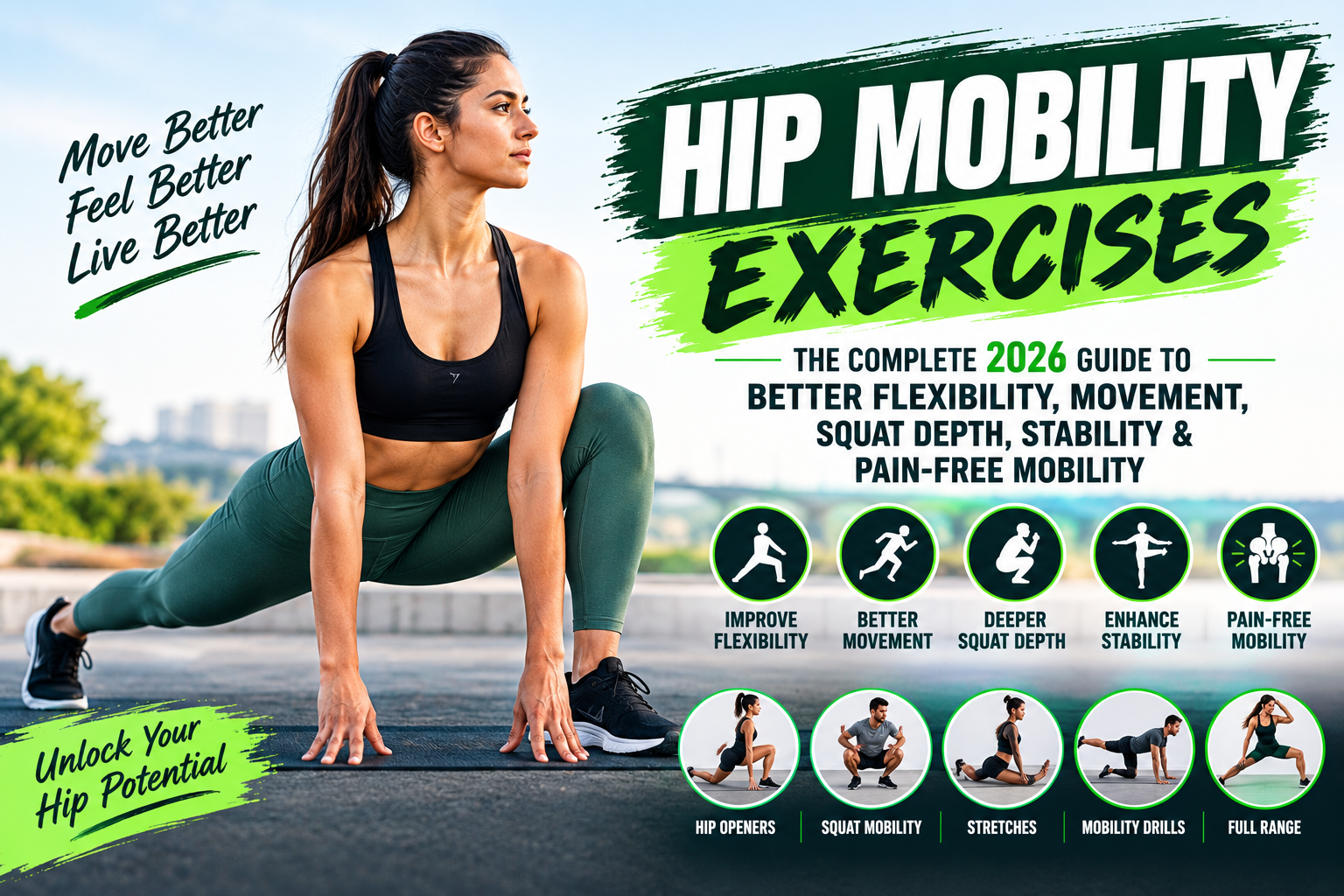
Hip mobility plays an important role in how comfortably and efficiently the body moves. The hips connect the upper and lower body and contribute to walking, running, squatting, lunging, jumping, climbing stairs, and many athletic movements. When hip movement is restricted, other joints may compensate, potentially affecting technique, balance, and movement quality.
Hip mobility exercises are controlled movements designed to improve usable range of motion around the hip joint. They are different from simply stretching a muscle and holding a position. Good mobility work combines flexibility, joint control, strength, coordination, and the ability to actively use available range.
For a recreational exerciser, mobility training can make everyday movement feel smoother. For an athlete or strength trainee, it can support positions required for squats, deadlifts, lunges, and other compound movements. The objective is not to become unusually flexible; it is to develop enough controlled movement to perform tasks efficiently and comfortably.
What Hip Mobility Actually Means
Hip mobility refers to the ability of the hip joint and surrounding tissues to move through an appropriate range of motion with control. The hip is a ball-and-socket joint, allowing flexion, extension, abduction, adduction, and internal and external rotation. Muscles including the glutes, hip flexors, adductors, hamstrings, and deep external rotators all influence how that movement feels and functions.
Mobility is often confused with flexibility, but the terms are not identical. Flexibility generally describes how much a muscle or tissue can lengthen, whereas mobility involves actively controlling a joint through its available range. Someone may be able to passively move into a deep position but struggle to control that position during a squat or lunge.
This distinction explains why effective hip mobility exercises often include active movement rather than passive stretching alone. The body needs to learn not only that a range exists, but also how to control it.
Why Hip Mobility Matters for Training and Daily Movement
Restricted hip movement can make certain positions feel awkward. A person with limited hip flexion or ankle mobility, for example, may compensate during a squat by changing trunk position or lifting the heels. Limited hip extension may also affect stride mechanics during walking or running. These compensations do not automatically indicate an injury, but they can reveal areas worth improving.
Mobility also matters outside the gym. Getting out of a chair, tying shoes, stepping over obstacles, sitting on the floor, and climbing stairs all require coordinated hip movement. Maintaining useful range of motion can help preserve movement options as training demands and daily activities change.
A practical way to think about mobility is to treat it like steering rather than horsepower. Strength gives the body the ability to produce force, while mobility helps determine where that force can be expressed. The best hip mobility exercises develop movement capacity without forcing the body into extreme positions.
Best Hip Mobility Exercises for Better Movement
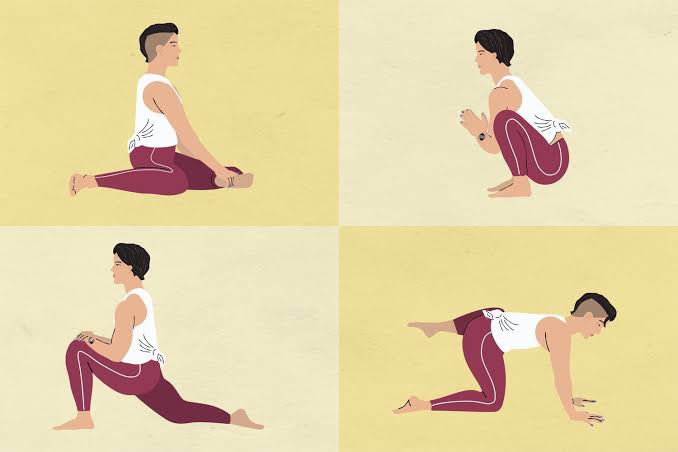
A well-rounded mobility routine can include controlled hip circles, 90/90 transitions, adductor rock-backs, hip flexor stretches, deep squat holds, and controlled hip rotations. Each movement approaches the joint from a slightly different angle and can address different aspects of hip motion.
The 90/90 position is particularly useful because it challenges internal and external hip rotation while allowing the individual to work gradually within a manageable range. Adductor rock-backs can emphasize the inner thigh and hip region, while controlled hip circles encourage active movement around multiple directions.
| Exercise | Primary Movement | Useful For | Suggested Approach |
|---|---|---|---|
| 90/90 transitions | Hip rotation | Rotational mobility | Slow controlled repetitions |
| Adductor rock-back | Hip abduction | Inner-thigh mobility | Gentle repeated movement |
| Half-kneeling hip flexor stretch | Hip extension | Tight-feeling hip flexors | Controlled holds |
| Deep squat hold | Hip flexion | Squat positioning | Short comfortable holds |
| Hip CARs | Multi-directional rotation | Joint control | Very slow circles |
| Glute bridge | Hip extension | Glute activation | Controlled repetitions |
| Frog stretch | Hip abduction | Adductor mobility | Comfortable static hold |
The most effective hip mobility exercises are not necessarily the ones that create the strongest stretching sensation. A useful movement should be controlled, repeatable, and appropriate for the person’s current ability. Aggressive stretching that produces sharp pain is not a sign of superior mobility training.
Hip Mobility Exercises for Squat Depth
Squatting requires coordinated movement from the hips, knees, ankles, and trunk. Hip mobility can influence how comfortably a person reaches depth, but squat depth is not determined by hip flexibility alone. Ankle dorsiflexion, limb proportions, stance width, pelvic control, and individual anatomy also influence the position.
A useful approach is to practice a comfortable squat while gradually exploring the available range. Holding onto a stable support can allow a beginner to spend time near the bottom position without worrying about balance. Adding gentle hip mobility work before squatting may also help someone feel more prepared for the movement.
If depth remains limited, the solution is not automatically to force the hips lower. Instead, identify the movement restriction and address it gradually. Hip mobility exercises can support better squat mechanics, but strength and motor control must develop alongside flexibility.
Hip Mobility for Runners and Athletes
Running, sprinting, jumping, and changing direction require the hips to move quickly through different positions. Hip extension is particularly relevant during powerful movements because the glutes contribute significantly to force production. Rotational control is also important in sports involving cutting, turning, and rapid changes of direction.
Athletes should therefore think beyond static stretching. Controlled movement drills, dynamic warm-ups, strength exercises, and sport-specific practice can all contribute to functional mobility. A runner, for example, may benefit from dynamic hip movements before training and more relaxed mobility work after the session.
A useful principle is: “Mobility should prepare you to move, not leave you exhausted before you move.” A pre-training routine should generally enhance readiness rather than become another demanding workout.
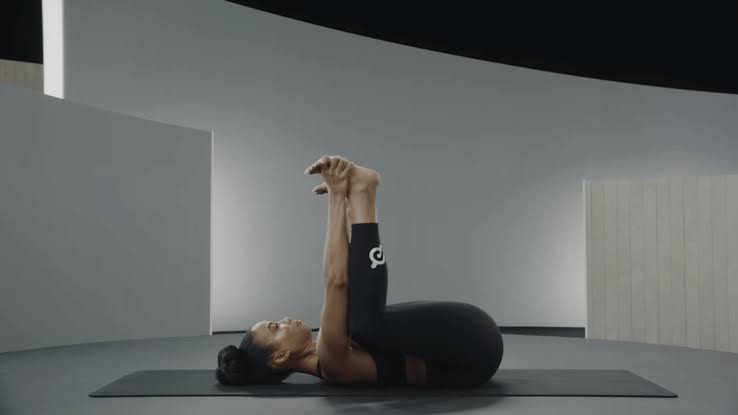
Hip Mobility for Tight Hip Flexors
Many people describe their hips as “tight” after spending long periods sitting. Prolonged sitting keeps the hips in a flexed position, while modern work and commuting habits can reduce opportunities to move through extension. However, the sensation of tightness does not always mean that a muscle is physically shortened.
A half-kneeling hip flexor stretch can be useful when performed with controlled pelvic positioning. Rather than aggressively pushing the hips forward and arching the lower back, gently tuck the pelvis and shift forward until a comfortable stretch is felt around the front of the hip.
Combining mobility work with strengthening can be even more useful. Glute bridges, split squats, and controlled hip-extension movements train the body to use the range it has gained. This problem–solution approach is more comprehensive than repeatedly stretching whenever tightness appears.
Hip Mobility and Lower-Back Movement
The hips and lower back work together during many movements. When hip motion is restricted, the lumbar spine may contribute more movement during tasks such as bending or squatting. However, lower-back movement is not inherently bad; the goal is appropriate distribution of movement according to the task.
A common mistake is assuming that every lower-back sensation means the hips are the problem. Human movement is complex, and discomfort can have multiple causes. Persistent, severe, or unexplained pain deserves assessment from an appropriately qualified healthcare professional rather than being treated exclusively with mobility drills.
Well-selected hip mobility exercises can improve movement options, but they should not be presented as a universal solution for pain. Mobility training works best when combined with appropriate strength, activity modification, recovery, and professional guidance when necessary.
How to Build a Daily Hip Mobility Routine
A short routine can be more sustainable than an occasional long session. Five to ten minutes of controlled movement can be enough to expose the hips to useful ranges without creating substantial fatigue. A simple sequence might include hip circles, 90/90 transitions, an adductor movement, a hip flexor stretch, and a few controlled bodyweight squats.
Consistency matters because mobility is a skill as well as a physical quality. Repeatedly practicing controlled movement teaches the nervous system to coordinate positions more efficiently. Over time, a range that initially feels unfamiliar may become easier to access and control.
The key is gradual progression. Increase range only when you can maintain control and comfortable breathing. Hip mobility exercises should generally feel challenging but manageable rather than painful or forced.
Common Hip Mobility Mistakes
One of the biggest mistakes is treating discomfort as evidence that an exercise is working. A mild stretch or muscular effort can be normal, but sharp, pinching, burning, or escalating pain is a reason to stop and reassess the movement. More intensity does not automatically produce better mobility.
Another mistake is using mobility work without strengthening the newly available range. If someone gains additional hip movement but cannot control it, the improvement may not transfer effectively to squats, lunges, running, or everyday movement. Active mobility and strength should therefore complement passive flexibility work.
It is also easy to become distracted by social-media routines containing dozens of complicated drills. A smaller selection performed consistently is often more valuable. Hip mobility exercises should serve a specific movement goal rather than becoming an endless collection of stretches.
Frequently Asked Questions About Hip Mobility
What are the best hip mobility exercises for beginners?
Beginners can start with controlled hip circles, 90/90 transitions, adductor rock-backs, half-kneeling hip flexor stretches, and supported deep squat holds. These movements expose the hips to flexion, extension, rotation, and abduction without requiring advanced equipment. The emphasis should remain on comfortable range, slow control, and consistent practice.
How often should I perform hip mobility exercises?
Mobility work can be practiced several times per week, and short daily sessions may be appropriate for many healthy individuals. The ideal frequency depends on the person’s goals, training schedule, and response to the movements. Consistent low-fatigue practice is generally easier to maintain than occasional sessions that are excessively intense.
Can hip mobility improve squat depth?
It can help when limited hip range is one of the factors restricting depth, but squat mechanics also depend on ankle mobility, strength, proportions, stance, and motor control. Improving hip movement while practicing the squat itself is usually more effective than relying on stretching alone.
Can hip mobility exercises reduce hip tightness?
They may help improve the sensation and usable range of movement, particularly when tightness is related to inactivity or limited exposure to certain positions. However, persistent discomfort should not automatically be attributed to poor mobility. Pain, restricted function, or symptoms that worsen should be assessed appropriately.
Should hip mobility exercises be done before or after a workout?
Both can be useful, but the style should match the timing. Dynamic and controlled mobility movements can work well during a warm-up because they prepare the body for movement. Longer relaxed stretches may fit better after training or during a separate mobility session, particularly when the goal is flexibility rather than immediate performance preparation.
Do hip mobility exercises make you more flexible?
They can contribute to improved flexibility and usable range of motion, especially when practiced consistently. However, mobility is broader than flexibility because it includes strength and control within the available range. The most useful improvement is not simply being able to reach a deeper position but being able to control that position during real movement.
Conclusion
Effective hip mobility exercises can improve movement quality, active range of motion, squat positioning, athletic preparation, and everyday physical function when they are performed consistently and intelligently. The goal is not extreme flexibility. It is developing hips that can move through useful ranges with strength, coordination, and control.
A balanced approach combines mobility drills with resistance training, dynamic movement, recovery, and appropriate technique. If a particular position feels restricted, gradually expose the joint to that range instead of forcing it. If pain persists, seek qualified assessment rather than assuming that more stretching is the answer.
The final insight is simple: good hip mobility is useful movement you can control. Build it gradually, strengthen the ranges you gain, and focus on how your hips function during real activities rather than chasing flexibility for its own sake.