

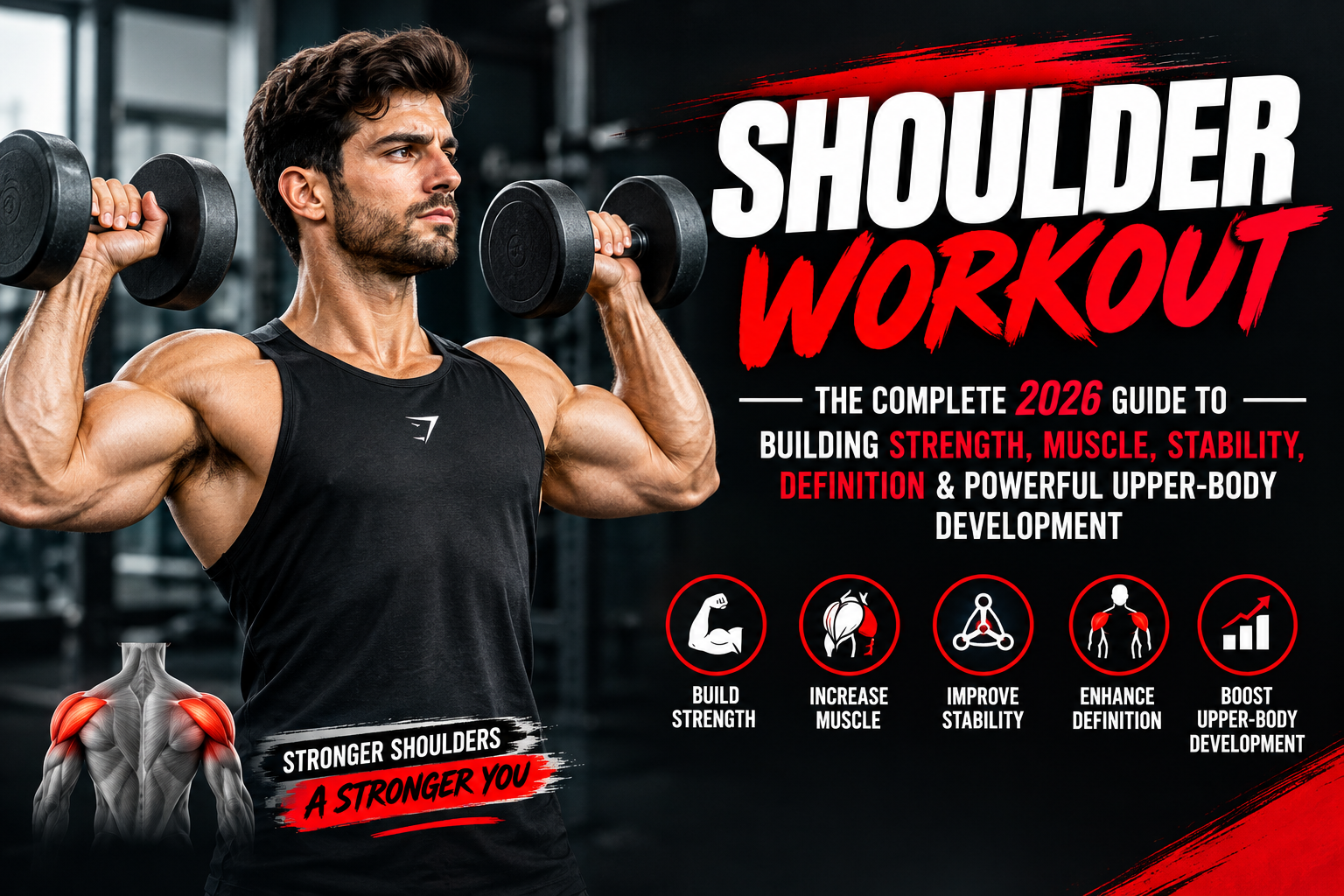
A well-structured shoulder workout can transform both upper-body strength and overall physique. Strong shoulders contribute to pressing power, posture, athletic movement, and the balanced appearance of the upper body. However, effective shoulder training requires more than repeatedly performing overhead presses or lifting heavy dumbbells.
The shoulder complex is highly mobile and relies on several muscles working together. The deltoids are divided into anterior, lateral, and posterior heads, while the rotator cuff and surrounding muscles help stabilize the shoulder joint. Because the shoulder is designed for a wide range of movement, good programming should develop strength without unnecessarily sacrificing mobility or control.
The goal is not simply to make the shoulders tired. It is to create a progressive training stimulus that targets the deltoid muscles, supports joint health, and fits logically into a complete resistance-training program.
How the Shoulder Muscles Work
The deltoid is the primary muscle responsible for the rounded appearance of the shoulder. The anterior deltoid helps with shoulder flexion and contributes strongly to pressing movements. The lateral deltoid is important for raising the arm away from the body and plays a major role in creating shoulder width. The posterior deltoid assists with horizontal abduction and other pulling-related movements.
The rotator cuff consists of the supraspinatus, infraspinatus, teres minor, and subscapularis. These smaller muscles help stabilize the head of the humerus within the shoulder joint. They do not need to be hammered with excessive isolation work, but their function highlights why controlled movement and sensible exercise selection matter.
A productive shoulder workout therefore trains multiple movement patterns rather than focusing exclusively on the front deltoids. Pressing, lateral-raise variations, rear-delt movements, and compound pulling exercises can work together to create more balanced shoulder development.
Best Shoulder Exercises for Muscle Growth
The overhead press is one of the most useful compound exercises for developing shoulder strength. Barbell, dumbbell, and machine variations can all be effective. Dumbbells allow each arm to work independently, while machines can provide additional stability and make it easier to focus on the target muscles.
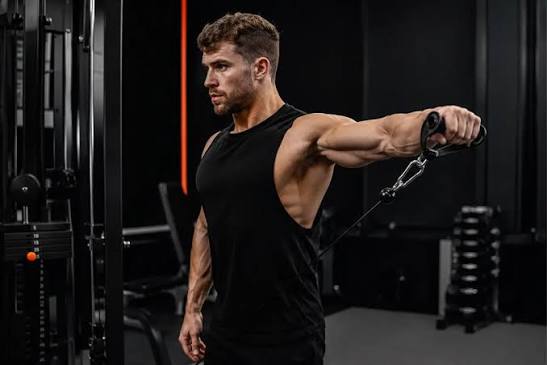
Lateral raises are particularly valuable for emphasizing the lateral deltoids. Because this muscle contributes to shoulder width, controlled lateral-raise variations can complement heavy pressing. Rear-delt flyes, reverse pec-deck movements, and cable exercises can then provide additional posterior shoulder work.
| Exercise | Primary Focus | Main Benefit | Training Role |
|---|---|---|---|
| Overhead press | Front and lateral delts | Strength and mass | Compound movement |
| Dumbbell shoulder press | Delts and triceps | Independent arm loading | Hypertrophy and strength |
| Lateral raise | Lateral deltoid | Shoulder width | Isolation |
| Reverse fly | Rear deltoid | Posterior development | Isolation |
| Face pull | Rear delts and upper back | Shoulder control | Accessory |
| Machine shoulder press | Delts | Stable resistance | Hypertrophy |
| Cable lateral raise | Lateral deltoid | Consistent resistance | Isolation |
An effective shoulder workout does not require every exercise in the table. Selecting a few movements that cover the major functions of the shoulders is usually more productive than creating an unnecessarily long session.
How to Build an Effective Shoulder Workout
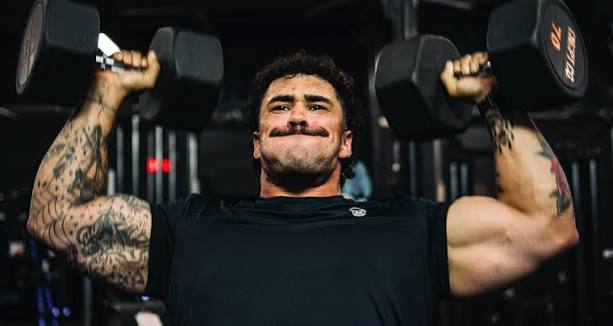
A balanced session can begin with a compound overhead press when strength is a priority. Once the major movement is completed, lateral raises can emphasize the middle deltoids, followed by a rear-delt movement to address the posterior shoulder. The exact number of sets and repetitions should depend on training experience and the rest of the weekly program.
Exercise order also matters because fatigue changes technique. If lateral raises are performed before heavy pressing, pressing performance may decrease. Conversely, using isolation movements later in the session can allow the lifter to train smaller muscles without compromising the most demanding compound exercise.
A useful shoulder workout should therefore have a clear purpose for every movement. If an exercise does not provide a meaningful stimulus or fit the overall program, adding it simply to increase workout length is unlikely to improve results.
Training for Shoulder Strength and Muscle Growth
Strength development depends heavily on progressive overload. For a compound overhead press, progression might involve gradually increasing resistance while maintaining consistent technique. For isolation movements, progress can involve additional repetitions, improved control, a small increase in load, or more effective range of motion.
Muscle growth depends on sufficient mechanical tension and appropriate training volume. The shoulders already receive indirect work from bench presses, incline presses, push-ups, rows, and other upper-body exercises. This means direct shoulder volume should be considered alongside the entire training week rather than treated as an isolated number.
A useful principle is: “Progress should make the movement better, not simply make the weight heavier.” If a heavier dumbbell causes swinging, shortened repetitions, or excessive momentum, the apparent progression may reduce the quality of the training stimulus.
Shoulder Form and Technique
Good technique begins with controlled movement and appropriate positioning. During an overhead press, the torso should remain stable while the weights travel through a comfortable path. Excessive lower-back arching can turn the exercise into a different movement and may indicate that the load is too challenging.
Lateral raises require even more attention to control because the exercise is easy to perform with momentum. Swinging heavy dumbbells may allow more weight to move but does not necessarily produce better deltoid stimulation. Using a manageable load and controlling both the lifting and lowering phases can make the exercise considerably more effective.
The quality of a shoulder workout is often determined by these small details. A lighter weight performed with consistent technique can provide a better training stimulus than a heavier weight moved through a shortened, uncontrolled range.
Common Shoulder Training Mistakes and Their Solutions
One common mistake is overemphasizing the front deltoids. The anterior deltoids already receive considerable stimulation from chest pressing and overhead movements. Adding excessive front raises may create redundant volume while leaving the lateral and posterior deltoids comparatively undertrained.
Another problem is treating shoulder discomfort as something that should simply be pushed through. Mild muscular fatigue is normal, but persistent or sharp joint pain should not be ignored. Adjusting exercise selection, reducing training stress, improving technique, or seeking qualified professional assessment can be more appropriate than repeatedly training through pain.
A third mistake is using too much volume. More sets do not automatically equal more growth. If performance consistently declines, recovery suffers, or the shoulders remain excessively fatigued between sessions, reducing unnecessary work can improve the quality of the program.
Shoulder Workout for Beginners
Beginners benefit from simplicity. A new lifter does not need advanced techniques, dozens of exercises, or extremely heavy weights. Learning a stable overhead press, controlled lateral raise, and rear-delt movement can establish a strong foundation while the person becomes comfortable with resistance training.
Technique should be learned before aggressive progression. A beginner might initially use machines or lighter dumbbells to understand the movement pattern before gradually introducing more demanding free-weight exercises. This approach also makes it easier to identify comfortable ranges of motion.
A beginner-friendly shoulder workout should leave enough energy for other important training movements. Shoulders do not need to be completely exhausted for the session to be productive. Consistency, gradual progression, and recovery are more important during the early stages.
Shoulder Training at Home
Effective shoulder training can be performed at home with dumbbells, resistance bands, or even bodyweight exercises. Dumbbell presses, lateral raises, rear-delt flyes, and band face pulls can provide a useful combination of pressing, abduction, and posterior shoulder work.
When equipment is limited, progression becomes especially important. Increasing repetitions, slowing the eccentric phase, adding pauses, using more challenging resistance, or gradually increasing load can keep exercises productive. A movement that initially feels difficult may eventually become too easy, requiring a progression rather than endless repetitions.
A home shoulder workout can therefore produce meaningful results without requiring a commercial gym. The key is creating sufficient resistance while maintaining safe, repeatable technique.
Recovery, Nutrition and Shoulder Development
Muscle development does not happen exclusively during training. Adequate protein, sufficient overall nutrition, hydration, sleep, and recovery days all contribute to adaptation. Someone attempting to gain muscle generally needs an appropriate calorie intake, while someone focused on fat loss must balance energy restriction with resistance training and adequate protein.
Recovery is particularly important for shoulders because they participate in many upper-body exercises. A person may train shoulders directly while also performing chest presses, rows, pull-ups, and other movements that involve the shoulder joint. Poorly managed weekly volume can therefore accumulate quickly.
Sleep also deserves attention. Consistently inadequate sleep can interfere with training performance, recovery, energy, and motivation. A well-designed shoulder workout cannot compensate for a consistently poor recovery strategy.
How Often Should You Train Shoulders?
Many people can train shoulders directly once or twice per week, depending on their experience and total upper-body workload. Someone who performs substantial pressing volume may need less direct anterior-delt work, while a physique-focused lifter may dedicate additional attention to lateral and rear deltoid development.
Spacing sessions appropriately can help maintain performance. If direct shoulder training leaves the muscles excessively fatigued before chest or upper-body sessions, adjusting the weekly schedule may be necessary. Programming should be viewed as a complete system rather than a collection of independent workouts.
The ideal frequency for a shoulder workout is therefore determined by training goals, total weekly volume, recovery capacity, and how the shoulders respond to the existing program.
Frequently Asked Questions About Shoulder Training
What is the best shoulder exercise for building muscle?
The overhead press is an excellent compound movement for overall shoulder strength and development, while lateral raises and rear-delt exercises provide more focused stimulation. A combination of compound and isolation movements is generally more comprehensive than relying on one exercise alone.
How many shoulder exercises should I do in one workout?
Most people can train the major shoulder functions effectively with roughly three to four carefully selected movements. The appropriate amount depends on experience and the amount of indirect shoulder work already included in the training program. Quality and progression matter more than simply increasing exercise count.
How can I build wider shoulders?
The lateral deltoids contribute significantly to the visual appearance of shoulder width. Lateral-raise variations can therefore be useful alongside compound pressing. Overall body composition also affects how shoulder width appears, so muscle development and appropriate nutrition should be considered together.
Are lateral raises necessary for shoulder growth?
They are not strictly mandatory, but they are a highly practical way to directly train the lateral deltoids. Pressing exercises involve the front deltoids strongly, whereas lateral raises provide a simple method for giving the middle portion of the shoulder more direct attention.
Can I train shoulders and chest on the same day?
Yes. Shoulders and chest can be trained during the same session because both involve pressing movements. However, the order and total volume should be managed carefully. Performing heavy shoulder pressing after substantial chest work may reduce pressing performance because the anterior deltoids and triceps are already fatigued.
How long should a shoulder workout take?
A focused session can often be completed within about 40 to 60 minutes, including warm-up and appropriate rest periods. A longer workout is not automatically more effective. Once technique and performance deteriorate significantly, additional volume may offer diminishing returns.
Conclusion
A successful shoulder workout is built around intelligent exercise selection, progressive overload, controlled technique, balanced deltoid development, and adequate recovery. Heavy presses can build foundational strength, lateral raises can emphasize shoulder width, and rear-delt movements can help create a more balanced upper-body appearance.
The biggest lesson is that effective shoulder training does not require endless exercises or maximum weights. Consistent, technically sound training performed with appropriate resistance and progressive overload can produce impressive results over time.
The final takeaway is simple: train the shoulders with purpose, not just intensity. Build strength gradually, give every deltoid region appropriate attention, respect recovery, and let consistency drive long-term development.