What Is the Biceps Brachii?
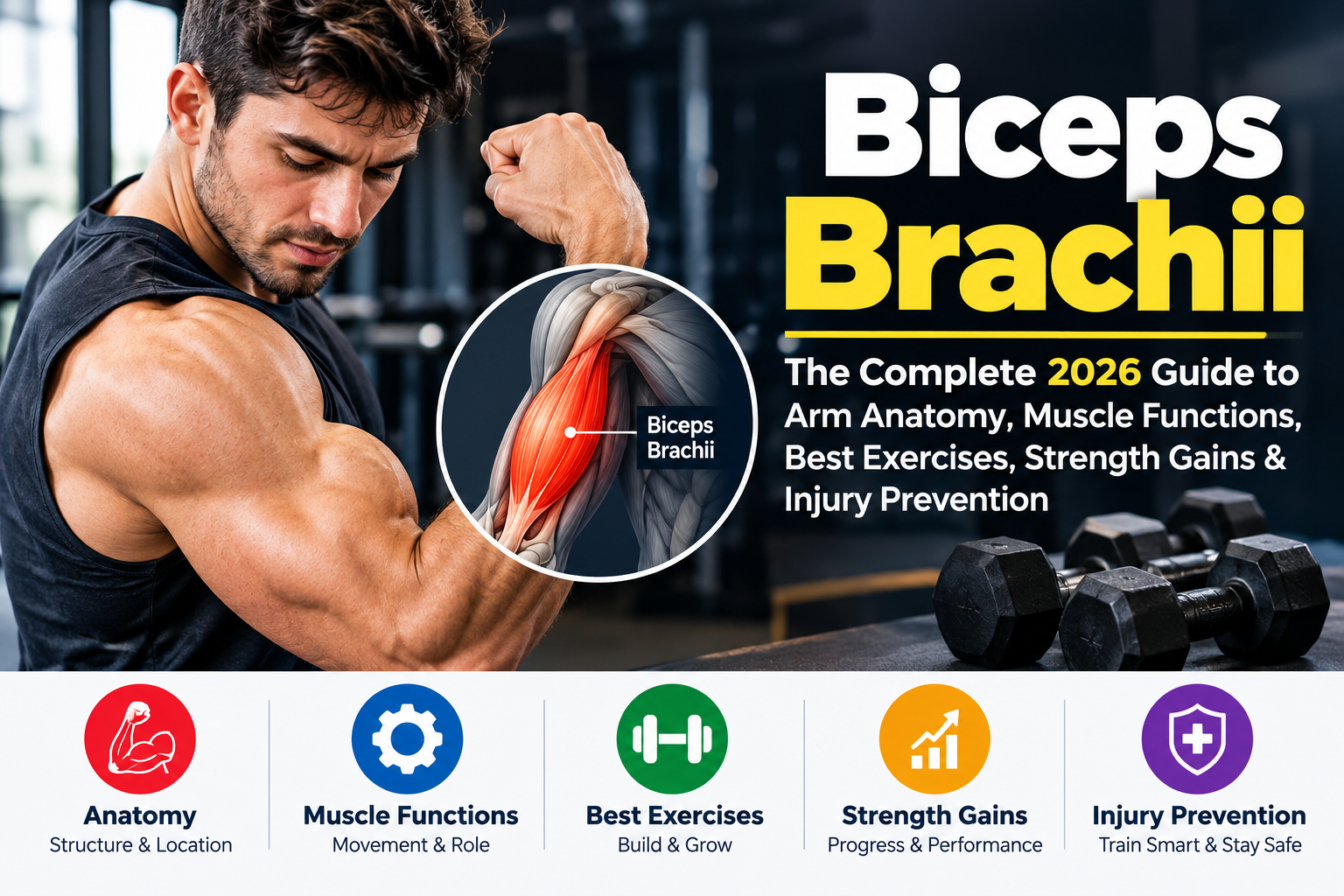
The biceps brachii is a prominent skeletal muscle located at the front of the upper arm. It plays an important role in bending the elbow, rotating the forearm so the palm faces upward, and assisting certain shoulder movements. Whether you lift weights, carry groceries, perform pull-ups, or turn a screwdriver, this muscle contributes to everyday upper-body function.
The name comes from Latin: bi means two, and ceps refers to heads. Unlike muscles with a single origin, this muscle has two heads that begin at different locations on the shoulder blade and join into a shared muscle belly. Both heads contribute to elbow flexion and forearm supination, although their positions give them slightly different roles in shoulder movement.
Understanding its anatomy and mechanics can help you choose more effective exercises, improve lifting technique, and recognize potential injuries. For fitness enthusiasts, the goal is not simply to build larger arms but also to develop strength, control, and balanced movement.
Biceps Brachii Anatomy: The Long Head and Short Head
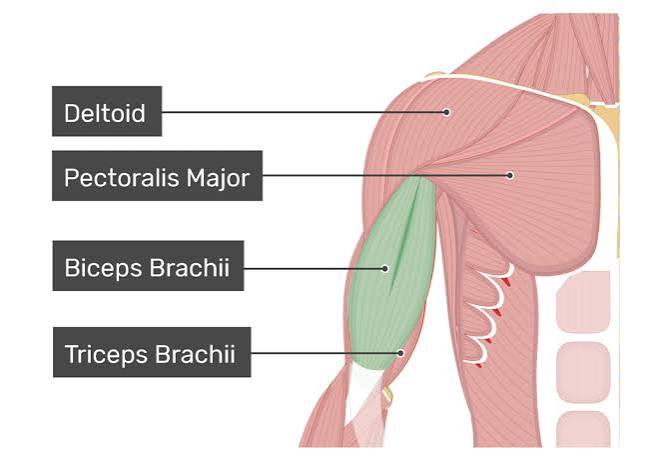
The muscle consists of two distinct portions: the long head and the short head. The long head originates from the supraglenoid tubercle of the scapula, near the shoulder joint. Its tendon travels through the shoulder joint region and along the bicipital groove of the humerus before joining the muscle belly. This anatomical pathway helps explain why certain shoulder problems can produce pain near the front of the upper arm.
The short head originates from the coracoid process of the scapula, a small projection on the front of the shoulder blade. The two heads combine into a shared muscle belly and attach primarily to the radial tuberosity of the radius, one of the forearm bones. The bicipital aponeurosis also spreads into the forearm fascia, helping distribute force across the region.
Although gym discussions often focus on isolating one head or the other, most traditional curling movements recruit both. Grip position, shoulder angle, resistance, and individual anatomy can influence how the muscle works, but no ordinary curl completely isolates a single head.
Main Functions of the Biceps Brachii
One of the muscle’s primary functions is elbow flexion, which brings the forearm toward the upper arm. This action occurs during dumbbell curls, lifting a bag, and bringing a cup toward your mouth. The brachialis, a muscle underneath the biceps, is also a powerful elbow flexor and contributes substantially to these movements.
Another major function is forearm supination, the rotation that turns the palm upward. This action is especially important when opening a jar, turning a key, or using a screwdriver. The biceps is particularly effective at supination when the elbow is bent, working alongside muscles such as the supinator.
The muscle also assists shoulder flexion and helps stabilize the shoulder during selected movements. Its role varies with the position of the arm and the task being performed. For this reason, a well-rounded upper-body program should train not only elbow flexion but also pulling strength, shoulder control, and the surrounding muscles.
Best Exercises for Biceps Strength and Muscle Growth
Effective training combines controlled curls with compound pulling exercises. Dumbbell curls allow each arm to work independently, while barbell curls make it easier to progressively increase the load. Cable curls provide relatively consistent resistance throughout the movement, and preacher curls help limit momentum by supporting the upper arms.
Chin-ups are another useful exercise because they combine elbow flexion with shoulder and back movement. They recruit the biceps alongside the latissimus dorsi, brachialis, and other upper-body muscles. Rows also contribute to arm development, although they primarily train the back and involve a broader group of muscles.
For most people, muscle growth depends more on consistent training, sufficient effort, progressive overload, and recovery than on finding a supposedly perfect curl. Use a range of motion you can control, avoid swinging the torso, and increase resistance gradually.
| Exercise | Main training benefit | Suggested starting range |
|---|---|---|
| Dumbbell curl | Balanced arm development | 3 sets of 8–12 reps |
| Barbell curl | Progressive strength loading | 3 sets of 6–12 reps |
| Hammer curl | Brachialis and brachioradialis emphasis | 2–3 sets of 8–12 reps |
| Cable curl | Consistent resistance | 2–3 sets of 10–15 reps |
| Chin-up | Compound pulling strength | 2–3 sets of controlled reps |
These are general starting guidelines rather than strict requirements. Adjust the volume to your experience, recovery, and other pulling exercises in your workout.
How to Train the Long and Short Heads
The long and short heads work together during most curls, so it is more accurate to think in terms of changing emphasis than completely isolating one portion. Incline dumbbell curls place the upper arms behind the torso, increasing shoulder extension and lengthening the long head at the shoulder. Some lifters find this position useful for training through a relatively long muscle length.
Preacher curls position the upper arms in front of the body, changing the shoulder angle and the demands placed on the elbow flexors. Supinated curls can train both heads effectively, while hammer curls use a neutral grip that places greater emphasis on the brachialis and brachioradialis relative to a fully supinated curl.
A practical routine might combine a standard curl, an incline curl, and a hammer curl across the training week. You do not need a separate exercise for every supposed muscle region. Prioritize quality repetitions and gradually increase training demands while allowing the elbows and shoulders time to recover.
Common Training Mistakes and How to Fix Them
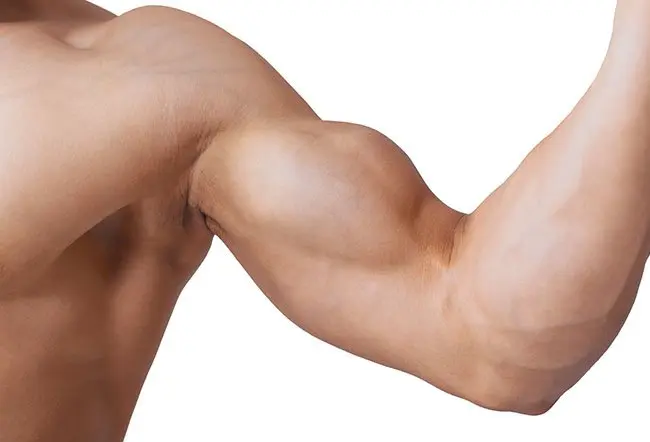
One common mistake is using momentum to lift a weight that is too heavy. When the torso swings and the shoulders move excessively, the exercise becomes harder to control and may place unnecessary stress on the lower back or elbow. Choose a manageable load, keep your upper arms relatively steady, and lower the weight under control.
Another mistake is shortening every repetition. Partial repetitions can be useful in specific training situations, but consistently avoiding the comfortable lower portion of a curl may limit the range of motion you train. Move through a controlled, pain-free range instead of forcing the elbow into an uncomfortable position.
Training the arms hard every day is another frequent problem. Muscles need recovery between challenging sessions, and tendons can become irritated when training volume rises too quickly. Many people do well with direct arm work two times per week, depending on how much additional work they perform through chin-ups, rows, and other pulling exercises.
Common Injuries and Warning Signs
The muscle and its tendons can become irritated or injured through excessive loading, sudden force, repetitive strain, or age-related changes. Biceps tendinopathy commonly causes pain around the front of the shoulder or upper arm, especially during lifting or overhead activity. Symptoms may develop gradually rather than following one obvious incident.
A distal biceps tendon tear occurs near the elbow and may happen when a heavy load suddenly forces the bent elbow straight. A person may feel a pop, experience immediate pain and bruising, notice a change in the shape of the muscle, or develop weakness when bending the elbow and rotating the palm upward. These signs require prompt medical assessment because complete tears can significantly affect strength and may need surgical treatment.
Not all arm pain originates in the biceps. Shoulder disorders, nerve irritation, and other elbow conditions can cause similar symptoms. Stop movements that produce sharp pain, avoid repeatedly testing a suspected tear, and seek professional evaluation for sudden weakness, significant bruising, deformity, or persistent symptoms.
Recovery, Nutrition, and Muscle Growth
Muscle growth depends on training stimulus, adequate nutrition, and recovery. Progressive resistance training provides the stimulus, while sufficient protein and overall energy help the body repair and build tissue. Protein-rich foods such as eggs, dairy products, fish, lean meat, soy, and legumes can contribute to daily protein needs.
Sleep also matters because inadequate recovery can reduce performance and make it harder to maintain consistent training. Allow time between demanding arm sessions, particularly if your routine includes heavy chin-ups, rows, and curls on the same day. Persistent elbow discomfort is a signal to reassess exercise selection, load, technique, and weekly volume.
A useful training principle is: “Add resistance only when you can control the movement.” Increasing the weight while sacrificing technique may make a workout feel harder without providing a better stimulus to the intended muscles.
Frequently Asked Questions
How long does it take to build bigger biceps?
Noticeable improvements in strength can occur within several weeks, while visible muscle growth often takes several months of consistent training. Results depend on training experience, genetics, nutrition, sleep, and progressive overload. Beginners may see faster early progress than experienced lifters.
Do biceps curls train both heads?
Yes. Standard curls generally recruit both the long and short heads because they share elbow-flexion and forearm-supination functions. Changing shoulder position or grip can alter the demands on the muscles, but typical exercises do not completely isolate one head.
Are hammer curls better than regular curls?
Neither is universally better. Regular supinated curls directly train the elbow flexors with the palm facing upward, while hammer curls use a neutral grip and place relatively greater emphasis on the brachialis and brachioradialis. Including both can support balanced arm development.
How often should I train the biceps?
Many people can train the muscle directly once or twice weekly, depending on total training volume and recovery. Remember that chin-ups and rows also recruit the elbow flexors. If performance declines or elbow pain develops, reduce the workload and allow more recovery.
Can I train my biceps without weights?
Yes. Chin-ups and bodyweight pulling variations can challenge the elbow flexors, particularly when performed with a supinated grip. Resistance bands can also provide adjustable resistance for curls. Choose variations that allow controlled repetitions and progress the difficulty gradually.
What is the difference between the biceps and brachialis?
The biceps is a two-headed muscle that helps flex the elbow and supinate the forearm. The brachialis lies underneath it and is a major elbow flexor regardless of forearm rotation. Strengthening both muscles contributes to overall elbow-flexion strength and upper-arm development.
Conclusion
The biceps brachii plays an important role in arm strength, forearm rotation, lifting, and everyday movement. Understanding its two heads, major functions, and relationship with the brachialis makes it easier to build a balanced training program and select exercises that match your goals.
For better results, combine controlled curls with compound pulling movements, train consistently, eat enough protein, and allow adequate recovery. Avoid chasing heavier weights at the expense of technique, and take persistent pain or sudden weakness seriously.
The key takeaway is simple: strong, well-developed arms come from consistent training, sound movement mechanics, and gradual progression—not from one exercise or one intense workout.