What Are Abs and Why Are They Important?
Abs are the abdominal muscles that support your spine, stabilize your trunk, and help control movements such as bending, twisting, reaching, and standing upright. They form an important part of the core, working alongside the back muscles, diaphragm, pelvic floor, and deeper abdominal stabilizers to maintain control during everyday activities and exercise.
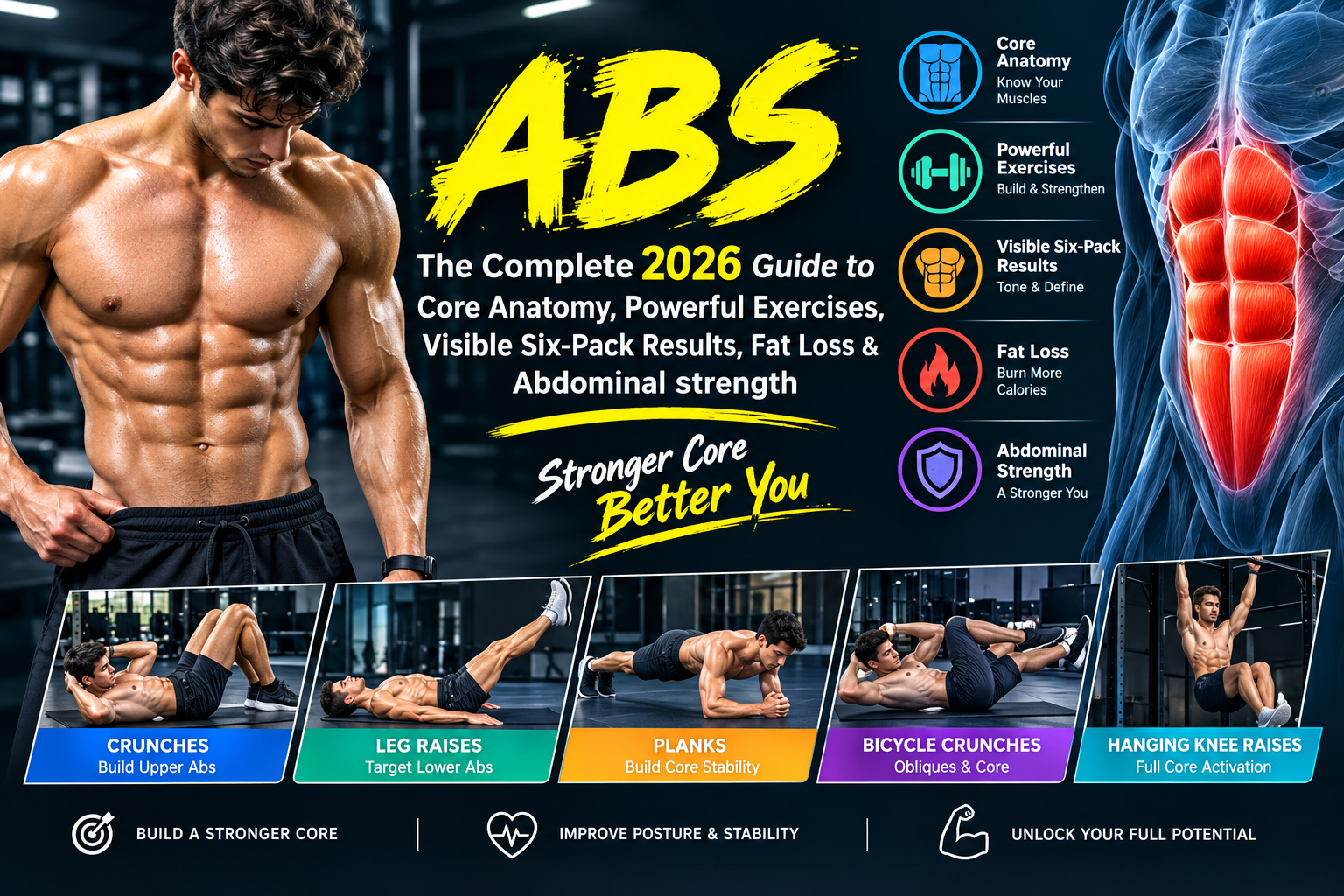
The abdominal region includes several muscles with different functions. The rectus abdominis is the long, paired muscle at the front of the abdomen, commonly associated with a visible six-pack. The external and internal obliques help rotate and bend the trunk, while the transverse abdominis contributes to abdominal wall tension and trunk stability.
Developing these muscles can improve core strength, movement control, and athletic performance. However, strong abdominal muscles are not necessarily visible. Muscle development, body-fat distribution, genetics, nutrition, and other individual factors all influence how the midsection looks.
Understanding Abdominal Muscle Anatomy
The rectus abdominis runs vertically along the front of the abdomen and helps flex the trunk, as when bringing the ribs toward the pelvis during a crunch. Its segmented appearance comes from fibrous connective tissue that separates portions of the muscle. The number and visibility of these segments vary naturally between individuals.
The obliques sit along the sides of the abdomen and contribute to trunk rotation, side bending, and resistance to unwanted movement. Beneath these muscles, the transverse abdominis wraps around the trunk like a supportive belt. It works with other muscles to help regulate abdominal pressure and stabilize the spine during movement.
These muscles do not operate independently during most exercises. A plank, for example, requires the abdominal muscles to resist spinal extension while the shoulders, hips, and legs help maintain body alignment. Understanding this teamwork makes it easier to choose exercises that develop practical core strength rather than focusing exclusively on appearance.

Best Ab Exercises for Strength and Muscle Development
Effective abdominal training combines controlled spinal movement with exercises that resist movement. Crunches and reverse crunches train trunk flexion, while planks challenge the muscles to maintain a stable position. Dead bugs and bird dogs develop coordination, and side planks target lateral stability.
A balanced routine does not need dozens of exercises. Choose movements you can perform with good technique, maintain a controlled pace, and increase difficulty as your strength improves. For example, a beginner might start with bent-knee reverse crunches and short plank holds before progressing to more demanding variations.
| Exercise | Primary training benefit | Suggested starting volume | Key technique |
|---|---|---|---|
| Crunch | Rectus abdominis strength | 2–3 sets of 10–15 reps | Lift shoulders without pulling the neck |
| Reverse crunch | Abdominal control and pelvic movement | 2–3 sets of 8–12 reps | Curl the pelvis gently upward |
| Forearm plank | Trunk stability | 2–3 holds of 15–30 seconds | Keep ribs and pelvis aligned |
| Side plank | Lateral core stability | 2 holds of 15–30 seconds per side | Keep hips lifted |
| Dead bug | Coordination and spinal control | 2–3 sets of 6–10 reps per side | Move slowly without arching the lower back |
| Bird dog | Trunk stability and coordination | 2 sets of 8–10 reps per side | Avoid rotating the pelvis |
These are general starting recommendations, not fixed requirements. Adjust the volume to your current fitness level and stop a set when technique begins to deteriorate. Sharp pain or persistent discomfort is a reason to modify the movement and seek professional guidance when necessary.
How to Build a Strong Core at Home
Home workouts can develop abdominal strength without expensive equipment. Body-weight crunches, planks, dead bugs, mountain climbers, and side planks provide a useful foundation. A mat can improve comfort, while a resistance band or dumbbell can add difficulty once basic movements become manageable.
Start with two or three sessions per week, incorporating a few exercises that address different functions. For example, combine a controlled crunch, a dead bug, and a side plank in one session. Rest between sets as needed to maintain good technique instead of rushing through repetitions to finish faster.
Progress by extending plank holds modestly, adding repetitions, improving movement control, or introducing resistance. A longer workout is not automatically more effective. Consistent training with gradual progression is generally more productive than performing hundreds of repetitions with limited control.
How to Make Your Abs More Visible
Visible abdominal definition depends on both muscle development and the amount of body fat covering the abdominal wall. Strength training can build the muscles, while nutrition and overall physical activity influence body composition. Genetics also affects where fat is stored and how abdominal muscle segments appear.
A common misconception is that repeated crunches directly burn fat from the stomach. This is known as spot reduction, and abdominal exercises do not reliably remove fat specifically from the area being trained. The body draws on stored energy through broader physiological processes rather than selecting fat exclusively from the working muscles.
If your goal is greater definition, combine resistance training with regular aerobic activity and a sustainable eating pattern. A modest calorie deficit may help reduce body fat when appropriate, but aggressive restriction can undermine training, recovery, and overall health. Progress is best assessed over weeks and months rather than by daily changes in appearance.
Nutrition for Abdominal Strength and Definition
Nutrition supports both muscle development and body composition. Protein-rich foods such as eggs, fish, chicken, yogurt, tofu, beans, and lentils supply amino acids needed for muscle repair. Carbohydrates from whole grains, potatoes, fruit, and other foods provide energy for training, while dietary fats support normal body functions.
For many healthy adults who exercise regularly, approximately 1.4–2.0 grams of protein per kilogram of body weight per day can support muscle development, although individual requirements vary. Adequate total energy intake matters as well. Eating too little may reduce training performance and make recovery more difficult, even if the goal is to improve abdominal definition.
Fiber-rich vegetables, fruit, legumes, and whole grains can support digestive health and satiety. Hydration is also important, particularly during exercise or hot weather. No particular food, detox drink, or supplement can selectively eliminate belly fat, and restrictive diets are unnecessary for building a stronger midsection.

Common Ab Training Mistakes and How to Fix Them
One frequent mistake is relying entirely on high-repetition crunches. Crunches can strengthen the rectus abdominis, but they do not cover every core function. Add anti-extension exercises such as planks, anti-rotation exercises such as band presses, and lateral stability movements to develop a more balanced foundation.
Another issue is using momentum instead of muscular control. During crunches, pulling the head forward can strain the neck, while allowing the lower back to arch excessively during planks may reduce exercise quality. Slow down, shorten the range of motion when necessary, and choose a variation that allows you to maintain comfortable alignment.
Training the abdomen intensely every day is not essential. Like other muscle groups, the abdominal muscles need adequate recovery, especially after challenging weighted exercises. Two or three well-planned sessions per week may be enough for many people, depending on the rest of their training. Persistent pain should not be dismissed as a normal sign of progress.
Core Training for Everyday Life and Athletic Performance
Core strength is useful beyond the gym because the trunk transfers force between the upper and lower body. During activities such as carrying groceries, lifting a suitcase, or climbing stairs, the abdominal and back muscles help stabilize the body while the limbs move. This makes trunk control an important part of functional fitness.
Athletes rely on similar qualities when sprinting, changing direction, throwing, swimming, or lifting weights. Exercises that challenge the body to resist unwanted rotation or extension can complement sport-specific training. However, abdominal exercises alone do not guarantee better performance; results depend on the athlete’s technique, conditioning, strength, and overall program.
A practical approach is to pair direct abdominal exercises with compound movements such as squats, deadlifts, rows, and loaded carries when appropriate. These movements challenge the trunk in different ways and can make core training more relevant to everyday tasks. Start with manageable resistance and progress according to your experience and physical capabilities.
Frequently Asked Questions About Abdominal Training
How often should I train my abs?
Many people can train their abdominal muscles two or three times per week, allowing recovery between demanding sessions. Beginners may need less volume, while experienced trainees can adjust frequency according to their overall program. Consistent technique, progressive difficulty, and adequate recovery matter more than training every day.
Can I get a six-pack without going to the gym?
Yes. Body-weight exercises such as crunches, reverse crunches, planks, and dead bugs can develop abdominal strength at home. Visible definition also depends on body composition and genetics, so exercise alone does not guarantee a six-pack. Consistent training and sustainable nutrition are more useful than expensive equipment.
Do abdominal exercises burn belly fat?
Abdominal exercises strengthen the muscles beneath the skin, but they do not reliably target fat loss specifically around the stomach. Reducing overall body fat, when appropriate, generally involves a sustainable calorie balance, regular physical activity, and resistance training. Fat distribution differs between individuals.
What is the best exercise for abdominal muscles?
There is no single best movement for every goal. Crunches train trunk flexion, planks challenge trunk stability, and dead bugs develop coordination and control. Combining several exercise patterns provides broader benefits than relying on one movement alone.
How long does it take to see abdominal definition?
The timeline varies according to starting body composition, muscle development, genetics, nutrition, and training consistency. Strength improvements may occur before visible changes appear, while changes in definition can take months or longer. A realistic plan emphasizes sustainable habits rather than rapid weight loss.
Can I train my abs if I have lower back pain?
Some people can perform modified core exercises comfortably, but the appropriate movements depend on the cause and severity of their symptoms. Gentle exercises may be suitable in certain cases, while others can aggravate discomfort. Seek advice from a qualified healthcare professional if pain persists, worsens, or is accompanied by concerning symptoms.
Conclusion: Build Stronger Abs With Consistent Training
Developing a strong midsection requires more than chasing visible definition. The abdominal muscles contribute to spinal stability, movement control, athletic performance, and everyday activities. Understanding their different roles helps you select exercises that build strength while supporting balanced core development.
The most effective approach combines controlled resistance exercises, progressive overload, balanced nutrition, sufficient recovery, and regular physical activity. Focus on mastering movements before increasing difficulty, and avoid relying on extreme diets or excessive repetitions to speed up results.
The final takeaway is simple: strong, defined abs are built through consistent training, sustainable habits, and patience. Prioritize how well your core functions as well as how it looks, and your progress will have a stronger foundation.