The rear shoulders are easy to overlook in a workout routine focused on pressing movements, biceps, and chest development. However, the posterior deltoids play an important role in shoulder movement, upper-body balance, and the appearance of a well-developed back. Training these muscles directly can help build stronger, more balanced shoulders while supporting everyday pulling movements.
The rear delt fly is an isolation exercise designed to target the posterior deltoids, the muscles located at the back of your shoulders. By moving your arms outward against resistance while maintaining a controlled position, you can train these muscles without relying primarily on the chest or front shoulders.
Whether you train at home with dumbbells or use a cable machine at the gym, learning the correct technique can improve your workout quality. This guide explains the muscles involved, proper form, effective variations, programming recommendations, and common mistakes to avoid.
What Is a Rear Delt Fly?
A rear delt fly is a shoulder isolation exercise in which you move your arms outward and backward against resistance, typically while leaning forward or positioning your chest against a bench. The movement emphasizes the posterior deltoid, which contributes to moving the upper arm backward and helping control shoulder movement.
The exercise can be performed with dumbbells, cables, resistance bands, or a dedicated reverse pec deck machine. Each variation challenges the muscles slightly differently because the direction of resistance and the body’s position affect how tension changes throughout the movement.
Unlike a shoulder press, which involves substantial work from the anterior and lateral deltoids and triceps, this exercise focuses more directly on the rear shoulders. It is particularly useful for people whose training includes plenty of pressing but relatively little direct work for the posterior deltoids.
Muscles Worked During the Rear Delt Fly
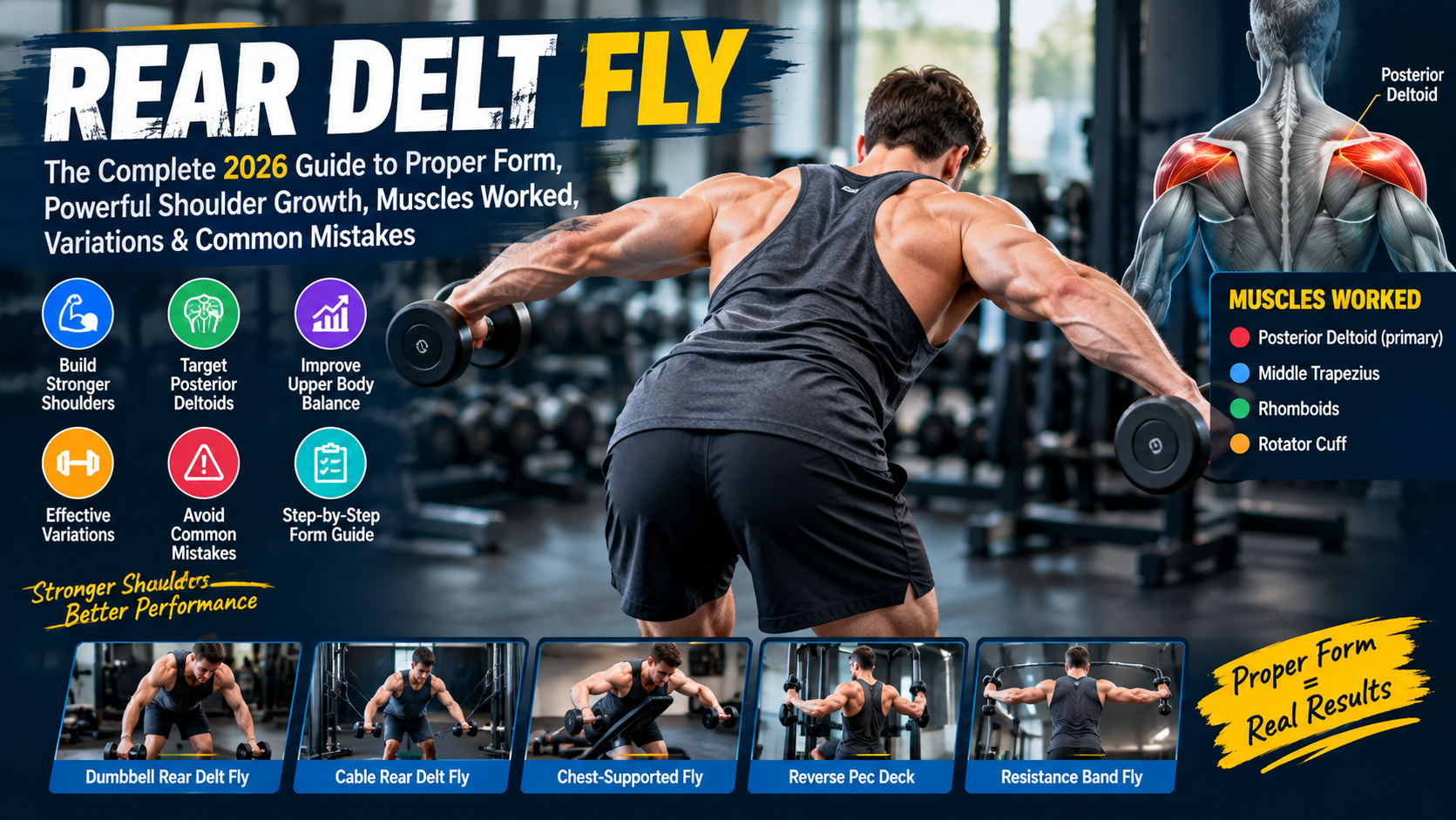
The primary target is the posterior deltoid, one of the three sections of the deltoid muscle. The anterior deltoid helps lift the arm forward, the lateral deltoid contributes to raising it sideways, and the posterior deltoid helps move the upper arm backward and supports horizontal shoulder abduction.
Several other muscles assist during the movement. The middle trapezius and rhomboids help control the shoulder blades, while the rotator cuff muscles contribute to shoulder stability. Depending on the variation and technique, the trapezius and other upper-back muscles may also contribute substantially.
The degree of involvement depends on how you move your arms and shoulder blades. Excessively squeezing the shoulder blades together can shift more of the work toward the upper back, whereas a controlled arm movement with appropriate shoulder-blade motion can help maintain emphasis on the rear deltoids.
How to Perform a Rear Delt Fly With Proper Form
Good technique starts with a stable body position and a manageable weight. For the dumbbell version, stand with your feet approximately hip-width apart, soften your knees, and hinge forward at the hips while keeping your spine neutral. Allow the dumbbells to hang beneath your shoulders with your palms facing each other and your elbows slightly bent.
Raise your arms outward in a wide arc until your upper arms approach shoulder height, provided this range is comfortable. Keep your elbows softly bent rather than locking them, and avoid shrugging your shoulders toward your ears. Pause briefly, then lower the weights slowly to the starting position without letting momentum take over.
Breathe out as you lift and breathe in as you lower. Your torso should remain relatively still throughout the set. If you need to swing your body, jerk your shoulders, or shorten the movement substantially to finish a repetition, reduce the weight.
A useful coaching cue is: “Move the upper arms, control the lowering, and keep momentum out of the repetition.” This encourages deliberate movement instead of turning the exercise into a heavy, uncontrolled upper-back swing.
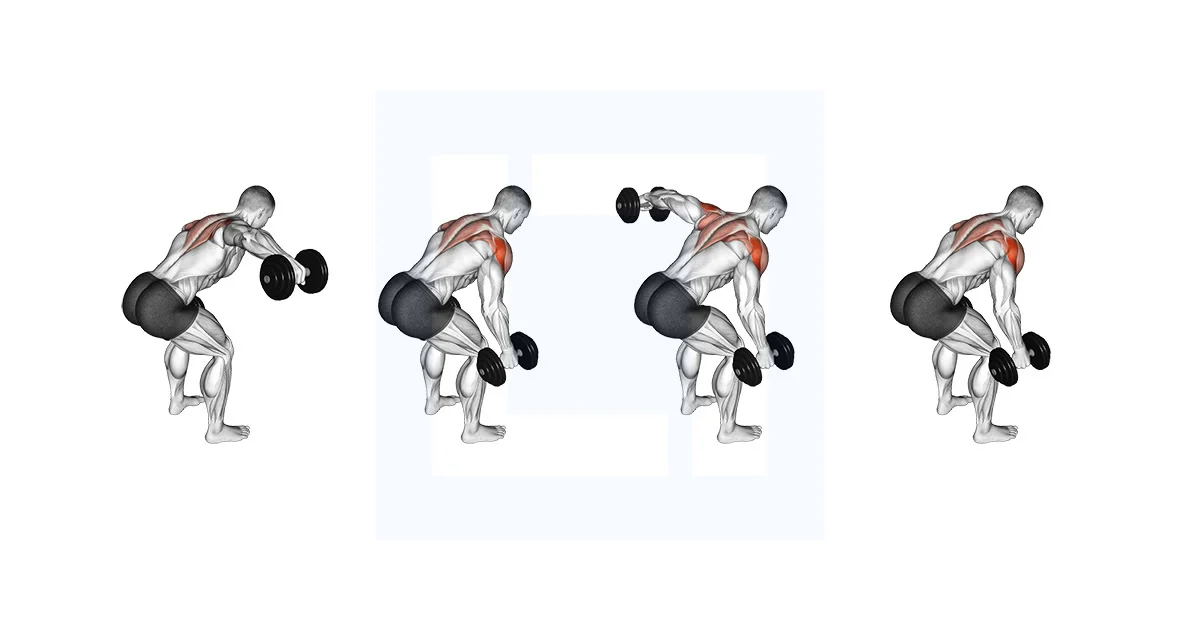
Best Rear Delt Fly Variations for Shoulder Growth
Different variations make it easier to train the posterior deltoids according to your equipment, experience, and comfort. Dumbbells are convenient and accessible, cables provide resistance throughout a broad portion of the movement, and machines offer additional support for people who struggle to maintain a stable torso.
The best choice is the variation that allows you to maintain consistent technique, work through a comfortable range of motion, and progress over time. You do not need to perform every version in the same workout. Choose one or two that complement your overall shoulder and back training.
<text weight=”medium”>Popular variations</text>
- Bent-over dumbbell fly: A versatile free-weight option that works well in home or gym workouts.
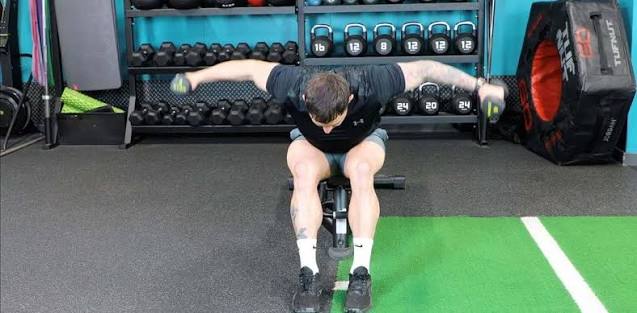
- Seated dumbbell fly: Sitting and leaning forward can make it easier to limit body movement.
- Chest-supported rear delt fly: Resting your chest against an inclined bench reduces the need to stabilize your torso.
- Cable rear delt fly: Adjustable cable positions allow you to alter the direction of resistance and maintain tension through much of the movement.
- Reverse pec deck: The machine supports a consistent setup and makes it easier to focus on the rear shoulders.
- Resistance-band reverse fly: A practical option for home training or travel, although resistance changes as the band stretches.
Common Mistakes That Limit Results
One of the most common mistakes is choosing dumbbells that are too heavy. Excessive weight encourages swinging, shrugging, and uncontrolled repetitions, often shifting effort toward other muscles. Using lighter weights with a deliberate tempo can make it easier to feel and control the target muscle.
Another mistake is turning every repetition into a shoulder-blade squeeze. The upper-back muscles should contribute, but aggressively retracting the shoulder blades can make the movement more like a rowing exercise. Think about guiding the upper arms outward while allowing natural, controlled shoulder-blade movement.
Other technique problems include rounding the lower back, locking the elbows, lifting far beyond a comfortable range, and dropping the weights quickly. To correct these issues, reduce the load, stabilize your torso, keep a slight elbow bend, and lower each repetition under control.
Pain should not be treated as proof that the exercise is working. Stop if you experience sharp shoulder pain, pinching, numbness, or unusual weakness. Persistent symptoms warrant assessment by a qualified healthcare professional.
Sets, Reps, and Training Frequency for Better Results
For general muscle growth, a practical starting point is two to four sets of 10–20 controlled repetitions. Many lifters find moderate or lighter loads effective because the posterior deltoids are relatively small and strict technique becomes harder to maintain with excessive weight.
Train the rear shoulders approximately two times per week if that fits your overall program and recovery needs. For example, you might include the exercise on an upper-body day and again on a pull-focused day, leaving sufficient recovery between demanding sessions. Your total training volume should account for other exercises that also involve the rear deltoids.
| Training goal | Suggested approach | Main priority |
|---|---|---|
| Beginner technique | 2 sets of 12–15 reps | Learn controlled movement |
| Muscle growth | 3–4 sets of 10–20 reps | Consistent effort and progression |
| Strength endurance | 2–3 sets of 15–20 reps | Maintain form as fatigue builds |
| Home workout | 2–4 sets with bands or dumbbells | Stable positioning and control |
These are general starting points, not strict rules. Rest around 60–120 seconds between sets, adjusting according to fatigue and training intensity. When you can complete your target repetitions with good form, consider gradually increasing the resistance or improving repetition quality.
How to Include Rear Delt Fly Exercises in Your Workout
The exercise fits naturally into upper-body, shoulder, and pull-day routines. You can perform it after larger compound movements, such as rows or pull-ups, or earlier in a session if the posterior deltoids are a particular priority. Performing it after heavy pulling exercises may require lighter resistance because the upper back and shoulder stabilizers are already fatigued.
For balanced shoulder development, combine direct rear-delt work with lateral raises, suitable pressing exercises, and pulling movements. Rows and face pulls can complement direct posterior-deltoid training, but they do not need to replace it entirely. The goal is to distribute training across the shoulder muscles without adding unnecessary volume.
For example, a simple upper-body session might include a chest press, a row, a lateral raise, and a controlled rear-delt movement. A person who spends long periods at a desk may also benefit from a broader exercise routine that develops general strength and mobility, rather than relying on a single exercise to correct posture.
Consistent training matters more than constantly changing exercises. Keep a record of your weights, repetitions, and technique so you can judge whether performance is improving over several weeks.
Benefits Beyond Shoulder Appearance
Developing the posterior deltoids can improve overall shoulder development by adding size and definition to the back of the shoulders. This contributes to a more balanced upper-body appearance, particularly when the front deltoids are already well developed through pressing exercises.
The muscles also participate in movements that bring the upper arm backward and help control the shoulder during pulling tasks. Training them as part of a balanced resistance program can support general upper-body strength and coordination.
However, the exercise is not a guaranteed treatment for rounded shoulders, shoulder pain, or poor posture. Those issues can have multiple causes and may require adjustments to training, work habits, mobility, or clinical care. Use the movement as one component of a well-rounded program rather than expecting it to resolve every shoulder problem.
Frequently Asked Questions About Rear Delt Fly Training
Is the rear delt fly better with dumbbells or cables?
Both can be effective. Dumbbells are convenient and easy to use, while cables allow you to adjust the line of resistance and maintain tension through much of the movement. Choose the version that feels comfortable, allows controlled repetitions, and fits your available equipment.
How often should I train my rear delts?
Training the rear deltoids about two times per week is a reasonable starting point for many people. Your ideal frequency depends on the number of sets you perform, the intensity of your other shoulder and back exercises, and your recovery. Increase training gradually rather than adding volume without considering fatigue.
Can beginners perform rear delt fly exercises?
Yes. Beginners can start with light dumbbells, resistance bands, or a reverse pec deck machine. Learning the hip hinge, maintaining a stable torso, and controlling the lowering phase are more important initially than lifting heavy weights. Increase resistance only when you can maintain proper form.
Why do I feel the exercise in my traps instead of my rear shoulders?
The upper trapezius and other upper-back muscles naturally assist with shoulder movement. However, excessive shrugging, heavy weights, or aggressive shoulder-blade squeezing can make them dominate the exercise. Reduce the load, keep your shoulders away from your ears, and focus on moving your upper arms outward.
Can rear delt fly exercises improve posture?
They can strengthen muscles involved in shoulder movement and upper-back control, which may contribute to a balanced resistance-training program. However, posture depends on several factors, including mobility, habits, strength, and individual anatomy. The exercise alone cannot guarantee a postural correction.
How long does it take to see results?
Visible muscle development varies with training experience, genetics, nutrition, recovery, and consistency. Some people notice better movement control within a few weeks, while measurable muscle growth typically requires sustained training over a longer period. Track your progress over months rather than expecting dramatic changes after a few sessions.
Conclusion: Build Stronger, More Balanced Shoulders
The rear delt fly is a valuable isolation exercise for developing the posterior deltoids and improving balanced shoulder training. With proper form, suitable resistance, and consistent progression, it can complement rows, presses, lateral raises, and other upper-body exercises.
Focus on controlled repetitions, a stable torso, and a comfortable range of motion rather than chasing heavier weights. Choose the variation that best suits your equipment and experience, and allow adequate recovery between sessions.
The final takeaway is simple: better shoulder development comes from consistent, technically sound training—not from lifting the heaviest dumbbells. Master the movement, progress gradually, and make direct rear-shoulder work part of a balanced fitness routine.