


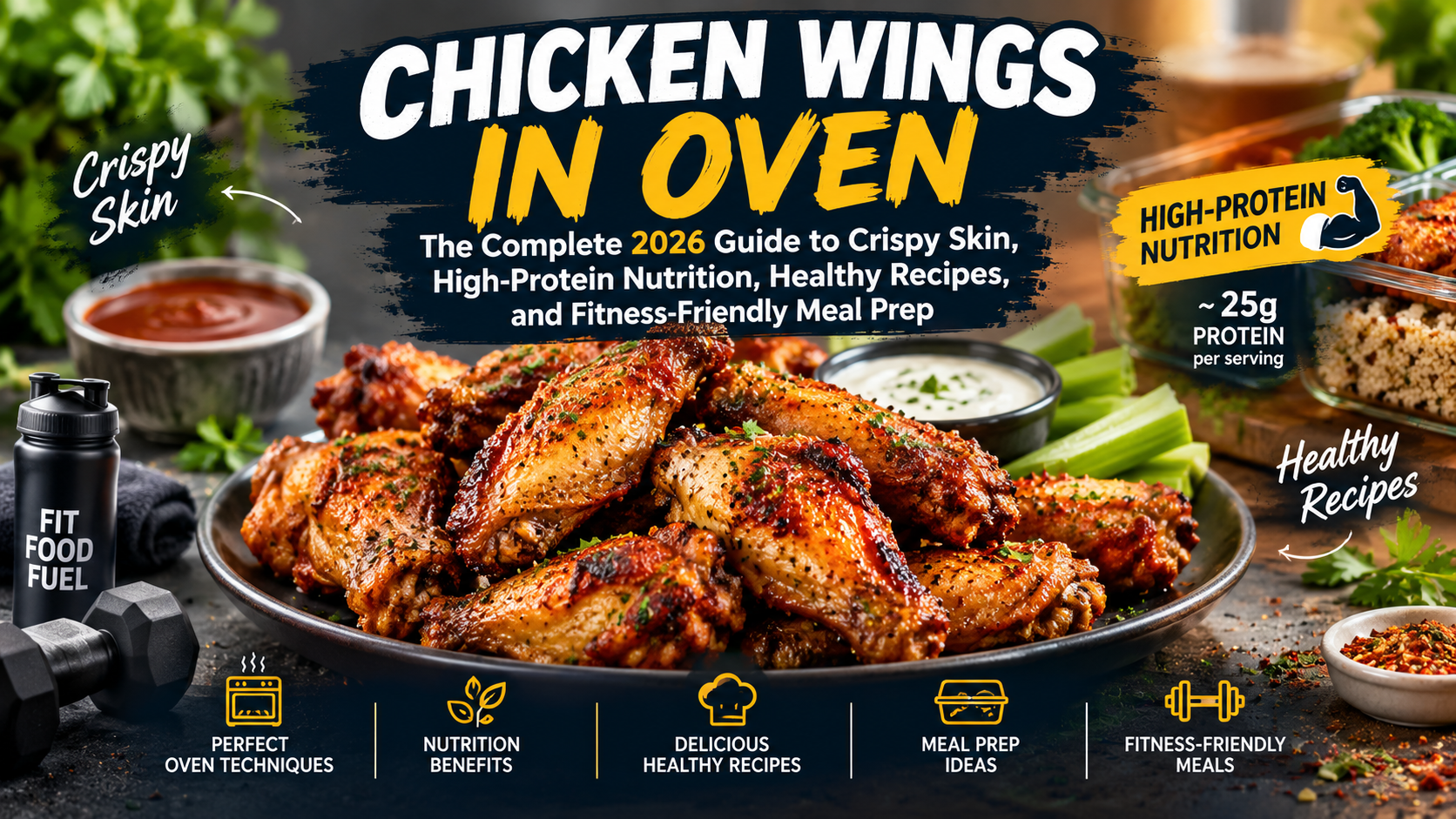
Chicken wings can be a delicious addition to a balanced fitness-focused diet when prepared with the right ingredients and cooking methods. Baking them at home gives you greater control over the oil, seasonings, sauces, and portion sizes, making it easier to enjoy a satisfying meal without relying on deep-fried takeout.
Learning to prepare chicken wings in oven starts with a few simple techniques: drying the skin thoroughly, seasoning the wings evenly, using the right temperature, and allowing enough space for hot air to circulate. These details help create golden, crisp skin while keeping the meat tender and juicy.
For people who exercise regularly, chicken wings also provide protein, which supports muscle repair and recovery. However, their nutritional value depends on the portion size, whether the skin is eaten, and the amount of oil, butter, sugar, and sauce added during cooking.
This guide covers everything from oven temperatures and cooking times to healthy marinades, food safety, nutrition, and meal-prep strategies. Whether you’re preparing a weekend snack or building a protein-rich dinner, these methods can help you make flavorful wings that fit your routine.
Why Bake Chicken Wings Instead of Deep-Frying Them?
Baking offers a practical way to achieve flavorful wings without submerging them in oil. The oven’s heat gradually renders some of the fat beneath the skin, while the exposed surface browns and develops texture. Using a wire rack over a baking sheet can improve airflow and help prevent the underside from becoming soggy.
For anyone following a fitness or weight-management plan, oven baking also makes portion control easier. You can measure the oil, prepare a lower-sugar seasoning blend, and serve the wings alongside vegetables, potatoes, or a whole-grain side dish. These small choices can make the overall meal more balanced.
Baked wings are not automatically low in calories. Chicken skin contains fat, and sauces made with butter, honey, or added sugar can significantly increase the energy content. The main advantage is control: you decide how much additional fat and seasoning goes into the recipe.
Ingredients for Crispy Oven-Baked Chicken Wings
A good recipe does not need a long ingredient list. Start with fresh or properly thawed chicken wings, a small amount of oil, salt, black pepper, garlic powder, paprika, and your preferred herbs or spices. Baking powder can also help produce a drier, crispier surface when used correctly.
Choose aluminum-free baking powder, not baking soda, if you want to use this technique. Baking powder helps change the surface conditions of the skin, encouraging browning and crispness. Use a modest amount, distribute it evenly, and avoid products that contain excessive seasoning or flavor additives.
| Ingredient | Suggested amount for 2 lb (900 g) wings | Purpose |
|---|---|---|
| Chicken wings | 2 lb (900 g) | Protein source |
| Olive oil | 1 tablespoon | Helps seasoning adhere |
| Baking powder | 1 teaspoon | Supports crisp skin |
| Salt | ¾ teaspoon, adjusted to taste | Enhances flavor |
| Garlic powder | 1 teaspoon | Savory flavor |
| Paprika | 1 teaspoon | Color and mild smokiness |
| Black pepper | ½ teaspoon | Mild heat |
| Onion powder | ½ teaspoon | Adds savory depth |
Check that the baking powder is evenly distributed to avoid bitter-tasting patches. If you prefer to skip it, you can still achieve excellent results by thoroughly drying the wings and using a rack with adequate airflow.
How to Make Chicken Wings in Oven for Maximum Crispiness


Start by preheating your oven to 425°F (220°C). If using a fan-assisted oven, you may need a slightly lower setting, depending on your appliance. Pat the wings completely dry with paper towels, since excess surface moisture can delay browning and leave the skin soft.
Place the wings in a bowl, add the oil and seasonings, and toss until every piece is coated. Arrange them in a single layer on a wire rack set over a rimmed baking sheet. Leave space between the pieces instead of piling them together. Crowding traps moisture and interferes with crisping.
Bake for approximately 40–50 minutes, turning the wings halfway through. Actual timing depends on wing size, oven accuracy, and how much moisture the chicken releases. Begin checking the wings toward the lower end of the time range, especially if they are small.
For the best texture, look for deeply golden skin and meat that is tender rather than rubbery. Always confirm that the thickest part of the meat reaches a safe internal temperature of 165°F (74°C), measured with a food thermometer without touching the bone.
A useful cooking principle is: “Dry skin, open airflow, and steady heat create crispier wings.” More oil is not necessarily the answer; controlling moisture is often more important.
Best Oven Temperature and Cooking Time
Temperature affects both the texture of the skin and how quickly the meat cooks. A moderately hot oven can cook the wings thoroughly, but temperatures that are too low may leave the skin pale and soft. Higher heat encourages browning, although very high temperatures can burn seasonings before the meat is ready.
For a straightforward balance of crispness and convenience, 425°F (220°C) is a useful starting point. Cooking at 400°F (205°C) may take longer, while 450°F (232°C) can brown the exterior more quickly and requires closer monitoring.
| Oven temperature | Approximate cooking time | Best use |
|---|---|---|
| 375°F (190°C) | 50–60 minutes | Gentler cooking |
| 400°F (205°C) | 45–55 minutes | Balanced browning |
| 425°F (220°C) | 40–50 minutes | Crisp skin and efficient cooking |
| 450°F (232°C) | 35–45 minutes | Faster browning with close monitoring |
These times are estimates, not food-safety guarantees. Wing size, oven calibration, starting temperature, and tray arrangement can all change the cooking time. Use internal temperature rather than appearance alone to confirm doneness.
Healthy Seasonings, Marinades, and Sauces


Seasonings can transform a basic tray of wings without adding much energy. Garlic powder, smoked paprika, black pepper, chili powder, cumin, lemon zest, and dried herbs provide plenty of flavor. A squeeze of fresh lemon after baking can brighten the taste without requiring a heavy sauce.
For a spicy option, combine hot sauce with a little Greek yogurt for a creamy dip. For a garlic-herb version, use garlic, parsley, lemon juice, and a small amount of olive oil. If you prefer a sweet glaze, mix a modest amount of honey with soy sauce, ginger, and garlic, keeping in mind that sweet sauces add sugar.
Apply sugary glazes near the end of cooking because their sugars can burn during prolonged exposure to high heat. If you want a classic buffalo flavor, toss the cooked wings in sauce just before serving rather than coating them heavily before baking.
Fitness-friendly cooking does not mean eliminating every flavorful ingredient. The goal is to balance taste, portion size, and nutritional needs so the meal is satisfying enough to fit into your routine consistently.
Chicken Wings Nutrition and Protein for Fitness
Chicken wings provide complete protein, meaning they contain all nine essential amino acids. Protein contributes to muscle maintenance and repair, making wings a useful food within a strength-training diet. They also supply nutrients such as vitamin B12, selenium, phosphorus, and niacin.
However, nutritional values vary considerably according to the edible portion, skin, cooking method, and sauce. A whole wing includes bone, so its total weight is not the same as the amount of food you actually eat. A restaurant-style serving covered in butter-based sauce may contain considerably more calories than a modest homemade portion.
| Nutrition factor | What to consider |
|---|---|
| Protein | Supports muscle repair and maintenance |
| Fat | Much of the fat is associated with the skin |
| Calories | Depend on edible meat, skin, oil, and sauces |
| Sodium | Can rise significantly with salt, seasoning blends, and bottled sauces |
| Carbohydrates | Plain wings contain very little; sweet glazes add carbohydrates |
| Micronutrients | Provide several B vitamins and minerals |
For people building muscle, pair wings with a carbohydrate source such as potatoes, brown rice, or whole grains and include vegetables for fiber and micronutrients. For weight management, focus on the total meal, portion size, and overall dietary pattern rather than labeling individual foods as good or bad.
Meal Prep and Serving Ideas for Active Lifestyles
Oven-baked wings can work well for meal prep, but crisp skin is best immediately after cooking. If you prepare them ahead, refrigerate them promptly in shallow containers and keep sauces separate until serving. This helps preserve texture and makes it easier to reheat only the amount you plan to eat.
For a balanced post-workout meal, serve a moderate portion with roasted potatoes and steamed broccoli. If you need a lighter meal, pair the wings with a large salad, cucumber, tomatoes, and a yogurt-based dip. For a higher-energy meal during a demanding training period, add rice, corn, or another carbohydrate-rich side.
Food safety matters during preparation and storage. Refrigerate cooked wings within two hours of cooking, or within one hour when the surrounding temperature exceeds 90°F (32°C). Properly refrigerated leftovers generally keep for three to four days. Reheat them to 165°F (74°C), checking the thickest pieces with a thermometer.
For crispier leftovers, use an oven or air fryer rather than a microwave alone. Reheat at around 375°F (190°C) until hot throughout, monitoring closely to prevent excessive browning. The exact time depends on wing size and whether the wings are refrigerated or frozen.
Common Mistakes That Make Oven-Baked Wings Soggy
The most common problem is leaving too much moisture on the skin. Washing raw chicken is unnecessary and can spread bacteria around the sink and nearby surfaces. Instead, pat the wings dry with paper towels and clean any surfaces that contact raw poultry.
Crowding the baking tray is another frequent mistake. When wings sit tightly together, released moisture has less opportunity to evaporate. Use two trays if necessary, leaving space around each piece. A wire rack can also help hot air reach the underside.
Adding sauce too early can soften the skin or cause sugary ingredients to burn. Bake the wings until they are nearly finished, then toss them in the desired sauce. If the wings are cooked safely but not crisp enough, a brief period under the broiler may help; watch them continuously because the skin can burn quickly.
Finally, avoid relying solely on color to judge doneness. Chicken can appear browned before it has reached a safe internal temperature. A food thermometer provides a more reliable check and is especially useful when cooking large batches.
Frequently Asked Questions
How long should chicken wings cook in the oven?
At 425°F (220°C), most average-sized wings take approximately 40–50 minutes, with a turn halfway through. The exact time varies with wing size and oven performance. Confirm that the thickest part reaches at least 165°F (74°C) before serving.
Should you cover chicken wings while baking?
No, covering them is generally unnecessary when your goal is crispy skin. Leaving the wings uncovered allows moisture to escape and promotes browning. Arrange them in a single layer and avoid overcrowding the tray.
Is baking powder necessary for crispy wings?
No. Baking powder can improve surface crispness, but dry skin, adequate spacing, and good airflow are also important. If you use it, choose aluminum-free baking powder and apply it sparingly. Do not substitute baking soda, which can create an unpleasant taste.
Are oven-baked wings healthy for muscle building?
They can fit into a muscle-building diet because chicken provides complete protein and several important nutrients. Their overall nutritional value depends on the portion, skin, oil, and sauce. Pairing them with vegetables and a suitable carbohydrate source can make the meal more balanced.
Can you cook frozen chicken wings directly in the oven?
Cooking from frozen is possible, but the wings may cook less evenly and develop less crisp skin. For more predictable results, thaw them safely in the refrigerator, pat them dry, and season before baking. Never thaw raw chicken on the counter at room temperature.
How do you keep baked wings crispy after cooking?
Place cooked wings on a rack rather than stacking them in a bowl, and add sauce just before serving. If preparing them ahead, refrigerate them promptly and reheat in an oven or air fryer. Avoid sealing hot wings in a container, as trapped steam softens the skin.
Conclusion
Making crispy chicken wings in oven is straightforward when you control moisture, use an appropriate temperature, leave enough room for airflow, and check the internal temperature for safety. A simple seasoning blend can produce flavorful results without excessive oil or complicated ingredients.
For a fitness-focused lifestyle, homemade wings offer flexibility: you can adjust the protein portion, manage sodium and added sugar, and serve them with vegetables and carbohydrates that support your individual training goals. Remember that a food’s place in a balanced diet depends on the whole meal and your overall eating habits.
The final takeaway is simple: prioritize safe cooking, dry skin, and balanced portions. With a few reliable techniques, oven-baked wings can deliver satisfying flavor, crisp texture, and useful protein in a meal that fits an active lifestyle.