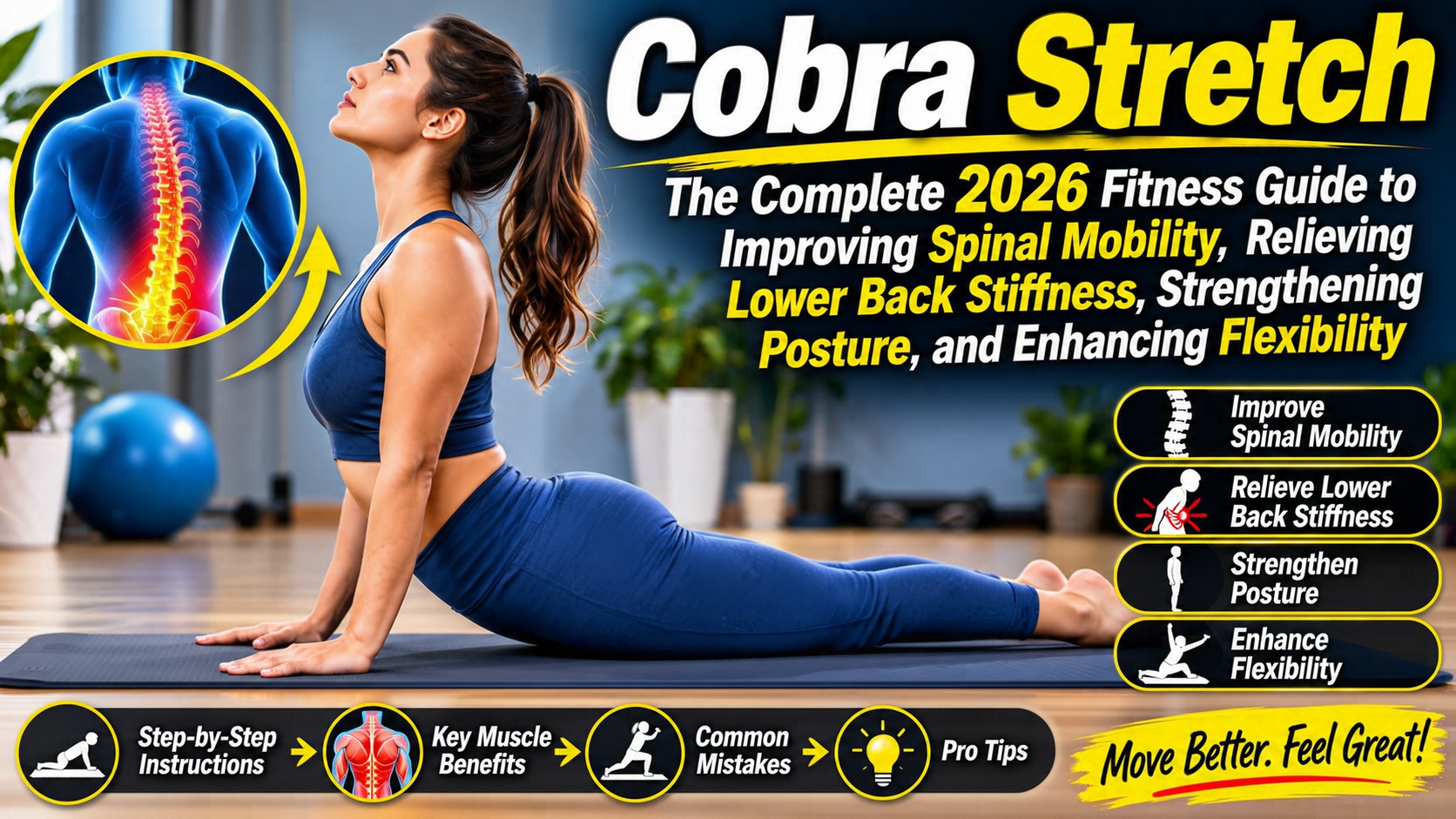
The cobra stretch is a popular yoga-inspired movement that gently extends the spine, opens the chest, and stretches the muscles along the front of the body. Commonly included in yoga sessions, warm-ups, and mobility routines, it can help counteract stiffness associated with prolonged sitting and improve awareness of spinal movement.
Although the movement looks simple, proper technique makes a significant difference. Lifting too high, forcing the lower back into an uncomfortable position, or relying entirely on the arms can create unnecessary pressure. Understanding the correct form, breathing pattern, and appropriate modifications helps make this exercise more comfortable and effective.
What Is the Cobra Stretch?
The cobra stretch, traditionally known as Bhujangasana in yoga, is a prone back-extension movement performed while lying face down. The upper body lifts away from the floor as the hands provide gentle support, creating an opening through the chest and an extension through the spine.
Unlike more demanding backbends, this movement can be adjusted to suit different flexibility levels. A beginner may lift only the head and upper chest, while someone with greater mobility may raise the torso further without forcing the lower back.
The movement primarily targets the abdominal muscles, hip flexors, chest, and spinal extensors. It also encourages controlled movement through the thoracic and lumbar regions of the spine. However, the goal is comfortable extension rather than achieving the highest possible lift.
Benefits of the Cobra Stretch
One important benefit is improved spinal mobility. Daily activities such as sitting at a desk, driving, and looking down at electronic devices often involve prolonged forward-flexed positions. Gentle spinal extension introduces movement in the opposite direction, helping balance a routine dominated by sitting.
It can also encourage better posture by opening the chest and increasing awareness of upper-body positioning. People who spend long hours working at computers may find that controlled chest opening helps them become more conscious of rounded shoulders. However, lasting postural improvements generally require strengthening the upper back and developing consistent movement habits.
Another potential advantage is flexibility through the front of the body. The abdominal region and hip flexors may experience a gentle stretch, particularly when the pelvis remains grounded. Regular, comfortable mobility practice can also make yoga transitions and other floor exercises feel more controlled.
Muscles Worked During the Movement
This exercise involves several muscle groups working together. The spinal extensors help lift and support the torso, while the shoulders and arms provide assistance. The abdominal muscles lengthen as the spine extends, and the chest muscles experience an opening sensation.
The muscles involved include:
- Erector spinae: Help extend and stabilize the spine.
- Multifidus: Supports segmental spinal stability.
- Rectus abdominis: Lengthens during controlled spinal extension.
- Hip flexors: May experience a gentle stretch depending on pelvic positioning.
- Pectoralis major and minor: Experience an opening sensation across the chest.
- Triceps and shoulder muscles: Assist with arm positioning and support.
The amount of muscular involvement depends on how high the torso lifts and how much assistance the arms provide. A smaller, controlled movement often offers better comfort than pushing into a deep backbend.
How to Perform the Cobra Stretch Correctly

Start by lying face down on a comfortable exercise or yoga mat. Extend your legs behind you, keeping the tops of your feet relaxed against the floor. Position your hands beneath or slightly outside your shoulders, with your elbows pointing backward rather than flaring outward.
Gently draw your shoulder blades down and back, then lift your head and upper chest using your back muscles. Allow your hands to provide light support without aggressively pushing against the floor. Keep your pelvis and lower body grounded, and avoid creating excessive compression in the lower back.
Breathe naturally as you hold the position. Your neck should remain aligned with your spine rather than tilting sharply upward. After a comfortable pause, slowly lower your chest to the mat.
| Technique element | Correct approach | Common problem |
|---|---|---|
| Starting position | Lie face down with legs extended | Excessive tension in the shoulders |
| Hand placement | Position hands near the shoulders | Hands placed too far forward |
| Elbow position | Keep elbows slightly bent | Locking the elbows |
| Chest movement | Lift gradually and comfortably | Forcing a deep backbend |
| Pelvis | Keep hips grounded | Lifting the pelvis unnecessarily |
| Breathing | Breathe smoothly | Holding your breath |
| Neck | Maintain a comfortable alignment | Looking excessively upward |
Common Mistakes and How to Avoid Them
One frequent mistake is pushing too hard with the arms. This can shift excessive pressure into the lower back instead of encouraging controlled spinal extension. The solution is to use the back muscles to initiate the lift and let the hands provide gentle assistance.
Another problem is raising the shoulders toward the ears. This creates unnecessary tension around the neck and upper trapezius muscles. Instead, relax the shoulders away from the ears and keep the shoulder blades moving naturally. Avoid forcing the chest upward if the movement feels restricted.
Holding the breath is another common issue. Smooth breathing helps maintain control and reduces unnecessary tension. If you cannot breathe comfortably, lower your torso and use a smaller range of motion.
Different Variations for Beginners and Experienced Practitioners


Not everyone needs the same level of spinal extension. Beginners can start with a low-lift variation, sometimes called Baby Cobra. The hands remain lightly positioned beneath the shoulders, but the chest rises only a few inches. This version emphasizes back-muscle engagement without demanding substantial flexibility.
A more developed variation involves gradually increasing the chest lift while keeping the pelvis grounded. The elbows may straighten slightly, but they should not lock. Experienced yoga practitioners may also explore related movements such as Upward-Facing Dog, known as Urdhva Mukha Svanasana. This is a distinct yoga posture in which the arms are straighter and the thighs and pelvis lift away from the floor.
Choosing an appropriate variation depends on comfort, mobility, and experience. Greater height does not automatically mean better technique.
How Long Should You Hold the Position?
For general mobility practice, beginners can start with holds of approximately 10–15 seconds, repeating the movement two or three times. This provides an opportunity to understand the positioning without creating unnecessary fatigue.
More experienced individuals may gradually increase the hold to 20–30 seconds if the position remains comfortable. However, longer holds are not essential for achieving useful mobility benefits. Consistency, controlled breathing, and proper alignment matter more than forcing a particular duration.
| Experience level | Suggested hold | Repetitions | Rest |
|---|---|---|---|
| Beginner | 10–15 seconds | 2–3 | 20 seconds |
| Intermediate | 15–25 seconds | 2–3 | 20–30 seconds |
| Experienced | 20–30 seconds | 2–3 | 30 seconds |
These are general starting guidelines rather than medical or individualized exercise prescriptions. Reduce the duration if you experience discomfort.
Who Should Avoid or Modify This Exercise?
Although the movement is gentle for many people, spinal extension is not appropriate for every condition. Individuals with acute back pain, a recent spinal injury, or a medical condition that makes backbending uncomfortable should seek advice from a qualified healthcare professional before attempting it.
People with certain spinal conditions, including symptomatic spinal stenosis or spondylolisthesis, may experience increased discomfort during extension-based movements. Pregnant individuals should also seek appropriate guidance because prone positioning may become uncomfortable or unsuitable as pregnancy progresses.
Stop immediately if you experience sharp pain, tingling, numbness, or pain spreading into the legs. A gentle stretching sensation is different from pain. As a practical rule, the movement should feel controlled and comfortable rather than forced.
How to Include It in Your Fitness Routine
The cobra stretch works well as part of a short mobility routine, especially after extended periods of sitting. It can be combined with Cat-Cow, Child’s Pose, and gentle thoracic mobility exercises to introduce movement through different parts of the spine.
For example, someone working at a desk might perform a brief movement routine during a break. A yoga practitioner could include it in a Sun Salutation sequence, while a fitness enthusiast might use a modified version after a workout as part of a comfortable cool-down.
It should not replace a balanced strength-training program. Exercises such as bird dogs, glute bridges, and controlled core movements can complement spinal mobility work by developing muscular support around the trunk and hips.
Frequently Asked Questions
What does the cobra stretch help with?
It helps improve comfortable spinal extension, encourages chest opening, and gently stretches the abdominal region and hip flexors. It may also help reduce stiffness associated with prolonged sitting when performed with appropriate technique.
Is this exercise good for lower back pain?
It may be comfortable for some people with certain types of lower back discomfort, but it is not suitable for every cause of back pain. Extension can aggravate some spinal conditions, so people with persistent or worsening symptoms should consult a healthcare professional before using it as a treatment.
How many times should beginners perform it?
Beginners can start with two or three repetitions, holding each position for approximately 10–15 seconds. The movement should remain comfortable, with smooth breathing and no sharp pain.
Can it improve posture?
It can encourage chest opening and greater awareness of spinal positioning. However, improving posture usually requires a broader approach that includes upper-back strengthening, core stability, regular movement, and appropriate workstation habits.
What is the difference between Cobra Pose and Upward-Facing Dog?
Cobra Pose generally keeps the pelvis and legs grounded while the upper body lifts. Upward-Facing Dog involves straighter arms and lifting the thighs and pelvis away from the floor, making it a more demanding posture.
Should the lower back hurt during the movement?
No. A mild stretching sensation may be normal, but sharp pain, pinching, or discomfort that spreads into the legs is a warning sign. Reduce the range of motion or stop the exercise if symptoms occur.
Conclusion
The cobra stretch is a simple way to introduce controlled spinal extension, encourage chest mobility, and improve awareness of body positioning. Its value comes from proper alignment, comfortable movement, and consistency rather than lifting the torso as high as possible.
Whether included in a yoga session, a daily mobility routine, or a break from desk work, it can complement a balanced approach to physical fitness. Start with a gentle variation, breathe naturally, and increase the range of motion only when it feels comfortable. The most effective practice is one that supports mobility without forcing the body beyond its limits.