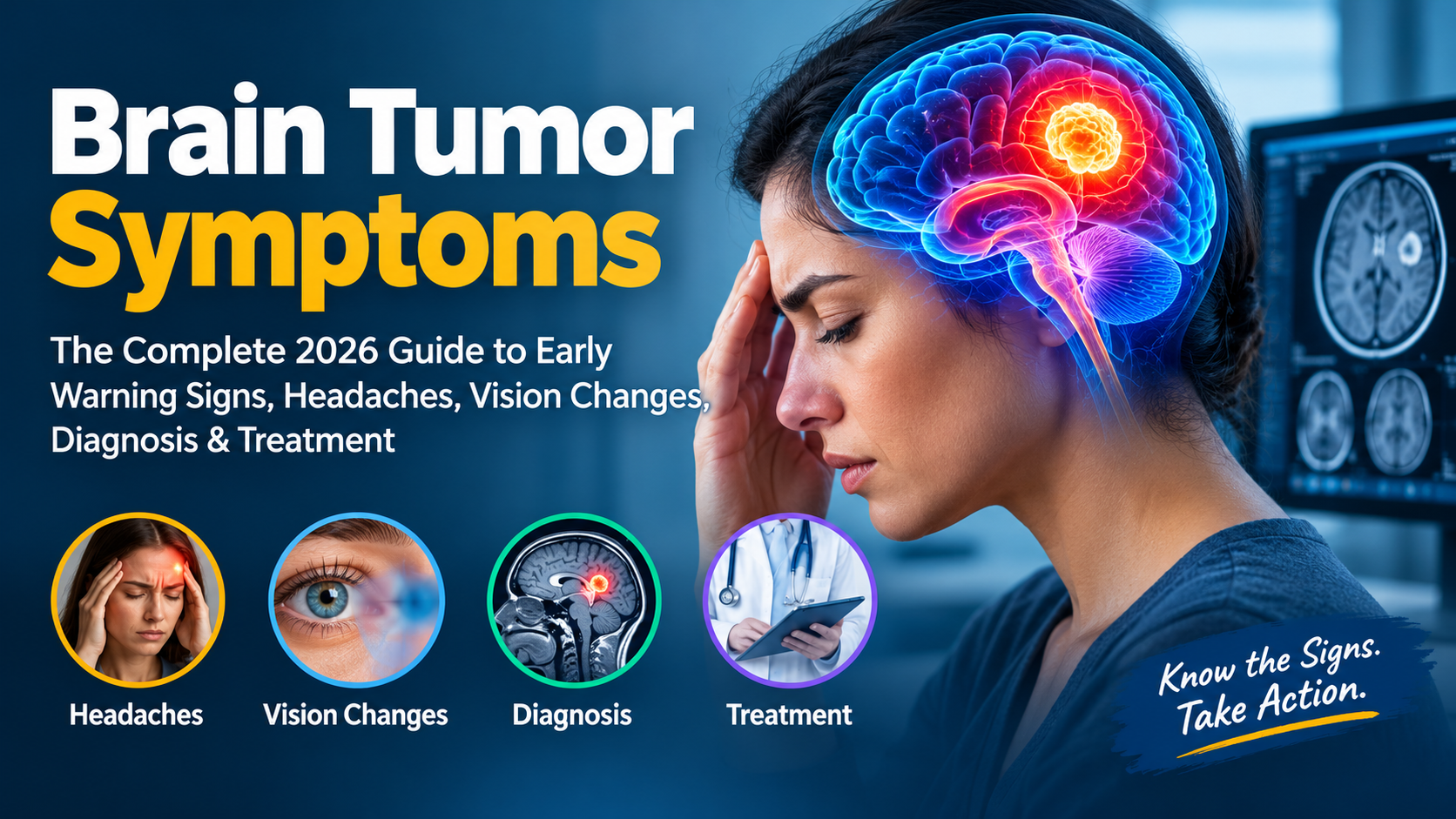
Brain tumor symptoms can vary significantly depending on a tumor’s location, size, growth rate, and whether it is cancerous or noncancerous. Some people experience persistent headaches, seizures, vision changes, or difficulties with balance, while others notice subtle changes in memory, concentration, or personality. In certain cases, a brain tumor causes no obvious symptoms during its early stages.
Recognizing unusual neurological changes is important, but it is equally important to understand that these symptoms can have many other causes, including migraines, infections, medication effects, and sleep disorders. Experiencing a headache or occasional dizziness does not automatically mean someone has a brain tumor.
This guide explains the warning signs to recognize, when to seek medical attention, how doctors investigate possible tumors, and which treatment options may be available.
What Are Brain Tumor Symptoms?
Brain tumor symptoms are physical, cognitive, or behavioral changes caused by an abnormal growth in or around the brain. A tumor may affect nearby brain tissue, interfere with normal neurological signals, increase pressure inside the skull, or disrupt the flow of cerebrospinal fluid.
Brain tumors may be primary, meaning they begin in the brain or nearby structures, or secondary, meaning cancer has spread to the brain from another part of the body. Primary tumors can be benign or malignant, although even a noncancerous growth may cause serious problems if it presses against critical brain structures.
The symptoms depend heavily on the affected area. For example, a growth near the motor cortex may cause weakness, while one involving the visual pathways can interfere with sight. Tumors affecting areas responsible for speech, memory, or emotional regulation may produce communication difficulties or noticeable behavioral changes.
Early Warning Signs to Recognize
Early warning signs are not always dramatic. Some people experience gradually increasing headaches, unexplained nausea, persistent fatigue, or subtle changes in their ability to concentrate. Others may develop symptoms that become more noticeable over several weeks or months.
A particularly important clue is a new neurological problem that persists, worsens, or occurs alongside other unusual changes. For instance, someone who develops recurring headaches together with double vision or progressive weakness should receive medical assessment rather than repeatedly treating the headache without investigating the additional symptoms.
However, there is no universal pattern of early warning signs. Some tumors grow slowly and produce symptoms gradually, while others cause sudden problems, including seizures. Some are discovered incidentally during brain imaging performed for an unrelated reason.
Persistent Headaches and Changes in Headache Patterns
Headaches are commonly associated with brain tumors in public discussions, but most headaches are not caused by tumors. Tension headaches, migraines, dehydration, poor sleep, and medication overuse are much more frequent explanations.
Headaches associated with a brain tumor may develop because the growth increases pressure inside the skull, causes swelling, or affects pain-sensitive structures surrounding the brain. The discomfort may be persistent, progressively worsen, or occur alongside vomiting, visual disturbances, or neurological changes. Some people notice headaches that are more pronounced in the morning or become worse with coughing, straining, or bending over, although these patterns are not specific to tumors.
A headache that differs significantly from a person’s usual pattern deserves attention, especially when it continues to worsen or comes with other neurological symptoms. Doctors consider the overall history, examination findings, and associated warning signs rather than diagnosing a tumor from headache characteristics alone.
Vision Problems, Speech Difficulties, and Hearing Changes
Changes in vision can occur when a tumor affects the optic nerves, visual pathways, or areas of the brain responsible for interpreting visual information. Symptoms may include blurred vision, double vision, loss of part of the visual field, or difficulty seeing objects on one side. Some people experience visual disturbances alongside headaches, while others notice changes in vision without significant head pain.
Speech and hearing changes can also develop depending on the tumor’s location. A person might struggle to find familiar words, understand spoken language, follow conversations, or speak clearly. A growth affecting structures involved in hearing and balance may cause hearing difficulties, ringing in one ear, or dizziness.
These problems have many possible explanations, including eye conditions, inner-ear disorders, strokes, and other neurological diseases. Sudden loss of vision, new speech difficulties, or abrupt weakness requires emergency assessment because a stroke and other serious conditions must be considered immediately.
Seizures, Muscle Weakness, and Balance Problems
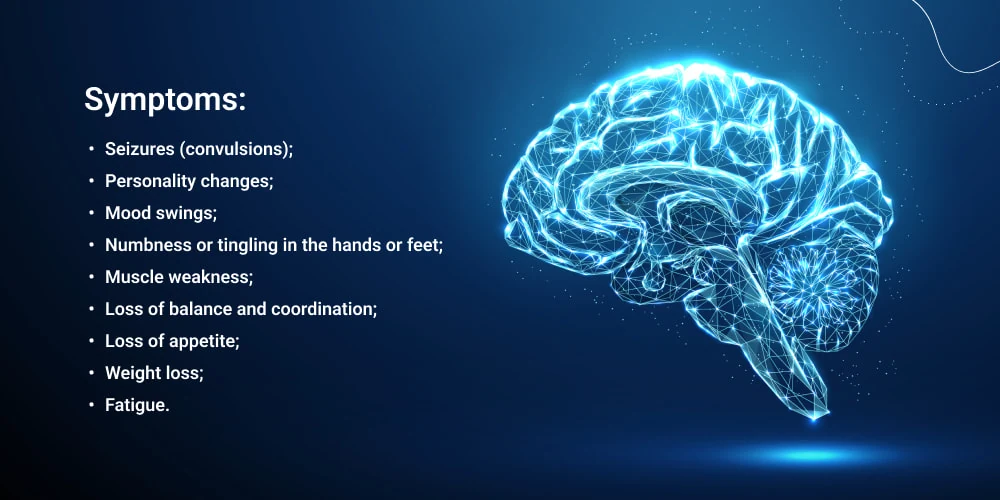
A seizure may be the first noticeable sign of a brain tumor in someone who has never experienced one before. Seizures occur when abnormal electrical activity develops in the brain. They can involve full-body convulsions, but some cause only brief staring episodes, unusual sensations, involuntary movements, or temporary confusion.
Muscle weakness and coordination difficulties may appear when a tumor affects the regions responsible for movement. A person may repeatedly drop objects, struggle with buttons, drag one foot, or experience weakness on one side of the body. Balance problems can make walking difficult and increase the risk of falls.
A first seizure requires urgent medical evaluation, even if the person recovers quickly. Call emergency services for a seizure lasting five minutes or longer, repeated seizures without recovery, breathing difficulties, or a first seizure accompanied by serious injury. During a seizure, protect the person from nearby hazards, cushion their head, and do not place anything in their mouth.
Memory Loss, Personality Changes, and Cognitive Difficulties
Not all neurological symptoms involve physical discomfort. Tumors affecting the frontal or temporal lobes may interfere with judgment, emotional regulation, memory, attention, or language. Someone might become unusually irritable, lose interest in familiar activities, struggle to organize daily tasks, or have difficulty remembering recent conversations.
These changes can be difficult for families to interpret because they may resemble stress, depression, burnout, or age-related cognitive decline. A person might initially appear distracted or emotionally different rather than physically ill. The significance increases when changes are persistent, progressive, or accompanied by other neurological difficulties.
For example, someone who has always managed household finances independently may suddenly struggle with familiar calculations or become confused by routine tasks. This does not prove a brain tumor is present, but a substantial, unexplained change in cognitive function warrants medical assessment.
Common Brain Tumor Symptoms by Type
Different tumor types and locations can produce overlapping symptoms. The following table summarizes possible patterns without suggesting that any single symptom can establish a diagnosis.
| Symptom or change | Possible explanation | When to seek care |
|---|---|---|
| Persistent or worsening headache | Pressure changes, swelling, or unrelated headache disorders | Prompt assessment if new, progressive, or unusual |
| Seizures | Abnormal electrical activity in the brain | Urgent assessment for a first seizure |
| Blurred or double vision | Visual pathway involvement or eye conditions | Prompt assessment for new or persistent changes |
| Weakness or numbness | Motor pathway involvement or other neurological conditions | Emergency care if sudden |
| Memory or personality changes | Changes affecting cognitive brain regions or other illnesses | Medical assessment if progressive |
| Balance or coordination problems | Cerebellar involvement, inner-ear conditions, or other causes | Prompt assessment, especially if worsening |
| Nausea and vomiting | Many possible causes, including increased intracranial pressure | Urgent care when persistent or accompanied by neurological signs |
The table is a guide to recognizing concerning patterns, not a diagnostic tool. Symptoms overlap substantially across different conditions, and the absence of these signs does not rule out a tumor.

When Brain Tumor Symptoms Require Emergency Care
Some warning signs require immediate medical attention because they may indicate a life-threatening neurological emergency. These include a sudden, extremely severe headache, a first seizure, sudden weakness or numbness, new difficulty speaking, abrupt loss of vision, or rapidly developing confusion.
A severe headache accompanied by repeated vomiting, reduced consciousness, or rapidly worsening neurological function also needs urgent evaluation. These symptoms may result from bleeding, stroke, infection, or increased pressure inside the skull rather than a tumor specifically, but identifying the cause quickly is essential.
Do not wait for a routine appointment if someone develops sudden neurological changes. Call local emergency services and avoid driving the affected person yourself if their consciousness, movement, or ability to communicate is impaired.
How Doctors Diagnose a Possible Brain Tumor
Diagnosis begins with a medical history and neurological examination. A clinician may ask when symptoms started, whether they are worsening, whether headaches have changed, and whether there is a history of cancer or seizures. The examination may assess strength, sensation, reflexes, coordination, balance, vision, hearing, and cognitive function.
If the findings suggest a possible brain tumor, magnetic resonance imaging (MRI) is commonly used to examine the brain in detail. MRI scans may be performed with contrast material to help distinguish abnormal tissue and assess its characteristics. Computed tomography (CT) may be used in emergencies or when MRI is unavailable or unsuitable.
Imaging can identify a suspicious growth, but a scan does not always establish its exact type or biological behavior. Depending on the findings, specialists may recommend a biopsy or surgical removal to examine tissue under a microscope. The diagnosis helps determine the tumor’s grade, likely behavior, and appropriate treatment.
Treatment Options and Recovery
Treatment depends on the tumor’s type, size, location, growth rate, molecular characteristics, symptoms, and the person’s overall health. Some slow-growing tumors without concerning features may be monitored with regular MRI scans and specialist appointments rather than treated immediately.
Surgery may be recommended when a tumor can be removed safely or when tissue is needed for diagnosis. Radiation therapy can target tumor cells, while chemotherapy and certain targeted medicines may be used for particular tumor types. Treatment plans often combine several approaches, and not every tumor requires the same intervention.
Supportive care can help manage symptoms and maintain quality of life. Depending on the situation, doctors may prescribe medication for seizures or swelling and recommend physical, occupational, or speech therapy. Recovery varies widely, and follow-up imaging is often necessary to monitor treatment response or detect recurrence.
Living With a Brain Tumor Diagnosis
A brain tumor diagnosis can be overwhelming for patients and their families. Understanding the pathology report, tumor grade, treatment goals, and expected follow-up schedule can make medical decisions easier to navigate. Patients should ask their specialist to explain unfamiliar terminology and clarify which symptoms require immediate attention.
Practical support also matters. Rehabilitation may help restore mobility, communication, or daily functioning, while counseling and patient support groups can help people manage uncertainty and emotional stress. Family members can assist by keeping a medication list, attending appointments when appropriate, and recording changes in symptoms.
Outcomes differ considerably between tumor types. A benign tumor may still require treatment because of its location, while some malignant tumors respond well to modern therapies. Individual prognosis should be discussed with the treating specialist rather than inferred from general information or another person’s experience.
Frequently Asked Questions
What are the most common brain tumor symptoms?
Commonly reported symptoms include headaches, seizures, vision changes, nausea, balance difficulties, weakness, and changes in memory or behavior. The particular symptoms depend on the tumor’s location, size, and growth rate. Many of these problems also occur with conditions that are not tumors, so persistent, progressive, or unusual symptoms should be evaluated by a healthcare professional.
Can brain tumor symptoms appear suddenly?
Yes. A seizure or sudden neurological change can be the first noticeable sign, even when a tumor has been developing for some time. However, sudden severe headaches, weakness, speech problems, or vision loss can also indicate a stroke or another emergency. Seek emergency medical care rather than assuming a tumor is responsible.
Are morning headaches a sign of a brain tumor?
Morning headaches can occur in people with brain tumors, particularly when pressure inside the skull is elevated. However, morning headaches are also associated with sleep disorders, migraines, dehydration, and other common conditions. A headache’s timing alone cannot diagnose a tumor; progressive pain or headaches accompanied by vomiting or neurological changes deserve medical assessment.
Can you have a brain tumor without headaches?
Yes. Some people with brain tumors never develop headaches, particularly when the tumor affects areas that do not directly produce headache-related symptoms. Instead, they may experience seizures, personality changes, weakness, hearing problems, or visual disturbances. Others have no symptoms and discover the tumor during imaging for an unrelated reason.
How long can a brain tumor develop before symptoms appear?
There is no single timeline. Some tumors grow slowly over months or years before causing noticeable problems, while others grow more rapidly or produce symptoms earlier because of their location. Tumor size alone does not determine when symptoms appear, since even a relatively small growth can affect a critical brain structure.
Can an MRI confirm a brain tumor?
MRI can reveal a suspicious brain growth and provide detailed information about its location and appearance. However, imaging does not always determine the exact tumor type or grade. A specialist may recommend additional tests, including a biopsy or surgical tissue examination, to establish the diagnosis and guide treatment.
Conclusion
Recognizing brain tumor symptoms means paying attention to persistent, progressive, or unexplained changes in physical function, vision, coordination, memory, behavior, and neurological health. Headaches are common and usually have causes other than tumors, but new or worsening symptoms should not be ignored when they occur alongside seizures, weakness, speech difficulties, or other concerning changes.
Medical evaluation is the most reliable way to understand what is causing these problems. Doctors use clinical examinations, brain imaging, and, when necessary, tissue analysis to determine the diagnosis and recommend appropriate care.
The most important takeaway is simple: recognize unusual changes, seek timely medical advice, and never rely on symptoms alone to diagnose a brain tumor. Early assessment can help identify serious conditions and ensure that appropriate treatment begins when needed.