

What Are Hamstring Exercises and Why Do They Matter?
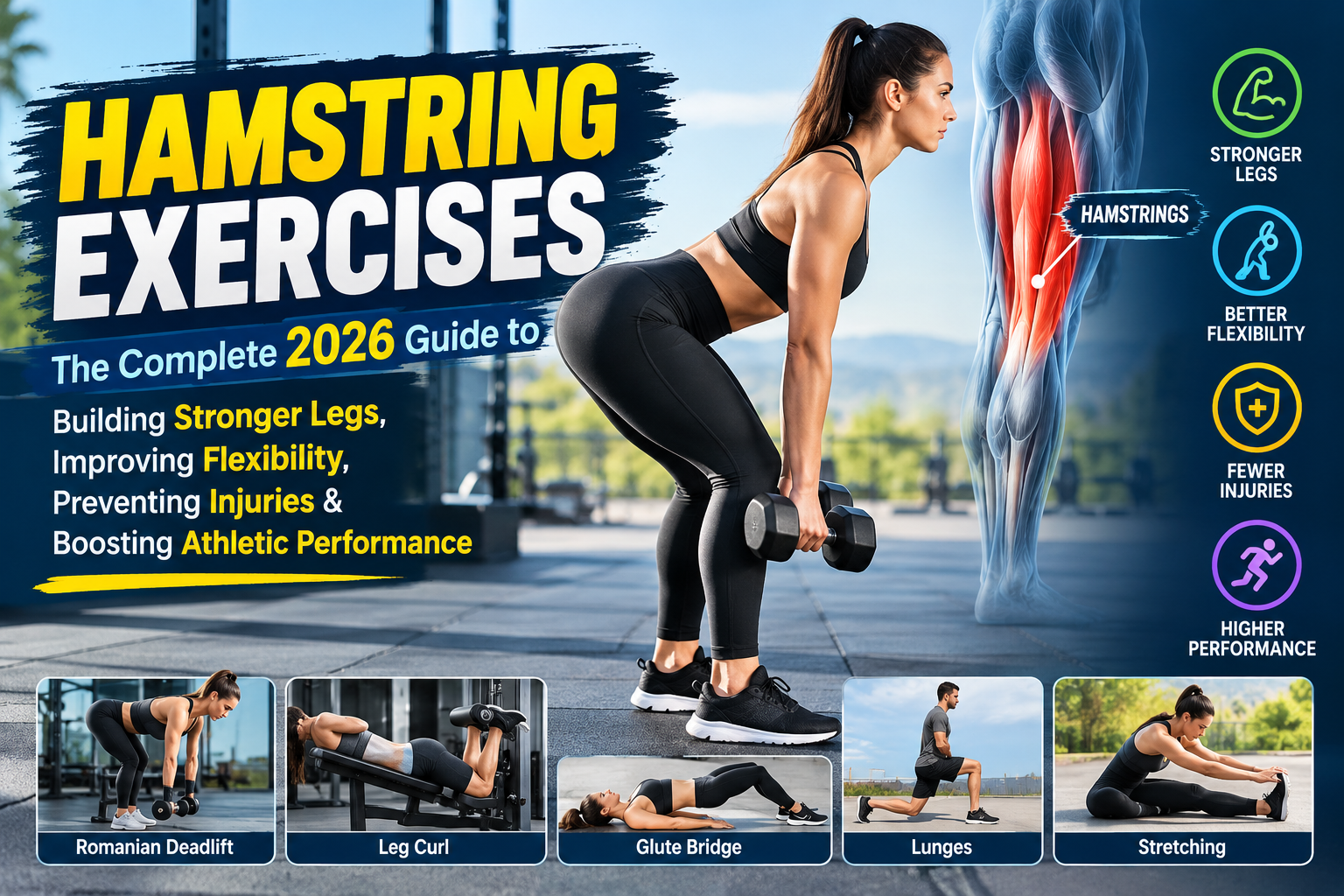
Hamstring exercises are strength, mobility, and conditioning movements that target the muscles along the back of your thighs. The hamstring muscle group includes the biceps femoris, semitendinosus, and semimembranosus. These muscles help bend the knee, extend the hip, control leg movement, and stabilize the body during walking, running, jumping, and lifting.
Strong hamstrings are essential for more than athletic performance. They support everyday movements such as climbing stairs, standing up from a chair, and picking up objects from the floor. They also work with the glutes, quadriceps, and calf muscles to maintain lower-body balance. When the hamstrings are weak relative to the demands placed on them, sprinting, sudden direction changes, and other explosive activities may become more challenging.
A balanced training program should include exercises that strengthen the hamstrings at different joint angles, build eccentric strength, and improve coordination. This combination supports muscle development, functional movement, and resilience during physical activity.
Best Hamstring Exercises for Strength and Muscle Growth
The most effective movements depend on your fitness level, available equipment, and goals. Some exercises emphasize hip extension, while others focus on knee flexion. Combining both movement patterns helps train the hamstrings more completely.
The Romanian deadlift is a particularly useful option for developing strength through the hip hinge. Stand with your feet hip-width apart, hold dumbbells or a barbell in front of your thighs, and push your hips backward while keeping your spine neutral. Lower the weight until you feel a controlled stretch in the back of your thighs, then drive your hips forward to stand. Keep the weights close to your legs rather than reaching them toward the floor.
Other effective movements include lying leg curls, seated leg curls, glute bridges, and stability-ball hamstring curls. Leg curls directly train knee flexion, while bridges and hip hinges emphasize hip extension. For beginners, bodyweight bridges and light dumbbell deadlifts provide a manageable starting point. More experienced lifters can progressively increase resistance while maintaining controlled technique.
Hamstring Exercises You Can Do at Home
You do not need a fully equipped gym to strengthen your posterior chain. Bodyweight movements can improve muscular endurance and control, while resistance bands and sliders can increase the challenge as you progress.
<text weight=”medium”>Effective home movements include:</text>
- Glute bridges: Lie on your back with knees bent and feet flat. Lift your hips until your shoulders, hips, and knees form a line, then lower slowly.
- Single-leg glute bridges: Perform the same movement with one foot lifted, keeping your pelvis level throughout the repetition.
- Towel hamstring curls: Lie on a smooth floor with your heels on towels or sliders. Lift your hips and slide your heels toward your body, then extend your legs under control.
- Good mornings: Stand with feet hip-width apart, place your hands across your chest, and hinge at the hips while maintaining a neutral spine.
- Resistance-band leg curls: Anchor a band securely, bend your knee against its resistance, and return slowly to the starting position.
Start with movements that allow you to maintain good form throughout each repetition. If towel curls are too difficult, keep your hips on the floor while practicing the sliding motion. Once your strength improves, progress to lifting your hips throughout the exercise.
Hamstring Exercises for Beginners
Beginners benefit from movements that build coordination and establish a reliable foundation before heavier resistance is introduced. Bodyweight glute bridges, light Romanian deadlifts, and controlled leg curls are practical starting points because they allow you to learn how the hips and knees contribute to movement.
Begin with two or three sessions per week, leaving recovery time between challenging workouts. A starting target of two or three sets of 8–12 controlled repetitions works well for many people, although lighter or heavier ranges may also be appropriate depending on the exercise. Focus on a steady tempo rather than rushing through repetitions to complete a target number.
A common mistake is trying to feel an intense burn during every set. Effective training does not require extreme soreness. Instead, use a resistance level that makes the final repetitions challenging without compromising posture, balance, or range of motion. Increase the load gradually as the movement becomes easier.
Hamstring Exercises for Athletes and Runners
Athletes require hamstrings that can produce force quickly and absorb force while the body moves at speed. During sprinting, the hamstrings help extend the hip and control the lower leg as it swings forward. They must tolerate substantial forces, particularly during the late swing phase of running, when the leg is decelerating before ground contact.
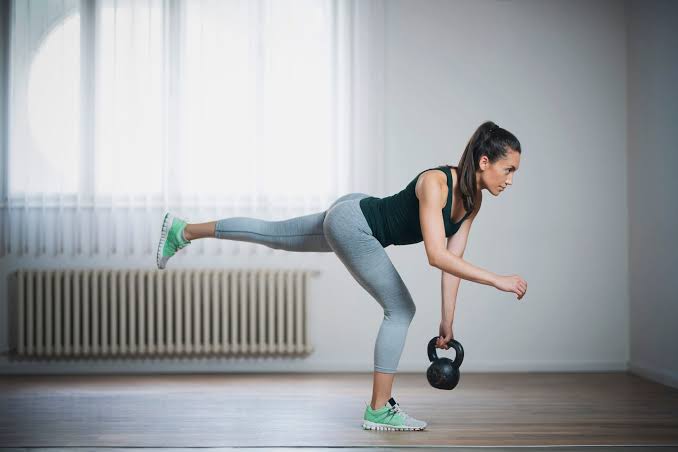
The Nordic hamstring curl is a valuable eccentric-strength exercise. Kneel on a padded surface with your ankles securely held, keep your hips extended, and lower your body forward slowly for as long as you can control the descent. Use your hands to catch yourself, then push back to the starting position. Because the movement can be demanding, begin with a small number of assisted repetitions and progress gradually.
Sprinters and field-sport athletes can also benefit from Romanian deadlifts, single-leg deadlifts, and progressive sprint training. Strength work should complement—not replace—sport-specific practice. A runner returning after time away from training, for example, should increase sprint intensity progressively rather than immediately attempting maximal-speed efforts.
Hamstring Stretches and Mobility Work
Strength and flexibility serve different purposes. Strength training helps muscles produce and control force, while mobility work supports comfortable movement through an appropriate range of motion. Both can contribute to a balanced fitness program.
A standing hamstring stretch is simple to perform. Place one heel slightly in front of you, keep the knee gently extended, hinge forward from the hips, and stop when you feel a mild stretch behind the thigh. Avoid rounding your back or forcing your torso toward your foot. Hold for around 20–30 seconds while breathing normally.
Dynamic movements, such as controlled leg swings and walking lunges, can prepare the lower body for exercise. Save longer static stretches for after training or a separate mobility session if they help you feel more comfortable. Stretching should create mild tension rather than sharp pain, tingling, or numbness. Those symptoms may indicate a problem beyond ordinary muscle tightness.
How to Build a Balanced Hamstring Workout
An effective workout includes a hip-hinge movement, a knee-flexion movement, and an exercise that challenges stability or eccentric control. This approach trains the hamstrings through different functions instead of relying entirely on one machine or movement pattern.
The following sample session can be adapted to your experience and equipment.
| Exercise | Sets | Repetitions | Primary focus |
|---|---|---|---|
| Romanian deadlift | 3 | 8–10 | Hip extension and strength |
| Seated or lying leg curl | 3 | 10–12 | Knee flexion |
| Glute bridge | 2–3 | 12–15 | Hip extension and control |
| Nordic hamstring curl, assisted | 2 | 4–6 | Eccentric strength |
| Standing hamstring stretch | 2 | 20–30 seconds | Flexibility |
Rest approximately 60–120 seconds between most strength-training sets, taking longer when necessary to maintain good technique. Nordic curls may require additional recovery because of their high eccentric demand. Beginners can omit them initially and substitute a less demanding leg-curl variation.
Progressive overload is the key to long-term improvement. When you can complete all prescribed repetitions with consistent form, increase resistance slightly or add repetitions. Avoid increasing volume, weight, and training frequency simultaneously, particularly when starting a new routine.

Common Mistakes and How to Avoid Them
One frequent mistake is rounding the lower back during deadlifts. When the hips stop moving backward and the spine begins to compensate, the exercise becomes harder to control. Reduce the weight, practice the hip hinge without equipment, and keep the load close to your body.
Another mistake is neglecting the hamstrings’ eccentric function. Lowering a weight or controlling the lengthening phase of a movement helps develop the ability to resist force. Use deliberate, controlled descents instead of letting the weight drop. However, slow repetitions are not a substitute for appropriate resistance and good technique.
Excessive stretching is another common problem. Tightness does not always mean a muscle needs aggressive stretching, and discomfort near the back of the knee can have several causes. If you experience sharp pain, bruising, sudden weakness, or difficulty walking after exercise, stop training and seek medical assessment. Do not attempt to train through a suspected hamstring tear.
Recovery, Injury Prevention, and Training Frequency
Muscles adapt between workouts, making recovery an essential part of progress. Many people can train the hamstrings directly two times per week, provided the workload is appropriate and sessions are spaced to allow recovery. Sleep, adequate protein, sufficient overall nutrition, and gradual increases in training demand support muscle repair and adaptation.
Injury prevention requires more than stretching before a workout. Strengthening the hamstrings, improving hip and trunk control, warming up properly, and building running intensity gradually can help prepare the body for demanding movements. Eccentric exercises, including Nordic curls, have evidence supporting their use in hamstring injury-prevention programs, particularly in field sports. Their effectiveness depends partly on consistent, appropriately progressed participation.
People recovering from a previous injury should follow a rehabilitation plan tailored to the injury and their activity goals. A physical therapist may assess strength differences, running mechanics, flexibility, and tolerance for faster movements before clearing someone for full sport participation.
Frequently Asked Questions
What are the best hamstring exercises for muscle growth?
Romanian deadlifts, seated leg curls, lying leg curls, and glute bridges are effective choices. Combining hip-extension and knee-flexion movements helps train the hamstrings through complementary functions. Consistent training, sufficient resistance, progressive overload, and recovery are more important than relying on a single exercise.
How often should I train my hamstrings?
Many people benefit from two direct hamstring sessions per week, with enough recovery between challenging workouts. The ideal frequency depends on training experience, exercise intensity, other leg workouts, and sports participation. Beginners may need less volume initially, while advanced athletes may distribute their workload across several sessions.
Can I strengthen my hamstrings without weights?
Yes. Glute bridges, single-leg bridges, towel curls, bodyweight good mornings, and resistance-band leg curls can strengthen the posterior thigh. As bodyweight movements become easier, increase the difficulty through single-leg variations, slower controlled repetitions, or additional resistance.
Do hamstring exercises help prevent injuries?
Strength training can improve the muscles’ capacity to tolerate force, and eccentric exercises such as Nordic curls can reduce hamstring injury risk in some athletic populations. However, no exercise guarantees injury prevention. Appropriate warm-ups, gradual workload progression, technique, and sufficient recovery also matter.
Should I stretch my hamstrings before or after a workout?
Dynamic mobility exercises are generally useful during a warm-up because they prepare you for movement. Static stretches can be performed afterward or during a separate flexibility session. Avoid forceful stretching when a muscle is injured or when the movement produces sharp pain, tingling, or numbness.
Why do my hamstrings feel tight after exercise?
Tightness can occur because of temporary fatigue, unfamiliar training, or delayed-onset muscle soreness. It does not always indicate poor flexibility. Reduce training intensity if symptoms interfere with normal movement, and seek professional evaluation if tightness comes with severe pain, swelling, bruising, or persistent weakness.
Conclusion
Hamstrings play a major role in lower-body strength, running performance, joint control, and everyday movement. A well-designed training plan combines hip hinges, leg curls, bridges, eccentric strengthening, and appropriate mobility work to develop these muscles from several angles.
The best hamstring exercises are not necessarily the most complicated or exhausting. They are the movements you can perform safely, progress consistently, and recover from effectively. Start with a manageable workload, prioritize controlled technique, and increase the challenge as your strength develops. Building stronger hamstrings is a gradual process, and consistency—not intensity alone—is what supports lasting results.