


Introduction
Leg raises are among the most effective bodyweight exercises for developing abdominal strength, improving core stability, and strengthening the muscles responsible for controlling hip movement. They are popular in home workouts, gym training programs, calisthenics, and athletic conditioning because they require minimal equipment while challenging several important muscle groups.
Whether performed on the floor, hanging from a pull-up bar, or using a captain’s chair, this exercise can help develop a stronger midsection and improve control over lower-body movements. It primarily challenges the abdominal muscles and hip flexors, while the core muscles work together to stabilize the pelvis and spine.
However, getting the best results requires more than repeatedly lifting your legs. Proper positioning, controlled movement, breathing, and progressive overload all influence how effectively the exercise develops strength.
This complete guide explains the muscles involved, correct technique, different variations, common mistakes, and practical workout strategies for building a stronger core.
What Are Leg Raises?

Leg raises are a bodyweight abdominal exercise in which you lift your legs against gravity while maintaining control of your torso and pelvis. Depending on the variation, the movement can target the rectus abdominis, hip flexors, and deeper core stabilizing muscles.
The exercise can be performed lying on your back, hanging from a pull-up bar, or using a supported captain’s chair. Each version creates a different level of difficulty and requires varying amounts of abdominal control and grip strength.
One reason this movement is popular is its versatility. Beginners can start with bent knees to reduce the difficulty, while advanced athletes can perform hanging straight-leg raises or toes-to-bar movements to increase the challenge.
Muscles Worked During Leg Raises

Although this exercise is commonly associated with lower abdominal training, several muscles contribute to the movement. Understanding their roles helps you perform each repetition more effectively.
Rectus abdominis: This is the long abdominal muscle running vertically along the front of your torso. It helps control spinal flexion and supports pelvic positioning during the movement.
Hip flexors: Muscles such as the iliopsoas and rectus femoris help lift the thighs toward the torso. They become particularly active when raising the legs from a hanging or lying position.
Transverse abdominis: This deeper abdominal muscle contributes to trunk stability and helps maintain control of the abdominal wall.
Obliques: The internal and external obliques assist with pelvic and trunk stabilization, particularly when maintaining a controlled position.
Quadriceps: These muscles help maintain knee extension during straight-leg variations.
The exercise does not isolate one particular abdominal region. Instead, it challenges a combination of muscles responsible for controlling the pelvis, hips, and torso.
How to Do Leg Raises With Proper Form

Proper technique is essential for maximizing abdominal engagement and minimizing unnecessary stress on the lower back.
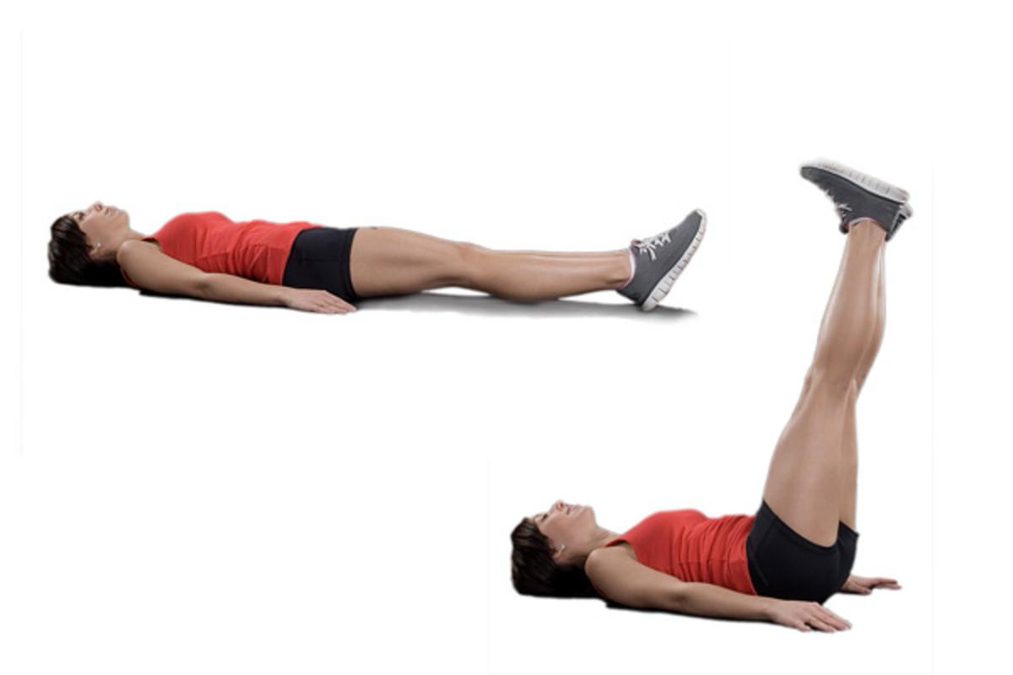
To perform a standard lying variation:
- Lie flat on your back on an exercise mat.
- Extend both legs and position your arms beside your body.
- Gently brace your abdominal muscles and maintain a comfortable neutral spine.
- Slowly lift your legs while keeping your knees straight.
- Raise them until they approach a comfortable vertical position.
- Lower them gradually without allowing your lower back to arch excessively.
- Repeat the movement with controlled breathing.
The most important part is controlling the lowering phase. Allowing your legs to drop quickly reduces muscular control and can place unnecessary stress on the lumbar spine.
If your lower back begins lifting noticeably from the floor, reduce the movement range or bend your knees. Quality repetitions are more valuable than forcing your legs closer to the ground.
Different Types of Leg Raises for Every Fitness Level
One of the biggest advantages of this exercise is the number of variations available. Beginners can use supported movements, while experienced athletes can introduce hanging exercises and additional resistance.

Bent-Knee Leg Raises
A beginner-friendly version in which the knees remain bent during the lifting movement. This reduces the lever length and makes controlling the pelvis easier.
Straight-Leg Raises
Both legs remain extended throughout the movement. This increases the lever arm and requires greater abdominal and hip-flexor control.

Hanging Leg Raises
Performed while holding a pull-up bar, this variation challenges abdominal strength, shoulder stability, and grip endurance.
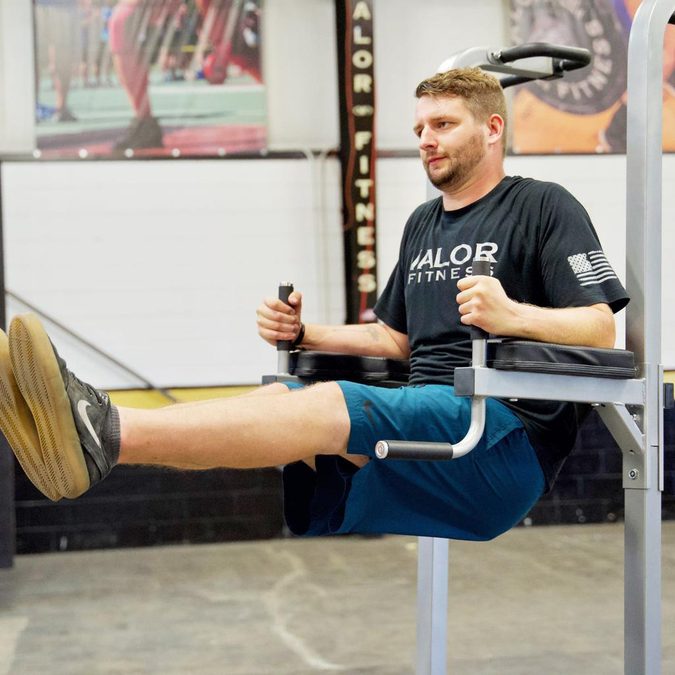
Captain’s Chair Raises
The forearms rest on padded supports while the legs are lifted. This removes much of the grip demand and allows greater focus on core control.
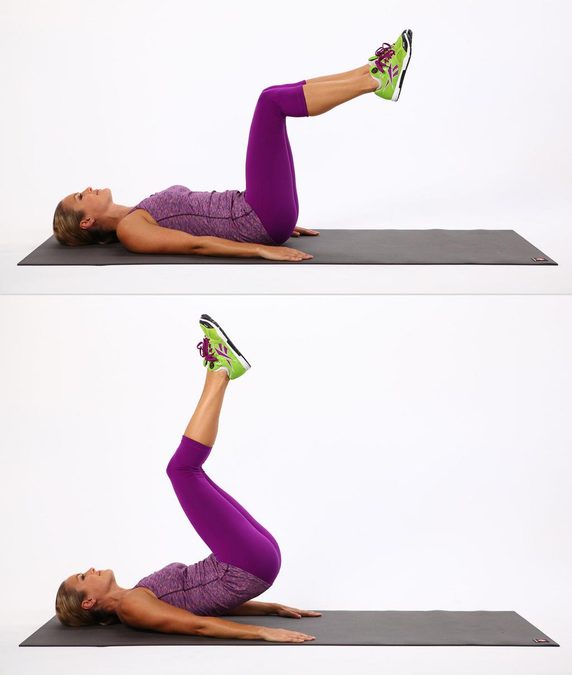
Reverse Crunches
This variation emphasizes curling the pelvis toward the rib cage rather than simply lifting the thighs. It encourages active abdominal contraction.
Choosing the right variation depends on your current strength, mobility, and ability to maintain proper technique. Beginners should master floor-based movements before progressing to hanging exercises.
Benefits of Leg Raises for Core Strength and Fitness
The biggest benefit of this exercise is its ability to develop abdominal and hip-flexor strength without requiring expensive gym equipment. Regular practice can improve muscular endurance, coordination, and control of the pelvis during movement.
Builds Stronger Abdominal Muscles
The abdominal muscles work to stabilize the torso and control pelvic movement. Consistent training can improve their strength and endurance, supporting other exercises such as squats, deadlifts, push-ups, and planks.
Improves Core Stability
A stronger core helps transfer force between the upper and lower body. This is useful in sports, weightlifting, running, and everyday activities such as lifting objects or climbing stairs.
Strengthens Hip Flexors
The hip flexors are important for lifting the thighs, walking, sprinting, and climbing. Training them through controlled movements can improve their muscular capacity.
Supports Athletic Performance
Athletes require strong abdominal muscles to maintain body control during acceleration, jumping, kicking, and changes of direction. Developing core strength can support these movements, although performance improvements also depend on sport-specific training.
Convenient for Home Workouts
Because floor variations require only a mat or comfortable surface, they are easy to include in home fitness routines. This makes them useful for people who prefer exercising without gym equipment.
Leg Raises for Lower Abs and Belly Fat Reduction
A common reason people include this exercise in their workout routine is to develop more visible lower abdominal definition. The rectus abdominis is one continuous muscle, however, and it is not possible to completely isolate its lower portion through a particular exercise.
Although controlled pelvic movement can increase abdominal involvement, visible abdominal definition depends heavily on overall body-fat levels, muscle development, genetics, and nutrition.
It is also important to understand that abdominal exercises do not directly burn fat from the stomach. This is known as spot reduction, and research does not support the idea that training one body part selectively removes fat from that area.
For better results, combine abdominal training with full-body resistance exercises, cardiovascular activity, adequate protein intake, and a sustainable calorie deficit when fat loss is appropriate.
Common Mistakes to Avoid
Even a relatively simple exercise can become ineffective when performed with poor technique. Several common mistakes reduce muscular control and may increase unnecessary strain on the lower back.
| Common mistake | Why it happens | How to correct it |
|---|---|---|
| Arching the lower back | Insufficient core control | Reduce range of motion |
| Swinging the legs | Using momentum | Slow down each repetition |
| Bending the knees unintentionally | Excessive exercise difficulty | Start with bent-knee variations |
| Dropping the legs quickly | Poor eccentric control | Lower them gradually |
| Holding the breath | Incorrect breathing pattern | Exhale during the lifting phase |
| Training through pain | Ignoring warning signs | Stop and assess the movement |
One particularly important mistake is allowing the lower back to arch excessively. This often happens when the legs are lowered too close to the floor before the abdominal muscles can maintain pelvic control.
If you experience sharp back pain, hip pain, or unusual discomfort, stop the exercise. Persistent symptoms should be assessed by an appropriate healthcare professional.
How Many Repetitions Should You Perform?
The ideal number of repetitions depends on your fitness level, exercise variation, and training goals. Beginners should prioritize controlled movement rather than chasing high repetition counts.
A practical starting point is two or three sets of 8–12 repetitions, with sufficient rest between sets. As your strength improves, you can gradually increase repetitions, movement range, or exercise difficulty.
| Fitness level | Sets | Repetitions | Recommended variation |
|---|---|---|---|
| Beginner | 2 | 8–10 | Bent-knee raises |
| Intermediate | 3 | 10–15 | Straight-leg raises |
| Advanced | 3–4 | 8–12 | Hanging leg raises |
These are general training guidelines rather than fixed requirements. Your repetitions should stop when you can no longer maintain controlled technique.
For most people, training abdominal muscles two or three times per week provides sufficient practice and recovery when balanced with a complete fitness program.
Best Exercises to Combine With Leg Raises
A balanced core workout should train different movement patterns rather than relying on a single abdominal exercise. Combining exercises can improve trunk stability, muscular endurance, and overall strength.

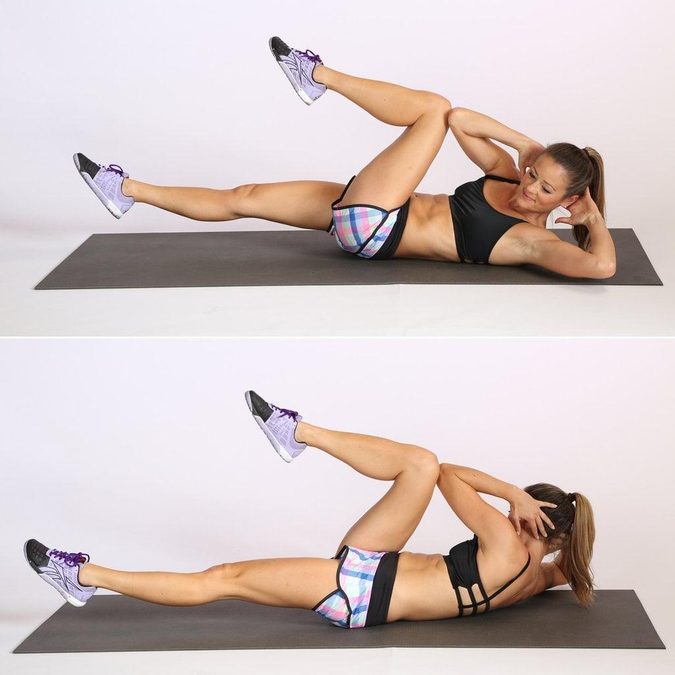
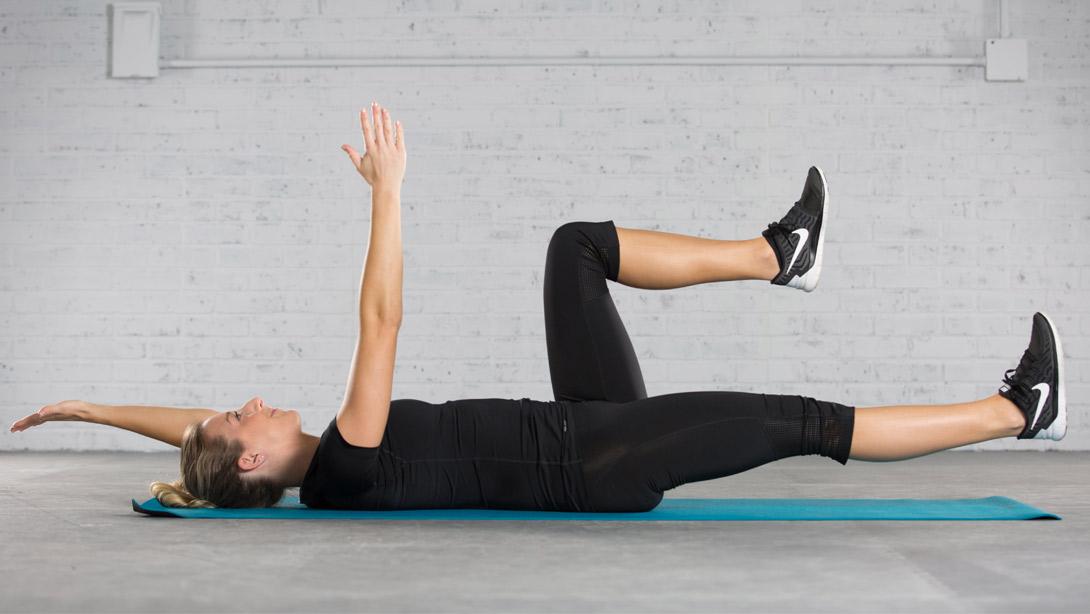
Useful complementary exercises include:
- Planks: Develop isometric core strength and trunk stability.
- Dead bugs: Improve coordination between the arms, legs, and abdominal muscles.
- Bicycle crunches: Challenge the abdominal muscles and obliques through controlled trunk rotation.
- Mountain climbers: Combine core stabilization with cardiovascular conditioning.
- Reverse crunches: Emphasize controlled pelvic movement.
- Bird dogs: Develop trunk stability and coordination.
For example, a beginner core session could include bent-knee raises, planks, dead bugs, and bird dogs. This combination trains abdominal control without placing excessive emphasis on repeated hip flexion.
Frequently Asked Questions
Do leg raises build lower abs?
They strengthen the rectus abdominis and require considerable abdominal control, particularly when the pelvis is actively stabilized. However, the upper and lower portions belong to one continuous muscle, so the exercise does not completely isolate the lower abs.
Are leg raises good for losing belly fat?
They can strengthen abdominal muscles, but they do not selectively burn stomach fat. Reducing overall body fat requires a sustainable nutrition strategy, regular physical activity, and appropriate resistance training.
How many leg raises should beginners do?
Beginners can start with two sets of 8–10 bent-knee repetitions. Once they can maintain proper technique without excessive lower-back arching, they can gradually increase repetitions or progress to straight-leg variations.
Are hanging leg raises better than lying leg raises?
Hanging variations are generally more challenging because they require grip strength, shoulder stability, and greater body control. Lying variations are more accessible for beginners and can provide effective abdominal training when performed correctly.
Can leg raises hurt your lower back?
They can cause discomfort when performed with excessive lower-back arching, poor pelvic control, or an exercise variation that exceeds your current strength. Reducing the range of motion, bending the knees, and maintaining controlled movement can help. Stop if pain occurs.
Do leg raises strengthen hip flexors?
Yes. The iliopsoas and rectus femoris contribute significantly to lifting the legs. This makes the movement useful for developing hip-flexor strength alongside abdominal control.
Can I perform leg raises every day?
Daily training is not necessary for most people. Abdominal muscles need recovery just like other muscle groups. Training them two or three times weekly with appropriate intensity is a practical approach for many fitness enthusiasts.
Are leg raises suitable for beginners?
Yes. Beginners can use bent-knee floor variations to develop abdominal control before attempting more demanding straight-leg or hanging exercises. People with existing back or hip conditions should seek appropriate professional guidance before starting.
Conclusion
Leg raises are a versatile and effective addition to a core-strengthening program. They develop abdominal strength, challenge the hip flexors, improve pelvic control, and support the muscular stability required for everyday movement and athletic performance.
Their greatest advantage is adaptability. Beginners can start with simple bent-knee movements, while experienced athletes can progress to hanging variations and more demanding exercises.
For the best results, focus on proper technique, controlled repetitions, progressive overload, and adequate recovery. Combine abdominal training with full-body strength exercises and balanced nutrition to support overall fitness.
Ultimately, stronger abs are built through consistent training rather than shortcuts. Mastering the fundamentals of this exercise can help you develop a stronger, more stable core and establish a solid foundation for long-term fitness progress.