


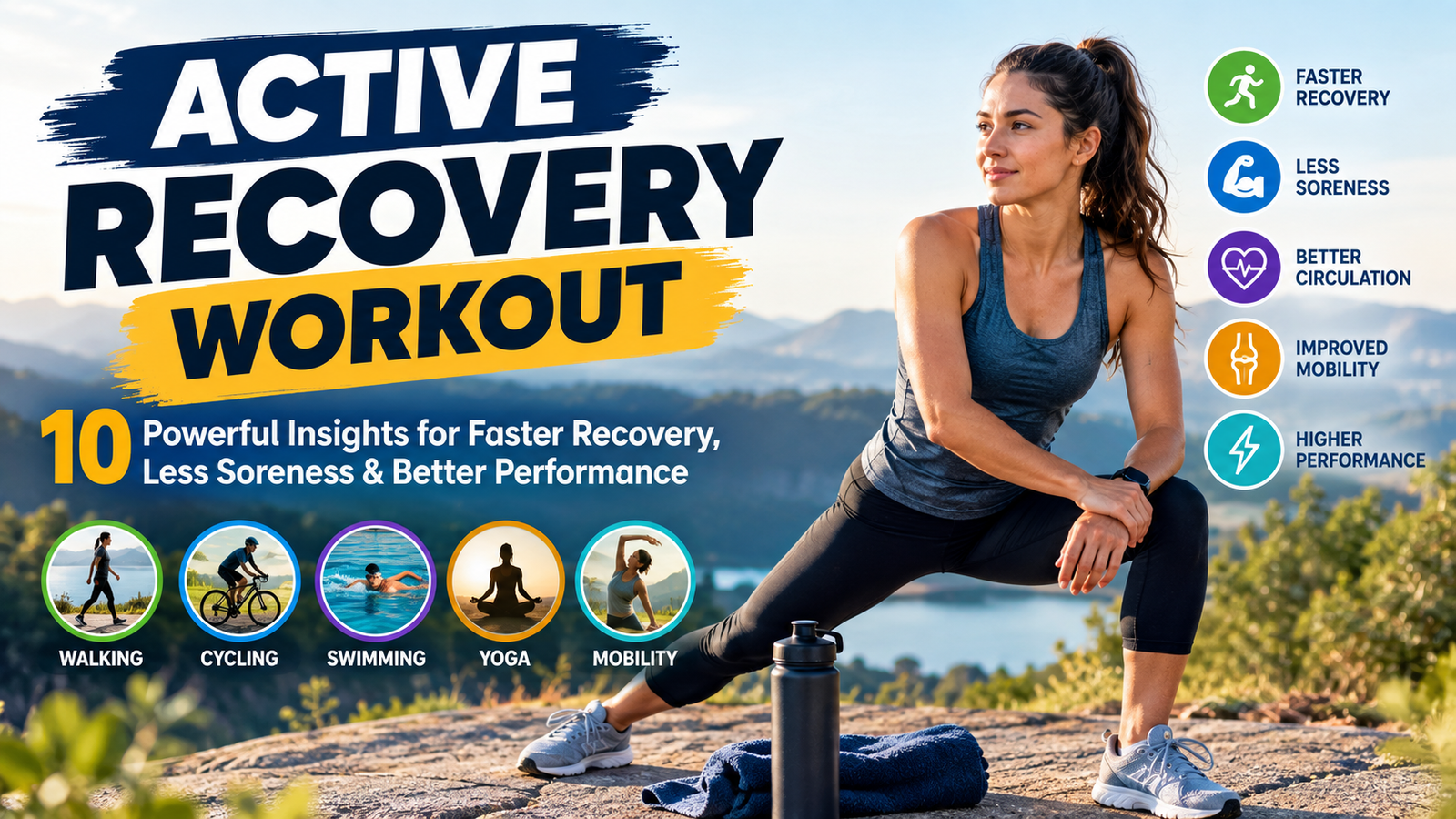
An active recovery workout is a low-intensity physical session designed to keep the body moving without creating the same level of fatigue as hard training. Instead of spending every recovery day completely inactive, you use gentle activities such as walking, cycling, swimming, mobility drills, stretching, or easy bodyweight movements to maintain movement and support recovery.
This approach is especially useful for people who train regularly. After a demanding strength workout, long run, sports session, or high-intensity interval workout, muscles may feel stiff and tired. Light movement can provide a useful transition between hard sessions while keeping overall activity levels consistent.
The key is intensity. Recovery training should feel refreshing rather than exhausting. As a practical rule, you should finish feeling better than when you started. If a recovery session leaves you needing another day to recover, it has probably become a workout rather than recovery.
What Is an Active Recovery Workout?
An active recovery workout uses gentle physical activity during periods when your body is recovering from harder exercise. The goal is not to maximize calories burned, increase strength, or set a personal record. Instead, the focus is on comfortable movement, mobility, circulation, and maintaining a sense of physical readiness.
Common activities include easy walking, relaxed stationary cycling, light swimming, gentle yoga, dynamic mobility exercises, and low-resistance movement. The right activity depends on what you did previously. For example, someone with tired legs after squats might choose an easy upper-body mobility session or a relaxed walk rather than another demanding leg workout.
A useful way to think about recovery training is to compare it with warming up an engine after a long drive. You are not trying to push the engine harder; you are simply keeping the system moving smoothly while it settles down.
How Active Recovery Supports the Body
An active recovery workout may help reduce the feeling of stiffness that commonly follows demanding exercise. Gentle movement increases muscular activity without producing the same stress associated with heavy resistance training or intense cardiovascular work. This can make normal movement feel easier, particularly after prolonged periods of sitting or demanding workouts.
Light aerobic activity also supports cardiovascular function and can increase blood flow through working muscles. However, it is important not to exaggerate the effect. Recovery is influenced by many factors, including sleep, nutrition, hydration, training load, stress, and overall health. Gentle exercise is one part of the recovery process rather than a magical solution for soreness.
For athletes and recreational lifters alike, the practical benefit is often behavioral. A short walk or mobility session can prevent a recovery day from becoming an entire day of inactivity while still allowing the body to recover from harder training.
Best Activities for Recovery Days
The most useful recovery activities are generally low impact and easy to control. Walking is one of the simplest choices because it requires little equipment and allows intensity to be adjusted immediately. Easy cycling can provide similar benefits while reducing impact on the joints, making it useful after certain forms of running or resistance training.
Swimming, gentle yoga, mobility flows, and light stretching can also fit well into a recovery routine. Foam rolling may be used alongside movement when someone finds it comfortable, although it should not be treated as a replacement for sleep, appropriate training volume, or adequate nutrition.
| Activity | Typical Intensity | Main Purpose | Useful After |
|---|---|---|---|
| Easy walking | Very low | General movement | Strength training, running |
| Gentle cycling | Low | Light aerobic activity | Leg training |
| Easy swimming | Low | Full-body movement | General training |
| Mobility drills | Very low | Range of motion | Strength or sports sessions |
| Gentle yoga | Low | Mobility and relaxation | High-stress training weeks |
| Light stretching | Very low | Flexibility and comfort | Most training sessions |
The best activity is usually the one that feels sustainable and does not add meaningful fatigue. A recovery day should complement your training rather than compete with it.

How Hard Should an Active Recovery Workout Be?
Intensity is the most important variable in an active recovery workout. If you are breathing heavily, accumulating significant muscular fatigue, or struggling to maintain a conversation, the session may be too demanding for a true recovery day.
A practical approach is to keep cardiovascular work at an easy conversational pace. Resistance exercises should use very light loads and controlled movement. You should have plenty of energy left when the session ends. This is particularly important after strenuous training blocks when fatigue has already accumulated.
Consider a runner who completes a demanding interval workout on Tuesday. On Wednesday, a 20- to 30-minute relaxed walk may help maintain movement without adding substantial training stress. Turning Wednesday into a fast hill workout would defeat the purpose.
Active Recovery for Muscle Soreness
Delayed onset muscle soreness, commonly called DOMS, can develop after unfamiliar or strenuous exercise. An active recovery workout may make movement feel more comfortable while the body naturally manages the recovery process.
The important distinction is between temporary soreness and an injury. Normal post-exercise soreness is usually diffuse and related to muscles that were trained. Sharp pain, significant swelling, instability, unusual weakness, or pain that worsens with movement deserves a different response and may require professional evaluation.
A common problem is trying to “train soreness away” with another hard workout. The solution is usually better load management rather than more intensity. Gentle movement can keep you active while giving the affected tissues time to recover.
Recovery Training for Strength Athletes
Strength athletes can use an active recovery workout strategically between demanding sessions. Heavy squats, deadlifts, presses, and pulling movements can create substantial muscular and systemic fatigue. A light recovery session can provide movement without repeating the same high-load stimulus.
For example, someone following a demanding five-day resistance program might use a recovery day for easy walking, mobility work, breathing exercises, or gentle cycling. The goal is to arrive at the next serious training session feeling prepared rather than depleted.
Recovery becomes particularly important when training frequency increases. More gym sessions do not automatically mean better results. Adaptation requires an appropriate relationship between training stress and recovery capacity.
Active Recovery for Runners and Endurance Athletes
Runners often use low-intensity movement between harder sessions to maintain aerobic activity while controlling fatigue. An easy walk, relaxed bike ride, or very gentle jog can sometimes work depending on the athlete’s experience and current training load.
The important principle is separation of intensities. Hard days should be genuinely challenging, while recovery days should remain easy. When every session becomes moderately difficult, accumulated fatigue can rise without providing a clear benefit from either high-intensity training or genuine recovery.
An endurance athlete preparing for a race may therefore use recovery sessions to maintain routine and movement while protecting the quality of key workouts. The same principle applies to cyclists, swimmers, hikers, and field-sport athletes.
A Simple Recovery Session Structure
A practical active recovery workout can be surprisingly short. Begin with several minutes of comfortable movement, followed by gentle mobility for areas that feel restricted. Continue with easy aerobic activity and finish with relaxed stretching or breathing exercises if they feel beneficial.
For example, a 25-minute session could include a five-minute easy walk, 10 minutes of relaxed cycling, five minutes of hip and shoulder mobility, and five minutes of comfortable walking. Nothing should feel like a test of fitness.
The session can be shortened when fatigue is high. Recovery is not improved simply because the clock says you must exercise for a particular duration. Quality, comfort, and appropriate intensity matter more than completing an arbitrary workload.
Common Mistakes That Reduce Recovery
One of the biggest mistakes is turning an active recovery workout into another demanding training session. Extra sets, heavy resistance, intense intervals, or long cardio sessions can add fatigue precisely when the body needs a lower training load.
Another mistake is believing that recovery depends entirely on exercise. Sleep remains fundamental. Nutrition provides energy and nutrients needed to support tissue repair, while hydration helps maintain normal physiological function. Stress management also matters because training does not occur in isolation from everyday life.
A good recovery strategy therefore considers the entire week. If hard sessions are stacked together and recovery days are also intense, the program may become difficult to sustain. Better scheduling can often solve the problem more effectively than adding recovery techniques.
When to Skip Active Recovery
An active recovery workout is not appropriate for every situation. If you are sick, significantly exhausted, experiencing acute pain, or dealing with a suspected injury, additional exercise may not be the right choice. Rest or professional medical guidance may be more appropriate depending on the circumstances.
Listening to your body does not mean avoiding every uncomfortable sensation. Training can naturally involve fatigue and mild soreness. The goal is to distinguish normal training stress from signs that your current workload exceeds what you can safely tolerate.
A useful rule is simple: recovery activity should reduce the feeling of being physically stuck, not force you to push through symptoms. When gentle movement makes you feel progressively worse, stopping is more sensible than completing the planned session.
Read More: High Protein Meal Prep: 9 Powerful Insights for Easy, Balanced & Delicious Weekly Meals
FAQs About Active Recovery Workout
How long should an active recovery workout last?
Most recovery sessions can be relatively short, often around 20 to 40 minutes depending on the activity and the individual’s training level. The session should remain easy enough that it does not interfere with the next demanding workout. A shorter session is perfectly reasonable when fatigue is elevated.
Is walking good for active recovery?
Walking is one of the most accessible recovery activities because intensity is easy to control and equipment requirements are minimal. A comfortable walk can provide gentle movement without the substantial training stress associated with running or intense cardiovascular exercise.
Can active recovery reduce muscle soreness?
Gentle movement may make sore muscles feel less stiff and improve comfort temporarily, but it does not instantly eliminate DOMS. Normal muscle soreness generally resolves as the body completes its natural recovery process. Adequate sleep, nutrition, sensible training loads, and time remain important.
Should I stretch during recovery days?
Gentle stretching can be included when it feels comfortable, particularly when certain areas feel restricted. However, stretching does not need to be aggressive. Mobility exercises and easy movement can also improve how the body feels without forcing joints or muscles into uncomfortable positions.
Can I do an active recovery workout after leg day?
Yes, provided the activity remains genuinely light. Easy walking, relaxed cycling, or gentle mobility can work well after a demanding leg session. Heavy squats, hard intervals, or high-volume leg exercises would generally add training stress rather than provide meaningful recovery.
Is active recovery better than complete rest?
Neither approach is universally better. Some days call for gentle movement, while others call for complete rest. The appropriate choice depends on training load, soreness, sleep, stress, injury status, and individual recovery capacity. A balanced program can include both active recovery and full rest.
Conclusion: Use Recovery to Train Better
An active recovery workout can be a valuable part of a balanced fitness routine because it keeps the body moving without unnecessarily repeating the stress of hard training. Walking, easy cycling, swimming, mobility work, and gentle stretching can all provide practical ways to stay active while allowing fatigue to settle.
The most important lesson is that recovery should support performance rather than become another competition. When movement feels refreshing, intensity stays controlled, and the overall training schedule provides enough sleep and rest, recovery days can help create a more sustainable approach to fitness.
The final takeaway is simple: train hard when it is time to train hard, and recover deliberately when it is time to recover. The ability to come back stronger for your next meaningful session is one of the clearest signs that your training program is working.