

Strong shoulders do more than make the upper body look wider. The shoulder complex helps you press, pull, lift, carry, rotate, and stabilize your arms during training and everyday movement. A well-structured shoulder routine can develop the deltoids while also strengthening the supporting muscles that help keep the shoulder joint controlled.
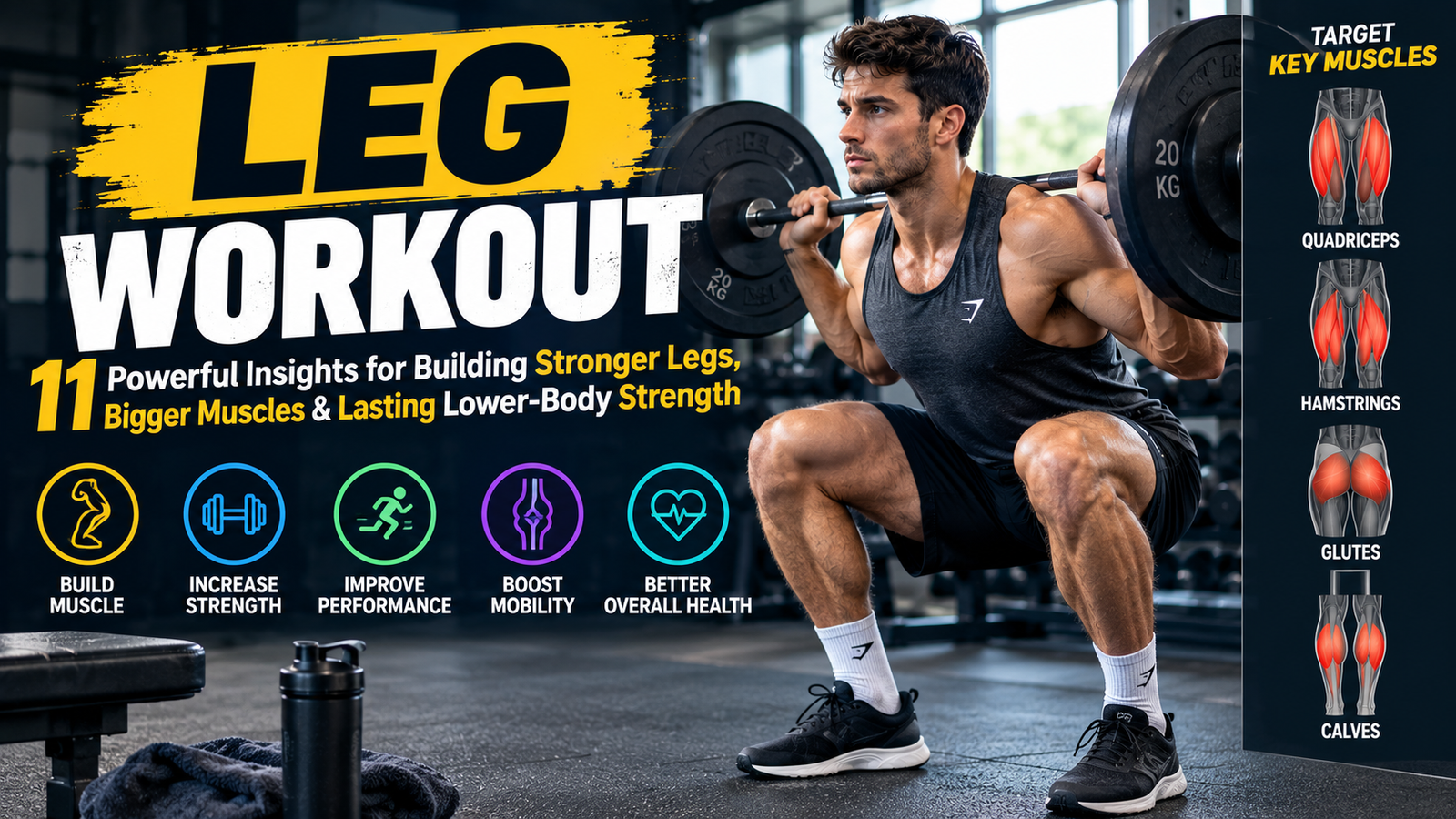
The most effective best shoulder exercises are not necessarily the most complicated. Like a well-built leg workout, the strongest approach is usually based on clear movement patterns, sensible loading, and repeatable technique. A productive routine combines pressing, lateral movement, rear-delt work, controlled resistance, progressive overload, and enough recovery.
Why Shoulder Training Matters for Strength and Muscle Growth
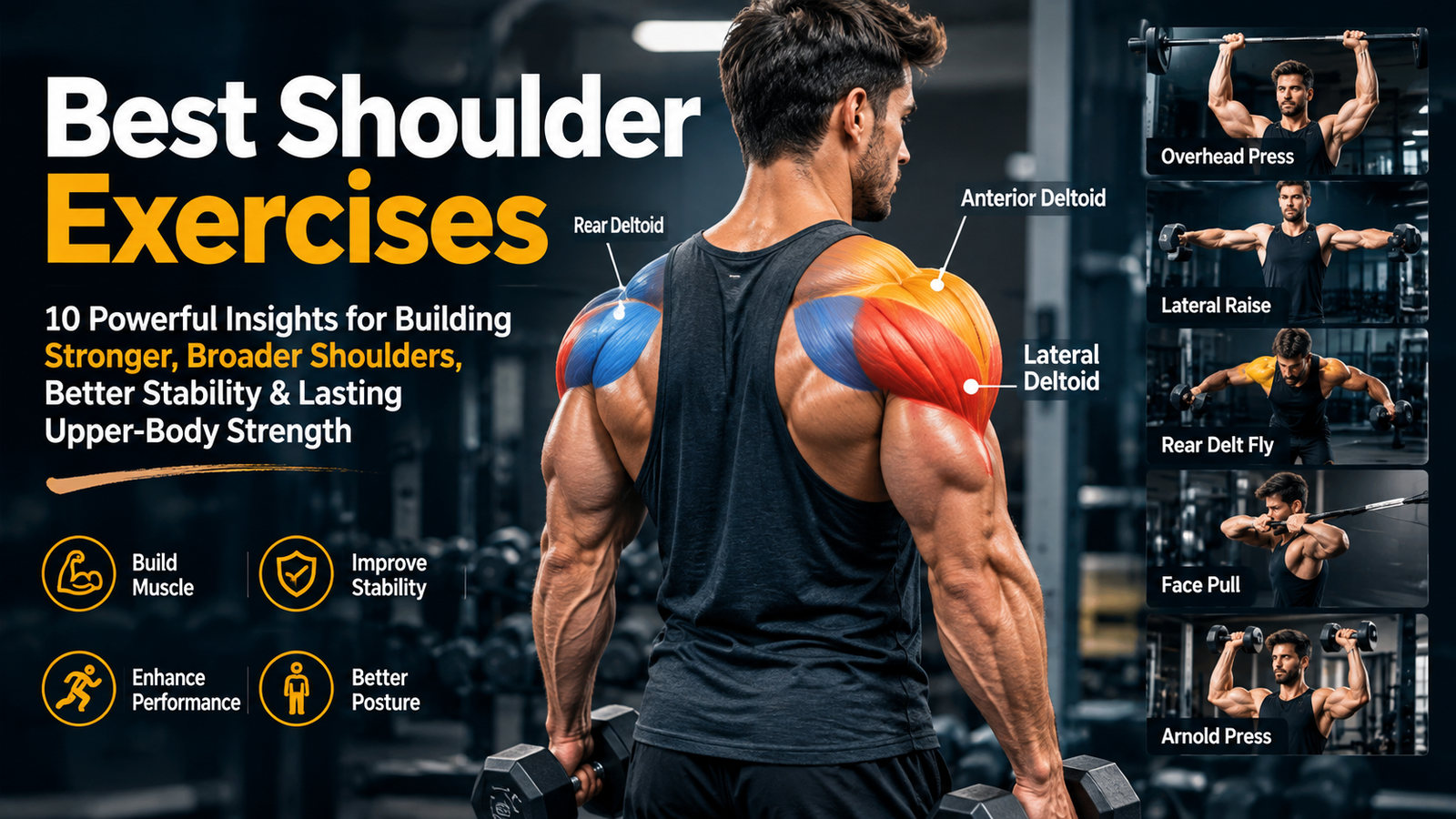
The shoulders are built around a highly mobile joint, which gives the arms a large range of motion but also makes control important. The deltoid has three major regions: the anterior deltoid at the front, the lateral deltoid at the side, and the posterior deltoid at the rear. The rotator cuff, trapezius, upper back, and other stabilizing muscles also contribute to efficient shoulder movement.
Using the best shoulder exercises in a balanced routine can improve pressing strength, upper-body coordination, and muscular development. Stronger shoulders can make exercises such as the bench press, overhead press, rows, and carries feel more stable. They can also contribute to practical tasks such as placing objects on a high shelf or carrying a loaded bag. As with any resistance program, technique and appropriate loading matter more than simply accumulating fatigue.
What Makes the Best Shoulder Exercises Effective
The best shoulder exercises generally share several useful characteristics: they create meaningful resistance, allow controlled movement, fit the individual’s anatomy, and can be progressed over time. A dumbbell lateral raise, for example, does not need a huge load to challenge the lateral deltoid because the leverage makes the movement demanding.
Compound pressing movements provide efficient strength work, while isolation exercises can help target specific areas of the deltoid. Rear-delt movements and upper-back exercises are especially useful when a routine contains a lot of pressing. As a practical rule, choose movements that you can perform consistently with a comfortable range of motion rather than forcing an exercise because it looks impressive.
“Good shoulder training is less about chasing the heaviest dumbbell and more about controlling the resistance through the range you can actually own.”
Core Exercises for a Complete Shoulder Workout
A complete routine built around the best shoulder exercises can include the overhead press, lateral raise, rear-delt fly, face pull, and a controlled front-raise variation when additional anterior-delt work is useful. These movements cover different functions and angles without requiring an unnecessarily large exercise menu.
The overhead press is valuable for overall shoulder strength and involves the triceps and upper body as well as the deltoids. Lateral raises place more direct emphasis on the side delts, while reverse flies and face pulls can train the rear delts and upper-back musculature. Exercise selection should still reflect the rest of your program because pressing movements such as the bench press already provide substantial work for the anterior deltoids.
| Exercise | Main Emphasis | Typical Reps | Best Use |
|---|---|---|---|
| Overhead press | Front and side delts | 6–10 | Strength and overall development |
| Dumbbell lateral raise | Side delts | 10–20 | Shoulder width and isolation |
| Rear-delt fly | Rear delts | 10–20 | Balanced development |
| Face pull | Rear delts and upper back | 12–20 | Scapular control and accessory work |
| Arnold press | Deltoids | 8–12 | Full-range pressing variation |
| Cable lateral raise | Side delts | 10–20 | Consistent resistance and isolation |
This combination is useful because each exercise has a different job. You do not need to perform every movement in one workout; selecting a few complementary exercises and progressing them consistently is usually more practical.
How to Train the Front, Side, and Rear Delts
The anterior deltoid assists with shoulder flexion and pressing. It is heavily involved in overhead presses and many chest presses, so additional front-raise volume is not always necessary. If your training already includes substantial bench pressing and overhead work, direct front-delt isolation may add fatigue without providing much extra benefit.
The lateral and posterior deltoids often deserve deliberate attention because they can receive less direct work in a conventional upper-body routine. Lateral raises are a simple way to emphasize the side delts, while reverse flies and face pulls can provide focused rear-shoulder work. Think of the shoulder like a three-part team: each region has a role, but the whole system works best when the workload is balanced.
Proper Form and Common Shoulder Training Mistakes
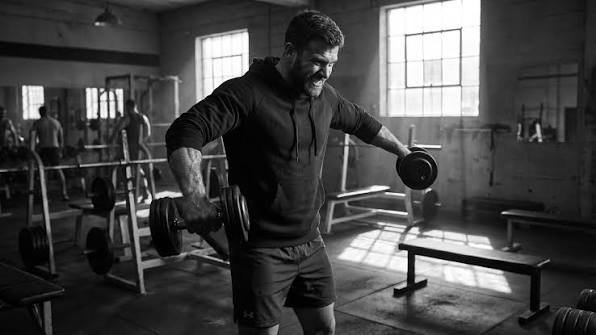
Good form begins with a stable setup and a resistance level that allows you to control every repetition. During lateral raises, for example, avoid turning the movement into a swinging exercise. Raise the weights smoothly, keep unnecessary momentum under control, and stop at a range that feels comfortable rather than forcing the arms into a position that causes discomfort.
One of the most common mistakes is treating shoulder training like a maximum-strength competition. Extremely heavy raises often shift work toward momentum and other muscles. Another mistake is ignoring fatigue from other upper-body exercises. If your shoulders are already heavily loaded by pressing, adding excessive direct volume can make recovery harder without automatically producing better results.
Sets, Repetitions, and Progressive Overload
Progress with the best shoulder exercises depends on sufficient training stimulus, recovery, and progressive overload. For many lifters, compound shoulder presses work well in moderate repetition ranges, while lateral and rear-delt isolation exercises are comfortable at higher repetitions. There is no single magical rep range; the important factors are challenging sets, good technique, appropriate volume, and consistent progression.
Progress can come from adding a small amount of weight, performing more repetitions with the same load, improving control, or gradually increasing useful training volume. A training log makes this easier to track. If you can perform every planned repetition with clean technique and still have room to progress, a modest increase in resistance may be appropriate. If your form breaks down, the better solution is often to maintain or reduce the load.
A Practical Shoulder Workout for Muscle and Strength
For a generally healthy beginner-to-intermediate trainee, a focused shoulder session can begin with a controlled overhead press, followed by lateral raises and rear-delt work. This structure places the most technically demanding movement earlier, when fatigue is lower, then uses isolation exercises to finish the target muscles without requiring very heavy loads.
A sample session could use three sets of overhead presses for 6–10 repetitions, three sets of lateral raises for 10–20 repetitions, three sets of rear-delt flies for 10–20 repetitions, and two or three sets of face pulls for 12–20 repetitions. Rest around two to three minutes for demanding presses and roughly 60–120 seconds for most isolation work. These are starting guidelines rather than rigid rules. The broader principle of combining compound movements, accessory work, appropriate rest, and progressive overload is consistent with the supplied training framework.
Recovery, Mobility, and Shoulder Health
Shoulder development happens between training sessions as well as during them. Adequate sleep, sufficient protein, hydration, and sensible weekly volume all support recovery. If performance repeatedly declines, soreness remains unusually high, or normal movement becomes uncomfortable, reducing training stress can be more useful than adding more exercises.
Mobility should also be practical rather than excessive. Controlled arm circles, light warm-up sets, and movement-specific preparation can help you transition into training. The purpose of a warm-up is to prepare the body for the work ahead, not to exhaust the muscles before the main session.
Adapting Shoulder Training to Your Fitness Level
Beginners should prioritize learning stable movement patterns. Machine presses, light dumbbell presses, cable raises, and supported rear-delt exercises can make it easier to learn control without worrying about moving excessive weight. Starting with a modest number of sets also makes it easier to judge recovery.
Intermediate and advanced lifters can use exercise variations to address specific goals. Someone focused on shoulder width may emphasize lateral-delt work, while someone seeking greater pressing strength may give more attention to progressive overhead pressing. Advanced programming should add purpose, not complexity for its own sake.
How to Avoid Plateaus and Keep Progress Moving
A plateau does not always mean you need a completely new routine. Sometimes the problem is inconsistent technique, insufficient recovery, unrealistic loading, or simply failing to track progress. Before changing everything, look at whether your repetitions, resistance, sleep, and weekly training volume have been consistent.
Variation can still be useful when applied strategically. You might move from dumbbell lateral raises to cable lateral raises, change an overhead press variation, or use a chest-supported rear-delt movement for a training block. The goal is to create a slightly different stimulus while preserving the movement patterns that are already working.
FAQs About the Best Shoulder Exercises
What are the best shoulder exercises for building muscle?
The best shoulder exercises for muscle development usually include a combination of overhead pressing, lateral raises, and rear-delt movements. Presses provide substantial overall loading, while lateral and rear-delt exercises allow more focused work on areas that may receive less direct stimulation from other upper-body exercises.
How often should I train my shoulders?
Many people can train shoulders directly once or twice per week, depending on their total upper-body workload and recovery. Remember that pressing exercises for the chest and triceps also involve the anterior deltoids, so direct shoulder frequency should be considered alongside the rest of your program.
Are dumbbells or machines better for shoulder training?
Neither is universally superior. Dumbbells require more stabilization and allow each arm to work independently, while machines can provide a stable setup that makes it easier to focus on producing force through the target muscles. The better choice is usually the movement that you can perform safely, comfortably, and progressively.
Can I build shoulders without heavy weights?
Yes. Shoulder muscles can be trained effectively with moderate or even relatively light resistance when the sets are sufficiently challenging and technique remains controlled. Lateral raises, cable exercises, resistance bands, and bodyweight variations can all contribute to shoulder development when programmed appropriately.
Should I train shoulders if they hurt?
Pain is different from normal muscular effort or mild post-training soreness. If an exercise causes sharp, persistent, or worsening shoulder pain, it is sensible to stop that movement and seek assessment from an appropriately qualified healthcare professional. Do not use increasing discomfort as a measure of workout quality.
How many shoulder exercises should I do in one workout?
A focused session can be effective with roughly three to four well-chosen movements. The exact number depends on your experience, total weekly volume, and the amount of shoulder work already coming from pressing exercises. More exercises are not automatically better if they reduce recovery or compromise technique.
Conclusion: Build Stronger Shoulders With Purpose and Consistency
The best shoulder exercises are the ones that let you train the deltoids effectively, maintain controlled technique, and progress over time. A balanced routine should give attention to pressing strength, lateral-delt development, rear-delt work, shoulder stability, and recovery rather than relying on one movement alone.
The most important takeaway from the best shoulder exercises is simple: strong, well-developed shoulders are built through quality repetitions repeated consistently over months. Choose movements that suit your body and goals, increase training demands gradually, and treat recovery as part of the program. With patience and smart progression, your shoulder training can support a stronger, more balanced, and more capable upper body.