


A simple piece of equipment can deliver an impressive workout when used correctly. Skipping is an accessible form of cardiovascular exercise that challenges your heart, lungs, coordination, balance, and lower-body muscles. It requires relatively little space, can be performed at home or outdoors, and offers plenty of ways to adjust intensity as your fitness improves.
A jump rope workout is more than a childhood playground activity. Athletes, boxers, runners, and fitness enthusiasts use skipping drills to develop footwork, rhythm, endurance, and conditioning. Whether your goal is weight management, improved stamina, or a more varied exercise routine, this training method can provide a practical full-body cardiovascular challenge.


What Is Jump Rope Exercise?
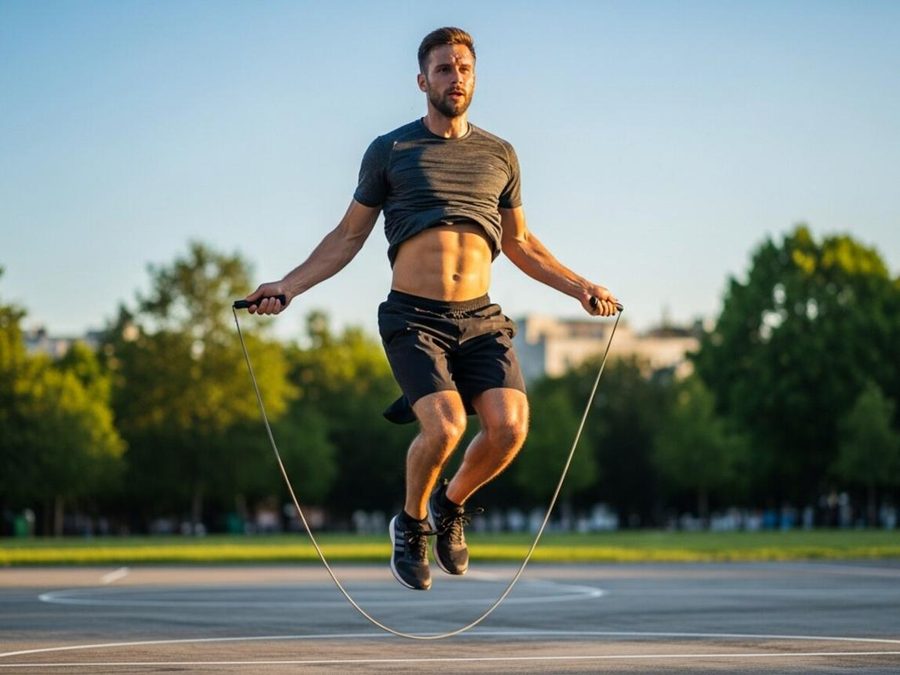
Jumping rope is a cardiovascular activity in which you repeatedly hop over a rotating rope, usually landing lightly on the balls of your feet. The movement requires coordination between your hands, wrists, legs, and eyes while your heart and lungs work to supply oxygen to active muscles.
Unlike some cardio machines, skipping involves repeated body-weight movements and rapid changes in rhythm. Your calves, quadriceps, hamstrings, glutes, shoulders, forearms, and core all contribute to the activity. The exact muscular demand depends on your technique, speed, and chosen variation.
It is also easy to adapt. Beginners can start with short intervals and basic two-foot jumps, while experienced exercisers can introduce alternate-foot steps, high knees, double unders, and timed rounds. This flexibility makes it suitable for different training environments, provided the impact is appropriate for the individual.
Benefits of Jump Rope Workouts
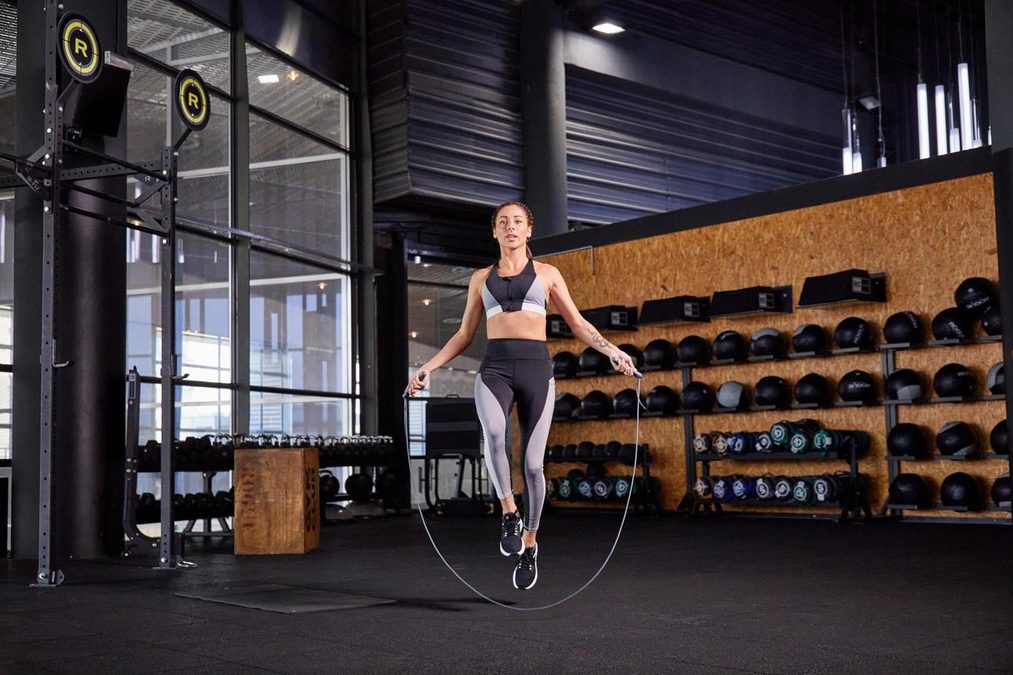
One of the main benefits is improved cardiovascular fitness. Repeated jumping raises your heart rate and challenges your aerobic system. Regular training can help improve cardiovascular endurance, making activities such as brisk walking, running, and climbing stairs feel more manageable over time.
Skipping also develops coordination and rhythm. Your hands must rotate the rope at a consistent speed while your feet time each landing. This connection between upper- and lower-body movement can improve timing and body awareness, which are useful in sports such as boxing, basketball, and tennis.
Other potential benefits include:
- Calorie expenditure: A vigorous session can contribute to daily energy expenditure and support weight-management goals.
- Lower-body conditioning: Repeated jumps challenge the calves, quadriceps, hamstrings, and glutes.
- Bone-loading activity: Weight-bearing impact may support bone health when appropriate for your fitness and health status.
- Convenience: A rope is portable, inexpensive, and requires little storage space.
- Workout variety: Different footwork patterns and intervals can keep cardiovascular training engaging.
However, results depend on consistency, intensity, nutrition, recovery, and individual fitness levels. No single exercise guarantees weight loss, injury prevention, or improved health.
Muscles Worked During Skipping

The calves are heavily involved because they help produce the repeated ankle movement needed to lift the heels and control landings. The gastrocnemius and soleus work alongside the Achilles tendon to manage force as you leave and return to the ground.
The quadriceps and glutes help stabilise the knees and hips, while the hamstrings contribute to lower-body control. Your abdominal and back muscles help maintain an upright posture, and the shoulders, forearms, and wrists guide the rope through each rotation.
Although skipping involves many muscles, it is primarily a cardiovascular and coordination exercise rather than a complete strength-training replacement. Pairing it with resistance exercises such as squats, lunges, push-ups, and rows can create a more balanced fitness program.
How to Choose the Right Jump Rope

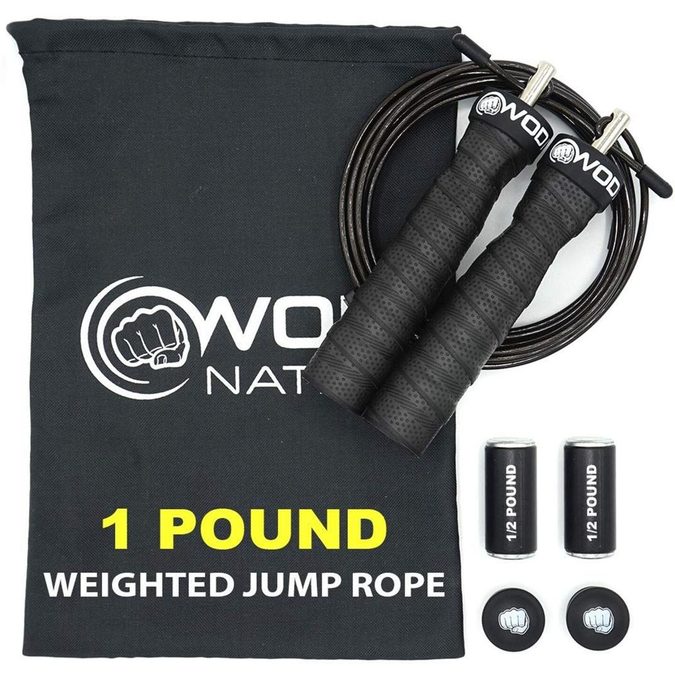

Choosing suitable equipment makes learning easier. A rope that is too long may repeatedly catch your feet, while one that is too short can make timing difficult. Many adjustable models allow you to customise the length before training.
Common rope types include:
| Rope type | Main characteristics | Best suited for |
|---|---|---|
| Basic PVC rope | Lightweight and affordable | Beginners and general fitness |
| Speed rope | Thin cable designed for quick rotation | Experienced users and faster drills |
| Beaded rope | Segmented beads provide audible rhythm and feedback | Learning timing and outdoor use |
| Weighted rope | Heavier cable or handles increase resistance | Controlled conditioning for experienced users |
| Adjustable rope | Length can be customised | Beginners and shared household use |
For beginners, a lightweight adjustable PVC rope is usually a practical starting point. Weighted ropes can increase the demands on the arms and shoulders, so they should not automatically be considered a better choice. Speed ropes are useful for faster movements but may be less forgiving when learning basic timing.
Proper Jump Rope Technique for Beginners

Good technique helps make training more efficient and reduces unnecessary impact. Start by standing upright with your feet close together, elbows near your sides, and hands slightly forward of your hips. Hold the handles comfortably and rotate the rope mainly through small wrist movements rather than large circles with your arms.
As the rope approaches your feet, perform a small hop just high enough to clear it. Land softly on the balls of your feet with your knees slightly bent. Keep your shoulders relaxed, your gaze forward, and your body relatively upright.
Avoid jumping excessively high or kicking your legs forward. Large movements waste energy and can make it harder to maintain rhythm. A useful coaching cue is: “Keep the jump small, the wrists relaxed, and the landing quiet.”
If you repeatedly catch your feet, slow down and practise rope rotations without jumping. You can also rehearse small hops without the rope before combining both movements. Learning the rhythm first makes the full exercise easier to master.
Best Jump Rope Variations to Improve Fitness
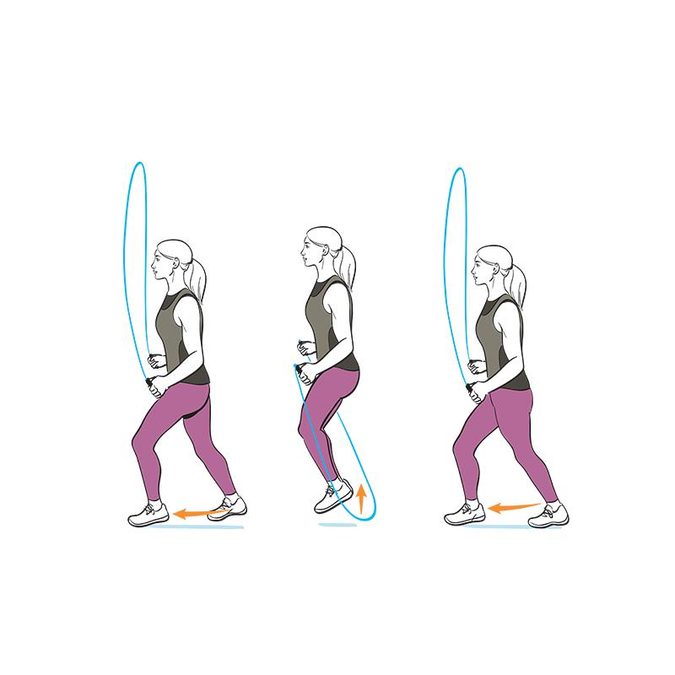
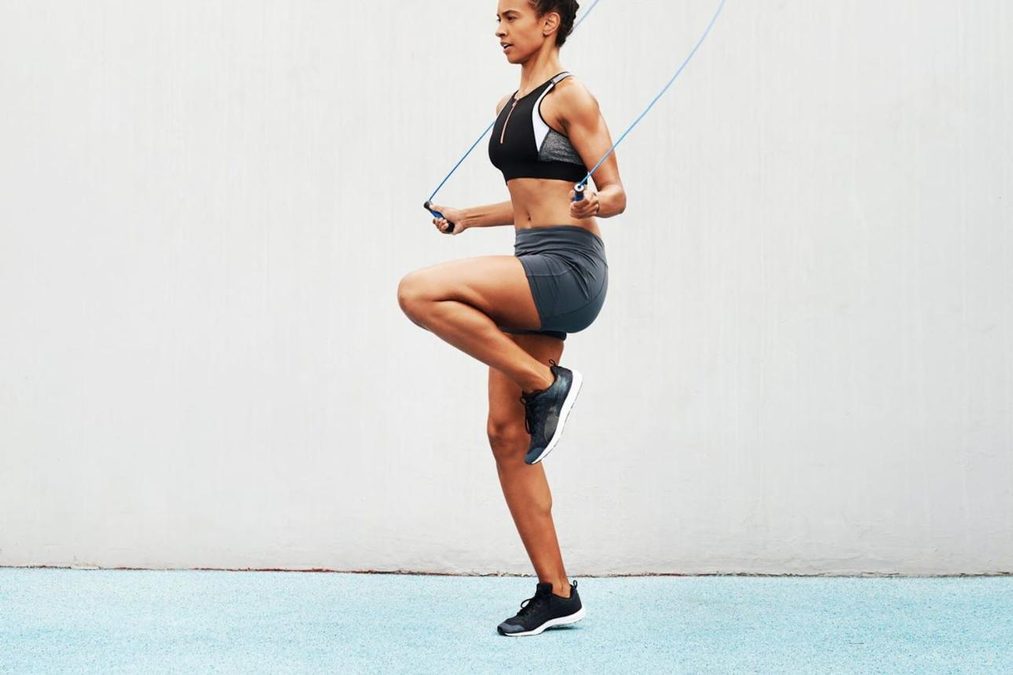

Once you can maintain a steady basic rhythm, variations can introduce different coordination and conditioning challenges.
Basic two-foot jump: Both feet leave and land together with a small hop. It is a useful starting movement for learning timing and controlling the rope.
Alternate-foot step: Lift one foot at a time, switching between left and right. This creates a running-like rhythm and can make longer sessions feel more natural.
Boxer step: Shift your weight gently from one foot to the other while keeping the jumps low. Boxers often use this style to develop footwork, balance, and rhythm.
High-knee skipping: Bring each knee higher as you rotate the rope. This increases the physical demand and should be introduced only after you can maintain basic technique.
Double unders: The rope passes beneath your feet twice during a single jump. This requires faster wrist rotation, precise timing, and greater coordination. It is an advanced variation rather than a beginner requirement.
A Beginner Jump Rope Workout Plan
Starting with short intervals is usually more manageable than trying to skip continuously for several minutes. Begin with a warm-up that includes brisk walking, ankle movements, and gentle body-weight squats. This prepares your muscles and joints for repeated jumping.
The following plan offers a gradual starting point. Adjust it according to your fitness, coordination, and recovery.
| Training level | Work interval | Recovery | Total rounds |
|---|---|---|---|
| Beginner | 15 seconds | 45 seconds | 5–6 |
| Developing fitness | 30 seconds | 30 seconds | 6–8 |
| Intermediate | 45 seconds | 30 seconds | 8–10 |
| Advanced | 60 seconds | 15–30 seconds | 8–12 |
You do not need to reach the advanced level quickly. Begin with a session that leaves you feeling challenged but able to maintain good form. Increase either the work interval or number of rounds gradually, rather than increasing everything at once.
Allow recovery between demanding sessions, especially if you are new to impact exercise. Walking, cycling, or gentle mobility work can provide lower-impact activity on other days.
Can Jump Rope Help With Weight Loss?
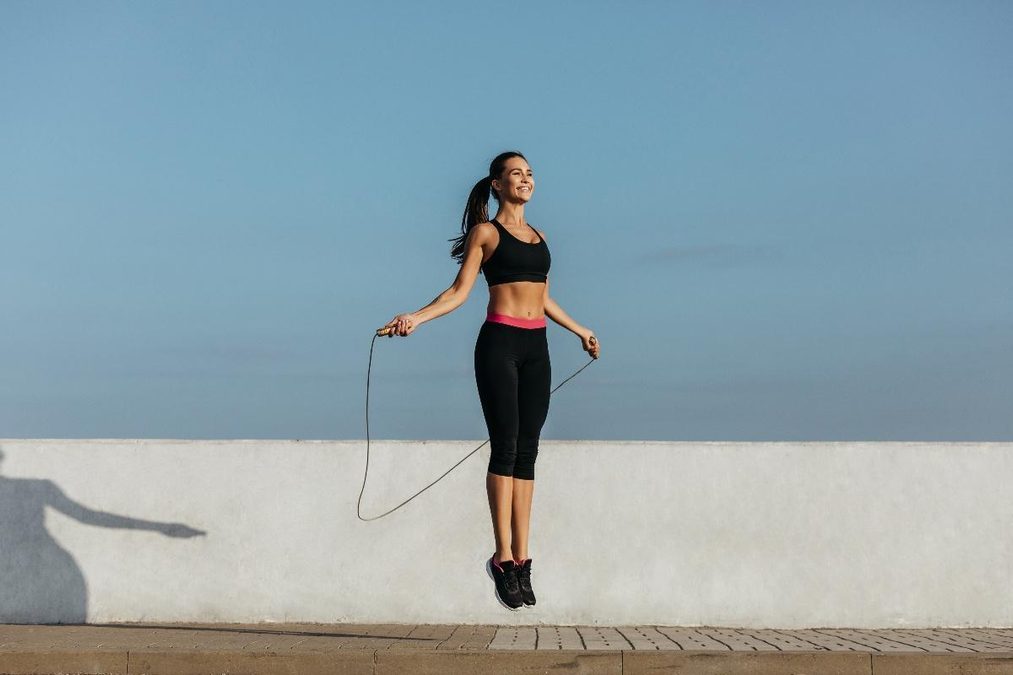
Skipping can contribute to weight loss because it increases energy expenditure. The number of calories used depends on body weight, workout duration, intensity, technique, and rest periods. Faster, more demanding sessions generally require more energy than gentle beginner practice, but there is no single calorie figure that applies to everyone.
Sustainable weight loss usually requires a consistent calorie deficit, meaning you use more energy than you consume over time. Exercise can support that goal, but nutrition remains important. A balanced diet with adequate protein, vegetables, fruit, whole grains, and appropriate portion sizes can help support training and recovery.
For example, someone who skips for ten minutes several times a week may increase their overall activity level. If that routine is combined with regular walking, strength training, and balanced eating habits, it can become part of a sustainable approach to weight management.
Common Mistakes and How to Avoid Them
One common mistake is using a rope that does not fit. Excess length can cause the rope to hit the floor too far in front of your feet, while insufficient length makes clearance difficult. Adjust the rope before starting and practise a few slow rotations to check its movement.
Another mistake is jumping too high. Large hops increase unnecessary impact and can cause early fatigue. Keep your jumps low, land softly, and let your wrists control the rope. If your calves become excessively tired, shorten the session and allow time for recovery.
Training on unsuitable surfaces can also create problems. Very hard concrete may increase discomfort for some people, while unstable or slippery surfaces create additional risks. Choose a flat, non-slip surface and wear supportive athletic shoes that fit properly.
Safety Tips and Who Should Take Extra Care
Skipping is a high-impact activity, so it may not be suitable for everyone. People with significant knee, ankle, hip, or foot pain should consider professional guidance before starting. Those recovering from an injury or managing a condition that affects balance or exercise tolerance may need a lower-impact alternative.
Start with short sessions and pay attention to how your body responds. Normal exertion is expected, but sharp pain, swelling, dizziness, or unusual shortness of breath are reasons to stop exercising. Persistent symptoms should be assessed by a healthcare professional.
If you are new to fitness, combining walking and basic strength exercises with gradual skipping practice may be more manageable than beginning with intense intervals. Good footwear, adequate recovery, and sensible progression are essential parts of a safe routine.
Frequently Asked Questions
Is jump rope good for beginners?
Yes, beginners can learn skipping with a lightweight adjustable rope and short intervals. Start with basic two-foot jumps, practise wrist rotation, and focus on soft landings. You do not need advanced tricks or long sessions to gain cardiovascular benefits.
How long should I jump rope each day?
There is no universal daily duration. Beginners can start with five to ten minutes of total work and recovery intervals, while more experienced exercisers may tolerate longer sessions. Build duration gradually and allow recovery if your calves, feet, or joints feel unusually tired.
Does jump rope build calf muscles?
Skipping repeatedly engages the calf muscles, particularly the gastrocnemius and soleus. It can improve muscular endurance and contribute to lower-leg conditioning. For substantial muscle growth, combine cardiovascular training with progressive resistance exercises such as standing and seated calf raises.
Is skipping better than running?
Neither is automatically better. Both activities improve cardiovascular fitness and use the lower-body muscles, but they place different demands on coordination, impact tolerance, and movement technique. The better choice depends on your goals, fitness level, preferences, and ability to perform the activity comfortably.
Can I use skipping for belly fat loss?
Skipping can help increase calorie expenditure, which may support overall fat loss when combined with a suitable eating plan. However, it cannot specifically target belly fat. Fat loss occurs throughout the body according to individual genetics and overall energy balance.
What surface is best for skipping?
A flat, non-slip surface with some give is generally preferable to very hard concrete. A suitable gym floor or exercise surface can provide a more comfortable training environment. Avoid slippery tiles, uneven ground, and surfaces that interfere with the rope’s movement.
Should I skip before or after strength training?
It depends on your priorities. Short, easy skipping intervals can work as part of a warm-up, while longer or more intense sessions may be better placed after strength training or on separate days. If strength performance is your main goal, avoid exhausting your legs before heavy lower-body exercises.
Conclusion
A jump rope workout is a convenient way to improve cardiovascular endurance, coordination, rhythm, and lower-body conditioning. Its versatility makes it useful for beginners, athletes, and people who want an effective cardio option without relying on large machines or complicated equipment.
Start with the right rope, learn controlled technique, and build your training time gradually. Combine skipping with strength exercises, balanced nutrition, and adequate recovery to support broader fitness goals.
The biggest takeaway is that effective training does not have to be complicated. A few minutes of consistent, well-controlled skipping can become a valuable part of a long-term fitness routine.