Introduction
Walking lunges are one of the most effective lower-body exercises for developing stronger legs, building glute muscles, improving balance, and increasing functional fitness. Unlike stationary lunges, this dynamic movement requires you to step forward continuously while maintaining control of your body, making it an excellent exercise for strength, coordination, and muscular endurance.
Whether you are a beginner, an experienced gym enthusiast, or someone looking to improve athletic performance, this exercise can add valuable variety to your training routine. It targets multiple muscle groups simultaneously, including the quadriceps, hamstrings, glutes, and calves, while also engaging the core muscles to stabilize your body.
Another advantage is its flexibility. You can perform the movement using only body weight, add dumbbells for resistance, or incorporate a barbell as your strength improves. Understanding the correct technique, appropriate training volume, and common mistakes can help you get better results while reducing unnecessary stress on your knees and lower back.
What Are Walking Lunges?

Walking lunges are a dynamic lower-body strength exercise in which you step forward, lower your hips until both knees bend, and push through your front foot to move into the next repetition. The alternating stepping pattern makes the exercise different from stationary lunges, where your feet remain in the same positions.
The movement combines muscular strength with balance, coordination, and controlled body movement. Each step challenges one leg to support your body while the other prepares for the next repetition. This makes it particularly useful for developing unilateral strength, which means improving the ability of each leg to work independently.
Because the exercise uses a natural walking pattern, it also has practical applications outside the gym. Climbing stairs, stepping over obstacles, hiking uphill, and changing direction during sports all require similar lower-body coordination and stability.
Muscles Worked During Walking Lunges

One of the biggest advantages of this exercise is its ability to recruit several major lower-body muscle groups in a single movement. The quadriceps, gluteus maximus, hamstrings, and calves contribute to movement, while the abdominal and lower-back muscles help maintain stability.
The amount of work performed by each muscle depends on your stride length, torso position, depth, and movement control. A shorter stride with a more upright torso generally emphasizes the quadriceps, while a slightly longer stride with controlled forward hip movement can increase glute involvement.
| Muscle group | Primary function | Training benefit |
|---|---|---|
| Quadriceps | Straighten the knee | Stronger front thighs |
| Gluteus maximus | Extend the hip | Glute development |
| Hamstrings | Assist hip extension and stabilize the leg | Posterior-chain strength |
| Calves | Support ankle stability | Better lower-leg control |
| Core muscles | Stabilize the torso and pelvis | Improved balance |
| Hip stabilizers | Control knee and pelvic alignment | Better movement coordination |
Quadriceps
The quadriceps are located at the front of your thighs and play a major role in extending the knee. During each repetition, they help control your descent and generate force as you rise.
Glutes and Hamstrings
The gluteus maximus contributes to hip extension, helping you push your body forward and upward. The hamstrings assist hip movement and provide additional stability throughout the exercise.
Core and Calves
Your core muscles work to prevent excessive torso movement, while your calves help stabilize the ankle and maintain balance. Although neither group is the primary target, both contribute to efficient movement.
Benefits of Walking Lunges for Strength and Fitness
The benefits extend beyond building stronger thighs. Because the exercise involves alternating single-leg movements, it challenges muscular strength, coordination, balance, and joint control simultaneously.
Builds Stronger Legs and Bigger Glutes
Regular training can strengthen the quadriceps, glutes, and supporting muscles. Adding dumbbells gradually increases resistance, creating a greater stimulus for muscular development.
For example, someone who already performs squats and leg presses might include lunges to introduce a different movement pattern and challenge each leg independently.
Improves Balance and Coordination
Each step requires you to maintain stability while transferring your body weight from one leg to the other. This improves neuromuscular coordination and helps develop better control during single-leg movements.
These qualities are useful for sports, recreational activities, and everyday movements such as climbing stairs or walking on uneven surfaces.
Develops Functional Lower-Body Strength
Functional strength refers to the ability to perform everyday movements efficiently. Lunging patterns resemble activities such as stepping forward, climbing, and changing direction.
Strengthening these movement patterns can make daily physical activities feel more controlled and manageable.
Supports Athletic Performance
Athletes who participate in football, basketball, tennis, and running can benefit from unilateral lower-body exercises. They help develop coordination, force production, and stability that contribute to more effective movement.
However, this exercise alone cannot guarantee faster sprinting or better sporting performance. It works best as part of a balanced training program.
How to Perform Walking Lunges With Proper Form
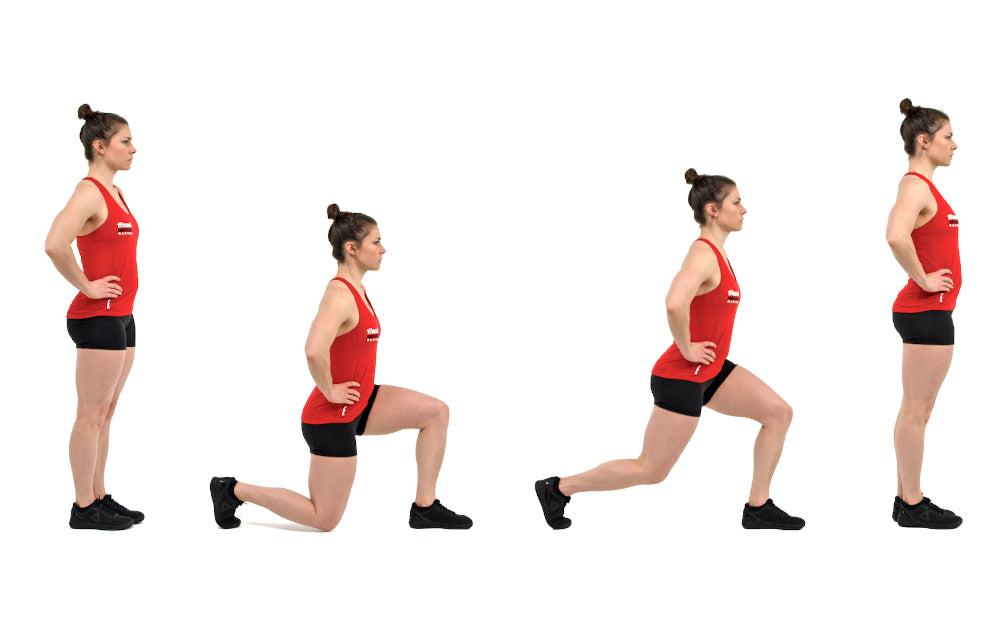
Correct technique is essential for getting the most from this exercise. Poor positioning can reduce muscle engagement, affect balance, and place unnecessary stress on the knees or lower back. Start with body weight before introducing additional resistance.
Follow these technique guidelines:
- Starting position: Stand upright with your feet approximately hip-width apart and your arms relaxed.
- Step forward: Take a controlled step forward with one foot, keeping your torso upright.
- Lower your body: Bend both knees until your rear knee approaches the floor. Your front knee should generally track in the direction of your toes.
- Maintain stability: Keep your abdominal muscles engaged and avoid allowing your front knee to collapse inward.
- Push through your front foot: Extend your front hip and knee to rise while bringing your rear leg forward.
- Alternate legs: Continue stepping forward with the opposite foot and repeat the movement.
A useful coaching cue is: “Step with control, lower with control, and rise without rushing.” This helps prevent momentum from taking over the movement.
Your front heel should remain grounded, and your pelvis should stay relatively level. Avoid taking excessively long steps or forcing your knee to touch the floor if your mobility does not allow it comfortably.
Different Walking Lunge Variations to Try


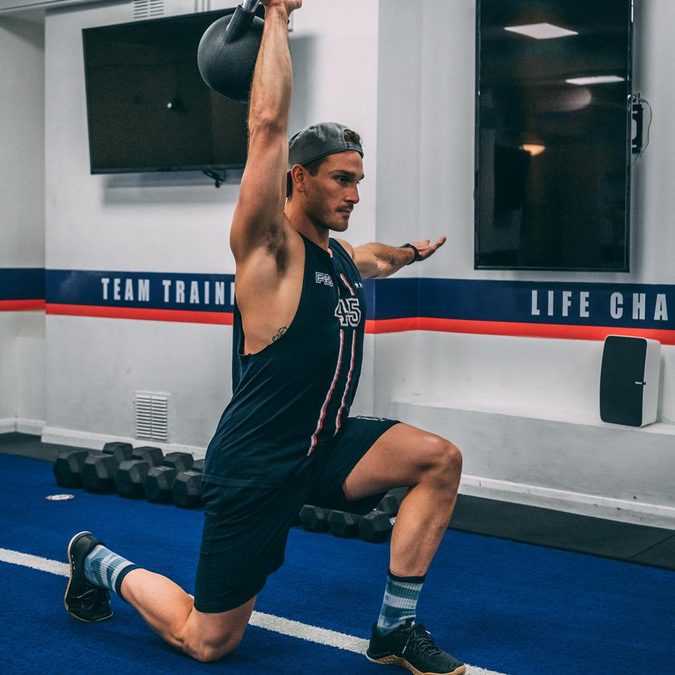
Changing the resistance or movement pattern can make your lower-body workouts more challenging. Beginners should first develop consistent bodyweight technique before experimenting with more demanding variations.
Bodyweight Lunges
This is the best starting variation for learning balance, coordination, and proper movement mechanics. It requires no equipment and can be performed at home, in a gym, or outdoors.
Dumbbell Lunges
Hold a dumbbell in each hand with your arms extended beside your body. This increases resistance and challenges your quadriceps and glutes while requiring additional core stabilization.
Choose a weight that allows you to maintain controlled steps without leaning excessively or losing balance.
Barbell Lunges
A barbell positioned across your upper back increases the loading demands on your lower body. This variation is better suited to experienced lifters who already have good balance and movement control.
Use a manageable weight and ensure you can safely enter and exit the starting position.
Overhead Lunges
Holding a suitable weight overhead increases the demands on shoulder stability, upper-back control, and core strength. This is a more advanced variation and requires good shoulder mobility and balance.
Common Mistakes to Avoid
Even a relatively simple exercise can become less effective when technique is inconsistent. Understanding common mistakes can help improve performance and reduce unnecessary joint stress.
| Common mistake | Why it matters | How to correct it |
|---|---|---|
| Taking excessively long steps | Can disrupt balance | Use a comfortable stride |
| Front knee collapsing inward | Reduces movement control | Keep knee aligned with toes |
| Leaning too far forward | Can affect stability | Maintain a controlled torso |
| Moving too quickly | Reduces muscular control | Slow down each repetition |
| Using excessive weight | Compromises technique | Reduce resistance |
| Allowing the front heel to lift | Reduces stable foot contact | Keep the heel grounded |
One particularly common problem is rushing through repetitions. Speed can make the exercise feel more intense, but it often reduces control and makes it harder to maintain proper knee and hip alignment. Slow, deliberate repetitions are generally a better choice when learning the movement.
Another mistake is using more weight than your balance and strength can support. If your torso twists, your steps become uneven, or your knees move uncontrollably, reduce the resistance. Good technique should remain the priority throughout the set.
Walking Lunges for Weight Loss and Fat Burning
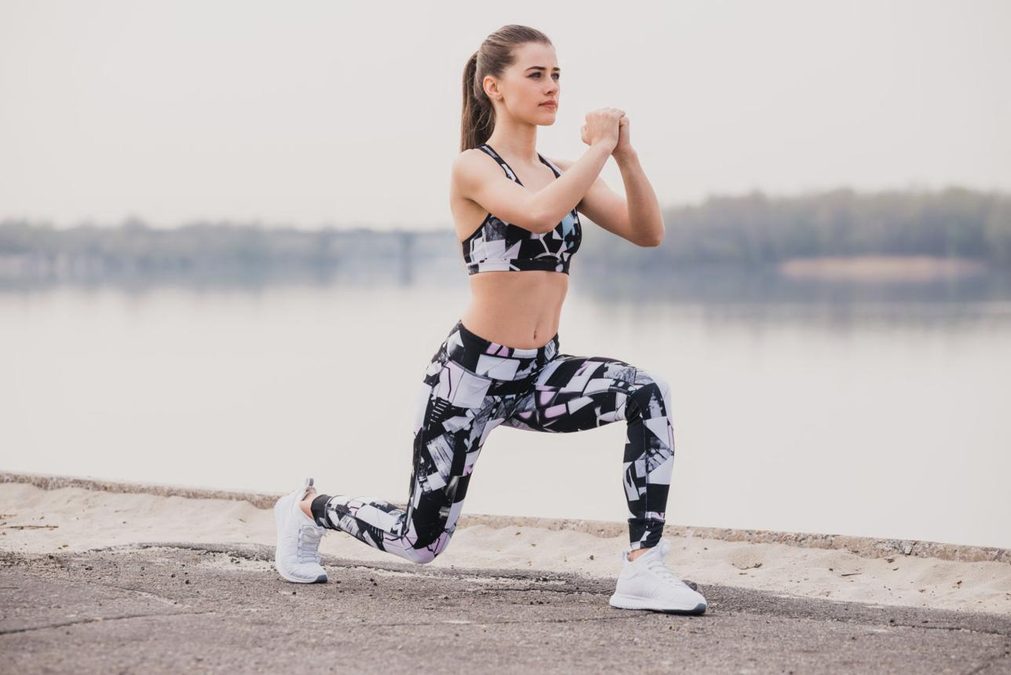
This exercise can contribute to weight management because it engages several large muscle groups and increases energy expenditure. Performing multiple repetitions can elevate your heart rate, particularly when combined with other movements in a circuit-style workout.
However, no individual exercise directly burns fat from a specific body part. Reducing body fat generally requires a sustainable calorie deficit supported by balanced nutrition, regular physical activity, and adequate recovery.
For better results, combine lunges with activities such as brisk walking, cycling, swimming, and resistance training. Eating sufficient protein and maintaining a consistent exercise schedule can also help preserve muscle while reducing body fat.
How Many Walking Lunges Should You Do?
The appropriate number depends on your fitness level, training experience, recovery capacity, and exercise goals. Beginners should focus on movement quality rather than completing a high number of repetitions.
A practical starting point is two sets of 8–10 steps per leg, using body weight and taking sufficient rest between sets. More experienced individuals can gradually increase the number of sets, repetitions, or resistance.
| Fitness level | Sets | Repetitions per leg | Resistance |
|---|---|---|---|
| Beginner | 2 | 8–10 | Body weight |
| Intermediate | 3 | 10–12 | Light dumbbells |
| Advanced | 3–4 | 12–15 | Moderate dumbbells |
These are general training examples, not mandatory targets. You should stop a set when your technique begins to deteriorate, rather than forcing additional repetitions.
How to Include Walking Lunges in Your Leg Workout

For balanced lower-body development, combine this movement with exercises that train different aspects of leg strength. Squats emphasize bilateral knee and hip extension, Romanian deadlifts target the posterior chain, and calf raises strengthen the lower legs.
A practical leg workout could include squats, Romanian deadlifts, lunges, hip thrusts, and calf raises. This combination trains the quadriceps, glutes, hamstrings, and calves while introducing both bilateral and unilateral movements.
Avoid placing demanding leg sessions too close together if your muscles have not recovered. Most people benefit from allowing sufficient recovery between challenging workouts, with training frequency adjusted to their experience and overall activity level.
Safety Tips and Recovery for Better Results
Although this is an effective lower-body exercise, it may not be suitable for everyone at every stage of fitness. People experiencing knee pain, hip discomfort, ankle instability, or lower-back problems should consider modified movements and seek professional guidance when necessary.
Warm up before training with five to ten minutes of light walking, cycling, or dynamic mobility exercises. Gentle leg swings, hip movements, and bodyweight squats can help prepare the muscles and joints for more demanding activity.
Recovery is equally important. Allow adequate rest between challenging leg workouts, maintain proper hydration, and consume balanced meals that support muscle repair. Persistent pain, swelling, or unusual discomfort should not be ignored.
Frequently Asked Questions
Are walking lunges better than regular lunges?
Walking lunges involve continuous forward movement, making them particularly useful for developing balance, coordination, and dynamic lower-body strength. Stationary lunges offer more stability because your feet remain in fixed positions. Both exercises are effective, and the better choice depends on your fitness goals and movement ability.
Do walking lunges build bigger glutes?
Yes, they can help develop stronger and bigger glutes by challenging the gluteus maximus during hip extension. Adding dumbbells, gradually increasing resistance, and following a consistent strength-training program can support muscle growth. Proper nutrition and recovery are also essential.
Are walking lunges good for weight loss?
They can support weight loss by increasing physical activity and engaging large muscle groups. However, meaningful fat loss requires an overall calorie deficit. Combining resistance training, cardiovascular exercise, and balanced nutrition generally produces better long-term results than relying on one exercise.
How many walking lunges should beginners do?
Beginners can start with two sets of 8–10 repetitions per leg using body weight. Focus on controlled movement, comfortable stride length, and proper knee alignment. Increase the workload gradually as strength, coordination, and confidence improve.
Do walking lunges hurt your knees?
They should not normally cause sharp or persistent knee pain when performed with appropriate technique and suitable resistance. However, excessive loading, poor alignment, or limited mobility may create discomfort. People with existing knee problems should consider modified exercises and consult a qualified healthcare professional.
Can you perform walking lunges every day?
Although bodyweight repetitions may be manageable for some people, challenging resistance training every day can limit muscular recovery. Most individuals should allow adequate rest between demanding lower-body sessions. Training frequency should depend on exercise intensity, experience, and recovery.
Do walking lunges work your abs?
Yes. Your abdominal muscles and other core stabilizers help maintain an upright torso and control pelvic movement during each step. Although this is not primarily an abdominal exercise, it contributes to overall core stability.
Conclusion
Walking lunges are a versatile lower-body exercise that can improve leg strength, develop glutes, enhance balance, and support functional fitness. Their ability to train multiple muscle groups while challenging coordination makes them a valuable addition to beginner and advanced workout programs.
Whether performed with body weight, dumbbells, or a barbell, the movement offers opportunities to progressively increase strength and muscular endurance. Combining it with squats, Romanian deadlifts, hip thrusts, and cardiovascular activities can create a more complete fitness routine.
The most important factor is consistency. Focus on correct technique, choose appropriate resistance, and allow your muscles enough time to recover. Ultimately, stronger legs and better movement control come from progressive training rather than rushing through repetitions or lifting excessive weight.