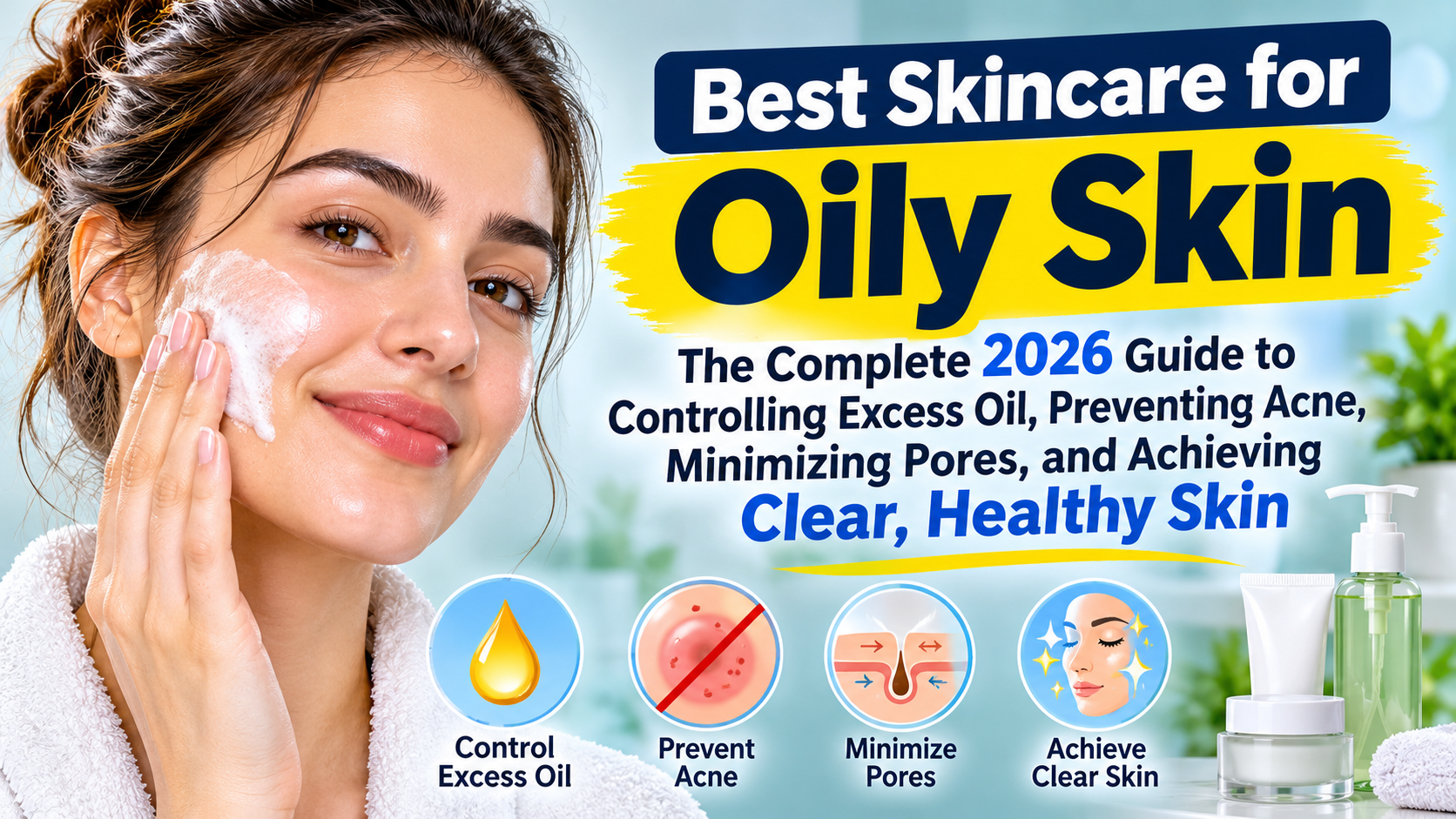
Introduction
The beauty world has embraced the Korean skincare trend known as glass skin, a complexion goal characterized by exceptional hydration, smooth texture, natural radiance, and a healthy-looking glow. Inspired by Korean beauty (K-beauty), this approach focuses on creating skin that appears so clear, moisturized, and luminous that it resembles polished glass.
Unlike makeup trends that temporarily create a shiny appearance, achieving this complexion involves consistent skincare habits. Proper cleansing, hydration, gentle exfoliation, barrier protection, and daily sunscreen use all contribute to healthier-looking skin.
The popularity of this beauty trend has also encouraged people to rethink traditional skincare routines. Instead of relying on harsh treatments or aggressive exfoliation, the emphasis is on maintaining the skin barrier and supporting its natural moisture balance.
Whether you have oily, dry, combination, or sensitive skin, understanding the science behind this approach can help you build a routine that suits your needs. The goal is not to create perfectly poreless skin, which is unrealistic, but to achieve a comfortable, hydrated complexion with a smoother appearance and natural luminosity.
What Is Glass Skin?


Glass skin is a Korean beauty concept describing a complexion that looks exceptionally smooth, hydrated, clear, and luminous. It emphasizes healthy skin texture and moisture rather than simply producing an oily or reflective surface.
The term became popular through South Korea’s beauty industry, where skincare routines often prioritize hydration, gentle cleansing, skin barrier support, and consistent sun protection.
A healthy complexion naturally reflects light more evenly when its surface is adequately hydrated and relatively smooth. However, natural pores, fine lines, and skin texture remain normal features of human skin. Achieving this appearance does not require eliminating them.
The most important characteristics include:
- Deep hydration: Skin feels comfortable, moisturized, and supple.
- Smooth texture: Dry patches and roughness become less noticeable.
- Natural radiance: The complexion appears fresh rather than greasy.
- Even-looking tone: Visible dullness and uneven pigmentation may improve.
- Healthy skin barrier: The skin retains moisture and tolerates everyday environmental exposure.
The Science Behind Healthy, Radiant Skin
Understanding skin biology makes it easier to choose products that genuinely support a luminous complexion. The outermost layer of the skin, called the stratum corneum, acts as a protective barrier. It contains skin cells surrounded by lipids, including ceramides, cholesterol, and fatty acids.
This barrier helps prevent excessive water loss while protecting against environmental irritants. When it becomes damaged through over-exfoliation, harsh cleansers, or unsuitable products, the skin may become dry, flaky, irritated, and sensitive.
Hydration is another essential factor. Humectants such as hyaluronic acid and glycerin attract and retain water in the outer layers of the skin. Emollients soften the skin, while occlusive ingredients help reduce moisture loss.
A balanced skincare routine supports these functions rather than overwhelming the skin with numerous active ingredients. Think of the skin barrier as a protective wall: hydration supports the skin’s moisture content, while barrier-supporting lipids help maintain the structure that keeps that moisture inside.
Best Ingredients for Achieving a Healthy Glass-Like Glow


Choosing ingredients according to your skin type is more useful than purchasing every trending product. Several well-researched skincare ingredients can improve hydration, support the skin barrier, and address uneven texture.
| Ingredient | Main benefit | Suitable for |
|---|---|---|
| Hyaluronic acid | Attracts and retains moisture | Most skin types |
| Glycerin | Improves skin hydration | Dry and dehydrated skin |
| Niacinamide | Supports barrier function and improves uneven tone | Most skin types |
| Ceramides | Help maintain the skin barrier | Dry and sensitive skin |
| Vitamin C | Provides antioxidant protection and helps brighten skin | Many skin types |
| Panthenol | Soothes and moisturizes | Sensitive and dry skin |
| Salicylic acid | Helps unclog pores and reduce blackheads | Oily and acne-prone skin |
| Lactic acid | Gently exfoliates and improves rough texture | Some dry and uneven-textured skin |
Hyaluronic Acid and Glycerin for Deep Hydration
Hyaluronic acid is a popular humectant that helps attract water to the skin’s surface. It can make dehydrated skin appear temporarily plumper and reduce the visibility of fine lines associated with dryness.
Glycerin is another effective moisturizing ingredient. It helps maintain hydration and is commonly found in serums, moisturizers, and gentle cleansers. Using a hydrating serum followed by moisturizer can help support comfortable, supple skin.
Niacinamide for Uneven Skin Tone
Niacinamide, a form of vitamin B3, supports the skin barrier and can help improve the appearance of uneven skin tone. It may also help regulate excess sebum and reduce the appearance of enlarged pores.
People with sensitive skin should begin with a lower concentration and monitor how their skin responds. Higher concentrations are not automatically more effective.
Ceramides for Skin Barrier Repair
Ceramides are lipids naturally present in the skin. They help maintain the protective barrier and reduce moisture loss.
A ceramide-rich moisturizer can be particularly useful for people experiencing dryness, tightness, or irritation after using exfoliating products. Maintaining barrier health is essential for achieving a comfortable, naturally radiant complexion.
Korean Glass Skin Routine: Morning Skincare Steps
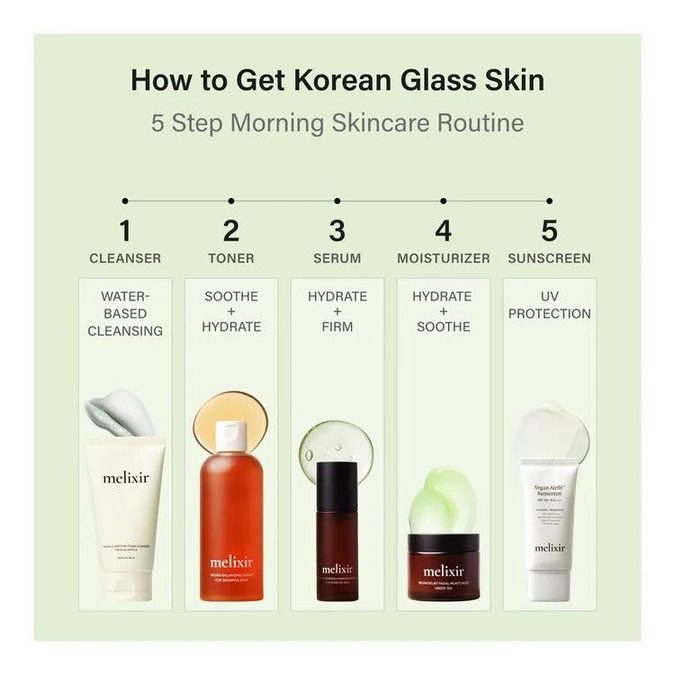


A consistent morning routine protects the skin from environmental damage while maintaining hydration throughout the day. Korean skincare often uses lightweight layers, allowing different products to provide moisture without making the complexion feel heavy.
A simple routine can be more effective than applying numerous products. The American Academy of Dermatology (AAD) recommends focusing on cleansing, moisturizing, and sun protection rather than purchasing an excessive number of skincare products. American Academy of Dermatology+1
Recommended morning routine:
- Gentle cleanser: Remove overnight oil, sweat, and product residue without stripping natural moisture.
- Hydrating toner: Apply a gentle, alcohol-free toner if additional hydration is needed.
- Vitamin C or niacinamide serum: Choose an ingredient that addresses your primary skin concern.
- Moisturizer: Apply a suitable cream or lotion to maintain hydration.
- Sunscreen: Finish with broad-spectrum SPF 30 or higher.
Sunscreen is particularly important because ultraviolet exposure contributes to premature skin aging, pigmentation, and skin cancer. The AAD recommends broad-spectrum, water-resistant SPF 30 or higher. Reapply approximately every two hours when outdoors and after swimming or sweating. American Academy of Dermatology+1
Korean Glass Skin Routine: Evening Skincare Steps

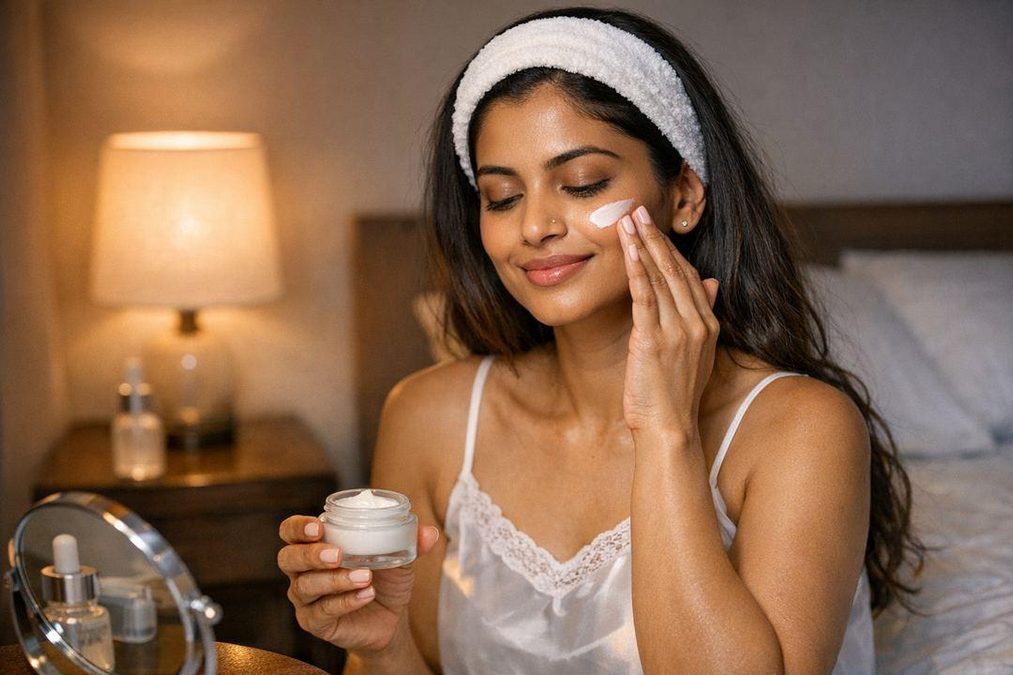
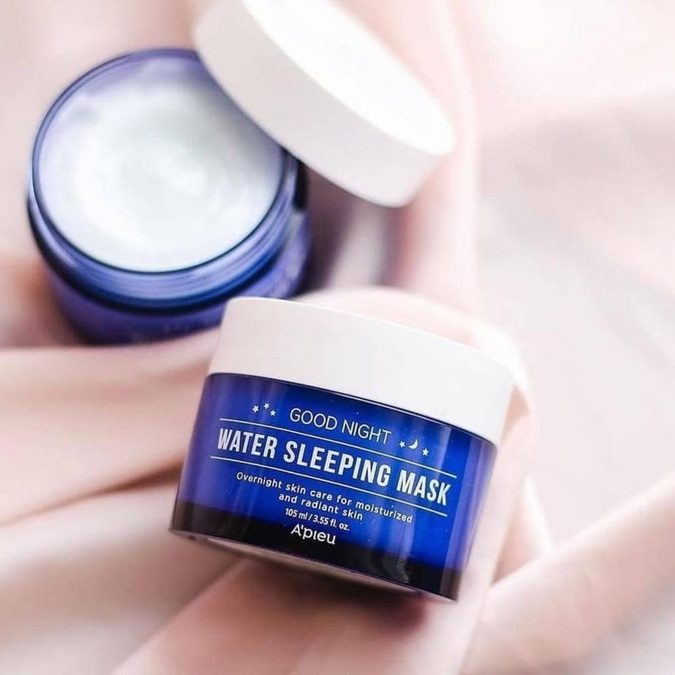
The evening routine focuses on removing accumulated sunscreen, makeup, oil, and environmental debris while supporting the skin’s natural overnight recovery processes.
Double cleansing is a popular K-beauty technique. It generally involves an oil-based cleanser followed by a gentle water-based cleanser. The first helps dissolve makeup and sunscreen, while the second removes remaining impurities. However, double cleansing is not essential for everyone; a single effective cleanser may be sufficient if you do not wear heavy makeup or water-resistant sunscreen.
Recommended evening routine:
- Oil cleanser: Use when wearing makeup or water-resistant sunscreen.
- Water-based cleanser: Gently remove remaining dirt and residue.
- Hydrating toner: Add moisture without unnecessary irritation.
- Treatment serum: Use niacinamide or another suitable treatment.
- Moisturizer: Support the skin barrier and reduce moisture loss.
People who want to introduce retinol or exfoliating acids should do so gradually. Combining multiple strong active ingredients immediately can cause redness, dryness, and irritation. A calm, comfortable complexion is a better foundation than an aggressive routine.
How to Exfoliate Without Damaging Your Skin Barrier
Exfoliation helps remove accumulated dead skin cells from the skin’s surface, which can contribute to dullness and rough texture. When performed appropriately, it can improve smoothness and allow moisturizers to spread more evenly.
Chemical exfoliants include alpha-hydroxy acids (AHAs), such as glycolic acid and lactic acid, and beta-hydroxy acids (BHAs), such as salicylic acid. AHAs work primarily on the skin’s surface, while salicylic acid can penetrate oil within pores, making it useful for some people with blackheads and oily skin.
However, excessive exfoliation can damage the protective barrier. Signs include persistent stinging, redness, peeling, tightness, and increased sensitivity.
For beginners, starting with one gentle exfoliating product once weekly is a reasonable approach. Increase frequency only if the skin tolerates it, and avoid using multiple exfoliating products together. People with eczema, rosacea, active irritation, or persistent acne should seek individualized dermatological advice.
How to Adapt Your Skincare Routine to Your Skin Type
The most effective routine depends on your skin’s natural characteristics. A product that feels comfortable on dry skin may feel heavy on oily skin, while highly concentrated treatments may irritate sensitive complexions.
The best approach is to identify your primary concern and select products that address it without compromising the skin barrier.
| Skin type | Recommended approach | Ingredients to consider |
|---|---|---|
| Oily skin | Lightweight, non-comedogenic hydration | Niacinamide, glycerin |
| Dry skin | Richer moisturizers and gentle cleansing | Ceramides, hyaluronic acid |
| Combination skin | Lightweight hydration with targeted care | Glycerin, niacinamide |
| Sensitive skin | Fragrance-free, minimal routine | Panthenol, ceramides |
| Acne-prone skin | Non-comedogenic products and appropriate acne treatments | Salicylic acid, niacinamide |
For oily skin, avoid the common mistake of skipping moisturizer. Dehydration and excess oil production are different issues, and oily skin still benefits from appropriate hydration.
For dry or sensitive skin, focus on repairing the moisture barrier before introducing strong exfoliants or retinoids. If a product consistently causes burning or irritation, discontinue it rather than assuming the reaction is part of the treatment process.
Common Mistakes That Prevent a Healthy, Radiant Complexion
Many people spend considerable money on skincare but struggle to achieve consistent results because their routines are too complicated or aggressive.
One frequent mistake is using too many active ingredients. Combining strong exfoliating acids, retinol, vitamin C, and acne treatments without understanding their compatibility can irritate the skin. A simpler routine with fewer well-chosen products is often easier to maintain.
Another mistake is expecting immediate results. Hydration may improve the appearance of dryness relatively quickly, but uneven pigmentation, acne marks, and rough texture can require several weeks or months of consistent care.
Other common mistakes include:
- Skipping sunscreen during cloudy weather.
- Using harsh cleansers that strip natural oils.
- Applying exfoliating acids too frequently.
- Choosing products based only on social media trends.
- Ignoring persistent redness or irritation.
- Using heavy products that aggravate clogged pores.
A useful principle is to introduce one new product at a time and monitor how the skin responds. This makes it easier to identify products that cause irritation and prevents unnecessary experimentation.
Lifestyle Habits That Support Naturally Glowing Skin
Skincare products are only one part of maintaining a healthy complexion. Sleep, nutrition, hydration, stress management, and sun protection can all influence how the skin looks and feels.
A balanced diet containing fruits, vegetables, healthy fats, and protein provides nutrients that support normal skin function. Foods containing vitamin C, vitamin E, zinc, and omega-3 fatty acids can contribute to overall nutritional health. However, no particular food or supplement guarantees a flawless complexion.
Sleep is equally important. During sleep, the body carries out processes involved in tissue repair and recovery. Regular sleep habits, adequate water intake, and avoiding smoking can support general skin health.
As licensed esthetician Erica Choi explained in Vogue when discussing the trend, it reflects a growing emphasis on “hydration, radiance, and overall skin health.” Vogue This captures the central idea: a healthy complexion comes from consistent care rather than chasing an unrealistic beauty standard.
How Long Does It Take to Achieve Glass Skin?
The time required depends on your starting skin condition, skincare ingredients, age, lifestyle, and consistency. Some improvements, particularly reduced dryness and increased hydration, may become noticeable within days of using an appropriate moisturizer.
Other concerns take longer. Uneven pigmentation, post-acne marks, and rough texture may require several weeks or months of suitable treatment. For example, niacinamide and vitamin C can help improve the appearance of uneven tone over time, while persistent acne may require medical treatment.
Patience is essential because skin naturally renews itself over time. Changing products every few days makes it difficult to determine whether a routine is effective. Maintaining a simple regimen for several weeks, while monitoring irritation and progress, provides a more reliable approach.
Frequently Asked Questions
What is glass skin in skincare?
It is a Korean beauty concept describing skin that looks exceptionally hydrated, smooth, clear, and luminous. The appearance is associated with consistent moisturizing, gentle cleansing, appropriate exfoliation, and daily sun protection rather than makeup or excessive skincare treatments.
How can I achieve glass skin naturally?
Start with a gentle cleanser, a suitable moisturizer, and broad-spectrum sunscreen. Include hydrating foods in a balanced diet, maintain healthy sleep habits, and avoid harsh exfoliation. Consistency is more important than purchasing expensive products or following complicated routines.
Which serum is best for a glowing complexion?
Hyaluronic acid is useful for hydration, niacinamide can support the skin barrier and improve uneven tone, and vitamin C provides antioxidant benefits. The best serum depends on your skin type and primary concern. Introduce new ingredients gradually to reduce the risk of irritation.
Can oily skin achieve a dewy complexion?
Yes. Oily skin can benefit from lightweight, non-comedogenic moisturizers containing ingredients such as glycerin and hyaluronic acid. Avoid skipping moisturizer because excess oil does not necessarily mean the skin is adequately hydrated.
Is Korean skincare necessary for achieving radiant skin?
No. Korean skincare offers useful techniques and product innovations, but healthy-looking skin does not depend on a particular country’s products. Effective cleansing, moisturizing, appropriate treatments, and sunscreen are more important than the brand or country of origin.
Does drinking water improve skin hydration?
Adequate water intake supports normal body function, and dehydration can affect overall health. However, drinking excessive water does not directly create a flawless complexion. Topical moisturizers containing humectants and barrier-supporting ingredients are important for maintaining hydration in the outer skin layers.
Can people with acne achieve a smooth, glowing complexion?
Yes. People with acne can improve their skin’s appearance through gentle cleansing, non-comedogenic moisturizers, sunscreen, and suitable acne treatments. Salicylic acid and dermatologist-recommended retinoids may help, depending on the condition. Persistent or severe acne should be assessed by a dermatologist.
Is exfoliation necessary for glass skin?
Exfoliation can help improve rough texture and remove accumulated dead skin cells, but it is not essential for everyone. Sensitive or damaged skin may become worse with frequent exfoliation. Gentle products used at an appropriate frequency are preferable to aggressive scrubbing.
Conclusion
Achieving a healthy, luminous complexion is less about following complicated beauty trends and more about understanding what your skin needs. Hydration, gentle cleansing, barrier protection, appropriate exfoliation, and consistent sunscreen use provide the foundation for long-term skin health.
The Korean-inspired approach offers valuable lessons about patience and simplicity. Instead of chasing instant results, focus on selecting suitable ingredients, maintaining a balanced routine, and allowing your skin enough time to respond.
Ultimately, glass skin should represent healthy, comfortable, well-hydrated skin rather than an unrealistic expectation of perfection. Natural pores, fine lines, and individual skin characteristics are normal. The most rewarding skincare routine is one that supports your skin’s health, confidence, and natural radiance over time.