Introduction
Building strong, athletic legs requires exercises that develop muscle strength, improve balance, and support natural movement. Among the most effective lower-body exercises, reverse lunges stand out because they target multiple muscle groups while allowing each leg to work independently.
Unlike traditional squats, which train both legs simultaneously, this movement involves stepping backward into a split stance before lowering the body toward the floor. This creates a challenging exercise that strengthens the quadriceps, glutes, hamstrings, and supporting muscles around the hips and core.
Whether your goal is building bigger glutes, improving athletic performance, developing stronger thighs, or increasing lower-body stability, this exercise can be a valuable addition to your training routine. It can also be performed using body weight, dumbbells, kettlebells, or other resistance equipment.
The biggest advantage is versatility. Beginners can start with simple bodyweight repetitions, while experienced athletes can increase resistance and introduce more demanding variations to develop strength and muscular endurance.
What Are Reverse Lunges?
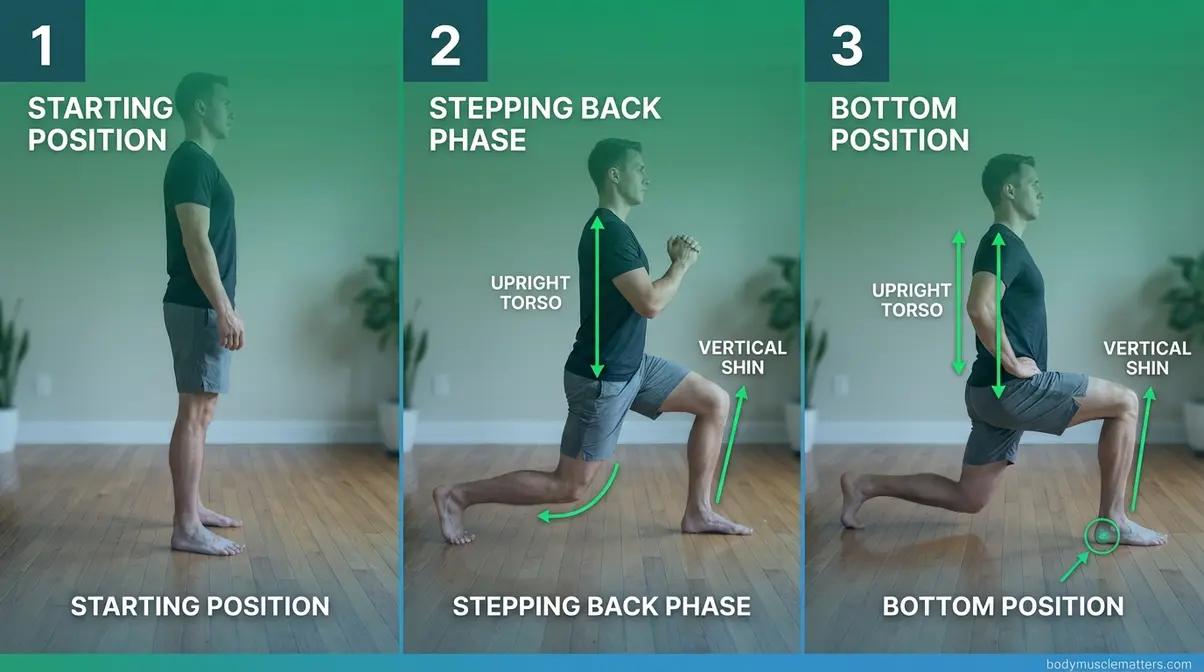
A reverse lunge is a unilateral lower-body strength exercise in which you step one foot backward, bend both knees, lower your body toward the floor, and return to a standing position.
The movement primarily targets the quadriceps and gluteal muscles while engaging the hamstrings, calves, abdominal muscles, and hip stabilizers. Because each repetition emphasizes one leg at a time, it can help identify and address strength differences between the left and right sides.
Unlike forward lunges, stepping backward allows you to establish a more controlled stance before lowering your body. Many people find this movement easier to coordinate because the front foot remains planted throughout most of the repetition.
This makes it useful for beginners, general fitness enthusiasts, and athletes looking to improve unilateral leg strength.
Muscles Worked During Reverse Lunges
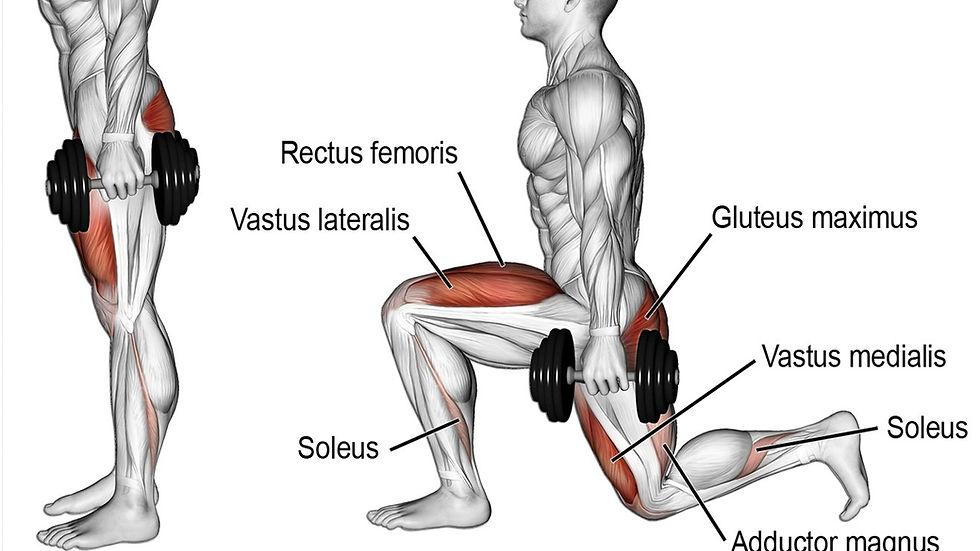
This exercise activates several major muscle groups in the lower body. The amount of emphasis placed on each muscle depends on stride length, torso position, depth, and movement control.
Understanding the muscles involved helps you adjust your technique according to your fitness goals.
| Muscle group | Main function during the exercise |
|---|---|
| Quadriceps | Straighten the front knee and help raise the body |
| Gluteus maximus | Extend the hip and drive upward |
| Hamstrings | Assist hip extension and stabilize the leg |
| Gluteus medius | Stabilize the pelvis and control hip movement |
| Calves | Support ankle stability and balance |
| Core muscles | Maintain posture and control body position |
Quadriceps
The quadriceps are located at the front of the thighs and play a major role in knee extension. During the lowering and upward phases, they help control knee movement and produce the force required to return to standing.
Glutes and Hamstrings
The gluteus maximus is responsible for powerful hip extension, making it especially important when rising from the bottom position. The hamstrings assist hip movement and contribute to lower-body stability.
A slightly longer backward step can increase the hip-extension demands of the movement, making it useful for people who want to emphasize glute development.
Core and Hip Stabilizers
The abdominal muscles, obliques, and smaller hip stabilizers help keep your pelvis and torso controlled. These muscles prevent excessive leaning, twisting, and side-to-side movement.
This additional stability challenge makes the exercise useful beyond simple leg strengthening.
Benefits of Reverse Lunges for Strength and Fitness


The benefits extend beyond building stronger thighs. Because the movement combines strength, coordination, and balance, it supports several aspects of physical fitness.
Improves unilateral leg strength: Training one leg at a time helps develop individual strength and may reveal imbalances that bilateral exercises sometimes hide.
Builds stronger glutes: The hip-extension movement recruits the gluteal muscles, supporting lower-body muscle development.
Develops balance and coordination: Maintaining a stable position while stepping backward challenges coordination and control.
Supports knee and hip stability: Properly performed repetitions strengthen muscles that help control lower-body movement. However, the exercise does not guarantee injury prevention or treat existing joint problems.
Improves functional movement: Stepping backward, bending the knees, and returning to standing resemble movements used in everyday activities and sports.
Supports muscular endurance: Performing controlled sets with moderate resistance can improve the ability of lower-body muscles to sustain repeated effort.
These benefits make the exercise particularly useful in strength-training programs, athletic conditioning, and general fitness routines.
How to Perform Reverse Lunges With Proper Form


Correct technique is essential for getting the most from this exercise. Poor positioning can reduce muscle activation, affect balance, and place unnecessary stress on the knees or lower back.
Follow these movement instructions:
- Starting position: Stand upright with your feet approximately hip-width apart. Keep your chest lifted, shoulders relaxed, and abdominal muscles engaged.
- Step backward: Move one foot behind you while maintaining a stable front foot.
- Lower your body: Bend both knees gradually until the rear knee approaches the floor. Keep your front knee aligned with your toes.
- Maintain balance: Keep your torso controlled and distribute your weight primarily through the front foot.
- Drive upward: Push through the front foot and bring the rear leg forward to return to the starting position.
- Alternate legs: Repeat the movement on the opposite side while maintaining consistent technique.
A useful coaching cue is: “Step back smoothly, lower under control, and drive through the front foot.”
Avoid rushing through repetitions. A controlled descent and stable upward movement are generally more valuable than completing as many repetitions as possible.
Reverse Lunges vs. Forward Lunges: What’s the Difference?
Both exercises strengthen the lower body, but their movement patterns create slightly different training demands.
Forward lunges involve stepping ahead of the body, while backward lunges require stepping behind you. The direction of movement influences balance, coordination, and how you control your body during the exercise.
| Comparison | Reverse lunges | Forward lunges |
|---|---|---|
| Movement | Step backward | Step forward |
| Balance demand | Requires controlled backward stepping | Requires controlled forward stepping |
| Muscle emphasis | Quadriceps and glutes | Quadriceps and glutes |
| Beginner suitability | Often easier to control | May require more coordination |
| Knee movement | Depends on stride and technique | Often involves greater forward movement |
| Training purpose | Unilateral strength and stability | Leg strength and movement coordination |
Neither variation is universally better. Your choice should depend on comfort, mobility, training experience, and personal fitness goals.
For people who find forward lunges uncomfortable, the backward variation may be a useful alternative. However, individuals with knee pain or previous injuries should select exercises with guidance from an appropriate healthcare or rehabilitation professional.
Best Reverse Lunge Variations for Different Fitness Goals


Once you understand the basic movement, different variations can introduce additional resistance, improve coordination, and create new training challenges.
Bodyweight variation: This is ideal for beginners learning balance and technique. It allows you to concentrate on knee alignment, movement depth, and controlled repetitions without additional equipment.
Dumbbell variation: Holding a dumbbell in each hand increases resistance and challenges your grip and core stability. It is particularly useful for progressive strength training.
Goblet variation: Hold one dumbbell or kettlebell against your chest. This position encourages an upright torso and adds resistance without requiring a barbell.
Barbell variation: Position a barbell across your upper back and perform controlled repetitions. This variation is better suited to experienced lifters who already have reliable balance and movement mechanics.
Deficit variation: Perform the movement while standing on a stable elevated platform to increase the available range of motion. This requires good mobility and should only be attempted when basic technique is established.
Choosing a variation should reflect your current ability rather than how advanced an exercise looks. Adding resistance too quickly can compromise stability and movement quality.
Common Mistakes to Avoid During Reverse Lunges
Even a relatively simple lower-body exercise can become less effective when performed with poor technique. Recognizing common mistakes helps improve performance and makes training more consistent.
Taking an excessively short step: A very short backward step can make the movement feel cramped and affect knee positioning. Use a comfortable stride that allows both knees to bend naturally.
Allowing the front knee to collapse inward: The knee should generally track in the same direction as the toes. Excessive inward movement can indicate poor control or insufficient resistance management.
Leaning too far forward: A slight natural forward torso angle is acceptable, but excessive bending can reduce control and place additional demands on the lower back.
Pushing through the rear foot: The front leg should perform most of the work during the upward phase. Using excessive force from the rear foot can reduce the intended training emphasis.
Dropping too quickly: Rushing the descent reduces control and makes it harder to maintain proper positioning. Lower yourself gradually and use a comfortable range of motion.
A simple solution is to practice without weights in front of a mirror. This allows you to observe your posture, knee alignment, and balance before increasing exercise difficulty.
How to Include Reverse Lunges in Your Workout Routine
The exercise can fit into several training programs, including lower-body strength sessions, full-body workouts, and athletic conditioning routines.
For beginners, two or three sets of 8–10 repetitions per leg can provide a reasonable starting point. Intermediate lifters may use three or four sets of 10–12 repetitions per leg, depending on their training goals and recovery capacity.
| Fitness level | Sets | Repetitions per leg | Equipment |
|---|---|---|---|
| Beginner | 2 | 8–10 | Body weight |
| Intermediate | 3 | 10–12 | Light dumbbells |
| Advanced | 3–4 | 8–12 | Dumbbells or barbell |
Perform the movement after warming up and before highly fatiguing isolation exercises when lower-body strength is a priority.
You can combine it with squats, Romanian deadlifts, glute bridges, calf raises, and hamstring curls to develop a more complete lower-body workout.
Allow sufficient recovery between challenging sessions. Increasing resistance, repetitions, or sets gradually is generally more sustainable than changing everything at once.
Are Reverse Lunges Good for Building Bigger Glutes?
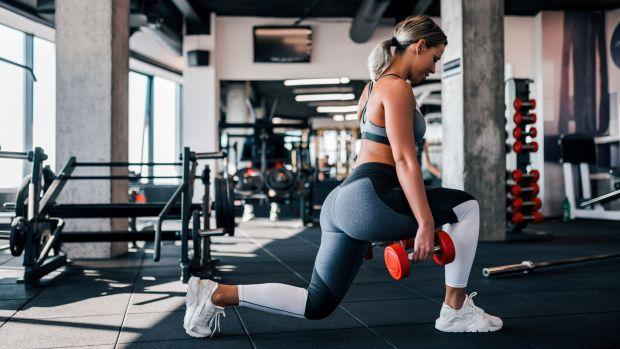
Yes, this movement can contribute to glute development because the gluteus maximus works to extend the hip as you rise from the lowered position. The gluteus medius also helps stabilize the pelvis throughout each repetition.
Stride length and torso position influence the muscles’ demands. A moderately longer backward step and controlled hip movement may increase the emphasis on the glutes, provided you can maintain balance and comfortable joint positioning.
However, no single exercise guarantees bigger glutes. Muscle growth requires progressive resistance training, sufficient protein, appropriate calorie intake, and recovery. Combining lunges with hip thrusts, squats, Romanian deadlifts, and other glute-focused exercises can create a more comprehensive program.
Safety Tips and Modifications for Beginners
Although this exercise is suitable for many fitness levels, beginners should pay attention to mobility, balance, and joint comfort. People with limited ankle mobility or previous knee injuries may find it difficult to reach a deep position immediately. Starting with a shorter range of motion can make the movement more manageable.
If balance is a problem, hold a stable support such as a wall-mounted rail or sturdy exercise rack. You can also begin with split squats, which allow you to develop leg strength without repeatedly stepping backward. Stop if you experience sharp pain, unusual swelling, or significant joint discomfort.
For people with existing musculoskeletal conditions, professional assessment can help determine appropriate modifications. Good exercise technique should support gradual improvement rather than force the body into uncomfortable positions.
Frequently Asked Questions
Are reverse lunges good for weight loss?
Yes, they can support weight-loss goals by increasing physical activity and strengthening major lower-body muscles. However, fat loss depends primarily on maintaining an appropriate calorie deficit over time. Combining resistance training with cardiovascular exercise and balanced nutrition produces a more comprehensive approach.
How many reverse lunges should beginners do?
Beginners can start with two sets of 8–10 repetitions per leg, using body weight. The priority should be proper technique, controlled movement, and comfortable depth. As strength and balance improve, resistance and training volume can gradually increase.
Do reverse lunges build bigger glutes?
Yes, they activate the gluteus maximus and supporting hip muscles, contributing to glute development. For better muscle growth, combine them with exercises such as hip thrusts, squats, and Romanian deadlifts while following a progressive resistance-training program.
Are reverse lunges better than squats?
Neither exercise is universally better. Squats train both legs simultaneously and are excellent for developing overall lower-body strength. Lunges train each leg independently and introduce additional balance and coordination demands. Including both can create a more complete leg workout.
Do reverse lunges hurt your knees?
They should not cause significant knee pain when performed with appropriate technique and a comfortable range of motion. However, individual anatomy, previous injuries, and exercise tolerance matter. Reduce the range of motion or stop the exercise if discomfort develops, and seek professional guidance when necessary.
Can reverse lunges be performed every day?
Daily training is generally unnecessary, particularly when using heavy resistance. Most people can include this exercise in two or three weekly lower-body sessions, depending on training volume and recovery. Allowing muscles sufficient time to recover supports strength development and performance.
Are reverse lunges better for glutes or quadriceps?
They train both muscle groups. A more upright torso and relatively shorter stride can increase quadriceps demands, while a moderately longer stride can place greater emphasis on hip extension and the glutes. Individual technique and anatomy influence the actual muscle recruitment.
Conclusion
Reverse lunges are an effective lower-body exercise for developing stronger quadriceps, bigger glutes, improved balance, and better muscular coordination. Their versatility makes them valuable for beginners, experienced gym enthusiasts, and athletes who want to improve unilateral strength.
From simple bodyweight repetitions to challenging dumbbell and barbell variations, the movement can adapt to different training levels and fitness goals. It also complements traditional squats, deadlifts, hip thrusts, and other lower-body exercises.
The most important factors are proper technique, controlled movement, progressive resistance, and adequate recovery. Instead of rushing through repetitions or lifting excessive weight, focus on developing strength through a comfortable and consistent range of motion.
Ultimately, incorporating this exercise into a balanced fitness routine can help build stronger legs, improve functional movement, and support long-term lower-body development.