

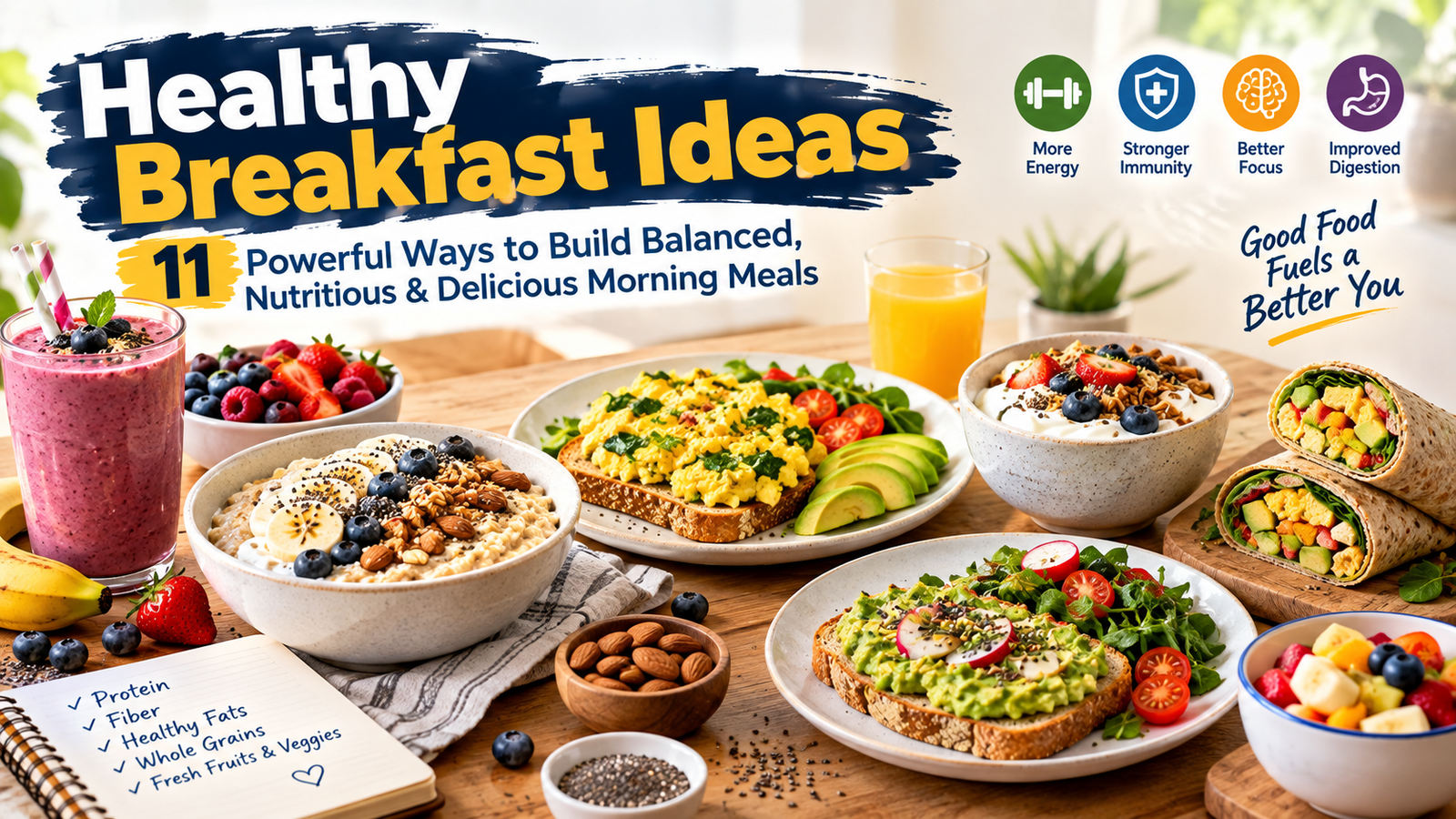
Breakfast can set the tone for the rest of the day, but a nutritious morning meal does not need to be complicated, expensive, or time-consuming. The best healthy breakfast ideas combine protein, fiber, nutrient-dense carbohydrates, healthy fats, and minimally processed ingredients in portions that suit your appetite and lifestyle.
A balanced breakfast can be as simple as Greek yogurt with berries and nuts, oatmeal topped with fruit and seeds, or eggs served with whole-grain toast and vegetables. What matters most is the overall nutritional balance rather than following a single “perfect” breakfast formula.
For busy mornings, preparation is often more important than elaborate cooking. Keeping convenient staples such as oats, eggs, fruit, yogurt, whole-grain bread, nut butter, and frozen vegetables available can make nutritious choices much easier.
What Makes a Breakfast Healthy and Balanced?
A healthy breakfast generally provides a combination of protein, fiber-rich carbohydrates, healthy fats, vitamins, minerals, and enough energy to support your morning activities. Protein can help support muscle maintenance and satiety, while dietary fiber contributes to digestive health and can help meals feel more filling.
Instead of judging breakfast by calories alone, consider its nutritional density. A bowl of sugary cereal may provide energy quickly but contain relatively little protein or fiber. By comparison, oatmeal with berries, chia seeds, and Greek yogurt provides several complementary nutrients in one meal.
A useful principle is simple: “Build the meal around nutrients, not just ingredients.” Two breakfasts can contain similar calories while offering very different amounts of protein, fiber, micronutrients, and beneficial fats.
Protein-Rich Breakfasts for Better Satiety
Protein is one of the most useful components to prioritize when creating satisfying breakfast meals. Eggs, Greek yogurt, cottage cheese, milk, tofu, beans, and lean meats can all contribute protein. Plant-based eaters can combine foods such as soy products, legumes, nuts, seeds, and whole grains throughout the day to meet their nutritional needs.
Eggs are particularly versatile. Scrambled eggs with spinach and whole-grain toast create a balanced meal, while an omelet can incorporate mushrooms, tomatoes, peppers, or other vegetables. Greek yogurt can serve as another quick option when combined with fruit, oats, nuts, or seeds.
The goal is not to make breakfast excessively high in protein. Rather, including a meaningful protein source can make the meal more nutritionally complete and may help reduce the tendency to become hungry shortly afterward.
High-Fiber Breakfasts for Lasting Fullness
Fiber is found naturally in fruits, vegetables, legumes, whole grains, nuts, and seeds. It supports digestive health and can contribute to feelings of fullness. Increasing fiber gradually while drinking adequate fluids is generally more comfortable than suddenly making large dietary changes.
Oatmeal is a classic example of a fiber-rich breakfast base. Rolled or steel-cut oats can be topped with blueberries, strawberries, banana, walnuts, ground flaxseed, or chia seeds. The combination provides texture and flavor while increasing the meal’s nutritional variety.
Other healthy breakfast ideas include whole-grain avocado toast, bran-rich cereal with fruit, or a breakfast bowl combining quinoa, yogurt, berries, and seeds. Choosing minimally processed carbohydrate sources can make it easier to increase fiber without relying on specialty products.
Quick Breakfast Ideas for Busy Mornings
A busy schedule is one of the biggest reasons people skip breakfast or rely on highly processed convenience foods. The practical solution is preparation. Overnight oats, boiled eggs, yogurt cups, pre-cut fruit, and homemade breakfast muffins can reduce the amount of cooking required during hectic mornings.
Smoothies can also work well when they contain more than fruit juice and sweeteners. A balanced smoothie might combine milk or unsweetened soy milk, berries, banana, Greek yogurt, oats, and nut butter. Frozen fruit can make preparation particularly convenient because it requires little chopping and can be stored for weeks.
| Breakfast | Protein source | Fiber source | Useful addition |
|---|---|---|---|
| Greek yogurt bowl | Greek yogurt | Berries, oats, chia | Walnuts |
| Oatmeal | Milk or yogurt | Oats, fruit | Flaxseed |
| Egg toast | Eggs | Whole-grain bread, vegetables | Avocado |
| Smoothie | Yogurt or soy milk | Berries, oats | Nut butter |
| Cottage cheese bowl | Cottage cheese | Fruit, seeds | Whole-grain toast |
| Breakfast burrito | Eggs or beans | Whole-grain tortilla, vegetables | Avocado |

Healthy Breakfast Ideas for Weight Management
Breakfast alone does not determine whether someone gains, loses, or maintains body weight. Overall energy intake, physical activity, sleep, food choices throughout the day, and individual physiology all contribute. Still, a satisfying breakfast can make it easier for some people to manage hunger and maintain consistent eating habits.
For weight-conscious eaters, meals centered on protein, fiber, fruit or vegetables, and minimally processed foods can provide substantial nutrition without relying heavily on added sugars. Portion sizes still matter, particularly with calorie-dense ingredients such as nut butters, nuts, seeds, cheese, and oils.
A common problem is turning “healthy” foods into oversized meals because ingredients such as granola, honey, nut butter, and dried fruit are perceived as automatically low-calorie. The solution is not to eliminate these foods but to use reasonable portions and balance them with high-volume foods such as fresh fruit or vegetables.
Breakfasts for Energy and Morning Workouts
People who exercise in the morning may need to adjust breakfast according to workout intensity and personal tolerance. A small meal such as a banana with yogurt or toast with nut butter may work before moderate exercise, while a more substantial breakfast can follow a longer or harder session.
After exercise, protein and carbohydrate-rich foods can support recovery and replenish energy stores. Eggs with whole-grain toast and fruit, Greek yogurt with oats and berries, or a tofu scramble with vegetables can all fit into a post-workout routine.
Not everyone needs to eat immediately before exercise. Some people prefer training after a light snack, while others feel comfortable exercising before breakfast. The important consideration is how the overall eating pattern supports energy, performance, recovery, and personal comfort.
Plant-Based and Vegetarian Breakfast Options
Plant-based breakfasts can be highly nutritious when meals include a variety of whole foods. Oatmeal with soy milk, chia seeds, berries, and peanut butter provides carbohydrates, protein, fiber, and healthy fats. Tofu scramble with vegetables and whole-grain toast offers another savory alternative.
Beans and legumes can also play an important role. A breakfast burrito containing black beans, vegetables, avocado, and scrambled tofu or eggs can be filling and nutrient-dense. Fortified plant milks may also contribute nutrients such as calcium and vitamin D, depending on the product.
People following strict vegan diets should pay particular attention to nutrients that can be difficult to obtain from plant foods alone, especially vitamin B12. Dietary requirements vary by individual, so evidence-based nutritional guidance can be useful when making substantial dietary changes.
Kid-Friendly Breakfasts That Provide Real Nutrition
Children often respond better to familiar foods presented in appealing combinations rather than complicated “health foods.” Whole-grain toast with peanut or other nut butter, fruit and yogurt, oatmeal with banana, or scrambled eggs with toast can provide simple nutritional foundations.
A useful strategy is to offer variety without turning breakfast into a battle. A child may accept sliced fruit more readily than a mixed fruit bowl, or scrambled eggs more readily than a vegetable-heavy omelet. Repeated exposure to nutritious foods can gradually broaden food preferences.
For young children, choking risks, allergies, portion sizes, and individual dietary requirements need to be considered. Foods should be prepared in age-appropriate forms, and known allergies should always be taken seriously.
Budget-Friendly Breakfast Choices
Nutritious breakfasts do not have to depend on expensive superfoods. Oats, eggs, bananas, potatoes, beans, lentils, whole-grain bread, seasonal produce, and plain yogurt can provide substantial nutritional value at relatively accessible prices.
Buying staple foods in larger quantities and using seasonal produce can further reduce costs. Frozen berries and vegetables can also be useful because they have a long storage life and can reduce food waste. A simple bowl of oats with banana and peanut butter may cost considerably less than a specialty café breakfast while still providing useful nutrients.
Some healthy breakfast ideas become more practical when ingredients overlap between meals. For example, spinach purchased for dinner can be added to morning eggs, while leftover roasted vegetables can become part of a breakfast wrap. This approach saves both money and preparation time.
Breakfasts for Different Dietary Needs
Dietary needs vary widely. Someone with lactose intolerance may choose lactose-free dairy or fortified plant alternatives, while a person with celiac disease needs certified gluten-free foods and careful attention to cross-contact. Food allergies require even more precise ingredient awareness.
People with diabetes may benefit from paying attention to carbohydrate quality, portion size, fiber, and the overall composition of the meal. Rather than relying on generic advice, individual medical conditions should be managed according to guidance from qualified healthcare professionals.
The same principle applies to athletes, older adults, pregnant people, and individuals with specific nutritional deficiencies. A breakfast that works extremely well for one person may not meet another person’s needs. Nutrition is most useful when it accounts for the individual rather than treating everyone identically.
How to Make Breakfast More Nutrient-Dense
Improving an existing breakfast is often easier than completely changing it. Add berries to oatmeal, vegetables to eggs, seeds to yogurt, or whole-grain toast alongside a protein-rich breakfast. Small additions can significantly increase the nutritional variety of a familiar meal.
Another useful approach is replacing rather than simply restricting. Swap refined bread for whole-grain bread, sweetened yogurt for plain yogurt with fruit, or sugary breakfast drinks for milk, unsweetened alternatives, or water. These changes can improve nutritional quality without making breakfast feel dramatically different.
The strongest healthy breakfast ideas are sustainable enough to become routine. A breakfast that takes five minutes and can be prepared consistently may be more valuable than an elaborate recipe that sounds impressive but rarely gets made.
Common Breakfast Mistakes and Practical Solutions
One common mistake is relying heavily on refined carbohydrates without enough protein or fiber. Toast, pastries, sweetened cereal, and sugary drinks can be convenient, but meals built almost entirely around these foods may be less satisfying. Adding eggs, yogurt, nuts, seeds, fruit, or vegetables can create a more balanced meal.
Another mistake is assuming that packaged products marketed as “healthy” are automatically nutritious. Granola bars, cereals, flavored yogurts, and breakfast drinks can vary substantially in added sugar, fiber, protein, and ingredient quality. Reading the nutrition facts panel and ingredient list provides a more reliable picture than front-of-package claims alone.
Skipping breakfast is not automatically unhealthy either. Some people naturally prefer a later first meal. The broader dietary pattern matters more than following a universal breakfast schedule. For those who do eat breakfast, however, building it around nutrient-dense foods can make the meal more useful.
Frequently Asked Questions
What is the healthiest breakfast to eat every morning?
There is no single breakfast that is healthiest for everyone. A balanced meal containing protein, fiber-rich carbohydrates, fruit or vegetables, and healthy fats is a practical foundation. Examples include eggs with whole-grain toast and vegetables, Greek yogurt with berries and seeds, or oatmeal with milk, fruit, and nuts.
Are healthy breakfast ideas good for weight loss?
They can support a weight-management eating pattern when portions and total daily intake are appropriate. Breakfasts containing protein and fiber may be more satisfying for some people, but weight change depends on the overall relationship between energy intake and expenditure rather than one particular meal.
What are healthy breakfast ideas for busy mornings?
Overnight oats, Greek yogurt with fruit and seeds, boiled eggs with whole-grain toast, smoothies containing protein and fiber, and prepared breakfast wraps are practical choices. Preparing ingredients the night before can make nutritious breakfasts much easier to maintain during busy weeks.
Is oatmeal a healthy breakfast?
Oatmeal can be an excellent breakfast because oats provide complex carbohydrates and dietary fiber, including beta-glucan. Its nutritional profile can be improved by adding protein-rich ingredients such as Greek yogurt or milk, along with fruit, nuts, or seeds.
Can I eat eggs every day for breakfast?
Eggs can be part of a balanced diet for many people and provide high-quality protein along with several vitamins and minerals. Individual dietary needs and medical conditions vary, so people with specific health concerns should follow personalized guidance from an appropriate healthcare professional.
What should I drink with breakfast?
Water is a simple choice, while milk or an unsweetened fortified plant beverage can provide additional nutrients. Coffee and tea can also fit into a balanced diet for many adults, although added sugar and high-calorie flavorings can substantially change the nutritional profile of a drink.
Conclusion
The most useful healthy breakfast ideas are not complicated recipes or trendy food combinations. They are balanced meals that provide meaningful amounts of protein, fiber, nutrient-dense carbohydrates, healthy fats, vitamins, and minerals while fitting realistically into your daily routine.
Whether the morning calls for a five-minute yogurt bowl, a protein-rich egg breakfast, overnight oats, a smoothie, or a budget-friendly bowl of oatmeal and fruit, consistency matters more than perfection. Building meals from simple whole foods makes nutritious eating easier to sustain.
The final takeaway is straightforward: make breakfast balanced before making it elaborate. Start with a protein source, add a fiber-rich carbohydrate or whole grain, include fruit or vegetables, and use healthy fats where appropriate. With that foundation, nutritious mornings become less about following rules and more about building a routine that genuinely works.