
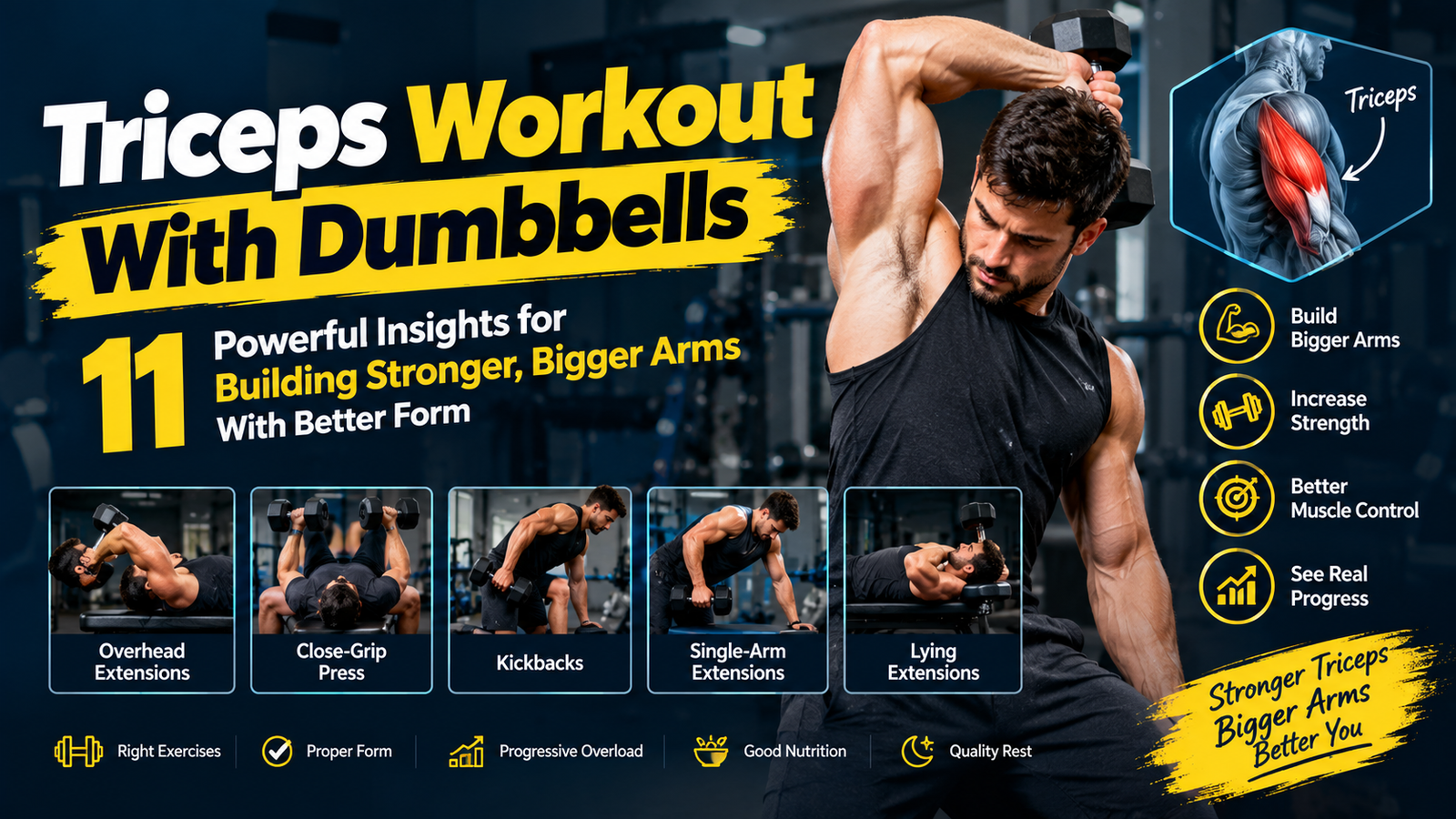
If you want bigger arms, it is easy to spend most of your training time thinking about biceps. But the triceps deserve just as much attention—arguably more. They make up a significant portion of your upper arm and contribute heavily to pressing strength, elbow extension, and the overall shape of your arms.
The good news is that you do not need a complicated cable machine setup to train them effectively. A pair of dumbbells can provide everything you need for a productive triceps workout with dumbbells, whether you train at home, in a commercial gym, or while traveling. The key is using the right exercises, controlling the weight, and gradually giving your muscles a reason to adapt.
Why Dumbbells Are So Effective for Triceps Training
The triceps brachii consists of three heads: the long head, lateral head, and medial head. All three help extend the elbow, but they do not contribute in exactly the same way. The long head also crosses the shoulder joint, which is why exercises performed with the arms overhead can feel noticeably different from pressing or kickback variations.
Dumbbells work particularly well because each arm has to control its own load. If your right arm is stronger than your left, a barbell can sometimes hide that difference, while dumbbells make it easier to notice. They also allow small changes in hand position and arm path, which can make an exercise feel more natural for your shoulders and elbows. For many people, that flexibility makes a triceps workout with dumbbells both practical and comfortable.
The Best Dumbbell Exercises for Building Your Triceps
A good routine does not need ten different exercises. In fact, constantly changing movements can make it harder to know whether you are actually getting stronger. A better approach is to choose a few exercises that complement each other and perform them consistently.
Overhead dumbbell extensions are useful for challenging the triceps when the arms are positioned overhead, while lying dumbbell extensions provide a different angle and loading pattern. Close-grip dumbbell presses allow you to use more weight and involve the chest and shoulders as supporting muscles. Kickbacks are better suited to lighter loads and controlled repetitions. Together, these movements can give your triceps workout with dumbbells a nice balance between heavier pressing and focused isolation work.
How to Build an Effective Triceps Workout With Dumbbells
A practical session could begin with a compound movement, followed by an extension exercise, and finish with a lighter isolation movement. For example, you might perform close-grip dumbbell presses first, overhead extensions second, and kickbacks last. This order allows you to tackle the more demanding movement while your triceps are still relatively fresh.
You do not need to train until your arms completely give out on every set. Instead, choose a weight that makes the final few repetitions challenging while allowing you to maintain good form. For many exercises, roughly 8–15 repetitions works well, while lighter movements such as kickbacks can comfortably move into a higher repetition range. The right triceps workout with dumbbells should leave the muscles challenged, not leave your joints feeling beaten up.
| Exercise | Primary role | Typical reps | Main focus |
|---|---|---|---|
| Close-grip dumbbell press | Compound strength | 6–12 | Controlled pressing |
| Overhead dumbbell extension | Triceps isolation | 8–15 | Long-head emphasis |
| Lying dumbbell extension | Extension strength | 8–15 | Controlled elbow movement |
| Dumbbell kickback | Isolation | 12–20 | Full contraction |
| Single-arm extension | Unilateral training | 10–15 each | Balance and control |
Your total weekly volume should also include the indirect triceps work you get from exercises such as bench presses and shoulder presses. Someone who already performs several pressing sessions may need less direct arm work than someone whose program contains very little pressing.
How to Perform Dumbbell Triceps Exercises With Better Form
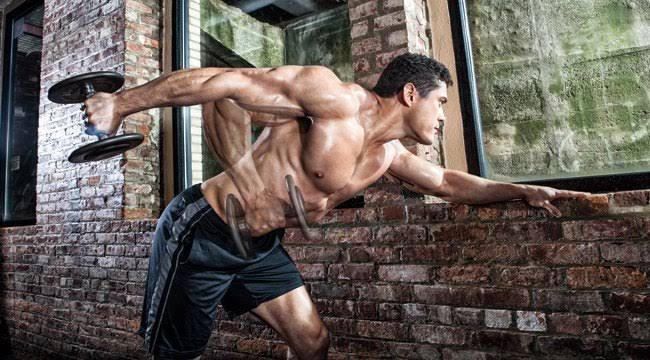
The easiest way to improve your results is often to improve your technique rather than immediately increase the weight. During most triceps exercises, the elbow should be doing most of the work. Your upper arm should stay reasonably controlled instead of swinging around to help the dumbbell move.
Pay special attention to the lowering portion of every repetition. Lower the weight deliberately, feel the triceps lengthen, and then extend the elbow smoothly. You do not need to force an extreme stretch or aggressively snap the elbow straight at the top. A useful training principle is simple: “Make every repetition look like the repetition you intended to perform.” If your first few reps look controlled but the final reps turn into swinging movements, the weight is probably too heavy.
Common Triceps Training Mistakes and Simple Fixes
Using too much weight is probably the most common mistake. It is tempting to grab heavier dumbbells because bigger numbers feel like progress, but triceps exercises often become less effective when the load forces you to use momentum. During kickbacks, for example, a heavy dumbbell can turn a precise isolation movement into a swinging shoulder exercise.
Another mistake is assuming that more exercises automatically mean better results. Your triceps already work during pressing movements for the chest and shoulders, so piling on endless isolation sets can create unnecessary fatigue. Start with a manageable amount of work and watch what happens to your strength, soreness, and technique over the following days. If performance keeps improving, your routine is doing its job.
Progressive Overload Without Chasing Heavy Weights
Muscle growth requires progressive overload, but that does not mean you need to increase the dumbbell weight every single week. Progress can also mean completing more repetitions with the same weight, improving your range of motion, performing cleaner repetitions, or adding a small amount of training volume when your recovery allows it.
One straightforward method is to use a repetition range. Suppose you are working toward 8–12 repetitions. You might begin with 10 clean repetitions, eventually reach 12, and then move to the next available dumbbell. After increasing the load, your repetitions may drop back toward eight. Over several weeks, you gradually build them up again. This makes a triceps workout with dumbbells easy to track and removes the pressure to constantly test your strength.
How Often Should You Train Your Triceps?
Your triceps do not need to be trained directly every day. They already contribute to many upper-body movements, so recovery should be considered when planning your week. For many lifters, direct triceps work once or twice per week can fit comfortably into a larger resistance-training program.
Pay attention to what your body is telling you. If your elbows remain irritated, your pressing strength is dropping, or your performance gets worse from session to session, adding more sets is unlikely to solve the problem. Sometimes the better move is simply giving the muscles more recovery time or reducing unnecessary volume. Training is the stimulus; recovery is where the adaptation takes place.
Creating a Home Triceps Workout With Dumbbells
One of the biggest advantages of dumbbell training is convenience. You can train your arms in a bedroom, garage, apartment, or small home gym without needing a rack of machines. A pair of adjustable dumbbells can support overhead extensions, lying extensions, presses, kickbacks, and single-arm variations.
For a simple home session, start with a few minutes of general movement and several easy warm-up repetitions. Then perform your heavier compound exercise, move into a controlled extension, and finish with a higher-repetition isolation movement. If you have an adjustable bench, you will have more exercise options, but you can still create a useful triceps workout with dumbbells with very little equipment.
Nutrition and Recovery for Better Arm Development
Training alone does not build muscle. Your body needs enough energy, protein, sleep, and recovery time to respond to resistance training. A diet built around nutritious foods, adequate protein, carbohydrates, healthy fats, and sufficient fluids can support performance and recovery without requiring an overly complicated eating plan.
Sleep is equally important. If you repeatedly train hard while sleeping poorly and barely recovering between sessions, your performance may eventually suffer. Think of muscle building as a three-part process: training provides the challenge, nutrition supplies the raw materials, and recovery gives your body time to adapt. Ignoring any one of those pieces can slow your progress.
Who Can Benefit From Dumbbell Triceps Training?
Beginners can benefit from dumbbell exercises because the equipment is simple, easy to adjust, and widely available. More experienced lifters can also use them to add unilateral work, address differences between arms, or change their training stimulus without completely rebuilding their program.
Dumbbells are not automatically suitable for every exercise or every person, however. If an exercise consistently produces sharp or unusual pain in the elbow, shoulder, or wrist, do not assume that pain is simply part of effective training. Reducing the load or changing the movement may help, while persistent pain should be assessed by an appropriate healthcare professional.
Read More: Healthy Breakfast Ideas: 11 Powerful Ways to Build Balanced, Nutritious & Delicious Morning Meals
Frequently Asked Questions
Can dumbbells build bigger triceps?
Yes. Dumbbells can provide enough resistance to build stronger and larger triceps when training is consistent and progressively challenging. The important factors are exercise selection, sufficient effort, good technique, nutrition, and recovery. You do not need specialized equipment if you can progressively overload your muscles with the equipment you have.
What is the best exercise in a triceps workout with dumbbells?
There is no single exercise that is perfect for everyone. Overhead extensions can provide useful long-head-focused work, close-grip presses allow heavier loading, and kickbacks can be effective for controlled isolation. Combining movements with different loading patterns is generally more useful than relying on one exercise.
How many sets should I do for triceps?
The appropriate number depends on your overall training program because pressing exercises already involve the triceps. A beginner may make progress with a relatively small amount of direct work, while an experienced lifter may tolerate more. Start conservatively and increase volume only when your technique, performance, and recovery remain solid.
Should I train triceps before or after chest?
Most people train triceps after chest because pressing exercises already fatigue them. Training the triceps first can reduce your ability to perform heavy chest presses. If developing the triceps is your main priority, you can place them earlier in a session, but the rest of your program should account for the additional fatigue.
Why do I feel dumbbell triceps exercises in my shoulders?
Shoulder involvement can increase when the weight is too heavy, the upper arm moves excessively, or your body uses momentum to complete repetitions. Reducing the load and keeping the movement controlled can often make the target muscle easier to isolate. If shoulder pain continues rather than simply muscle fatigue, the exercise may need to be modified or professionally assessed.
How long does it take to build bigger triceps?
There is no universal timeline because results depend on training history, genetics, nutrition, recovery, age, and consistency. Beginners may notice strength improvements relatively quickly, while visible muscle growth generally requires sustained training over a longer period. Tracking repetitions and loads can help you see progress even before changes in arm size become obvious.
Conclusion
A good triceps workout with dumbbells does not need to be complicated, exhausting, or filled with dozens of exercises. The fundamentals are what matter most: choose movements that suit your body, use controlled technique, challenge the muscles progressively, and give yourself enough food and recovery to adapt.
The biggest lesson is to stop treating every workout as a test of how much weight you can lift. Stronger arms come from repeatedly giving the triceps a productive stimulus and gradually improving your performance. With a few well-chosen dumbbell exercises, consistent training, and patience, you can build stronger, more muscular arms without needing an elaborate gym setup.